A balance ball improves core strength, balance, posture, and mobility through unstable-surface training.
I’ve spent years teaching and testing fitness tools, and I can tell you a balance ball is one of the simplest and most versatile tools you can own. This article explains what a balance ball is used for, how it works, who benefits, safe ways to use it, and real tips from my hands-on experience so you can use it with confidence and get faster results.
Today's Exclusive Deals
Limited-time Exclusive Deals. Check current discount on Amazon.
Check Price on Amazon As an Amazon Associate I earn from qualifying purchases.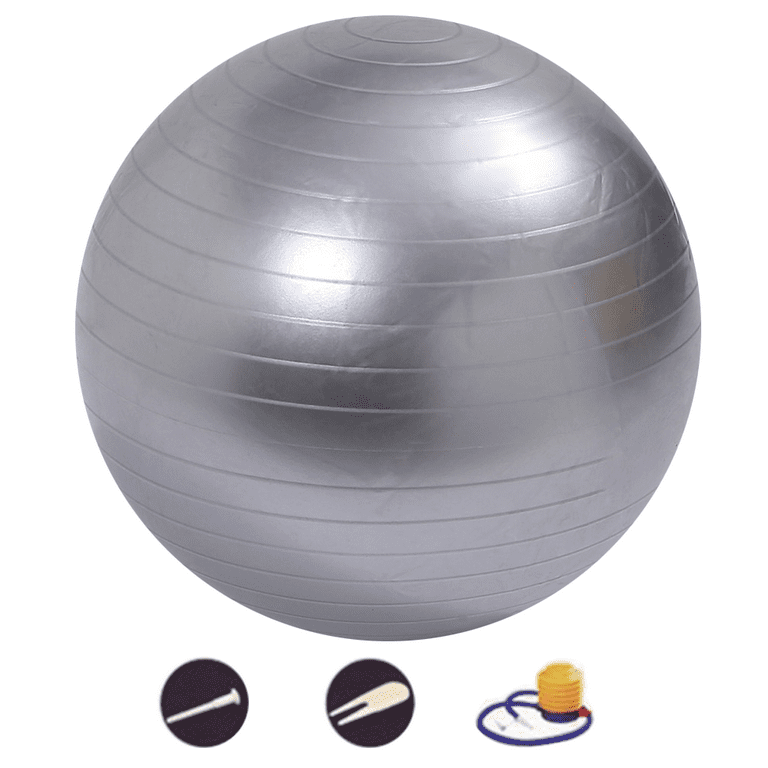
What a balance ball is and how it works
A balance ball is a large, inflatable exercise ball made from durable, elastic material. It creates an unstable surface that forces your body to make tiny adjustments. Those adjustments engage deep stabilizer muscles, especially in the core, hips, and ankles. When you understand this basic idea, you see why a balance ball used for stability training is so effective.

Benefits of using a balance ball
A balance ball used for regular training delivers many gains. Here are the main benefits you can expect:
- Core strengthening Small, constant corrections build deep core muscles for better posture and support.
- Balance and coordination The unstable surface improves proprioception and body awareness.
- Low-impact rehab Gentle loading makes it useful for injury recovery and joint-friendly workouts.
- Posture and spinal alignment Sitting or exercising on a ball trains neutral spine habits.
- Versatility Use it for stretching, strength work, cardio, and desk sitting.
- Functional fitness It helps translate training to real-life movement and sports.
These benefits make a balance ball used for rehab, office posture, and gym programming equally valuable.
Common exercises you can do on a balance ball
A balance ball used for training fits all levels. Try these simple moves and follow the cues.
- Seated balance
- Sit tall on the ball with feet hip-width apart.
- Lift one foot briefly, switch sides. Repeat 10–20 reps per side.
- Ball bridge
- Place heels on the ball, knees bent. Lift hips into a bridge.
- Lower slowly and repeat 10–15 reps.
- Stability ball plank
- Place forearms on the ball, body in a straight line.
- Hold 20–60 seconds, keeping hips steady.
- Hamstring curl
- Lie on your back, heels on the ball. Pull the ball toward you by bending knees and lifting hips.
- Do 8–12 reps.
- Wall squats with ball
- Ball between lower back and wall. Squat to 90 degrees and stand.
- Repeat 12–15 reps.
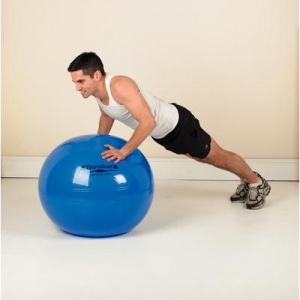
- Push-ups with hands or feet on the ball
- Start with elevated hands for an easier version, progress to feet on the ball for challenge.
Start with low reps and short holds. A balance ball used for dynamic moves should always be introduced slowly.

How to choose the right balance ball
Choosing the right ball makes a big difference. Here’s what to check when you buy:
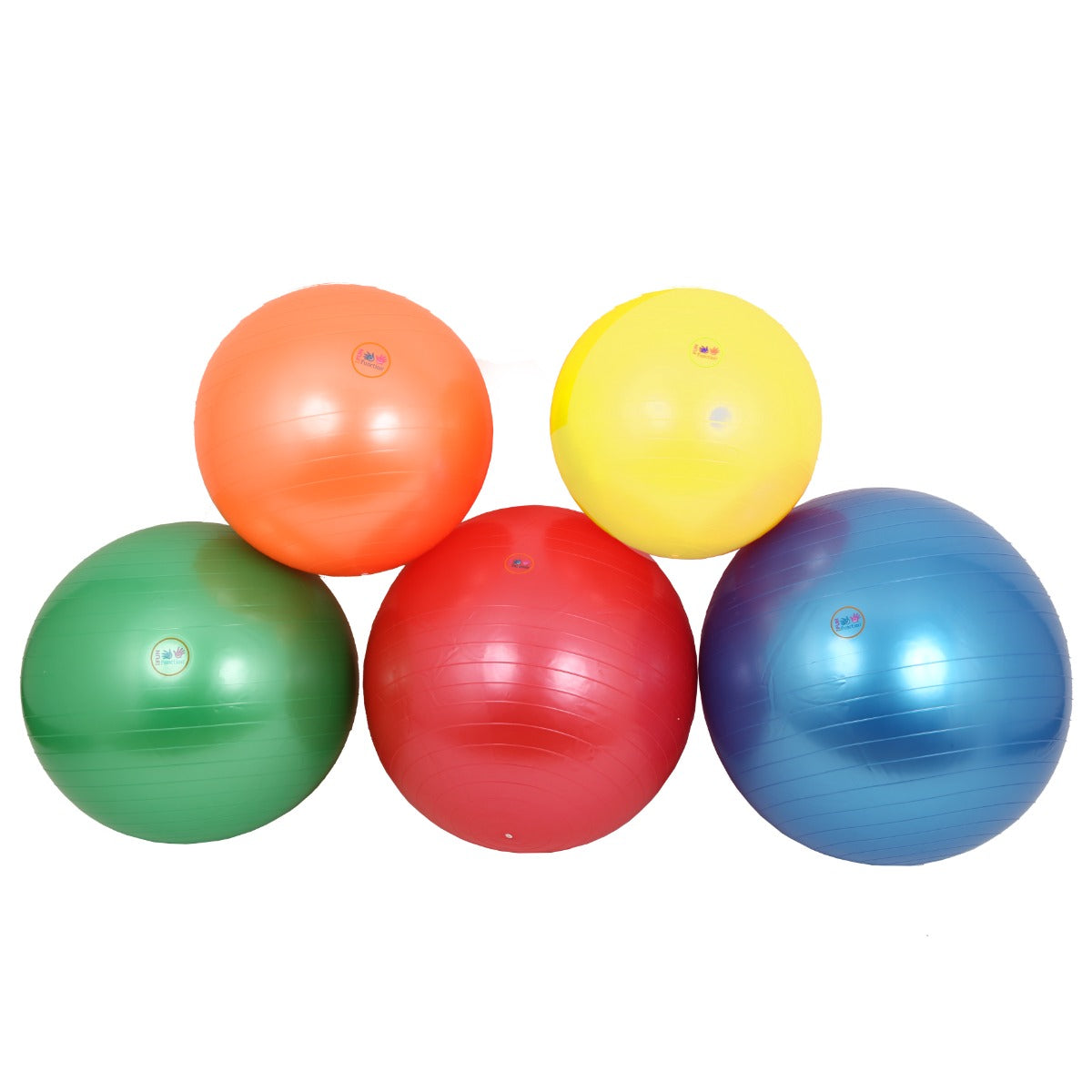
- Size guides Pick 55 cm for people under 5'6", 65 cm for 5'6"–6'0", and 75 cm for taller users.
- Weight capacity Choose a ball rated well above your body weight for durability.
- Material and burst resistance Look for anti-burst material for safety and longevity.
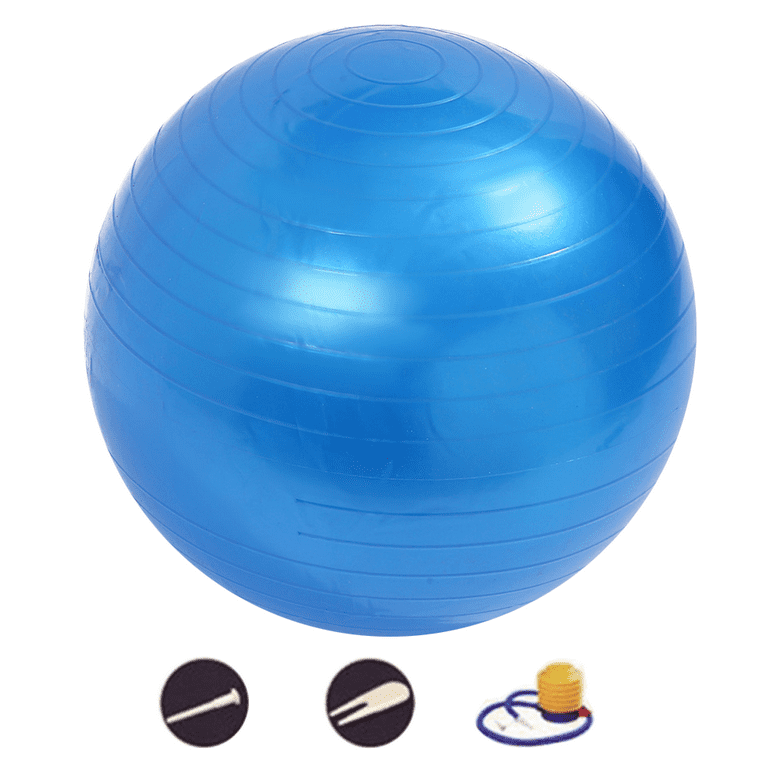
- Pump included A quality pump makes inflation easier and more accurate.
A correctly sized ball ensures your form stays safe and a balance ball used for daily sitting or exercise feels stable.
Safety tips and limitations
A balance ball used for exercise is low risk but requires care. Follow these safety rules:
- Start near a wall or stable surface until you get comfortable.
- Inflate to the correct firmness. Too soft or too hard reduces effectiveness.
- Avoid high-impact moves early on. Progress slowly.
- Consult a healthcare provider if you have recent injuries, vertigo, or certain balance disorders.
- Inspect the ball regularly for tears or wear and replace if damaged.
Also know that a balance ball is not a cure-all. It helps many people, but some conditions require tailored rehab or medical oversight.
Maintenance and storage
Simple upkeep keeps the ball safe and lasting longer. Do this:
- Clean regularly with mild soap and water. Rinse and dry.
- Keep away from sharp objects and direct sunlight for long periods.
- Store partially inflated in a cool place if you won’t use it long-term.
- Re-inflate occasionally to maintain correct pressure.
Good care means your balance ball used for daily workouts will serve you for years.
Personal experience, mistakes to avoid, and practical tips
I’ve trained dozens of clients using a balance ball. Early on I made common mistakes that you can avoid.
- Mistake: Choosing the wrong size. Fix: Measure sitting height and follow size charts.
- Mistake: Progressing too fast. Fix: Build stability for weeks before adding load.
- Tip: Use the ball as an active seat at your desk for 15–30 minutes to improve posture.
- Tip: Combine ball work with strength training for balanced gains.
From my experience, consistency beats intensity. Short, regular sessions with a balance ball used for posture and core work beat sporadic hardcore workouts.

Quick practical questions (PAA-style)
Is a balance ball good for back pain?
Yes. Gentle core strengthening and improved posture often reduce mechanical back pain. Always check with a clinician for specific conditions.
Can I use a balance ball to sit at my desk all day?
Use it intermittently. Aim for 15–30 minute periods to encourage active sitting without fatiguing your back.
How often should I use a balance ball for best results?
Three to five short sessions per week works well. Consistency matters more than long, infrequent sessions.
Frequently Asked Questions
What is the best size for a balance ball?
Choose based on your height: 55 cm for under 5'6", 65 cm for 5'6"–6'0", and 75 cm for taller users. Proper size keeps your knees and hips at safe angles during exercises.
Can children use a balance ball?
Yes, with supervision and an age-appropriate size. Use gentler exercises and ensure the ball has a strong burst-resistance rating.
How long should I hold a stability ball plank?
Start with 20–30 seconds and build up to 60 seconds as you get stronger. Focus on control rather than time.
Will sitting on a balance ball burn a lot of calories?
No, sitting alone burns only slightly more calories than a chair. It improves posture and core engagement but is not a major calorie burner.
Can a balance ball replace a gym?
Not fully. It complements gym training by adding balance and core work. Use it alongside strength and cardio for a balanced routine.
Conclusion
A balance ball used for strength, balance, rehab, and posture is simple and powerful. It gives real improvements when used consistently and safely. Try short, regular sessions. Start with basic moves, pick the right size, and progress slowly. If you enjoyed this guide, leave a comment with your questions, subscribe for more practical tips, or try one ball exercise today and track how your balance improves.