
Yes — inversion tables can provide short-term relief for some pinched nerves by decompressing the spine.
I have treated people with back and neck pain and tested inversion therapy myself. In this article I explain how inversion tables work, when Can inversion tables help with pinched nerves, what the science says, real risks, and how to use one safely. Read on for clear guidance, practical tips, and honest limits so you can decide if inversion therapy fits your recovery plan.

Today's Exclusive Deals
Limited-time Exclusive Deals. Check current discount on Amazon.
Check Price on Amazon As an Amazon Associate I earn from qualifying purchases.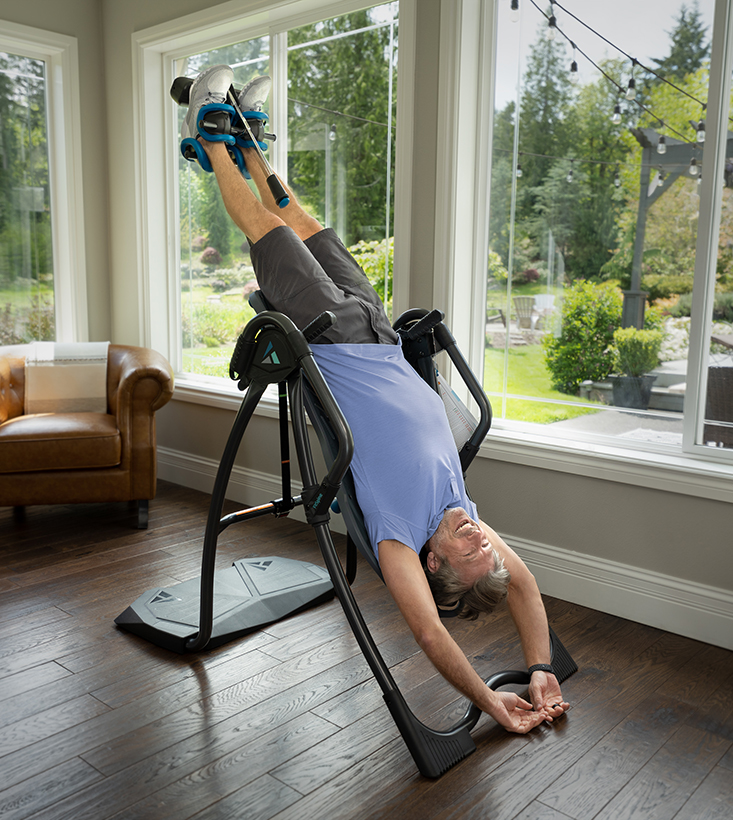
How inversion tables work
Inversion tables flip you upside down or at an angle. This creates gentle spinal traction. Traction can reduce pressure between vertebrae. Less pressure may ease irritation on spinal nerves.
Traction changes the spine by:
- Increasing space between vertebrae for a short time.
- Reducing load on discs and nerve roots.
- Helping fluids move in the disc and soft tissue.
Keep sentences short when you try inversion. Start slow and listen to your body. Many people use low angles first and short sessions.
Can inversion tables help with pinched nerves? A detailed look
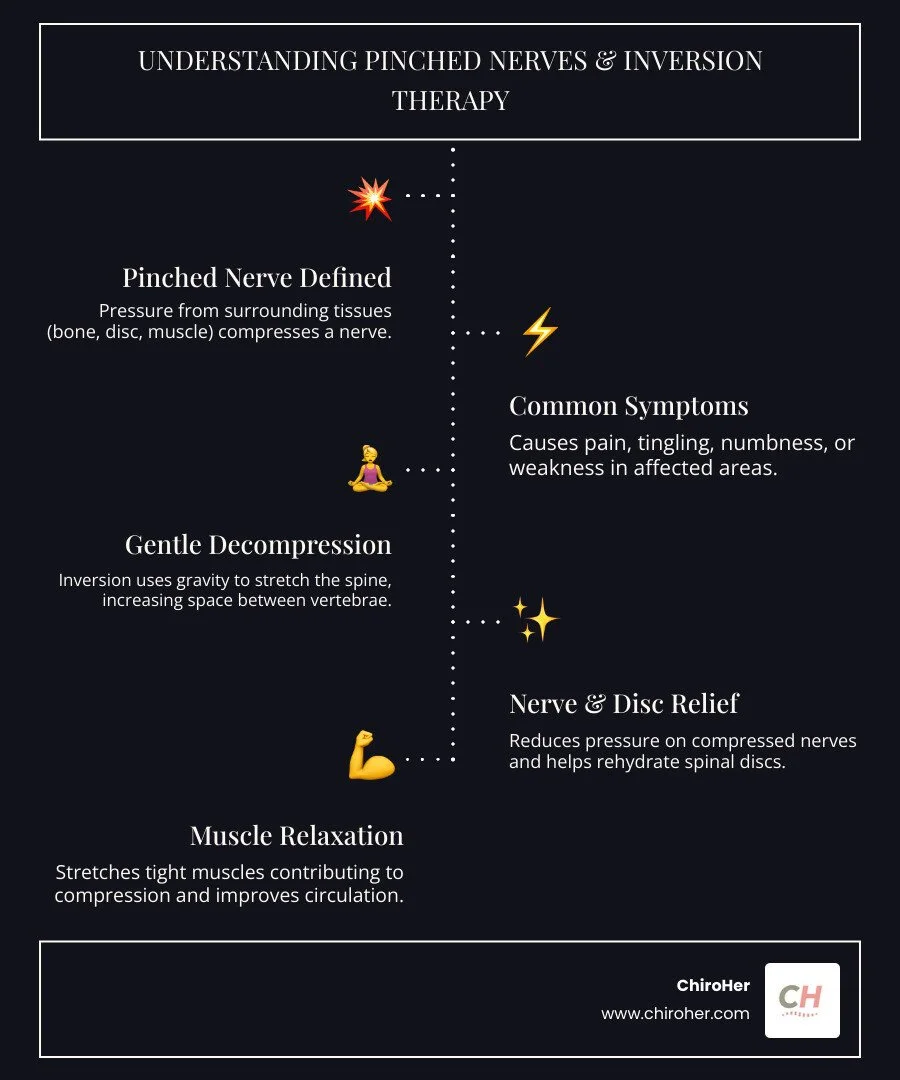
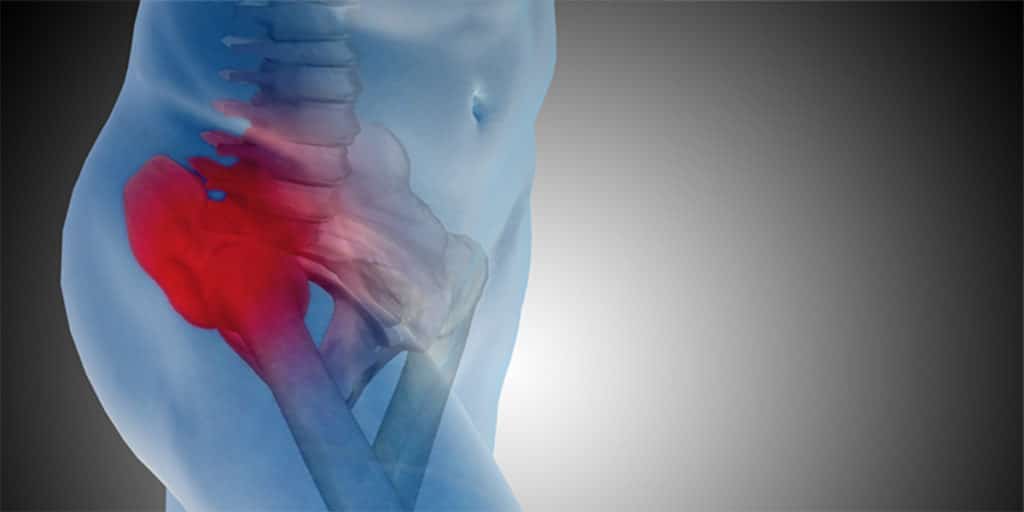
Can inversion tables help with pinched nerves depends on the cause and severity. If a nerve is pinched by a bulging disc or tight facet joint, mild decompression can ease symptoms. If the nerve is compressed by a bone spur or severe herniation, inversion alone may not help.
How inversion tables help with pinched nerves:
- They create temporary spinal decompression that can reduce pressure on irritated nerves.
- They can reduce muscle spasm that worsens nerve pain.
- They may improve blood flow and reduce inflammation locally for a short time.
Limitations to expect:
- Relief is often temporary, lasting hours to days.
- Inversion does not "fix" large structural problems.
- Some conditions get worse with inversion, especially high blood pressure or glaucoma.
Will inversion therapy relieve sciatica? Many people with sciatica get short-term relief from lumbar decompression. Sciatica from a small disc bulge often responds better than sciatica from severe stenosis.
Will inversion tables cure a pinched nerve? They rarely cure a nerve compression permanently. Use inversion as part of a plan that includes exercise, posture work, and medical care.
Benefits and limitations
Benefits of inversion tables for pinched nerves:
- Quick, noninvasive way to reduce nerve pressure temporarily.
- Easy to use at home after simple training.
- Can reduce back and neck muscle tightness.
- May speed short-term symptom relief and improve mobility.
Limitations to keep in mind:
- Evidence for long-term nerve recovery is limited.
- Not suitable for everyone because of blood pressure and eye risks.
- Incorrect use can increase pain or cause dizziness.
- Results vary widely between people.
Use inversion as a tool, not a cure. Combine with exercises and guidance from a clinician when possible.
Risks, contraindications, and when not to use inversion tables
Inversion therapy is not safe for everyone. Common risks include:
- Increased blood pressure and heart rate in some people.
- Worsening eye pressure, risky for glaucoma or retinal issues.
- Dizziness, nausea, or fainting if you invert too fast.
- Increased pain if a structural problem is severe.
Do not use inversion tables if you have:
- Uncontrolled hypertension or heart disease.
- Glaucoma or detached retina risk.
- Recent stroke or inner ear disorders that cause vertigo.
- Pregnancy or severe osteoporosis without medical clearance.
If you have major structural spine issues, consult a specialist first. Always get a medical okay when in doubt.

How to use an inversion table safely for pinched nerves
Follow these steps for safe inversion use:
- Get medical clearance if you have chronic illness.
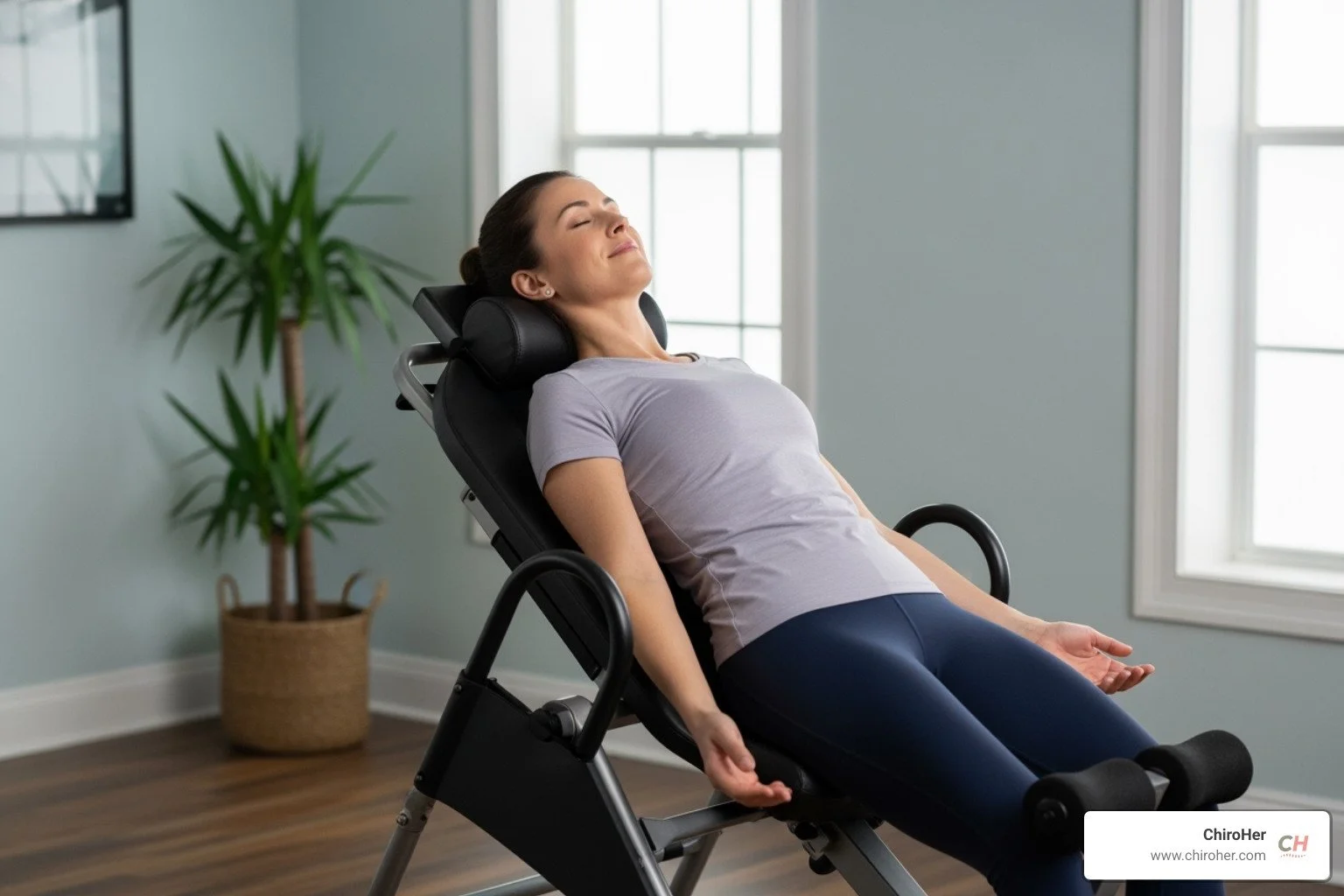
- Start at a low angle, such as 20–30 degrees.
- Limit sessions to 1–2 minutes at first.
- Breathe slowly and stay relaxed.
- Gradually increase angle and time over weeks if well tolerated.
- Combine with core and mobility exercises recommended by a therapist.
- Stop immediately if you feel sharp pain, numbness increase, or dizziness.
Practical tips:
- Use a spotter for the first few sessions.
- Wear comfortable clothing and secure ankle locks properly.
- Keep sessions consistent but brief—too long can cause rebound pain.
Track your symptoms. If pain improves after sessions and overall function gets better, inversion may be helping. If symptoms worsen, stop and consult your provider.
Research, evidence, and expert perspective
Research on inversion and traction shows mixed results. Studies often report short-term pain relief from spinal traction. Long-term benefits are less clear and depend on diagnosis and patient factors.
What the evidence suggests:
- Short-term decompression can reduce nerve root irritation for some people.
- Benefits are usually short-lived unless combined with rehab exercises.
- High-quality long-term trials are limited and show inconsistent outcomes.
Expert view:
- Many clinicians see inversion tables as a low-risk adjunct for selected patients.
- They recommend combining inversion with exercise, posture correction, and weight management.
- Use should be individualized and medically supervised when risks exist.
I have seen patients who reported immediate relief after short inversion sessions. The same patients often needed strengthening and posture work to keep getting better. Use inversion to gain symptom relief and to make rehab exercises easier, not as the sole treatment.

Personal experience and practical lessons
I used an inversion table for mild lumbar nerve irritation after a weekend of heavy lifting. My first session was 90 seconds at 30 degrees. The tightness eased and I could bend more without sharp pain. I learned these lessons:
- Start slow and short. Rushing can cause dizziness.
- Use inversion to reduce pain long enough to do targeted exercises.
- Combine with core work and hip mobility for best results.
- Don’t expect a permanent fix from inversion alone.
Common mistakes I’ve seen:
- Inverting too far or for too long on day one.
- Using inversion without a plan for strengthening and posture.
- Ignoring medical red flags like high blood pressure.
If you try inversion, keep a simple log of angle, time, and symptom change. This helps you and your clinician decide if it’s useful.

Frequently Asked Questions of Can inversion tables help with pinched nerves
Can inversion tables help with sciatica or leg pain from a pinched nerve?
Yes. Many people with lumbar disc-related sciatica report short-term relief due to reduced pressure on the nerve root. Long-term improvement usually requires exercise and rehab.
How long should I invert for a pinched nerve?
Start with 1–2 minutes at a low angle and slowly increase to 5–10 minutes if comfortable. Short, frequent sessions are safer than long single sessions.
Will inversion make a herniated disc worse?
Not usually if used properly and with medical clearance, but inversion can worsen symptoms in people with severe or unstable spine issues. Stop if pain increases.
Are inversion tables safe for older adults with pinched nerves?
They can be, but older adults should get medical clearance, especially with heart disease or osteoporosis. Use gentler angles and shorter times.
Can inversion therapy replace physical therapy for a pinched nerve?
No. Inversion can be a helpful adjunct, but physical therapy provides exercises and education needed for lasting recovery.
Conclusion
Inversion tables can help with short-term relief for some pinched nerves by reducing pressure and easing muscle tightness. They work best as part of a broader plan that includes exercises, posture work, and medical guidance. Start slow, get cleared by your doctor if you have health concerns, and use inversion to make rehab easier rather than as a standalone cure.
Take action today: if you have mild nerve irritation, try a supervised introductory session, keep notes on how you feel, and pair inversion with targeted strengthening. If you found this helpful, leave a comment or subscribe to get more practical guides on safe back care.

