
Baseball vs. softball: it's a question that often comes up when you're looking at team sports, especially if you're trying to figure out which game might be a better fit for you or your kids. While they share a lot of common ground, these two popular sports have distinct differences that impact everything from the equipment used to how the game is played on the field. Understanding these nuances is key to appreciating each sport fully.
At their core, both baseball and softball are about hitting a ball with a bat and scoring by running bases. However, the specifics diverge significantly. For instance, per official rules as of 2026, a regulation softball is larger than a regulation baseball, measuring between 11 and 12 inches in circumference compared to baseball's 9 to 9.25 inches.

Today's Exclusive Deals
Limited-time Exclusive Deals. Check current discount on Amazon.
Check Price on Amazon As an Amazon Associate I earn from qualifying purchases.This fundamental difference ripples through many other aspects of the game. Let's dive into what makes them unique.
Baseball vs. Softball
The main distinction between baseball and softball boils down to the ball size, the pitching style, and the field dimensions. Softball uses a larger ball and underhand pitching, while baseball employs a smaller ball and overhand pitching on a larger field. These core differences shape the strategies, pace, and athleticism required for each sport.
The Core Differences You'll See First
You'll spot the most obvious differences right away when you see a game in action. These aren't subtle; they define the very character of each sport and what you need to know if you're considering playing or just watching.
Ball Size and Feel
This is arguably the most significant visual and tactile difference. Softballs are noticeably larger and feel softer than baseballs.
- Softball: Typically 11 or 12 inches in circumference. They’re designed to be hit with more frequency and can be gripped with a five-finger, palm-up hold by players.
- Baseball: Usually 9 to 9.25 inches in circumference. They have a firmer feel and require a grip that often involves more of the fingertips.

Image source: Web (Bing) / candimension.com (Web image (fair-use with source credit))
This size difference impacts how the ball travels when hit and thrown, and it dictates the size of the bats used.
Pitching: Underhand vs. Overhand
The way the ball gets from the pitcher's hand to the batter is perhaps the most striking contrast.
- Softball Pitching: Uses an underhand motion, often a windmill style, with a distinct arc. The pitcher's arm comes from below their shoulder, creating a unique spin and trajectory.
- Baseball Pitching: Employs overhand pitching, similar to throwing a dart with significant arm speed. This allows for much higher velocity and a wider array of pitch types.
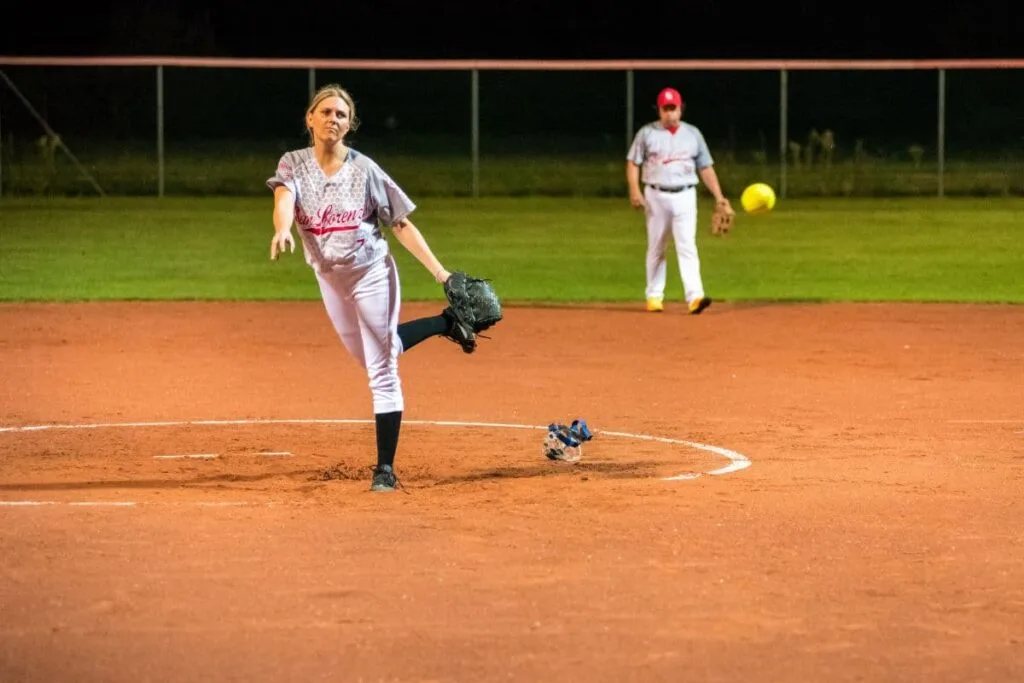
Image source: Web (Bing) / prorecathlete.com (Web image (fair-use with source credit))
The underhand pitch in softball generally results in slower ball speeds compared to baseball, but it can involve significant movement due to spin.
Field Dimensions
The playing surfaces themselves are scaled differently, influencing the game's dynamics.
- Softball Fields: Are generally smaller. The distance from pitcher's mound to home plate is closer, and the base paths are shorter. Outfield fences are also typically nearer the batter's box.
- Baseball Fields: Are significantly larger. This requires more athleticism to cover the outfield and greater power from batters to hit home runs.
This difference in field size means that while both games involve running the bases, the strategic considerations for hitting, fielding, and baserunning are quite distinct.

Image source: Bing (Web (fair-use with source credit))
How These Differences Shape the Game
The fundamental differences in ball size, pitching, and field dimensions don't just change the rules; they fundamentally alter the feel and strategy of baseball and softball. It's not just about playing the same game on a different-sized diamond.
Pace of Play and Strategy
Softball, with its smaller field and underhand pitch, often leads to a faster pace of play. The ball comes in with a pronounced arc, and batters have a shorter reaction time for pitches that can have a lot of movement. This often emphasizes contact hitting, bunting for base hits, and aggressive base running.
You might see more stolen bases and hit-and-runs executed due to the shorter distances.
Baseball, on the other hand, with its larger field and faster overhand pitching, tends to rely more on power hitting and strategic pitching. A baseball pitcher can throw harder and with greater velocity, while batters need more power to drive the ball to the outfield gaps or over the fence. The larger scale of the game also demands more complex defensive positioning and a longer build-up of innings.
Athletic Demands
While both sports require skill and athleticism, the specific demands vary. Softball's underhand pitch and smaller field can make it more accessible for younger players or those who develop coordination differently. The game often highlights quick reflexes and strong arm strength for throwing accurately across shorter distances.
Baseball, with its overhand pitching velocity and larger field, typically emphasizes raw power, speed, and endurance. Pitchers need tremendous arm strength and stamina to throw at high speeds for extended periods. Fielders need to cover more ground, and batters are often judged on their ability to generate significant bat speed and power.
If you're looking to improve your overall conditioning, you might find how often you should deadlift plays a role in building functional strength relevant to both sports' explosive movements.
Who Is Each Sport Best For?
Deciding between baseball and softball often comes down to what you're looking for in a sport, whether it's for personal play, coaching, or simply enjoying as a spectator. Our analysis shows each sport caters to slightly different preferences and developmental stages.
For Young Athletes and Beginners
Softball is frequently a great starting point for younger children and individuals new to bat-and-ball sports. The larger ball is easier to see and make contact with, and the underhand pitch is generally less intimidating than the high velocity of baseball pitching. The smaller field dimensions mean that more plays happen closer to home plate, giving beginners more opportunities to be involved in the action.
This can build confidence and a foundational understanding of game mechanics without the initial steep learning curve sometimes associated with baseball.
For Power and Precision Seekers
If the thrill of raw power, high-velocity pitching, and the strategic depth of a larger field appeals to you, baseball might be the better fit. Baseball is renowned for its emphasis on powerful swings, the intricate art of pitching with varying speeds and movements, and the athleticism required to cover vast outfield spaces. The challenge of hitting a smaller ball with greater speed on a larger field demands a different kind of skill set.
For those focused on building explosive strength, understanding what muscles do deadlifts work offers insight into the types of power development that can translate well to the demands of baseball.
Key Aspects to Consider When Choosing
When you're trying to decide between baseball and softball, or just understand them better, a few specific details really stand out. These aspects aren't just minor rule tweaks; they impact the entire experience of playing the game.
Ball and Bat Technology
The equipment used in baseball and softball is specifically designed to match the ball and the style of play. As mentioned, softball uses a larger ball, and consequently, softball bats are typically shorter and lighter than baseball bats. For example, a common adult softball bat might be 34 inches long and weigh 26 ounces, whereas an adult baseball bat of the same length could weigh 31 ounces or more.
This lighter weight and shorter length make softball bats easier to swing for quicker bat speed, accommodating the underhand pitch and larger ball. Conversely, baseball bats are built to maximize power transfer for hitting a smaller ball over greater distances.
Game Structure: Innings and Timing
The duration and structure of a game are different, which can influence strategic planning and player endurance.
- Softball: Games are typically played in 7 innings. This shorter structure can mean a quicker overall game time.
- Baseball: Games are traditionally 9 innings long. This extended duration allows for more strategic shifts, pitcher changes, and a greater test of stamina for both players and coaches.
This difference in innings impacts how coaches manage their pitching staff and how players need to pace themselves throughout a game. It's a subtle but important factor when comparing the two sports for participation or even just for understanding game flow.
Common Mistakes to Avoid
When you're new to baseball or softball, or even if you've played casually, it's easy to fall into common traps. Understanding these pitfalls can help you improve faster and enjoy the game more.
Misunderstanding Pitching Differences
Many beginners, especially those transitioning between sports, struggle with the distinct pitching styles. Expecting a baseball pitcher to throw like a softball pitcher, or vice versa, leads to missed cues and poor timing. For instance, a batter accustomed to the arc of an underhand softball pitch might be caught off guard by the flat, fast approach of a baseball pitcher.
Conversely, a baseball player might misread the sharp break of a softball pitch thrown with heavy spin.
Inappropriate Equipment Choices
Using the wrong equipment can hinder development and even increase injury risk. A common mistake is using a bat that's too heavy or too long for your size and strength, which impacts your ability to generate bat speed. Similarly, using a baseball glove for softball, or vice versa, can be less effective due to differences in pocket size and lacing.
Always ensure your equipment aligns with the specific sport's requirements.
Ignoring Field Dimension Impacts
Forgetting about the different field sizes is another frequent error. Players might run bases too conservatively on a smaller softball field, missing opportunities for extra bases, or they might try to hit the ball too hard on a large baseball field when a well-placed bunt or ground ball could be more effective. Understanding how much ground you need to cover defensively, or how far you need to hit the ball to reach a base, is critical.
Common Questions About Baseball and Softball
How long does a game typically last?
Softball games usually last around 1.5 to 2 hours, often concluding in 7 innings. Baseball games, being longer at 9 innings, can extend to 2.5 to 3.5 hours or even more, especially with extra innings.
Which sport is considered harder?
"Harder" is subjective and depends on the player's strengths. Baseball generally requires more raw power and arm strength due to faster pitching and larger fields. Softball often emphasizes quicker reaction times, refined bat control, and a different type of athletic finesse.
Can you play both sports?
Absolutely. Many athletes play both baseball and softball, particularly at younger ages, and some even play both at the adult amateur level. Understanding the rules and techniques for one can offer a solid foundation for learning the other, though some adjustments are always needed.
What's the most significant difference for a casual player?
For a casual player, the most immediately noticeable differences are the underhand pitch in softball versus the overhand pitch in baseball, and the size of the ball and bat. These directly affect how you interact with the game as a batter and fielder.

