When it comes to home inversion therapy, two names often rise to the top: the Innova ITX9900 and the Ironman Gravity 1000. Both are popular inversion tables designed to help with back pain, improve flexibility, and support overall spine health. But which one is right for you? Choosing the best inversion table is about more than just looks or price. It’s about your comfort, safety, and long-term results. This guide dives deep into the features, pros, cons, and key differences between these two models, so you can make a confident decision.
What Is An Inversion Table And Why Does It Matter?
Before looking at the ITX9900 and Gravity 1000, let’s clarify what an inversion table is. An inversion table is a device you use to hang upside down or at an angle. This position helps to decompress your spine, relieve pressure on your discs, and may ease back pain.
Today's Exclusive Deals
Limited-time Exclusive Deals. Check current discount on Amazon.
Check Price on Amazon As an Amazon Associate I earn from qualifying purchases.Many people use inversion tables at home for therapy, stretching, or relaxation.
Regular use can improve posture, help with herniated discs, and sometimes reduce the need for painkillers. But not all inversion tables are made the same. Features, comfort, and build quality vary a lot.
Overview: Innova Itx9900 Vs Ironman Gravity 1000
Both the Innova ITX9900 and Ironman Gravity 1000 are designed for home users who want effective, safe inversion therapy. Here’s a quick look at each:
- Innova ITX9900: A modern, feature-rich inversion table with adjustable lumbar support and a sturdy frame. It’s known for extra comfort and customization.
- Ironman Gravity 1000: A classic, no-nonsense inversion table focusing on stability, simple design, and affordability. It’s a favorite for beginners and those who want a straightforward experience.
But how do they really compare? Let’s explore their features in detail.
Design And Build Quality
Innova Itx9900
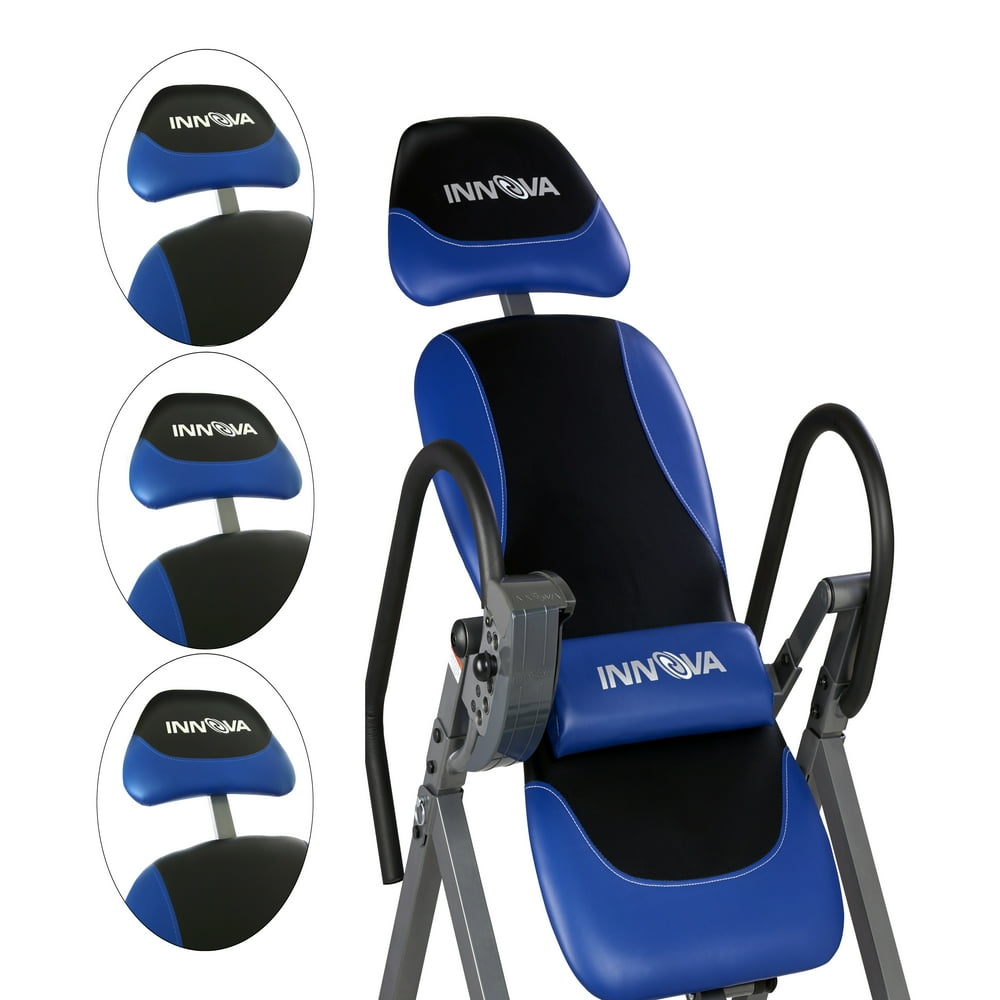
The ITX9900 features a heavy-duty steel frame, which supports users up to 300 pounds. Its standout feature is the adjustable lumbar pad for extra lower back support. The table’s backrest uses thick foam padding, covered with soft vinyl, making it comfortable during longer sessions.
One unique aspect is its six-position adjustable pin system. This system makes changing inversion angles quick and safe, with no need for complicated straps. There’s also a True Balance system that allows you to adjust the headrest and the height, helping you find the perfect center of gravity.
Ironman Gravity 1000
The Gravity 1000 is built with a durable tubular steel frame and supports up to 300 pounds as well. Its backrest is made from tough nylon, which is less cushioned than the ITX9900 but is breathable and easy to clean.
This model uses a safety tether strap to control the inversion angle. Adjusting the angle means manually setting the strap length, which takes a bit more time compared to the ITX9900’s pin system.
Build Quality Comparison
Both models feel sturdy and safe when assembled properly. However, the ITX9900’s extra padding and adjustable lumbar support give it an edge in comfort, especially for people with sensitive backs. The Gravity 1000’s simpler design appeals to users who want less maintenance and easy cleaning.
User Comfort And Support
Backrest And Padding
- ITX9900: Thick foam padding, lumbar support, adjustable headrest.
- Gravity 1000: Nylon backrest, firm support, no lumbar pad.
If you need more cushion or have lower back pain, the ITX9900 is more comfortable. The Gravity 1000 is best for those who prefer firm support or get hot during use.
Ankle Locking System
- ITX9900: Ergonomic ankle holders with a soft foam pad. The holders are easy to adjust, and they feel secure.
- Gravity 1000: Uses standard foam rollers and ankle cushions. They hold you in place, but some users find them less comfortable during long sessions.
A common beginner mistake is ignoring ankle comfort. If you plan to use the table for more than a few minutes at a time, pay attention to the ankle locking system, as uncomfortable holders can cut sessions short.
Adjustability
- ITX9900: Multiple adjustment points for height, inversion angle, headrest, and lumbar pad.
- Gravity 1000: Adjustable for user height and inversion angle (via tether strap), but lacks extra lumbar or head support.
If more customization is important to you, the ITX9900 stands out.
Inversion Mechanism And Safety
Control Of Inversion Angle
- ITX9900: Six-position pin system is easy and quick to use. Simply pull the pin and move it to your desired angle.
- Gravity 1000: Tether strap requires manual adjustment. You set the length before you start, which can be less precise.
Balance And Stability
Both tables have wide, non-slip feet and a stable base. The ITX9900’s True Balance system helps you find a smooth inversion motion, while the Gravity 1000 relies more on your body positioning.
Safety Features
- ITX9900: Safety handles, locking pin, adjustable headrest, and non-slip feet.
- Gravity 1000: Extra-long safety handles, non-slip feet, and a secure frame.
Both are safe when used correctly. Beginners often forget to check that all pins and straps are secured before inverting, which is a key safety step.
Ease Of Use And Assembly
Assembling The Table
- ITX9900: Assembly takes 45–60 minutes for most people. Instructions are clear, but the many adjustments mean more parts.
- Gravity 1000: Simpler assembly, usually 30–45 minutes, with fewer moving pieces.
If you’re not handy, the Gravity 1000 may be easier to set up.
Daily Use
The ITX9900’s pin system makes daily use faster, as you can easily change angles. The Gravity 1000’s strap system is slower but still straightforward once set.
Size, Storage, And Portability
Folded Dimensions
Both tables fold for storage, but neither is truly compact. The ITX9900 measures about 60 x 28 x 60 inches when open, and the Gravity 1000 is similar. When folded, each is roughly half their length, but they may still be bulky for small apartments.
Weight
- ITX9900: Around 60 pounds.
- Gravity 1000: About 46 pounds.
The Gravity 1000 is lighter, making it easier to move around.
Durability And Maintenance
Both inversion tables are built to last, with powder-coated steel frames that resist rust and wear. The ITX9900’s vinyl cover can be wiped clean, but the foam may wear faster with heavy use. The Gravity 1000’s nylon backrest is tough and easy to clean, but can feel rough for some users over time.
A common oversight is not checking bolts and pins every few weeks. Loose parts can make the table unsafe. Make it a habit to inspect your inversion table regularly.
Price And Value
- ITX9900: Usually priced between $180–$250, depending on promotions.
- Gravity 1000: Often found for $150–$200.
Both offer good value, but the ITX9900’s extra features may justify the higher price for some users. If budget is a top concern, the Gravity 1000 is a solid, affordable choice.
Extra Features And Accessories
- ITX9900: Adjustable lumbar support, six-position pin system, ergonomic ankle holders, True Balance system, and safety handles.
- Gravity 1000: Basic inversion, safety handles, nylon backrest.
If you want more comfort or customization, the ITX9900 delivers more for the price. The Gravity 1000 is best for those who need only the basics.

Who Should Choose Each Model?
Innova Itx9900
Best for:
- Users with sensitive backs needing extra lumbar support
- People who want more comfort and adjustability
- Those willing to spend a bit more for extra features
Ironman Gravity 1000
Best for:
- Beginners or budget-focused buyers
- People who prefer simple, low-maintenance equipment
- Users who value lighter weight for easier storage
Real-world User Experiences
Many users report that the ITX9900’s lumbar pad makes a big difference for chronic lower back pain. The easy adjustment options are praised by people with different heights in the same household. However, some find it bulky and harder to store.
The Gravity 1000 is loved for its reliability and simple design. Users appreciate how easy it is to clean, but a few mention discomfort at the ankles during longer sessions.

Key Differences At A Glance
Here’s a side-by-side comparison for quick reference:
| Feature | Innova ITX9900 | Ironman Gravity 1000 |
|---|---|---|
| Frame Material | Steel, powder-coated | Tubular steel, powder-coated |
| Weight Capacity | 300 lbs | 300 lbs |
| Backrest | Thick foam, vinyl cover | Nylon, firm |
| Angle Adjustment | Six-position pin system | Manual tether strap |
| Ankle Holders | Ergonomic, foam padded | Foam rollers & cushions |
| Extra Support | Adjustable lumbar pad | None |
| Price Range | $180–$250 | $150–$200 |
| Weight | ~60 lbs | ~46 lbs |
Detailed Feature Comparison
Comfort And Support
The adjustable lumbar support on the ITX9900 sets it apart for users with chronic pain. The thicker padding also allows for longer, more comfortable sessions. The Gravity 1000 is functional but may not be as comfortable for users with existing back issues.
Inversion Angle And Control
The pin system on the ITX9900 allows for quick changes between sessions, ideal for multiple users. The Gravity 1000’s manual strap is slower but just as safe if set correctly. For families or groups, the ITX9900 is more convenient.
Storage And Space
Both inversion tables require some space. They fold, but are not as compact as some people hope. If you need to move the table often, the lighter Gravity 1000 is easier to handle.
Durability
Both models hold up well over time. The nylon backrest on the Gravity 1000 will show less wear than foam, but the ITX9900’s extra features are worth the extra care.
User Mistakes To Avoid
- Ignoring ankle comfort: Uncomfortable holders can cut sessions short.
- Not checking safety features: Always secure pins and straps before use.
- Skipping maintenance: Loose bolts or worn pads can be dangerous.
- Overestimating storage space: Both models are bulky, even when folded.
- Choosing the wrong model for your needs: Extra features aren’t always better if you won’t use them.
Data Table: Technical Specifications
For those who like specifics, here are some technical details:
| Specification | Innova ITX9900 | Ironman Gravity 1000 |
|---|---|---|
| Max User Height | 4’10″–6’6″ | 4’10″–6’6″ |
| Open Dimensions (L x W x H) | 60″ x 28″ x 60″ | 49″ x 26″ x 65″ |
| Folded Dimensions | Foldable, not flat | Foldable, not flat |
| Assembly Time | 45–60 mins | 30–45 mins |
| Warranty | 1 year limited | 1 year limited |
Which Inversion Table Should You Buy?
If you want more comfort, adjustability, and extra lumbar support, the Innova ITX9900 is the better choice. It’s ideal for people with chronic back pain, families with multiple users, or those who want a more feature-rich table.
If you prefer a basic, affordable, and lighter inversion table, the Ironman Gravity 1000 is perfect. It’s easy to use, easy to move, and offers all the essentials for safe inversion therapy.
To learn more about inversion therapy and its benefits, check out the Wikipedia page on inversion therapy.
Frequently Asked Questions
What Is The Main Difference Between The Innova Itx9900 And Ironman Gravity 1000?
The biggest differences are in comfort and adjustability. The ITX9900 has more padding, an adjustable lumbar pad, and a quick-adjust pin system for angles. The Gravity 1000 is simpler, with a basic nylon backrest and manual strap for inversion angle.
Is One Table Safer Than The Other?
Both tables are safe when used as directed. The ITX9900’s pin system may feel more secure to some users, while the Gravity 1000’s longer safety handles help with control. Always check that all parts are locked before inverting.
How Much Space Do These Inversion Tables Need?
Both need a dedicated space when open—about 5 feet by 2. 5 feet. When folded, they are still bulky and not flat enough to slide under most beds. Make sure you have enough room before buying.
Can Beginners Use These Inversion Tables Easily?
Yes, both models are suitable for beginners. The ITX9900 may be easier for new users due to its pin system and extra padding. Just start with short sessions (1–2 minutes) and increase gradually.
How Do I Maintain My Inversion Table?
Check bolts, pins, and straps every few weeks. Wipe down surfaces after use. Replace foam or pads if they show signs of wear. Proper maintenance keeps your table safe and comfortable for years.
Choosing between the Innova ITX9900 and Ironman Gravity 1000 comes down to your needs, comfort preferences, and budget. Both are solid options for home inversion therapy—select the one that fits your lifestyle best, and you’ll be on your way to better spine health.