Image source: Bing (Web (fair-use with source credit))

Today's Exclusive Deals
Limited-time Exclusive Deals. Check current discount on Amazon.
Check Price on Amazon As an Amazon Associate I earn from qualifying purchases.So, how long does a scuba diving tank last? That's the million-dollar question for anyone dipping their toes into the underwater world, and the honest answer is: it really depends! It's not just about the tank itself, but a whole mix of factors you control as a diver.
Think of it like fuel in a car; your breathing rate, how deep you go, and even how much you're moving all play a massive role. As of 2026, manufacturer specifications for common recreational tanks, like an 80 cubic foot cylinder, show they hold a specific volume, but how quickly that volume is depleted is where the real dive planning comes in.
Quick Answer
Your scuba tank's duration hinges on depth, exertion, and your breathing. A standard 80 cubic foot tank might last 30-60 minutes. Deeper dives and higher exertion dramatically reduce this time.
Relaxed, shallow dives with controlled breathing maximize your bottom time.
The Key Players: What Eats Up Your Air Underwater
Your scuba tank, often called a cylinder, holds a finite amount of compressed air. Your goal as a diver is to manage this precious resource effectively. Several factors constantly influence how quickly that air is used, and understanding them is crucial for safe and enjoyable dives.
Depth: The Biggest Air Guzzler
This is the heavyweight champion of air consumption. As you descend, the pressure of the water surrounding you increases significantly. For every 33 feet (10 meters) you go down, the ambient pressure essentially doubles.
This means the air you inhale from your tank also gets compressed by this external pressure. To effectively breathe, your body needs to match this pressure, so you end up consuming more air from your tank to get the same physiological effect as breathing at the surface.
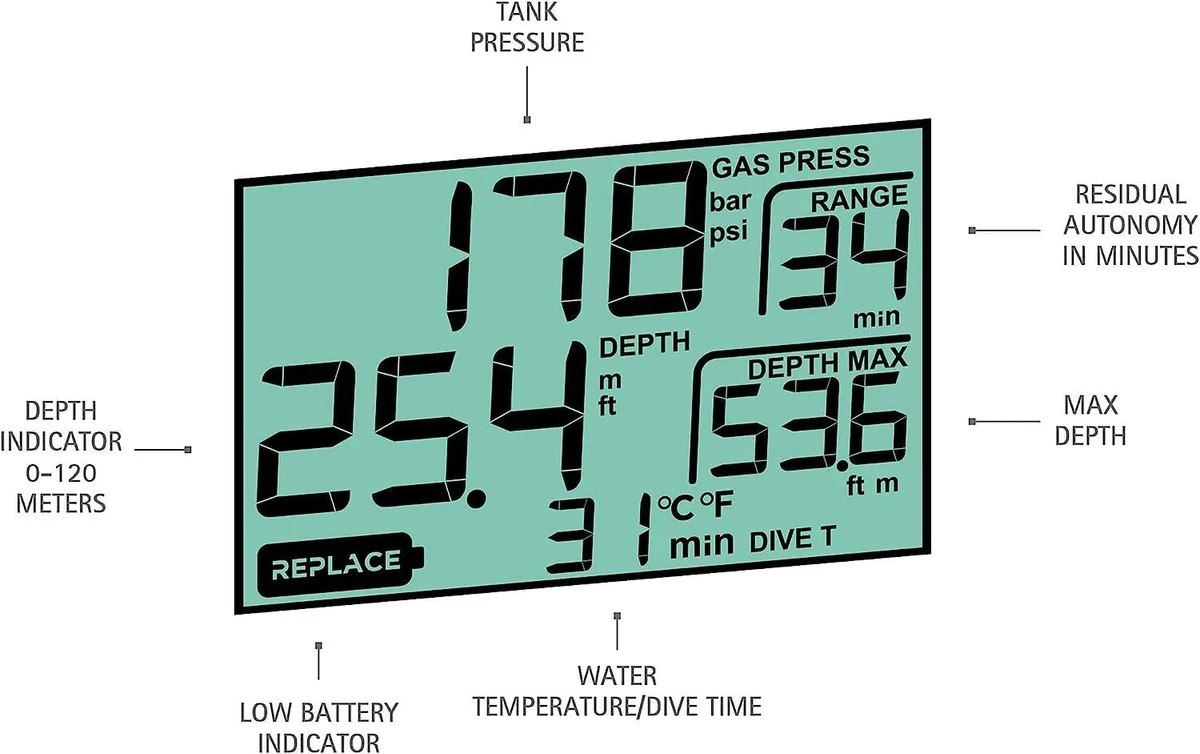
Image source: Bing (Web (fair-use with source credit))
- Surface (0 ft): 1 atmosphere of pressure, normal air consumption.
- 33 ft (10m): 2 atmospheres of pressure, roughly double the air consumption of the surface.
- 66 ft (20m): 3 atmospheres of pressure, roughly triple the air consumption.
- 99 ft (30m): 4 atmospheres of pressure, roughly quadruple the air consumption.
This exponential relationship means that a dive to 60 feet will use air much, much faster than a shallow 20-foot dive. Planning your maximum depth is the first step in figuring out your dive time.
Your Pace: Exertion and Air Consumption
Think about when you're really busy or stressed; you tend to breathe harder, right? The same applies underwater. If you're working hard, maybe finning against a strong current, trying to swim up too quickly, or maneuvering around a complex wreck, your heart rate increases, and you'll breathe more rapidly and deeply.
All this extra effort means your body demands more oxygen and expels carbon dioxide faster, leading to a significantly higher rate of air consumption from your tank.
This is why efficient swimming techniques and proper buoyancy control are so important for conserving air. A relaxed diver who glides smoothly through the water will use far less air than someone who is thrashing about. When you're planning a dive, consider the conditions.
If you know there's a strong current, you'll need to factor in that increased air usage.
You: Your Personal Breathing Style
We're all different, and our breathing patterns are no exception. Some people are naturally calm, deep breathers, while others tend to breathe more shallowly and frequently. Your individual physiology, as well as your mental state, plays a huge role in how much air you use.
If you're feeling anxious, excited, or even just a bit cold, your breathing rate can increase automatically.
Becoming a conscious breather is one of the most effective ways to extend your bottom time. Learning to relax, focus on slow, deep inhalations and exhalations, and generally being at ease underwater makes a massive difference. Experienced divers often describe a feeling of "breathing the dive" rather than "fighting the dive," which comes with practice and a good understanding of your own body's responses.
Your comfort level with your gear, like a well-fitting best scuba diving mask for beginners 2026: top picks for easy underwater exploration, can also contribute to a calmer, more controlled breathing pattern.
The Water: Temperature's Impact
Colder water can sneakily increase your air consumption. When you're in chilly conditions, your body has to work harder to maintain its core temperature. This increased metabolic rate means you use more energy, and to fuel that energy production, you breathe more.
You might even find yourself shivering, which is your body's involuntary way of generating heat, and it's a real air drain.
Wearing the appropriate thermal protection, such as a good best scuba diving wetsuit for cold water 2026: top picks reviewed or even a drysuit, helps your body stay comfortable and reduces the amount of energy it needs to expend on staying warm. This, in turn, leads to more relaxed breathing and better air conservation. Properly insulated best scuba diving gloves for comfort and safety in 2026 also help maintain dexterity and comfort in colder dives, indirectly aiding your breathing control.
Your Gear: A Small But Mighty Factor
While depth and your personal physiology are the biggest factors, your gear can also play a role in air consumption. For instance, if your regulator isn't performing optimally or is providing too much resistance, you might find yourself working harder to breathe. Similarly, if your best scuba diving regulator for beginners 2026: top picks reviewed isn't well-maintained, it could lead to increased breathing effort.
A poorly fitting mask that causes leaks can also be a problem. Constantly having to clear water from your mask can be distracting and might lead to more rapid breathing due to minor stress or effort. Even the drag from poorly streamlined gear can contribute to needing more power to move through the water, thus increasing air use.
While these are generally smaller factors compared to depth and exertion, ensuring your equipment is in good working order and properly fitted is always a good practice.
From Numbers to Reality: Typical Dive Times
So, we've talked about all the things that influence how fast you use air. But what does that actually mean for your time underwater? It's not an exact science, but we can give you a ballpark.
For most recreational divers using a standard aluminum 80 cubic foot tank, you can generally expect a bottom time somewhere between 30 to 60 minutes.
However, this range is hugely dependent on those variables we just discussed.
- Shallow, Relaxed Dives: If you're diving in calm, warm waters, staying relatively shallow (say, 30-40 feet), and you're a relaxed diver with good buoyancy control, you could easily hit that 60-minute mark, maybe even a bit more. This is the ideal scenario for maximizing your time exploring a reef or enjoying a gentle drift dive.
- Deeper Dives: When you venture deeper, perhaps to 60-100 feet to explore a wreck or a specific feature, your air consumption will increase noticeably. In these conditions, your bottom time might shrink to the 30-45 minute range. It's a trade-off: more depth means less time, unless you're an incredibly efficient diver or have a larger tank.
- Challenging Conditions: If you add a strong current, cold water, or are feeling a bit stressed, these times can drop even further. A dive to 70 feet in a strong current might see you only getting 25-30 minutes of good bottom time before you need to start thinking about heading up.
Remember, these are just estimates. Your dive computer will provide you with real-time air consumption data and predicted bottom times, which are far more accurate for your specific dive. Your dive buddy's air gauge is also your lifeline; always check on each other.
Having a reliable best scuba diving computer 2026: top picks for safe underwater adventures is paramount for managing these timings.
Real Dive Scenarios: Seeing Air Consumption in Action
To really get a feel for how air consumption works in practice, let's look at a couple of hypothetical dives. These aren't scientific studies, but they paint a realistic picture of how different situations affect your tank pressure.
Case Study 1: The Relaxed Explorer
Meet Alex. Alex is an experienced diver, comfortable in the water and well-practiced with buoyancy control. Today, Alex is planning a dive on a calm reef at around 50 feet.
The water is a pleasant 75°F, and there's barely any current. Alex is using a standard 80 cubic foot aluminum tank.
- Entry and Descent: Alex descends slowly and smoothly, equalizing comfortably.
- Bottom Time: Alex spends the next 45 minutes exploring the reef. Alex drifts along, observing marine life, occasionally finning gently to maintain position or move to a new spot. Breathing is slow and controlled, with no signs of stress. Alex is careful not to ascend too quickly when moving between different points of interest.
- Ascent: Alex begins a slow, controlled ascent with the buddy, maintaining proper buoyancy and taking safety stops as indicated by their dive computer.
- Surface: Upon reaching the boat, Alex's tank pressure reads approximately 700 PSI. This is a healthy reserve, well above the common 500 PSI target for surfacing, allowing for a comfortable margin. Alex's air consumption was efficient due to good technique, suitable depth, and calm conditions.
Case Study 2: The Anxious Newbie
Now, let's look at Jamie. Jamie is relatively new to diving, still getting used to the underwater environment and feeling a bit nervous about the depth. Jamie is diving with a buddy on the same reef, also at 50 feet, with similar water temperature and minimal current.
Jamie also has an 80 cubic foot tank.
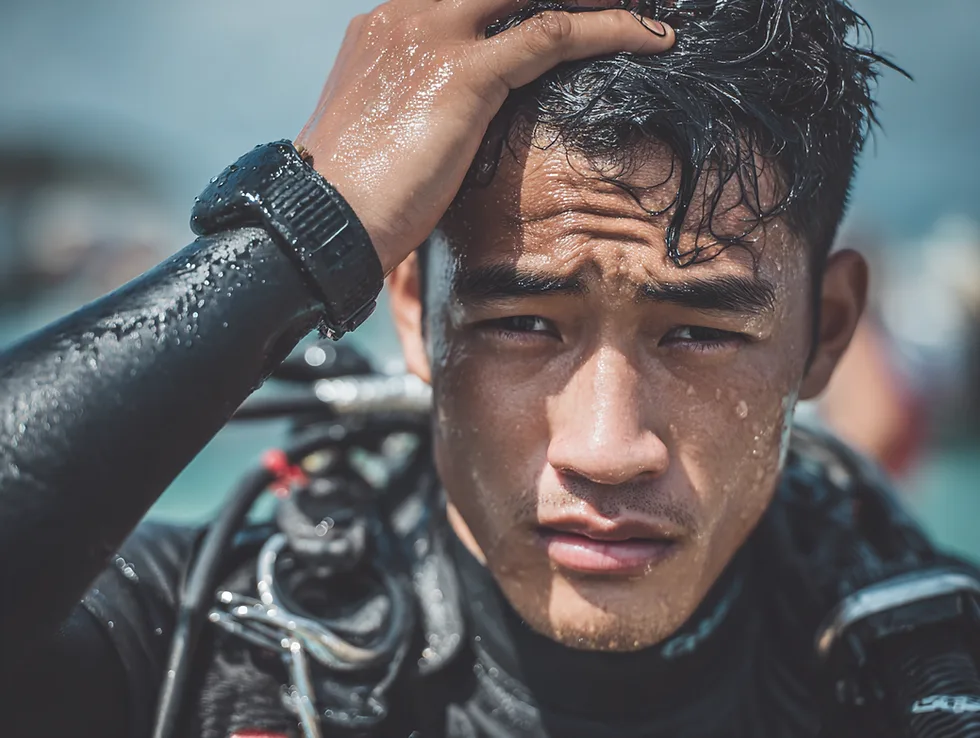
Image source: Web (Bing) / cuddlefishdivers.com (Web image (fair-use with source credit))
- Entry and Descent: Jamie descends a little faster than ideal, feeling a bit pressured to keep up. As Jamie reaches 50 feet, the increased pressure is noticeable, and Jamie finds themselves breathing more deeply to compensate.
- Bottom Time: Jamie stays with the group but finds it hard to relax. Jamie is constantly checking the air gauge, which increases anxiety, leading to faster breathing. When the group encounters a slightly stronger patch of current, Jamie struggles to maintain position, finning harder than necessary. This situation lasts for about 20 minutes.
- Ascent: By the time the group signals for ascent, Jamie's air gauge is looking low. Jamie ascends at the planned rate but feels a sense of relief more than enjoyment.
- Surface: Reaching the boat, Jamie's tank pressure is around 450 PSI. This is uncomfortably low for a planned surfacing and indicates a much higher air consumption rate than Alex's, primarily due to anxiety, less efficient breathing, and struggling with the current. This scenario highlights how mental state and exertion can drastically shorten dive times.
Mastering Your Air: Tips for Longer Dives
Want to spend more time exploring the wonders beneath the waves? It's all about smart diving habits that conserve your precious air supply. Mastering these techniques will not only extend your bottom time but also make your dives safer and more enjoyable.
Dive Planning Essentials
Effective planning is the bedrock of any good dive, and air management starts long before you hit the water.
- Know Your Tank: Understand the volume of your cylinder. While an 80 cubic foot tank is common, you might use smaller or larger ones depending on your certification level and the dive conditions.
- Discuss Your Dive: Before entering the water, always discuss your dive plan with your buddy. Agree on your maximum depth, the approximate bottom time you're aiming for, and your minimum surface air pressure. This ensures you're both on the same page regarding safety margins.
- Consider Conditions: Factor in currents, water temperature, and visibility. If conditions are challenging, plan for shorter bottom times and higher air consumption. You might opt for a shallower dive or prepare to surface sooner.
Using Your Dive Computer Wisely
Your dive computer is your most valuable tool for real-time air management. It's not just for tracking depth; it continuously calculates your air consumption rate and predicts how much longer you can stay underwater.
- Monitor Your Gauge: Regularly check your dive computer's air gauge and the predicted no-decompression limit (NDL).
- Understand Your Consumption: Most dive computers show your current air consumption rate in PSI per minute. This helps you gauge how efficient you're being. If your rate is higher than you'd like, adjust your breathing and exertion.
- Set Alarms: Many computers allow you to set air supply alarms, alerting you when you reach a pre-determined reserve pressure. This is a crucial safety feature. A reliable best scuba diving computer 2026: top picks for safe underwater adventures is an investment in both safety and dive enjoyment.
The Power of Buoyancy Control
Excellent buoyancy control is directly linked to efficient air consumption. When you can hover effortlessly in the water column, you're not expending energy fighting gravity or sinking unintentionally.
- Master Your Buoyancy: Practice makes perfect. Work on achieving neutral buoyancy where you neither sink nor float upwards without using your breath. This conserves energy and air.
- Minimize Finning: Good buoyancy means you need to fin less. Avoid excessive or hard finning, which burns air quickly. Smooth, controlled movements are key.
- Streamline Your Gear: Ensure your equipment is properly weighted and streamlined. This reduces drag and makes it easier to maintain your position, further conserving energy and air. Proper weighting is often achieved with a reliable best scuba diving weight belt 2026: top picks for every diver.
Safety First: Managing Your Air Reserves
Running out of air underwater is one of the most critical risks in scuba diving, and it’s entirely preventable with proper management. It’s not about having a super-long bottom time; it's about ensuring you always have enough air to ascend safely. This means adhering to established safety margins.
- The 500 PSI Rule: A widely accepted guideline in recreational diving is to surface with at least 500 PSI (pounds per square inch) of air remaining in your tank. This reserve ensures you have enough air for a controlled ascent, especially if you encounter unexpected conditions or need to make a safety stop. Your dive computer will track your tank pressure, but always keep an eye on your submersible pressure gauge (SPG).
- Buddy Breathing: Never dive alone. Your buddy is your lifeline. Regularly check your buddy's air gauge and allow them to check yours. If one of you is running low, you can share air from one tank for a controlled ascent. This is a basic skill practiced during diver training.
- Ascent Rate: Ascending too quickly can be dangerous, leading to decompression sickness (the bends). Most dive computers will alert you if your ascent rate is too fast. Aim for a slow, controlled ascent, generally no faster than 30 feet per minute. Combine this with a safety stop at 15-20 feet for 3-5 minutes.
Frequently Asked Questions About Scuba Tank Duration
How much air does a typical scuba tank hold?
Standard recreational tanks, like an aluminum 80 cubic foot cylinder, hold approximately 80 cubic feet of air at 3000 PSI. This volume is the starting point for calculating your dive time.
Can I use a bigger tank to stay down longer?
Yes, larger tanks hold more air, which can extend your bottom time. However, they are also heavier and can affect your buoyancy and trim underwater. Larger tanks are often used for deeper dives or by divers with higher air consumption rates.
What's the difference between air and enriched air (Nitrox)?
Nitrox tanks contain a higher percentage of oxygen and less nitrogen than standard air. This allows for longer bottom times at certain depths because it reduces nitrogen absorption. However, Nitrox has depth limits, and using it requires specific certification.
Does breathing faster mean I'll run out of air quicker?
Absolutely. Faster, shallower breathing significantly increases your air consumption rate. Learning to breathe slowly and deeply is one of the most impactful ways to conserve air and extend your dive duration.
Should I worry about my tank being empty?
Worrying can increase anxiety and air consumption. Instead, focus on planning your dives, monitoring your air gauge and dive computer, and communicating with your buddy. Proper training and practice build confidence and reduce the likelihood of running out of air.