
Scuba diving is an adventure that opens up a different world beneath the ocean’s surface. Many people are drawn to the beauty, excitement, and discovery that comes with exploring underwater environments. Yet, not everyone knows what the word “scuba” really means.
It’s a term people use all the time, but its origin and true meaning often go unmentioned. Understanding what “scuba” stands for is more than just learning a fact—it gives you insight into the history, technology, and culture of diving itself.

Today's Exclusive Deals
Limited-time Exclusive Deals. Check current discount on Amazon.
Check Price on Amazon As an Amazon Associate I earn from qualifying purchases.What Does Scuba Stand For?
The word SCUBA is actually an acronym. It stands for Self-Contained Underwater Breathing Apparatus. Each part of this phrase is important and explains the main idea behind scuba diving. Let’s break it down:
- Self-Contained: The diver carries all their equipment. They do not depend on air from the surface.
- Underwater: The activity happens below the water’s surface, often in the ocean, lakes, or rivers.
- Breathing Apparatus: This is the equipment (usually a tank, regulator, and mask) that lets the diver breathe underwater.
The acronym was first used during World War II, when new underwater breathing systems were being developed for military use. Over time, SCUBA became a common word, and now people use “scuba diving” to talk about recreational, professional, and military diving with this kind of equipment.
The Evolution Of Scuba Diving
Scuba diving is more than just a modern sport. Its roots go deep into history, and its technology has evolved with human curiosity and innovation.
Early Attempts To Breathe Underwater
Long before the word scuba existed, people wanted to stay underwater for longer. Ancient divers used hollow reeds as breathing tubes, and by the Renaissance, inventors were experimenting with diving bells—large, air-filled chambers lowered into the sea. These devices gave divers a limited supply of air, but they were not truly “self-contained.”
The Birth Of Modern Scuba
The real breakthrough came in the 1940s, when Jacques Cousteau and engineer Emile Gagnan invented the “Aqua-Lung.” This was the first practical self-contained underwater breathing apparatus. It allowed divers to move freely and breathe comfortably underwater, using a tank of compressed air and a regulator.
By the 1950s, recreational diving clubs started to form. The equipment became safer and more reliable, and the word SCUBA became popular. The U. S. military and NASA also used scuba systems for training and research.
Growth Of Recreational Diving
Today, scuba diving is a popular hobby around the world. Millions of people get certified each year, visiting coral reefs, shipwrecks, and underwater caves. The technology continues to improve, making diving safer and more accessible.
How Does A Scuba System Work?
A scuba system is designed to let you breathe underwater. But how does it actually work? Let’s look at the main parts and their roles.
Main Components Of Scuba
- Cylinder (Tank): This holds compressed air or other breathing gases. Most tanks are made of aluminum or steel.
- Regulator: This device reduces the high pressure of air in the tank to a level you can breathe. It delivers air only when you inhale.
- Buoyancy Control Device (BCD): A vest that you can inflate or deflate to control your position in the water.
- Weight System: Helps you sink and stay at the right depth.
- Mask: Lets you see clearly underwater.
- Fins: Make swimming easier and more efficient.
The Breathing Process
When you breathe in, the regulator gives you air from the tank. When you breathe out, your bubbles rise to the surface. The system is “self-contained” because you carry all your air with you.
Here’s a quick comparison of common tank sizes:
| Tank Size (Liters) | Typical Volume (Cubic Feet) | Average Dive Time (Minutes) |
|---|---|---|
| 10 | 71 | 30-40 |
| 12 | 85 | 40-50 |
| 15 | 100 | 50-60 |
The exact dive time depends on depth, breathing rate, and physical activity.
Why “self-contained” Matters
The word self-contained is crucial. It separates scuba diving from other types of underwater activities, such as snorkeling or using a surface-supplied air system.
- Snorkeling: You breathe through a tube, but your face stays near the surface.
- Surface-Supplied Diving: Air is pumped to the diver through a hose from a boat or platform.
Scuba divers are independent. They can explore freely, without relying on anything at the surface. This freedom is one of the main reasons people love scuba diving.
Common Types Of Scuba Systems
Scuba systems are not all the same. They can be divided into two main categories:
Open-circuit Scuba
This is the most common type. When you breathe out, your used air is released as bubbles. Most recreational divers use open-circuit systems.
Closed-circuit (rebreather)
A rebreather recycles your exhaled air. It removes carbon dioxide and adds oxygen, so you use less gas and make fewer bubbles. Rebreathers are used for special applications, like deep diving or military operations.
Here’s a simple comparison between open-circuit and rebreather systems:
| Feature | Open-Circuit | Rebreather |
|---|---|---|
| Gas Efficiency | Lower | Higher |
| Bubbles Produced | Yes | Few/None |
| Complexity | Simpler | More Complex |
| Maintenance | Less | More |
| Cost | Lower | Higher |
Most new divers start with open-circuit systems because they are easier to use and maintain.
The Impact Of Scuba On Science And Exploration
Scuba diving isn’t just for fun. It has played a huge role in marine science, archaeology, and environmental protection.
Underwater Research
Scientists use scuba to study coral reefs, fish populations, and underwater plants. It allows them to observe animals in their natural habitats. For example, marine biologists can count fish, take samples, and install monitoring equipment.
Archaeology And History
Many ancient shipwrecks and lost cities have been discovered using scuba equipment. Underwater archaeologists explore these sites to learn about human history.
Conservation Efforts
Scuba divers help protect the ocean. They take part in clean-up dives, remove fishing nets, and report illegal activities. Their work helps keep marine environments healthy.
Safety In Scuba Diving
Safety is a big part of scuba diving. The acronym itself reminds divers that they are using a special system to breathe underwater, which requires training and respect for the environment.
Training And Certification
Most divers get certified by organizations like PADI or NAUI. Training includes:
- Understanding the equipment
- Learning underwater communication
- Managing buoyancy
- Emergency procedures
Without proper training, diving can be risky. Beginners sometimes underestimate how important it is to check their gear and monitor their air supply.
Common Mistakes Beginners Make
- Not checking air supply: Running out of air is dangerous and preventable.
- Ignoring dive plans: Always plan your dive and dive your plan.
- Ascending too quickly: This can cause decompression sickness.
- Not equalizing pressure: Failing to do this can hurt your ears or sinuses.
Advanced divers learn to handle special situations, like diving in caves or at night.
Important Terms Related To Scuba
To fully understand what SCUBA stands for, it helps to know a few related terms:
- Regulator: The device that lets you breathe from the tank.
- Buddy System: Always diving with a partner for safety.
- No-Decompression Limit (NDL): The time you can spend at a certain depth without needing special stops on the way up.
- Dive Computer: A device that tracks depth and time to keep you safe.
Learning these terms makes you a safer and more confident diver.

Differences Between Scuba And Other Diving Methods
There are several ways to explore underwater. Here’s a quick overview:
| Method | Air Source | Movement | Common Use |
|---|---|---|---|
| Snorkeling | Surface (tube) | Surface/near-surface | Recreation |
| SCUBA | Carried tank | Free, underwater | Recreation, science |
| Surface-Supplied | Hose from surface | Limited by hose | Commercial, construction |
| Freediving | Breath-hold | Free, underwater | Sport, recreation |
Understanding these differences will help you choose the right method for your needs.
Non-obvious Insights About Scuba
Many beginners focus only on the equipment, but there are deeper lessons:
- Gas Mixtures Matter: Not all tanks contain regular air. Technical divers use special mixes, like Nitrox or Trimix, to go deeper or stay longer. Each mix affects your body differently.
- Buoyancy Is a Skill: Controlling your position in the water is an art. Good buoyancy makes diving safer, protects coral, and helps you use less air.
- Environmental Awareness: Scuba divers can make a big difference. For example, touching corals or stirring up sand can damage fragile environments. Learning to “hover” without touching anything is a key skill.
The Role Of Scuba In Popular Culture
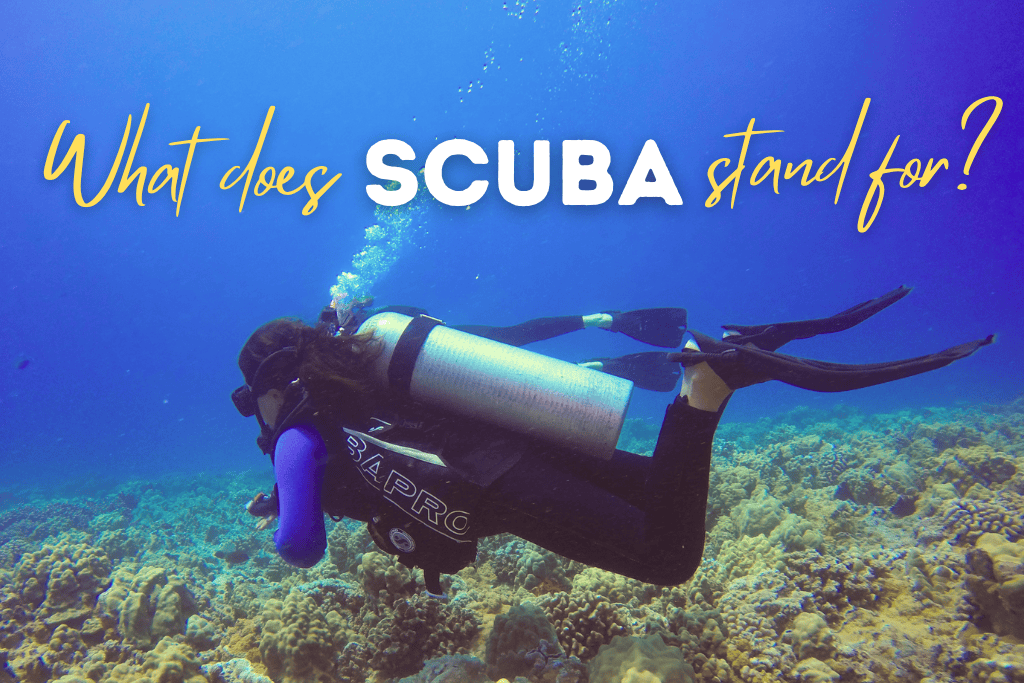
The image of a diver with fins and a tank is popular in movies, books, and travel ads. People dream of visiting places like the Great Barrier Reef or the Blue Hole. Scuba diving has inspired art, fashion, and even video games. Its influence goes far beyond the ocean.
Where To Learn More About Scuba
If you want to go deeper, look for courses from certified organizations. You can also find reliable information online or in diving magazines. For more history and technology details, see the Wikipedia page on scuba sets.
Frequently Asked Questions
What Does Each Letter In Scuba Stand For?
Each letter stands for a word: Self-Contained Underwater Breathing Apparatus. This means you carry your own air and equipment, allowing you to breathe underwater without surface support.
Is Scuba Always Written In Capital Letters?
At first, SCUBA was always in capitals because it is an acronym. Today, many people write it as “scuba. ” Both are correct, but using capitals reminds us that it means something specific.
What Is The Difference Between Scuba Diving And Snorkeling?
Scuba diving uses tanks and lets you go deep underwater. Snorkeling uses a simple tube and keeps your face near the surface. Scuba requires training and special gear; snorkeling does not.
Do You Need A License To Scuba Dive?
You need a certification from an organization like PADI or NAUI to dive safely and rent equipment. Certification involves classroom lessons, pool practice, and open water dives.
Can Children Try Scuba Diving?
Yes, but there are age limits. Most organizations allow children as young as 10 to try diving in shallow water with special programs. Full certification usually starts at age 12 or above.
Scuba diving is much more than a sport—it’s a way to discover a hidden world. Knowing what SCUBA stands for connects you to a long tradition of exploration and adventure. With the right knowledge, training, and respect for the ocean, anyone can enjoy this amazing activity safely and responsibly.

