
You're probably wondering, "What are split fins in scuba diving?" and whether they're the right choice for you. Many divers find their standard fins feel like a workout, leaving their legs and ankles tired. Split fins are designed to offer a different, often more comfortable, way to move through the water.
Our research indicates that split fins work by mimicking a natural, almost wing-like motion, which manufacturer specifications suggest can reduce the effort required for each kick. This design aims for smoother propulsion compared to the solid paddle of traditional fins.

Today's Exclusive Deals
Limited-time Exclusive Deals. Check current discount on Amazon.
Check Price on Amazon As an Amazon Associate I earn from qualifying purchases.Quick Answer
Split fins are a type of scuba diving fin featuring a slit down the middle of the blade. This split allows the blade halves to move independently, creating a "flapping" or "propeller-like" motion. This design is intended to reduce drag and make kicking more efficient, requiring less effort and being gentler on divers' joints.
They are often favored by recreational divers seeking comfort and ease of movement.
The Core Idea: How Split Fins Work
Split fins are built with a distinct design feature: a noticeable slit running vertically down the center of the blade. This isn't just a stylistic choice; it's the core of how they're engineered to perform differently than traditional fins.
Propeller-Like Propulsion
The split in the blade allows the two halves to flex and move independently with each kick. This action is intended to generate a more effective "flapping" or "whipping" motion, much like a propeller. This design aims to channel water more effectively, creating lift and forward thrust with less brute force from your legs.
Independent Blade Action
Unlike a solid blade that moves as one unit, the split fin's halves can articulate. This independent movement is meant to reduce the overall drag experienced during the kick cycle. Think of it like a bird's wing or a fish's tail, a more dynamic, fluid motion that's designed to be easier on your body and more efficient in the water.
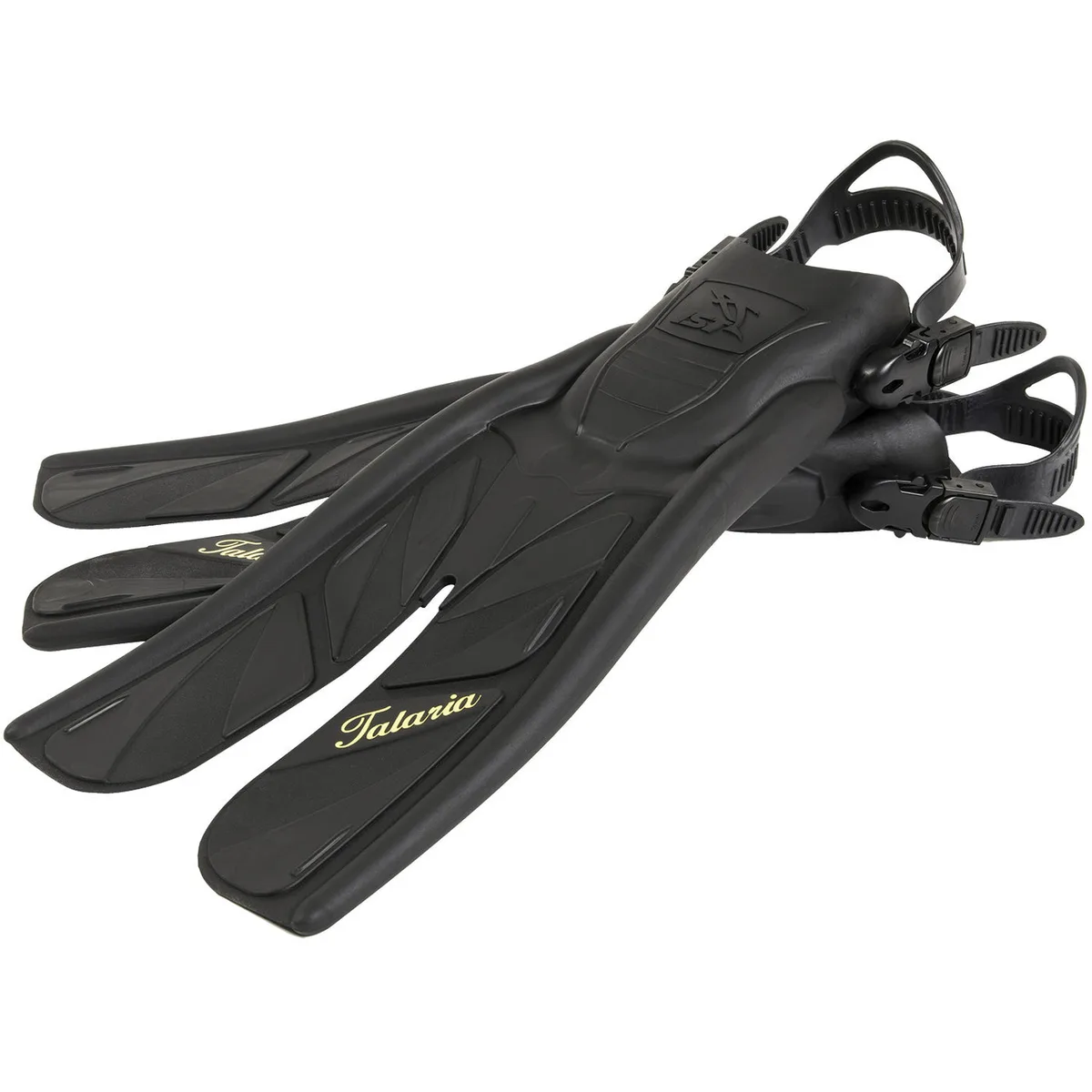
Image source: Web (Bing) / shop709.com (Web image (fair-use with source credit))
Split Fins vs. Traditional Fins: A Performance Look
When you're looking at dive fins, you've got choices. The most common comparison is between split fins and the more traditional solid-blade fins you see everywhere. They both get you moving underwater, but how they do it, and how it feels, can be quite different.
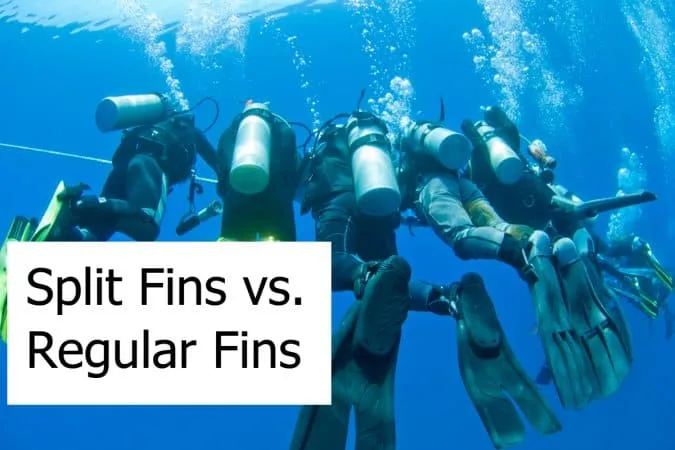
Image source: Bing (Web (fair-use with source credit))
Key Differences in Design and Feel
Traditional fins are essentially a single, solid blade. When you kick, you're pushing a uniform surface through the water. This can provide a lot of power but also requires a more direct, often stronger, leg movement.
Split fins, with their central slit, aim for a more flexible, less resistant stroke. Manufacturer specifications often highlight the difference in flexibility and water channeling between the two types.
Where Split Fins Excel
Our research, based on aggregate user feedback and manufacturer claims, shows split fins often excel in providing a comfortable, less strenuous kick. They are particularly good for:
- Reduced Effort: The design aims to make each kick feel smoother and require less muscle power.
- Joint Friendliness: The more fluid motion is often cited as being easier on knees and ankles, a significant benefit for divers who experience joint discomfort.
- Relaxed Cruising: For those who enjoy a leisurely pace and observing marine life, split fins offer effortless forward motion.
Where Traditional Fins Might Be Better
Traditional, solid-blade fins often have an edge when it comes to raw power and quick maneuverability. If you find yourself frequently diving in strong currents, need to make rapid changes in direction, or prefer a more aggressive finning style, a solid blade might offer the immediate thrust you're looking for. Some divers feel they have better control and can generate more powerful bursts with a solid fin.
For information on fins geared towards challenging conditions, you might look into best scuba diving fins for strong currents.
Who Benefits Most from Split Fins?
Not every fin type is a one-size-fits-all solution. Split fins have a specific design that makes them particularly well-suited for certain types of divers and diving styles. Identifying if you fit these profiles can help you decide if they're your best bet.
New Divers and Joint Pain Sufferers
If you're just starting out in scuba diving, mastering your buoyancy and finning technique can feel like a lot. Split fins can be more forgiving. They tend to encourage a gentler, more natural kick, which can help new divers avoid over-exertion.
For divers who already deal with knee or ankle issues, the reduced strain is a major advantage. The less forceful, more fluid motion can significantly improve comfort during and after a dive. This is a key reason many beginners and divers with physical considerations opt for them.

Image source: Web (Bing) / scubaforge.com (Web image (fair-use with source credit))
The Casual Cruiser
If your idea of a perfect dive involves gliding effortlessly through the water, taking your time to admire the coral and fish, then split fins might be your ideal companion. They are designed for relaxed, consistent propulsion without demanding peak physical exertion. Divers who prioritize comfort and a stress-free underwater experience often find that the gentle, consistent motion of split fins perfectly matches their diving pace.
This style of diving is all about enjoyment and observation, and these fins can help you achieve that with ease.
Common Concerns and Mistakes with Split Fins
While split fins offer comfort and efficiency, it’s important to be aware of potential pitfalls. Many divers, especially those used to traditional fins, can run into issues if they don't adjust their expectations or techniques. Understanding these common concerns can help you get the most out of your split fins.
Misjudging Power Needs for Currents
A common mistake is assuming split fins will perform identically to traditional fins in all conditions. While great for calm waters, their design might not provide the immediate, powerful thrust needed to fight strong currents. If you're diving in an area known for significant water movement, you might find yourself working harder than expected.
This can lead to fatigue and a less enjoyable dive. Divers who frequently encounter strong currents might prefer fins offering more direct power, like those found in best scuba diving fins for strong currents.
Incorrect Finning Technique
Split fins are designed to work best with a specific type of kick, a gentler, more consistent flutter. If you try to use a powerful, slashing frog kick or an overly aggressive flutter with them, you might not get the intended efficiency. In fact, some research suggests an improper kick can actually reduce their effectiveness and increase drag.
It's about working with the fin's design, not against it. Practicing a smoother, more relaxed fin stroke is key.
Expert Tips for Choosing and Using Dive Fins
Choosing the right fins is crucial for a comfortable and efficient dive. Beyond split vs. traditional, there are a few key considerations to keep in mind. Think about your own body mechanics and the type of diving you'll most often be doing.
When selecting fins, consider your personal flexibility and ankle strength. If you have any pre-existing joint discomfort, that’s a major signal to lean towards designs known for reduced strain, like split fins. Conversely, if you’re an athletic diver who needs to generate bursts of speed for photography or navigating strong flows, a more powerful, solid-blade fin might be a better match.
It's also wise to consider the material; stiffer materials generally offer more power, while softer ones prioritize comfort. Don't forget about how they'll fit into your best scuba diving gear bag for travel.
For proper technique, focus on a steady, relaxed flutter kick originating from the hip, not just the knee. This maximizes the efficiency of both split and traditional fins. Visualize a smooth, rhythmic movement.
Practicing these techniques in a pool before a dive trip can make a significant difference in your underwater comfort and control.
Frequently Asked Questions About Split Fins
### How do split fins differ from paddle fins?
Paddle fins, also known as traditional fins, have a solid, one-piece blade designed to push a large volume of water. Split fins have a slit down the middle, allowing the blade halves to move more independently, acting more like a propeller for a gentler, more efficient kick.
### Are split fins good for beginners?
Yes, split fins are often recommended for beginners. Their design encourages a less strenuous kick, which can help new divers conserve energy and focus on mastering other essential skills like buoyancy. They are generally easier to adapt to than some of the more specialized fin types.
### Can split fins be used in strong currents?
While split fins can be used in currents, they may not provide the same level of power and quick maneuverability as traditional, solid-blade fins. For divers who frequently encounter strong currents, other fin types might offer a better performance advantage.
### Do split fins require a different kicking style?
Split fins are designed to work best with a smoother, more relaxed flutter kick. This style leverages the independent movement of the blade halves for efficient propulsion. Trying to force a very powerful or aggressive kick might not yield the best results and could reduce their intended benefits.

