
Balance balls can improve balance and coordination when used correctly and consistently.
As a fitness coach who has built rehab and performance programs around stability tools, I’ll walk you through how balance balls work, what the research says, safe ways to use them, and simple routines you can try today. This article gives practical tips, evidence-based insights, and real-world experience so you can decide if balance balls belong in your training or therapy plan.

Today's Exclusive Deals
Limited-time Exclusive Deals. Check current discount on Amazon.
Check Price on Amazon As an Amazon Associate I earn from qualifying purchases.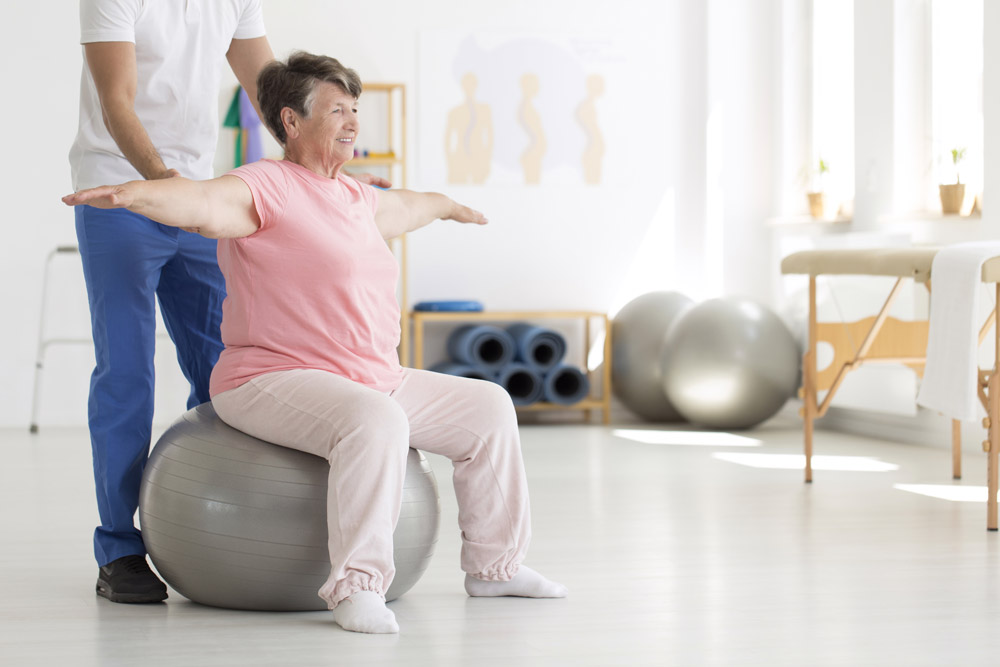
How balance balls improve balance and coordination
Balance balls challenge the body to stay upright on an unstable surface. That instability forces tiny muscles, nerves, and the brain to work together. Over time, this improves proprioception, reaction time, and coordinated movement.
Key mechanisms at work:
- Proprioceptive training increases joint awareness and reflexes.
- Core and stabilizer muscle activation improves posture and limb control.
- Motor learning strengthens neural pathways that link sensation to action.
People often confuse balance with strength. Balance balls target control more than raw power. That means you learn to move smoothly and recover from perturbations. For many athletes and older adults, that skill reduces slips and mistakes during daily tasks.
PAA-style questions
Do balance balls really help balance?
Yes. Using a balance ball trains proprioception and reflexes. Regular practice leads to measurable improvements in stability and coordination.
How long until I see improvement?
Most people notice small gains in 2–4 weeks with consistent practice. Meaningful changes in coordination often take 6–12 weeks of regular training.
Are balance balls better than traditional balance boards?
They serve similar goals but differ in stimulus. Balance balls offer multi-directional instability and are gentler for rehab, while boards give sharper, single-plane challenges.
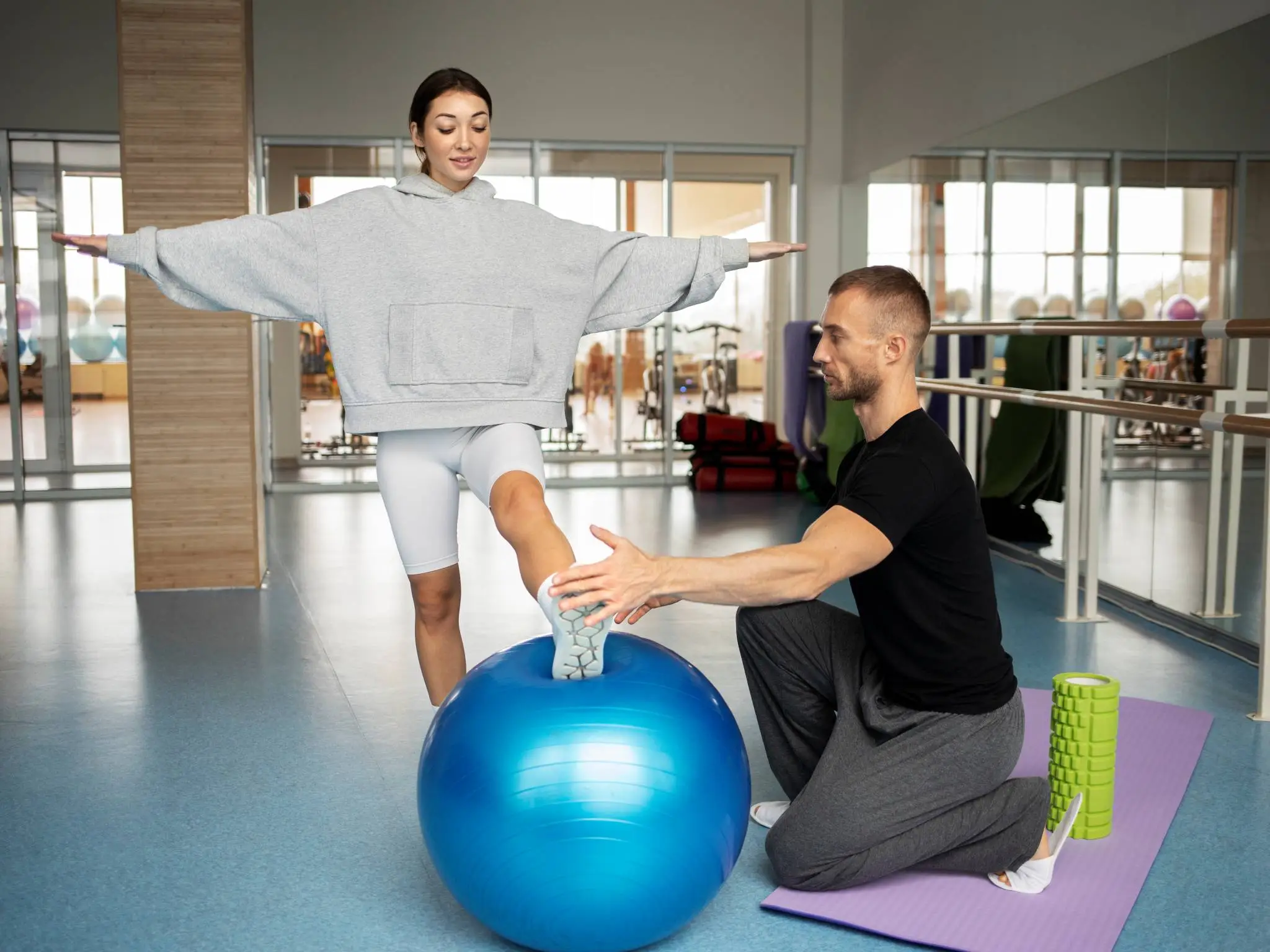
What the research and evidence show
Studies show that balance balls and stability ball training can improve balance, core strength, and functional performance. Effects vary by population, program length, and exercise type.
Evidence highlights:
- Older adults often show reduced fall risk and better gait stability after balance ball programs.
- Athletes can gain improved dynamic balance and core control, which transfers to sport tasks.
- In rehab, balance balls help recover proprioception after ankle or knee injuries.
Limitations in the research:
- Study sizes and methods vary, so effects are not uniform.
- Some improvements are modest and depend on frequency and exercise quality.
- Balance balls are one tool among many; combining methods yields the best results.

Benefits beyond balance and coordination
Using balance balls offers several extra perks that make them worth adding to training routines.
Benefits include:
- Core strength: Constant micro-adjustments recruit deep stabilizers.
- Posture: Sitting and exercising on a ball encourages neutral spine alignment.
- Mobility: Gentle movement on the ball improves joint range without heavy loading.
- Functional carryover: Better control during daily tasks, sports, and work.
- Low equipment cost and high versatility for home workouts.
These gains help athletes, desk workers, seniors, and anyone wanting safer movement. Balance balls are flexible tools that fit many goals.

Practical exercises and progressive routines
Start simple and build complexity. Below are progressive exercises for beginners to intermediate users. Perform sessions 3 times per week for best results.
Beginner (focus on safe control)
- Seated balance: Sit on the ball with feet hip-width apart. Lift one foot 3–5 seconds and switch. Repeat 8–12 times per side.
- Pelvic tilts: Sit tall and rock pelvis forward and back slowly for 10–15 reps.
- Wall squats with ball: Place ball between low back and wall; squat to 45 degrees for 10–15 reps.
Intermediate (add movement and challenges)
- Ball bridges: Lie with heels on the ball and lift hips. Hold 2–3 seconds, 10–15 reps.
- Stir-the-pot: On elbows on the ball, make slow small circles with forearms for 20–30 seconds.
- Single-leg deadlift to ball touch: Balance on one leg and touch the ball with opposite hand. 8–10 reps each side.
Sample 4-week progression
- Week 1: Focus on seated control and breathing, 10–15 minutes per session.
- Week 2: Add simple standing balance and light bridging, 15–20 minutes.
- Week 3: Introduce dynamic moves such as stir-the-pot and single-leg tasks, 20–25 minutes.
- Week 4: Combine core holds with movement and light instability training, 25–30 minutes.
Coaching tips
- Prioritize slow, controlled reps over lots of repetitions.
- Keep breathing steady; breath-holding reduces performance.
- Track progress with simple tests like single-leg balance time or timed sit-to-stand.

Safety, limitations, and common mistakes
Balance balls are low risk but not risk-free. Use safe progressions and know when to pause or modify.
- Start with a stable environment and spotter if needed.
- Avoid high-risk moves if you have severe vestibular, balance disorders, or acute joint instability.
- Inflate the ball to the right firmness; too soft reduces control, too hard reduces shock absorption.
Common mistakes
- Skipping basics and jumping to advanced moves. This increases injury risk.
- Overemphasizing motion speed instead of control.
- Using a ball that is too large or too small for your height.
Limitations
- Balance balls alone cannot fix all balance problems. They work best within a varied program that includes strength, mobility, and sensory training.
- Results depend on consistency, quality of movement, and appropriate challenge level.

Choosing the right balance ball and setup
Select the correct ball size and accessories to get the most from your training.
Sizing guide
- 45 cm ball fits people under 5'0".
- 55 cm ball fits 5'0" to 5'8".
- 65 cm ball fits 5'9" to 6'2".
- 75 cm ball fits people over 6'2".
Accessories and setup tips
- Use a non-slip mat to prevent sliding on hard floors.
- Consider a pump and a repair patch kit.
- For therapy or office use, a balance cushion or half-ball can offer gentler instability.
Set the ball up so your hips and knees form roughly 90-degree angles when seated. This gives a neutral posture for most exercises.

My experience and lessons learned
I’ve programmed balance balls for dozens of clients. I used them in rehabs, office wellness classes, and sports prep. Small, steady steps produced the biggest gains.
Key lessons
- Consistency beats intensity. Short daily practice often works better than sporadic long sessions.
- Combine balance ball work with strength training. Strength builds the capacity to control instability.
- Watch for compensations. People often grip or hold breath; cue relaxed shoulders and steady breath.
A mistake I made early was pushing clients too quickly. That led to frustration rather than progress. Now I emphasize wins that are easy to measure, like longer single-leg balance times or improved ease of daily tasks.
Frequently Asked Questions about Do balance balls improve balance and coordination
Do balance balls help seniors reduce fall risk?
Yes. Regular balance ball exercises can improve proprioception, strength, and stability, all of which reduce fall risk. Programs tailored to seniors show measurable functional gains.
Can beginners use balance balls safely at home?
Absolutely. Start with seated and supported exercises and progress gradually. Use a wall or chair nearby for safety until confidence grows.
How often should I train on a balance ball for best results?
Aim for 2–4 short sessions per week, about 10–30 minutes each. Consistency yields more benefit than occasional long workouts.
Will balance balls improve athletic performance?
They can improve core control and dynamic balance, which helps many sports. For sport-specific gains, pair ball work with skill drills and strength training.
Are balance balls good for back pain?
They can help by encouraging core engagement and better posture. However, consult a healthcare professional for chronic or severe back pain before starting new exercises.
Conclusion
Balance balls are a practical and effective tool to improve balance and coordination when used properly. They enhance proprioception, core stability, and functional control. Combine short, consistent sessions with strength and mobility work for the best results. Try a simple routine this week, track small wins, and scale challenges as your control improves. Leave a comment about your experience, subscribe for more practical guides, or share this article with someone who wants steadier, more confident movement.

