
Deciding between Judo and Brazilian Jiu-Jitsu (BJJ) can feel like a puzzle, especially when you’re just starting out. Both are incredible martial arts focused on grappling, but they offer different experiences and skill sets. Understanding their core differences is key to picking the one that best fits your goals, whether that's self-defense, fitness, or competition.
Our research indicates that while Judo is an Olympic sport with a strong emphasis on throws and takedowns, BJJ focuses more on ground fighting and submission techniques. As of 2026, both continue to grow in popularity worldwide, offering distinct paths for martial arts practitioners. We'll break down what makes each unique so you can make an informed choice.

Today's Exclusive Deals
Limited-time Exclusive Deals. Check current discount on Amazon.
Check Price on Amazon As an Amazon Associate I earn from qualifying purchases.Judo vs Brazilian Jiu-Jitsu
Judo and Brazilian Jiu-Jitsu (BJJ) are distinct grappling martial arts. Judo emphasizes throws and takedowns to get an opponent to the mat. BJJ focuses on ground fighting and submission holds to force a tap-out.
Both build discipline and physical strength.
Judo: Mastering the Art of the Throw
Judo, meaning "gentle way," was founded in Japan by Jigoro Kano in the late 1800s. Kano’s goal was to create a system that fostered physical, mental, and moral development through a safe, competitive sport. The art is heavily built around the principle of seiryoku zen'yo (maximum efficiency, minimum effort) and jita kyoei (mutual welfare and benefit).
At its heart, Judo is about using an opponent's balance and momentum against them to execute a throw.

Image source: Web (Bing) / bjiujitsu.com (Web image (fair-use with source credit))
Judo's Core Philosophy and Techniques
The primary objective in Judo is to throw your opponent onto their back, thereby scoring an ippon (full point) and winning the match. This requires mastering a wide array of dynamic throwing techniques, known as nage-waza. These throws can involve gripping the opponent, breaking their posture and balance, and then using body mechanics to unbalance them and bring them to the mat.
Once on the ground, Judo includes pinning techniques (osaekomi-waza), joint locks (kansetsu-waza), and chokeholds (shime-waza), though the emphasis on these ground submissions is less pronounced than in BJJ, and their use in competition can be restricted by age and rule sets.
Key Attributes of Judo Training
Judo training is physically demanding and highly athletic. Practitioners develop excellent balance, coordination, and explosive power. You’ll spend a significant amount of time drilling throws, which involves falling safely (ukemi) and learning how to execute techniques repeatedly against a resisting partner.
The uniform worn, the judogi, is designed to withstand the strong grips used in throws. Judo is a core Olympic sport, meaning training often has a strong competitive focus. Developing resilience and a disciplined mindset is also a major component of Judo practice, as emphasized by its founder.
Brazilian Jiu-Jitsu (BJJ): Dominating the Ground Game
Brazilian Jiu-Jitsu, often called BJJ, is a martial art and combat sport system that focuses on grappling, specifically ground fighting. Its core principle is that a smaller, weaker person can defend themselves against a larger, stronger attacker by using leverage and proper technique, taking the fight to the ground, and applying joint-locks and chokeholds to submit the opponent. BJJ evolved from Judo, with key modifications made in Brazil by the Gracie family, who heavily emphasized ground techniques and submissions.
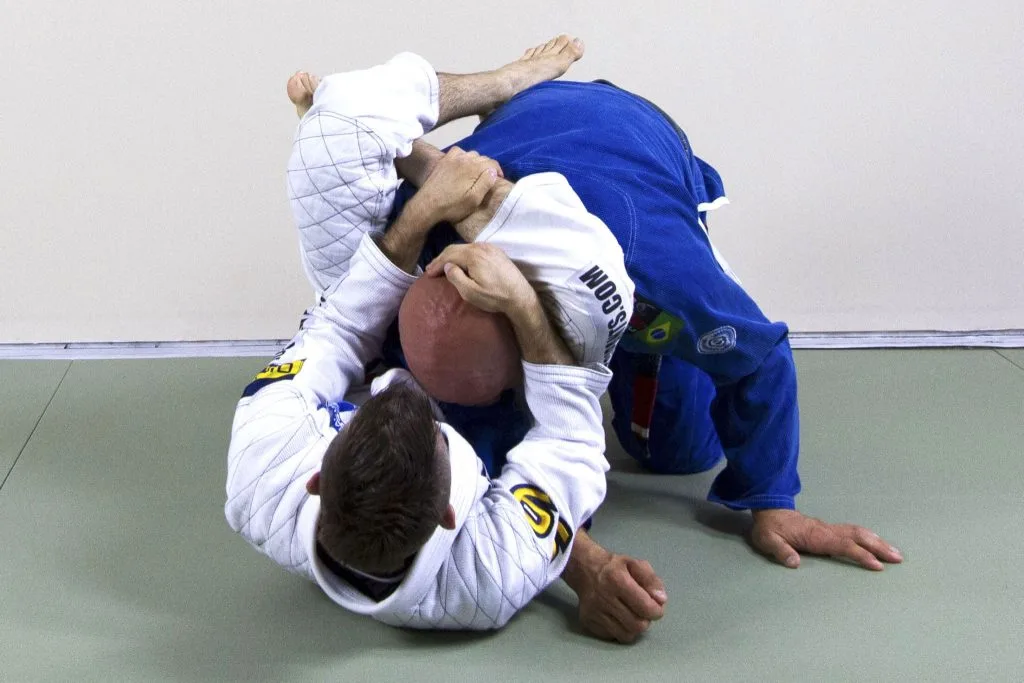
Image source: Web (Bing) / a4fitness.com (Web image (fair-use with source credit))
BJJ's Foundation in Submissions and Control
The ultimate goal in BJJ is to achieve a submission, forcing your opponent to tap out due to pain or the threat of a joint lock or choke. This involves intricate positional control on the ground. Fighters learn to navigate a complex web of techniques to advance their position, from escaping bad situations to achieving dominant pins like the mount or side control.
From these dominant positions, or even from less advantageous ones, practitioners can apply a vast arsenal of joint manipulations, such as armbars and kimuras, and various chokeholds, like the rear-naked choke.
Defining Characteristics of BJJ Practice
BJJ training is often described as a physical chess match due to its strategic depth and problem-solving nature. Sessions, commonly known as "rolling," involve sparring with partners to practice techniques in a live, resisting environment. The uniform, called a gi or kimono, is similar to Judo's but often made of heavier material to withstand the intense grappling and gripping that occurs on the ground.
BJJ practitioners spend a significant amount of time learning to escape bad positions, pass an opponent's guard, and set up submissions. The art places a strong emphasis on the technical details of each movement, making it accessible to a wide range of body types and strengths.
Judo vs. BJJ: A Direct Comparison of Focus and Style
When you look at Judo and Brazilian Jiu-Jitsu side-by-side, the most striking difference is their primary focus. While both are grappling arts and share common roots, their training methodologies and competition rules lead to very different skill sets. Understanding these core differences helps you see who each art might be best suited for.
Standing vs. Ground: Where Each Art Excels
Judo places a massive emphasis on the standing phase of combat. The art is built around the dynamic execution of throws to take an opponent down to the mat, often scoring immediate points or winning the match outright. While Judo does have ground techniques, they are generally used to maintain a dominant position after a throw or to secure a quick submission before an opponent can defend.
BJJ, conversely, is overwhelmingly a ground-fighting art. While BJJ practitioners do learn to take an opponent down (often referred to as "takedowns" or "sweeps" from guard), the real meat of the training is what happens once everyone is on the mat. The strategy revolves around positional control, escaping bad positions, and applying submissions.
For someone whose primary interest is mastering the intricacies of ground combat, BJJ is the clear choice.
Techniques: Throws vs. Submissions
The technical differences are profound. Judo’s hallmark is its extensive repertoire of nage-waza (throwing techniques). These are often explosive movements that require precise timing, balance disruption, and grip fighting.
A skilled Judoka can throw an opponent with significant force using techniques like seoi nage (shoulder throw) or uchi mata (inner thigh throw).

Image source: Web (Bing) / stockcake.com (Web image (fair-use with source credit))
BJJ's technical focus is on katame-waza (grappling techniques), which include positional controls, joint locks, and chokeholds. Instead of the explosive nature of throws, BJJ emphasizes patience, leverage, and the precise application of pressure to manipulate an opponent's body into a vulnerable position. Common BJJ submissions include the armbar, triangle choke, and rear-naked choke.
While Judo teaches these submissions, BJJ drills them to an extreme level of detail and application.
Competition and Sport Aspects
Judo is a well-established Olympic sport, with a standardized set of rules that emphasize dynamic throwing exchanges and quick pins or submissions. Matches are typically shorter, and the emphasis is on decisive actions like throws that land an opponent cleanly on their back.
BJJ also has a robust competition scene, with major organizations like the International Brazilian Jiu-Jitsu Federation (IBJJF) setting rules. BJJ competitions can often last longer, with points awarded for positional advancements. Submissions are the primary way to win, and matches can sometimes end in a draw if no submission occurs within the time limit.
The sport aspect of BJJ is highly focused on strategic grappling and technical execution on the ground, appealing to those who enjoy a more intricate, positional contest.
Who Should Train Judo?
Judo training is a fantastic path for individuals who are drawn to a martial art that is both physically demanding and deeply rooted in tradition. If you appreciate a strong emphasis on athletic movement, explosive power, and the satisfaction of mastering complex throwing techniques, Judo could be an excellent fit. It's also ideal for those looking for a well-established competitive sport with global recognition, as Judo is an Olympic discipline.
Ideal Candidates for Judo Training
People who thrive in Judo often enjoy structured training that builds discipline and resilience. If you have an interest in self-defense that prioritizes quickly neutralizing a threat by taking an opponent down, Judo's focus on throws is highly practical. It’s also well-suited for younger practitioners due to its strong emphasis on character development and respect, as taught by its founder, Jigoro Kano.
The consistent training in safe falling techniques (ukemi) builds a strong foundation for martial arts and can reduce the impact of accidental falls in everyday life.
Who Should Train Brazilian Jiu-Jitsu?
Brazilian Jiu-Jitsu appeals strongly to those who enjoy a cerebral, strategic approach to combat, especially on the ground. If you are fascinated by the idea of solving problems through leverage and technique, or if you’ve ever wanted to learn how a smaller person can effectively control and subdue a larger opponent, BJJ is likely for you. It's a martial art that rewards patience, analytical thinking, and a persistent pursuit of technical mastery.
Ideal Candidates for BJJ Training
Individuals who gravitate towards BJJ often appreciate the depth of its ground-fighting systems. It’s excellent for people who enjoy problem-solving and the intricate details of human biomechanics. For those interested in self-defense, BJJ offers a highly effective system for controlling an aggressive situation on the ground, which is a common scenario in real-world altercations.
The emphasis on continuous learning and adaptation makes it engaging for lifelong practitioners who enjoy a challenge. You can learn to apply techniques effectively as demonstrated in various BJJ competitions like those sanctioned by the IBJJF.
Common Questions About Judo and BJJ
Do Judo and BJJ teach similar takedowns?
Yes, they share many fundamental takedown principles, as BJJ evolved from Judo. Techniques like the Osoto Gari (major outer reaping) or Seoi Nage (shoulder throw) are present in both arts, although their application and emphasis might differ. Judo training focuses heavily on perfecting these throws, while BJJ may use them as a means to get to the ground before transitioning to submission play.
Can I get injured practicing Judo or BJJ?
Like any physical activity, there's a risk of injury in both Judo and BJJ. Common injuries can include sprains, strains, or bruises. In BJJ, joint locks, if not released properly by tapping, carry a risk of ligament damage.
In Judo, improper falling or being thrown incorrectly can lead to more significant injuries. However, experienced instructors prioritize safety, teaching proper techniques for falling and applying submissions, which greatly minimizes risks. Following a structured training regimen, as advocated by organizations like the International Judo Federation (IJF), is crucial for safety.
Is one martial art better for self-defense than the other?
Both Judo and BJJ offer highly effective self-defense applications, but they excel in different areas. Judo's throws can quickly end a confrontation by neutralizing an aggressor or creating distance. BJJ's ground control and submission techniques are invaluable if a fight goes to the ground, allowing a smaller person to neutralize a larger threat.
Many experts suggest that cross-training in both, or at least understanding the principles of each, provides the most comprehensive self-defense skillset.
Making Your Choice: A Final Verdict
Choosing between Judo and Brazilian Jiu-Jitsu ultimately comes down to your personal goals and preferences. If you're drawn to dynamic, athletic movements, the art of the throw, and a rich competitive sporting tradition, Judo is likely the path for you. It builds explosive power and a strong sense of discipline.
If your interest lies in the intricate strategy of ground fighting, the intellectual challenge of submission holds, and a system designed for a smaller person to control a larger one, then Brazilian Jiu-Jitsu might be your ideal match. It fosters incredible patience and problem-solving skills. Ultimately, both arts offer immense physical and mental benefits, and exploring introductory classes at local academies is the best way to feel which one resonates with you more.

