
Getting your deadlift form right is crucial, not just for lifting heavier, but for staying safe and building a resilient body. It's a foundational movement that hits a ton of muscles at once, making it incredibly efficient. But when your form is off, it can quickly lead to frustration and, worse, injuries that sideline you from training altogether.
This guide focuses on diagnosing and fixing common deadlift technique issues. We'll walk you through the key elements, from setup to lockout, and help you understand what good looks like and how to achieve it. As of 2026, many lifters still struggle with consistency; we'll provide clear, actionable steps to help you master this powerful lift.

Today's Exclusive Deals
Limited-time Exclusive Deals. Check current discount on Amazon.
Check Price on Amazon As an Amazon Associate I earn from qualifying purchases.Is Your Deadlift Form Holding You Back? Spotting the Red Flags
If your deadlifts feel awkward, lack power, or leave you with nagging aches, it's a sure sign your form needs attention. Many lifters start with good intentions but develop bad habits without realizing it. These can range from subtle inefficiencies to outright dangerous positions that put your spine and joints at risk.
Identifying these issues is the first step toward a stronger, safer deadlift.
Common Deadlift Mistakes That Lead to Injury
- Rounded Back (Lumbar Flexion): This is perhaps the most critical mistake. Allowing your lower back to round under load puts immense stress on the spinal discs and ligaments.
- Hips Shooting Up Too Fast: If your hips rise much faster than your shoulders, your back ends up doing most of the work, leading to a position where your spine is highly vulnerable.
- Jerking the Bar Off the Floor: A deadlift should be a controlled pull, not a sudden yank. Jerking the weight often means sacrificing form to initiate the movement.
- Inconsistent Bar Path: The barbell should travel in a relatively straight line, close to your body. If it drifts forward or snakes around your knees, you're losing efficiency and increasing risk.
- "Butt Wink" (Pelvic Tilt at Bottom): While more common in squats, a slight pelvic tilt at the very bottom of the deadlift can sometimes indicate mobility issues or improper setup.
The "Why" Behind a Solid Deadlift Foundation
A strong deadlift isn't just about brute strength; it’s about coordinated movement. When your form is dialed in, you create a rigid lever system that allows you to transfer force efficiently from your legs and hips through your torso and up to the bar. This coordinated effort minimizes wasted energy and maximizes your lifting potential.
Think of it as unlocking your body's natural power.
The Deadlift Setup: Your Crucial First Steps
The deadlift starts long before you even break the bar off the floor. Your setup dictates everything that follows. A proper setup ensures your body is in a mechanically advantageous and safe position to lift the weight.
It's about creating tension and stability before you apply force.
Getting Your Stance and Grip Just Right
Your stance is fundamental. For a conventional deadlift, your feet should be about hip-width apart, with your toes pointing slightly outward or straight ahead. Your shins should be close to the bar, but not necessarily touching it hard.
When you grab the bar, your arms should hang straight down, keeping your shoulders directly over the bar or slightly in front of it.
Your grip width will vary depending on your limb length and comfort, but generally, it's just outside your shins. Some lifters use a double overhand grip for lighter weights, transitioning to an alternating (or "hook") grip for heavier loads to prevent the bar from slipping. Mixed grip is very common among powerlifters for maximal lifts.

Image source: Web (Bing) / powerliftingtechnique.com (Web image (fair-use with source credit))
Finding Your Neutral Spine: The Core of Good Form
Maintaining a neutral spine is paramount. This means keeping the natural curves of your spine intact, particularly the lumbar curve in your lower back. Your back should look flat, not rounded or excessively arched.
Imagine squeezing an orange in your glutes without letting your lower back cave in. Keeping your thoracic spine (upper back) packed and braced is also vital.
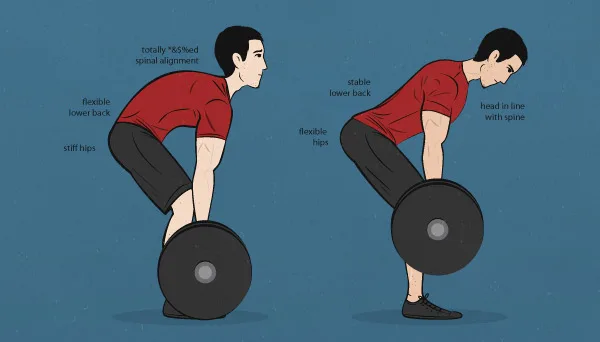
Image source: Web (Bing) / fitnish.com (Web image (fair-use with source credit))
Bracing Like a Pro for Maximum Stability
Before you even think about pulling, you need to brace your core. This isn't just about sucking in your stomach. It involves taking a deep diaphragmatic breath, filling your belly with air, and then tightening your abdominal muscles as if you're about to be punched.
This creates intra-abdominal pressure, which stabilizes your spine and torso, allowing you to generate more force safely. This braced position is what helps maintain that critical neutral spine throughout the lift.
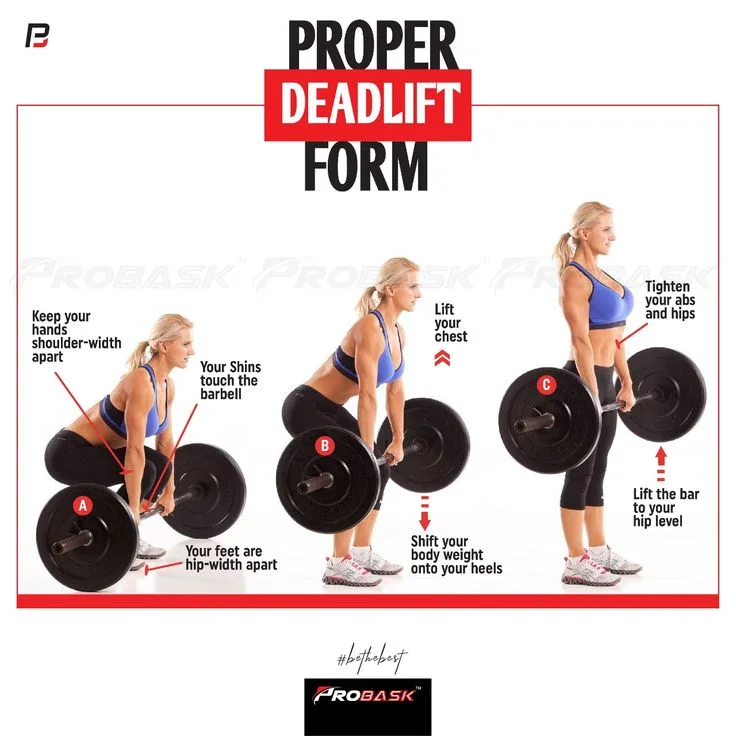
Image source: Web (Bing) / in.pinterest.com (Web image (fair-use with source credit))
The Pull: From Floor to Lockout
Once your setup is solid and you're braced, it's time to move the weight. This phase is all about controlled tension and coordinated movement. Think of it as applying force smoothly and progressively, rather than in one explosive burst.
Engaging Your Legs: That Powerful Drive
The deadlift is often misunderstood as a "back" exercise. While your back is crucial for stability, the primary force generation comes from your legs. Think about pushing the floor away with your feet.
Your quads and hamstrings should engage to straighten your legs. This leg drive initiates the upward movement and helps get the bar off the floor.
Maintaining Bar Path: Keeping It Close and Efficient
As you drive with your legs, your hips will naturally start to rise. The key here is to keep the barbell as close to your body as possible throughout the entire range of motion. Imagine dragging the bar up your shins and thighs.
This minimizes the lever arm, making the lift more efficient and reducing stress on your lower back. The bar should travel in a straight, vertical line.
The Hip Hinge: Mastering the Movement
As the bar clears your knees, your hips will continue to extend. This is where the hip hinge motion really takes over. Think about pushing your hips forward to meet the bar as you stand up.
The movement should be a smooth transition from leg drive to hip extension. Lockout occurs when your hips and knees are fully extended, and you're standing tall with your shoulders back.
Troubleshooting Your Deadlift: When Things Go Wrong
Even with the best intentions, form breakdowns happen. The good news is that most common issues can be identified and corrected with targeted adjustments. Understanding these problems is the first step to fixing them.
Hips Shooting Up Too Fast? Here's the Fix
This common issue often happens because lifters try to pull with their back too early. The solution is to focus more on the leg drive. When you initiate the pull, think about pushing the floor away with your feet, driving your hips forward at the same rate your shoulders rise.
Practice with lighter weights and focus on keeping your hips and shoulders rising in unison. Sometimes, widening your stance slightly can help achieve better hip drive.
If your hips consistently rise faster than your shoulders, it usually means you're not engaging your hamstrings and glutes effectively from the start. Focusing on feeling those muscles work during the initial pull phase can make a big difference.
Is Your Back Rounding? Let's Address That
A rounded back during a deadlift is a major red flag. This typically means you're either starting with your hips too low, or you're not bracing your core effectively. Try starting with your hips slightly higher, about level with your shoulders or just a bit below.
Another key is the bracing technique. Our research indicates that failing to properly fill the diaphragm with air and brace the core creates a lack of rigidity, allowing the spine to flex. Take a deep breath into your belly, hold it, and then initiate the pull.
You can also try exercises like planks and Pallof presses to build core strength and awareness of spinal neutrality.
What to Do About "Butt Wink"
"Butt wink," a slight tucking of the pelvis at the bottom of a lift, can sometimes occur in deadlifts, though it's more prominent in squats. If you experience it, it could be a sign of tight hamstrings or limited hip mobility. Incorporating specific mobility drills for your hips and hamstrings into your warm-up can help.
Additionally, practicing the deadlift with a slightly wider stance might allow for a more upright torso and reduce the likelihood of pelvic tilt.
Deadlift Variations: Are They Helping or Hurting Your Form?
We touched on a few variations earlier, but let's dive deeper into how they can be strategic tools rather than just alternatives. Using variations correctly can iron out weak points, build specific muscle groups, and prepare you for heavier loads. However, misusing them can create bad habits.
Sumo vs. Conventional: Which Suits You?
The conventional deadlift uses a narrower stance, with hands placed just outside the shins. This variation often emphasizes the posterior chain (hamstrings, glutes, lower back). The sumo deadlift, characterized by a much wider stance and hands inside the legs, typically allows for a more upright torso and can be more quad-dominant.
- Conventional is best for: Individuals with longer torsos and shorter arms, or those looking to primarily build posterior chain strength.
- Sumo is best for: Lifters with longer torsos and shorter arms, or those who want to leverage quad strength and maintain a more upright posture.
Both variations require excellent form, but the biomechanics are different. If you're struggling with one, sometimes switching to the other temporarily can highlight underlying issues or build strength that transfers back.
When to Use Trap Bar or Romanian Deadlifts
The trap bar deadlift is a fantastic entry point for newer lifters or those returning from injury. Its unique bar shape allows for a more natural torso angle and reduced stress on the lower back, making it easier to maintain a neutral spine. It's a great tool for learning the hip hinge pattern and building general strength.
Manufacturers often design these bars with safety and ease of use in mind, making them a popular choice in many gyms.
Romanian Deadlifts (RDLs) are less about lifting maximal weight off the floor and more about controlled eccentric loading of the hamstrings and glutes. They're excellent for building strength and hypertrophy in these muscles, which are crucial for a strong deadlift lockout and for preventing hyperextension of the spine. When programming RDLs, focus on feeling the stretch in your hamstrings and controlling the descent.
This variation also helps improve hamstring flexibility and resilience, which can indirectly protect your lower back. Learning how to do Romanian deadlifts effectively is a fantastic way to build supporting muscle. Practicing with lighter weights or dumbbell variations can also be highly effective.
Leveling Up: Advanced Deadlift Form Tips
Once you've got the fundamentals down, it's time to fine-tune your deadlift for maximum strength and efficiency. Advanced tips often focus on subtle adjustments that can make a big difference, especially as the weights get heavier. These aren't about fundamental changes, but about optimizing what you're already doing.
Grip Strategies for Heavier Lifts
As weights increase, your grip will likely become the limiting factor. The standard double overhand grip works well for many, but beyond a certain point, the bar will start to slip. This is where the mixed or alternating grip comes into play.
By having one palm facing forward and the other facing backward, you create opposing forces that help secure the bar. This grip is incredibly effective for lifting maximal loads, though it can sometimes lead to a slight rotation in the spine if not managed carefully.
For those who find even the mixed grip insufficient, or who want to avoid it due to potential imbalances, consider using straps. Lifting straps are fabric loops that wrap around the bar and your wrists, essentially allowing you to hold onto the weight indefinitely. While they're fantastic for ensuring your grip doesn't fail during heavy sets, relying on them too much can hinder your natural grip strength development.
Many lifters use straps only for their heaviest sets or specific accessory work where grip is truly the bottleneck. You can learn more about building raw grip strength through dedicated exercises.
Building a Stronger Posterior Chain with Accessory Work
Your deadlift is only as strong as its weakest link, and for many, that link is the posterior chain, the muscles along the back of your body. This includes your hamstrings, glutes, and lower back. To improve your deadlift, you need to strengthen these muscles directly.
Consider incorporating exercises like:
- Glute-Ham Raises (GHRs): These are fantastic for building hamstring strength and endurance.
- Good Mornings: Performed with a barbell on your back, these mimic the hip hinge and heavily tax the hamstrings and lower back.
- Hip Thrusts: Excellent for developing powerful glutes, which are crucial for hip extension and lockout.
- Back Extensions (Hyperextensions): Focus on controlled movement to strengthen the erector spinae muscles along your spine.
These accessory exercises build the foundational strength that will translate directly into a heavier, more stable deadlift. Consistent training of these muscle groups can significantly improve your overall deadlift numbers and reduce the risk of injury by creating a more robust support system for the spine. If you're looking to increase overall strength, understanding how to combine muscle groups effectively can also be beneficial.
Frequently Asked Questions About Deadlift Form
How often should I practice deadlifts?
For most people, deadlifting once or twice a week is sufficient. Since it's a very taxing exercise, your body needs adequate time to recover. Beginners might even find once a week is plenty to start.
Can I deadlift with dumbbells?
Yes, you absolutely can deadlift with dumbbells. This variation is often more accessible and can be a great way to learn the hip hinge pattern without the complexity of a barbell. Mastering the form with dumbbells can carry over to barbell deadlifts.
How heavy should my deadlifts be when focusing on form?
You should use a weight that allows you to perform 5-8 repetitions with perfect form. If your form breaks down before the last rep, the weight is too heavy for technique work. It's about quality over quantity.
What's the difference between a deadlift and a Romanian deadlift?
In a standard deadlift, the bar starts from the floor and you lift it to a standing position. In a Romanian deadlift, you typically start from the top or step back from a rack and lower the bar, focusing on the stretch in your hamstrings and glutes while keeping your legs mostly straight. RDLs are more about hamstring and glute development.
Is it okay if my shins get scraped during a deadlift?
A little bit of scraping on your shins is normal, especially when starting out with a conventional deadlift. It often means the bar is staying close to your body. However, excessive or painful scraping could indicate your setup or bar path needs adjustment.

