
The barbell deadlift is a powerhouse exercise, capable of building incredible strength and muscle. But if your form isn't dialed in, you're not just leaving gains on the table, you're risking injury. Understanding and correcting what are the most common deadlift mistakes is crucial for anyone looking to lift safely and effectively.
Many lifters, especially those new to the movement, struggle with specific technical breakdowns that compromise both performance and spinal health. For instance, the National Strength and Conditioning Association (NSCA) emphasizes maintaining neutral spinal alignment throughout the lift, a principle violated by many common errors. Let's break down the most frequent pitfalls and how to sidestep them.

Today's Exclusive Deals
Limited-time Exclusive Deals. Check current discount on Amazon.
Check Price on Amazon As an Amazon Associate I earn from qualifying purchases.What Are the Most Common Deadlift Mistakes?
The most common deadlift mistakes involve rounding the lower back, letting the hips rise too fast, and the barbell drifting away from the body. These errors can lead to ineffective lifts and increase the risk of acute injuries or chronic pain. Correcting these issues requires a focus on specific cues and a conscious effort to maintain proper spinal position.
The Most Common Deadlift Mistakes Harming Your Progress (and Your Back)
You’re in the gym, ready to pull some serious weight with the deadlift, that foundational strength movement. You’ve seen the big numbers and know it’s a fantastic tool for building overall power. But then it happens.
You feel that twinge, or maybe the weight just feels awkward, heavy, and uncontrolled. Chances are, you're falling into one of the many common deadlift mistakes that can stall your progress and, more importantly, put your spine at risk. It’s not just about lifting more weight; it’s about lifting it correctly to build strength sustainably.
Our research shows that even slight deviations from optimal form can create undue stress on your musculoskeletal system, particularly your lower back, hips, and shoulders. For example, manufacturer specifications for Olympic barbells typically recommend maintaining controlled movements to prevent damage to the equipment and the lifter. Ignoring these basic biomechanical principles can turn a beneficial exercise into a source of pain and frustration.
This section dives into the most frequent errors we see and how they directly impact your lifting and your long-term health.
Lower Back Rounding: The Big One
This is, without a doubt, the most significant and potentially dangerous deadlift mistake. When your lower back rounds during a deadlift, you're essentially taking the natural curves of your spine and flattening them out, turning your spine into a hinge that's under immense pressure. This often happens because the lifter tries to initiate the pull with their back muscles instead of their legs and hips, or they simply try to lift too much weight too soon.
The thoracic spine can also round, but the lumbar spine is where the most critical damage can occur.
Think about it: your spine is designed to be relatively neutral during heavy lifting to distribute force efficiently. When it rounds, the intervertebral discs bear a disproportionate amount of the load, significantly increasing the risk of disc herniation or other serious back injuries. This isn’t just about aesthetics; it's about structural integrity.
This error often stems from a failure to properly brace the core or a weak posterior chain that can't yet handle the load required to keep the back straight.
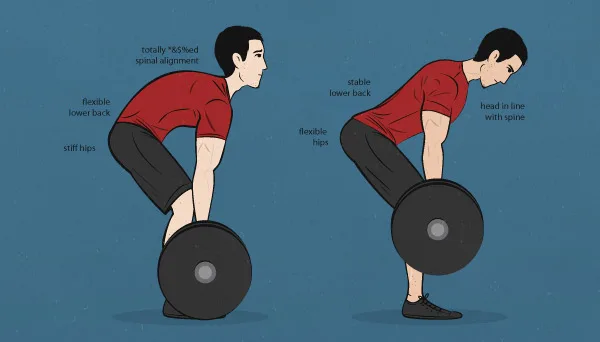
Image source: Web (Bing) / trainingdayhc.com.au (Web image (fair-use with source credit))
Hips Shooting Up Too Fast: What's Happening
Another super common issue is when the hips rise significantly faster than the shoulders during the ascent of the deadlift. This often creates a situation where your torso becomes almost horizontal by the time the bar is mid-shin. What's happening here is that your hamstrings and glutes aren't firing effectively at the start of the lift, or the lifter is trying to use their lower back to initiate the movement.
They're essentially turning the deadlift into more of a stiff-legged deadlift, but with a rounded back to compensate.
This error means you're not using the power of your legs and hips optimally. Instead of a smooth, powerful pull where your legs drive the weight up and your back maintains a stable, neutral position, you end up with a lot of strain on your lower back and shoulders. It becomes a less efficient lift because your body is trying to compensate for weak initial drive from the hips and legs.
It’s a sign that your posterior chain isn’t yet strong enough to handle the load in a balanced way.
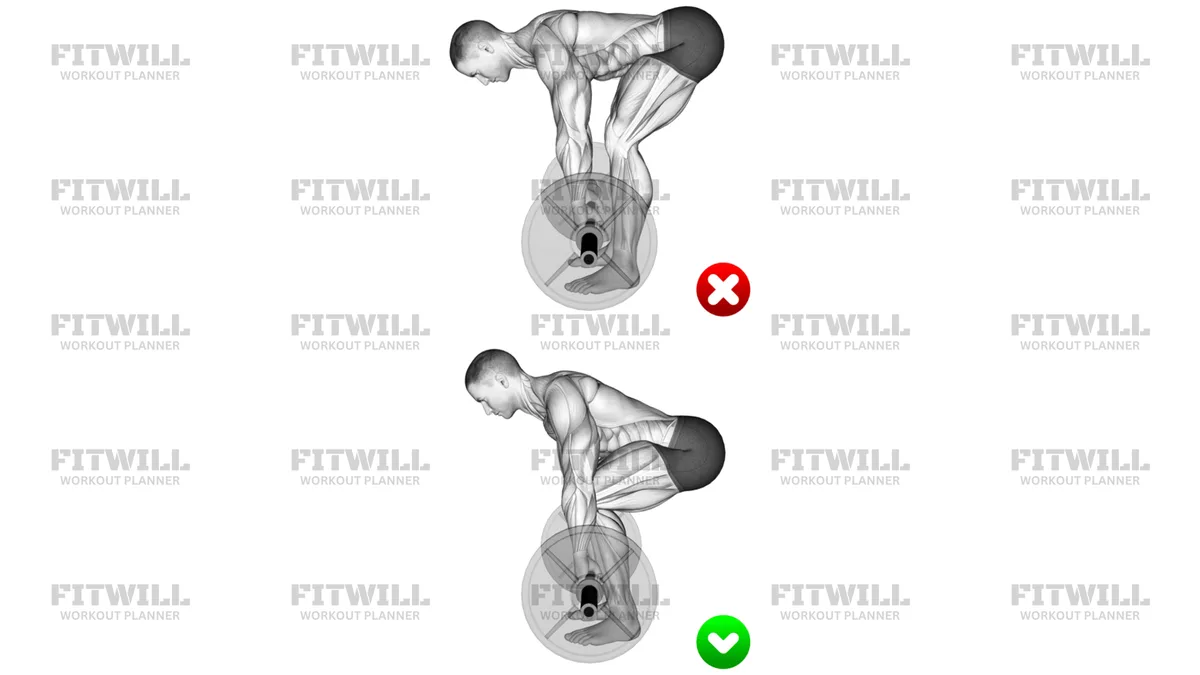
Image source: Web (Bing) / fitwill.app (Web image (fair-use with source credit))
Bar Drifting Away from the Body: Losing Your Line
The ideal bar path in a deadlift is a relatively straight line, or a very slight arc, moving upwards close to your body. When the bar drifts away from your shins and knees as you lift, it creates a much longer lever arm. This means you have to work much harder to pull the weight up, and it dramatically increases the stress on your lower back.
Think of it like trying to lift a heavy object that's a foot away from your body versus right up against it, it's significantly harder and less stable.
This often happens because lifters set up too far away from the bar, or they fail to engage their lats effectively at the start. Engaging your lats means pulling your shoulders back and down, essentially creating tension that pulls the bar into your body. If your lats are slack, the bar has room to wander forward.
It can also occur if you’re not pushing your feet into the floor hard enough, which fails to create the necessary hip drive and forces the arms to do more work. We’ve seen manufacturers like Rogue Fitness emphasize the importance of close bar proximity for optimal power transfer in their equipment designs.
Not Engaging the Glutes and Hamstrings Properly
Your glutes and hamstrings are the engine of the deadlift, especially the lockout phase. A common mistake is failing to actively squeeze your glutes to finish the lift. Instead of driving your hips forward and squeezing your glutes to stand tall, lifters might hyperextend their lower back or simply let their hips fall back slightly at the top.
Similarly, not engaging the hamstrings off the floor contributes to that hip-shooting-up problem we just discussed.
When these muscles aren't firing correctly, you're missing out on massive amounts of power and stability. This forces other, smaller muscles to compensate, often leading to imbalances and increased strain on your spine. A proper deadlift is a full-body effort, and neglecting the powerful muscles of your posterior chain is a surefire way to limit your strength gains and increase your injury risk.
It’s crucial to feel these muscles working throughout the entire range of motion, from breaking the weight off the floor to locking out at the top.
Other Subtle (But Costly) Form Errors
Beyond the big three, rounding the back, hip rise, and bar drift, there are other common deadlift mistakes that might seem less obvious but can still cause problems. One is the "jerking" the weight off the floor. Instead of a controlled pull, some lifters yank the bar upwards, which can lead to momentum overriding proper technique and can be jarring for your spine. Another is failing to properly brace your core; this means not taking a deep diaphragmatic breath and creating intra-abdominal pressure to stabilize your torso.
Without this brace, your spine is much more vulnerable.
We also see issues with grip width and stance width. If your stance is too narrow or too wide, it can compromise your balance and leverage. Similarly, if your grip is too wide, it can force your shoulders into an awkward position. Finally, some lifters struggle with lockout. This is where, at the top of the lift, they don't fully extend their hips and knees, or they hyperextend their lower back to try and "reach" the lockout.
Mastering these finer points is what separates a good deadlift from a great one. It's also worth noting that proper breathing technique is often overlooked, but essential for stability; we've seen breathing guides from institutions like the NSCA highlight its importance for core engagement.
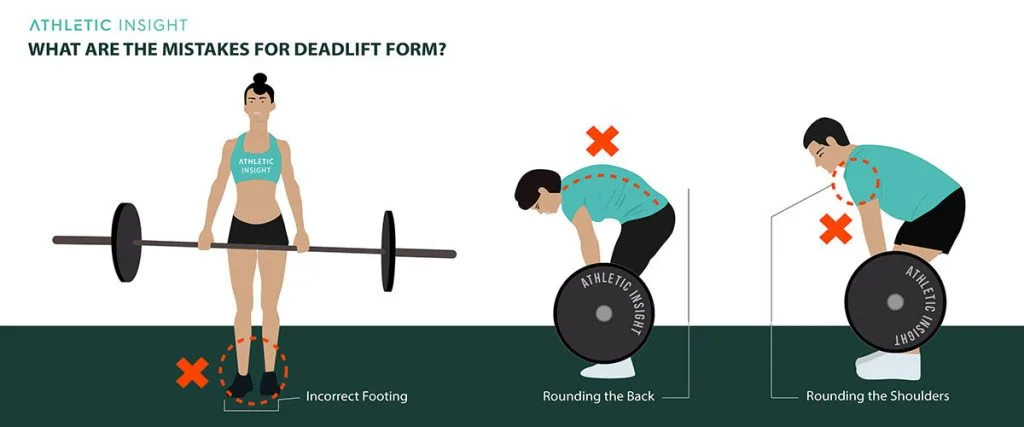
Image source: Bing (Web (fair-use with source credit))
Safety First: How to Fix Your Deadlift and Prevent Injury
Fixing your deadlift isn't just about lifting heavier; it's about preserving your body for years of training. The good news is that most common deadlift mistakes can be corrected with focused attention on technique and a smart approach to loading. The key is to break down the movement, identify where you're going wrong, and implement specific drills and cues to reinforce good habits.
Prioritizing safety means not only avoiding injury today but also building a solid foundation for long-term strength development.
As you work on correcting these errors, remember that consistency is vital. It takes time and deliberate practice to rewire movement patterns. Our research indicates that athletes who focus on gradual progression and consistent technique refinement see the best long-term results.
So, be patient with yourself, and don't be afraid to reduce the weight significantly to nail down the perfect form. This focus on safety and technique aligns with recommendations from organizations like the National Strength and Conditioning Association (NSCA), which stress controlled execution over sheer load.
Setting Up for Success: Your Pre-Lift Checklist
A solid deadlift starts before you even touch the bar. Your setup is everything. First, approach the barbell so it’s directly over the middle of your feet.
When you look down, you should see the bar covering about an inch of your shoelaces. This positioning is critical for ensuring the bar stays close to your body during the lift. Next, set your stance width, typically hip-width apart for a conventional deadlift, or slightly wider for a sumo deadlift.
Your feet should be pointed mostly straight ahead, or slightly out, depending on your hip anatomy and comfort.
Now, hinge at your hips and bend your knees to grip the bar. Your grip should be firm and just outside your legs. If you're using a double overhand grip, ensure it's even.
If you're going for a mixed grip (one palm up, one palm down), alternate grips each set to avoid muscle imbalances. Crucially, before you even think about pulling, take a deep diaphragmatic breath into your belly, and brace your core. Imagine you're about to get punched in the stomach.
This intra-abdominal pressure is your body's natural weightlifting belt and is non-negotiable for spinal stability. Your shoulders should be pulled back and down, slightly in front of the bar, creating tension in your lats.
Cues for a Safer, Stronger Pull
Once you've mastered the setup, it's time for the pull itself. Think of the deadlift as a pushing movement, not a pulling one. Instead of thinking "pull the bar up," think "push the floor away with your feet." This cue helps engage your leg drive and keeps your hips from shooting up prematurely.
As your hips extend, focus on keeping your chest up and your back straight. Your hips and shoulders should rise at roughly the same rate.
Another key cue is to imagine "scraping" the bar up your shins and thighs. This ensures the bar stays as close to your body as possible, minimizing leverage against your lower back. As you reach the top, think about squeezing your glutes together to finish the movement, driving your hips forward until you're standing tall.
Avoid hyperextending your back at the top; your ears should be in a neutral position relative to your spine. For both conventional and sumo deadlifts, maintaining this close bar path is essential. If you find the bar drifting, it's a sign your lats aren't engaged enough or your hip hinge isn't powerful enough.
When to Back Off and Seek Expert Help
It’s tempting to push through pain or stubbornly stick to your programmed weight, but knowing when to stop is a sign of true strength and intelligence. If you feel sharp, shooting pains, especially in your lower back or down your legs, that's an immediate red flag. Don't try to "work through it." Similarly, if you consistently find yourself resorting to the common mistakes we've discussed, significant back rounding, hips shooting up uncontrollably, or the bar consistently drifting far from your body, it's time to reassess.
This doesn't mean you're weak or doomed; it means you need a targeted approach. Consider filming yourself from the side and front to get a clear picture of your form. Sometimes seeing it yourself is the best teacher.
If you're still struggling, or if pain persists, it's highly advisable to consult with a qualified strength coach or physical therapist. They can provide personalized feedback, identify specific weak points, and prescribe corrective exercises. For instance, they might recommend exercises like glute bridges or hamstring curls to build strength in those key areas, or teach you specific bracing techniques.
Remember, proper form is the foundation for all your strength gains, and investing in professional guidance can save you from serious injury and long-term setbacks.
Real-World Deadlift Fixes: What Works
Let’s talk practical application. You’ve identified your primary mistake, say, rounding your lower back. What can you actually do in your next training session?
First, drastically reduce the weight. You might need to drop down to 50-60% of what you were lifting. The goal here is perfect execution, not heavy tonnage.
Focus intently on maintaining that neutral spine throughout the entire lift. One excellent cue is to imagine you're trying to bend the barbell. This creates tension and helps you keep your back tight.
If your hips are shooting up too fast, focus on "pulling the slack out of the bar" before you actually lift it. This means applying slight tension to the bar until you hear or feel a subtle "click" or "pop" as the plates engage. Then, initiate the pull by driving your feet into the floor, keeping your hips low initially.
Think about pushing your chest up and forward as you stand. For the bar drifting away, consciously "hug the bar" by engaging your lats. Imagine pulling your shoulder blades down and back, creating tension that draws the bar into your body.
You might also benefit from practicing the Romanian deadlift (how to do Romanian deadlifts (RDL): master your form!), which reinforces a strong hip hinge and keeps the bar close.
Frequently Asked Questions About Deadlift Mistakes
Why does my lower back hurt after deadlifts?
Lower back pain after deadlifts is usually a direct result of rounding your lumbar spine during the lift. This puts excessive stress on the spinal discs and supporting muscles. It can also stem from insufficient core bracing or a weak posterior chain that forces your lower back to overcompensate.
Should I be able to do a deadlift with a perfectly straight back?
Yes, maintaining a neutral, or slightly lordotic (natural inward curve), spine is the goal for a safe and effective deadlift. A perfectly "straight" back doesn't mean flat; it means maintaining the spine's natural curves under load without excessive rounding or hyperextension.
What's the difference between a conventional and sumo deadlift mistake?
While the core principles of spinal safety apply to both, the common mistakes can manifest slightly differently. For sumo, hip positioning and knee caving are more common issues, whereas conventional deadlifts often see more lower back rounding and bar drift due to a longer range of motion. The goal of keeping the bar close and the spine neutral remains paramount for both.
How can I tell if my deadlift form is bad?
The best way is to film yourself from the side and front. Look for excessive rounding in your lower back, hips rising much faster than your shoulders, or the bar moving away from your body. Pain during or after the lift is also a strong indicator that something is wrong.
Consulting a coach can provide objective feedback.

