The best way to improve baseball reaction time is to train your eyes, decision-making, movement speed, and baseball skills together through focused drills and regular practice.
Deal
Today's Exclusive Deals
Limited-time Exclusive Deals. Check current discount on Amazon.
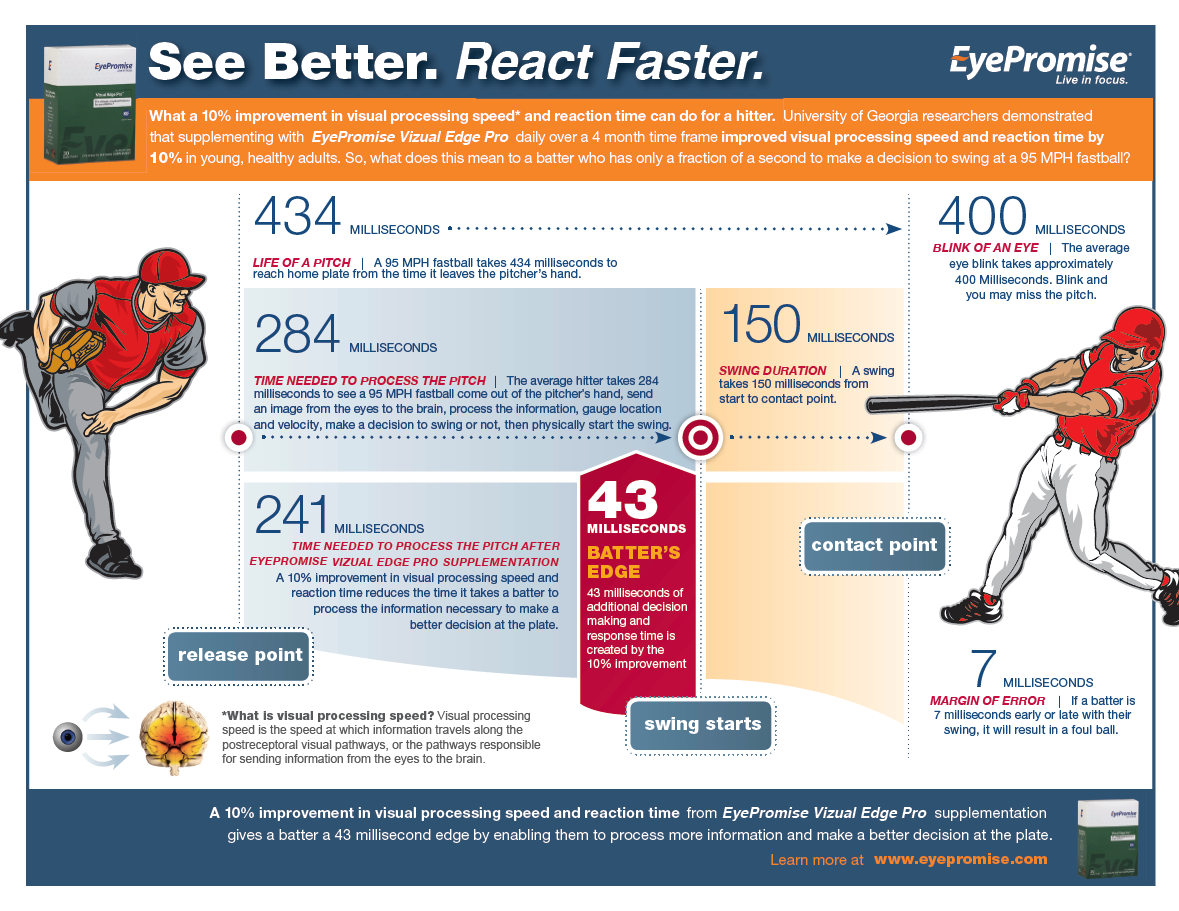
Baseball players across the United States, from youth leagues and high school teams to college programs and professional organizations, rely on reaction time every pitch and every play. A batter has only a short window to recognize a pitch, decide whether to swing, and begin the movement. A fielder must read the ball, move into position, and make a play before the opportunity disappears.
Improving reaction time is not only about moving faster. It is about improving the entire process from seeing information to making a physical response. Better players develop faster recognition, stronger body control, efficient footwork, and repeated exposure to realistic game situations.
This guide explains practical ways to improve baseball reaction time for hitting, fielding, and overall performance. The methods focus on skill development, coordination, and training habits rather than quick fixes or unsupported performance claims.
Source: friskmode.com
What Baseball Reaction Time Means And Why It Matters
Baseball reaction time is the ability to notice a situation, process the information, and respond with the correct movement. It includes visual reaction, mental decision speed, and physical movement. A player who reacts well does not simply move quickly. They recognize what is happening earlier and choose the right action.
For hitters, reaction time affects pitch recognition. A batter must identify pitch speed, location, and movement before committing to a swing. For fielders, reaction time affects the first step, glove position, and ability to reach a ball before it passes.
Reaction time has limits because baseball is a high-speed sport. Players cannot remove all uncertainty from a pitch or hit ball. The goal is to improve the skills that allow faster and more accurate responses.
Every baseball reaction follows a chain: see the event, understand the event, choose an action, and execute movement. A weakness in any part can slow performance. A player with fast feet but poor recognition may still react late.
Effective training improves each part of the chain. This is why baseball drills often combine vision, movement, and decision-making instead of training only one skill.
Train Your Eyes To React Faster
Better baseball reaction time begins with better visual skills. Players often focus only on muscles and speed, but the eyes provide the information that starts every play. Training the ability to track, focus, and recognize movement can support faster responses.
A hitter should learn to watch the pitcher’s delivery, release point, and early ball movement. A fielder should practice reading the hitter’s contact, ball angle, and speed. These skills improve through repeated baseball-specific practice.
Eye training should support baseball performance, not replace normal hitting, throwing, and fielding work. The most useful drills connect visual information with a baseball action.
Source: i.pinimg.com
Track the ball
Practice following the ball from release to contact or from contact to fielding position.
Improve focus control
Use drills that require switching attention between different targets and movements.
Practice realistic situations
Game-like repetitions help the brain recognize patterns that appear during competition.
Simple Vision Drills For Baseball Players
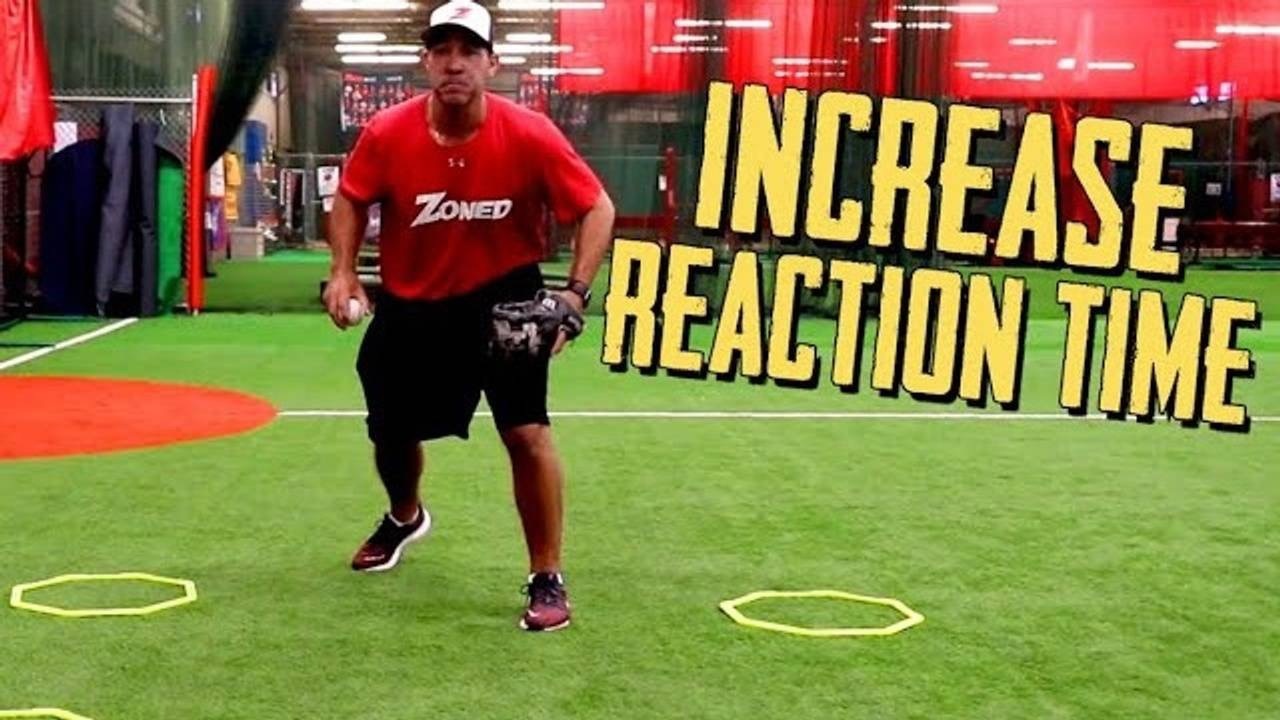
Players can use reaction balls, partner toss drills, and tracking exercises to challenge visual processing. A reaction ball creates unpredictable movement, forcing the player to read direction quickly.
Another useful drill is having a partner vary throws or pitches. The player focuses on recognizing the movement before responding. The goal is not just speed but accurate decisions.
Use Baseball Reaction Drills That Build Game Skills
The best reaction drills copy the demands of a real baseball game. A player improves faster when practice requires the same decisions needed during competition. Random movement drills may help general athletic ability, but baseball-specific drills connect training to performance.
Coaches and players should choose drills based on position. Infielders need quick first steps and glove reactions. Outfielders need tracking and directional movement. Hitters need pitch recognition and controlled swing decisions.
These drills train quick glove reactions, body control, and confidence when handling difficult ground balls.
Rapid catch drills
Fast catches with a partner challenge hand-eye coordination and response speed.
Variable pitching drills
Changing speeds and locations helps hitters improve recognition and decision-making.
A Basic Reaction Training Routine
A simple routine can include five minutes of visual warm-ups, ten minutes of position-specific reaction drills, and regular game-speed practice. Players should focus on quality repetitions rather than performing rushed movements with poor technique.
Signs of improvement include taking earlier first steps, making cleaner contact, recognizing pitches sooner, and feeling more prepared during unpredictable plays.
Improve Footwork And Body Position
Quick reactions require a body position that allows movement. A player who starts from poor balance may see the ball early but still arrive late. Athletic posture gives the body more options when the direction changes.
Fielders should maintain a ready position with balanced weight and active feet. Hitters should avoid unnecessary movement that delays the start of the swing. Efficient mechanics reduce the time between recognition and action.
Source: hiwindsaruba.com
Stay balanced
Good balance allows faster movement in any direction.
Train the first step
The first movement often determines whether a player reaches the ball.
Avoid extra motion
Unnecessary steps or movements create delays during fast plays.
Common Mistakes That Slow Baseball Reaction Time
Many players try to improve reaction time by only doing speed exercises. Speed matters, but reaction is a combination of perception, decisions, and movement. Training only one area may leave important weaknesses unchanged.
Another common mistake is practicing drills that are too predictable. If a player knows exactly where the ball will go every time, the brain does not experience the uncertainty found in games.
Recovery also matters. Fatigue can reduce focus, coordination, and decision quality. Players should balance hard training with enough rest and proper preparation.
Source: friskmode.com
Mistake: Ignoring vision
A player may move quickly but still react late if recognition skills are weak.
Mistake: Using poor technique
Fast movements with bad mechanics can create inconsistent results.
Mistake: Overtraining
Too much practice without recovery can reduce performance quality.
When Progress Feels Slow
Reaction improvements may not appear overnight. Players should measure progress through game actions, such as better positioning, fewer missed plays, and improved confidence under pressure.
If a drill becomes easy, increase difficulty gradually by changing speed, distance, direction, or decision requirements.
A strong reaction training plan combines daily habits, focused practice, and game experience. Young players should build fundamentals first, while advanced players can add more complex decision drills.
The goal is not to chase a single reaction number. Baseball performance depends on applying reaction skills correctly during real situations. A player who reads the game well often appears faster because they begin moving earlier.
Source: cdn11.bigcommerce.com
Start with fundamentals
Build throwing, hitting, fielding, and movement skills before adding advanced drills.
Increase challenge slowly
Make drills harder only after correct technique becomes consistent.
Review performance
Use practice results and game situations to identify areas needing improvement.
Frequently Asked Questions
Q
Can baseball reaction time actually be improved?
Yes. Players can improve reaction performance by practicing visual tracking, decision-making, movement skills, and baseball-specific drills. Improvement depends on consistent training and proper technique.
Q
What drills help baseball players react faster?
Useful drills include reaction ball exercises, rapid catch drills, short hop fielding drills, and variable pitching practice. The best drill depends on the player’s position and skill level.
Q
How can hitters improve reaction time against fast pitches?
Hitters can improve by training pitch recognition, watching the pitcher’s release point, practicing different speeds, and improving swing mechanics so decisions become quicker.
Q
Does strength training improve baseball reaction time?
Strength training can support movement quality and power, but reaction time also depends on vision, coordination, and decision-making. A complete program combines multiple skills.
Q
How often should players practice reaction drills?
Players can include short reaction drills several times per week. Frequent quality practice is usually more useful than occasional sessions with poor focus or excessive fatigue.
✦ Wrapping Up
Conclusion
Improving baseball reaction time requires more than trying to move faster. The best results come from training the connection between the eyes, brain, and body. Players who recognize situations earlier and move efficiently gain an advantage on the field.
A consistent routine that combines vision drills, position-specific practice, strong mechanics, and realistic game situations can help players become more responsive. Progress should be measured through better decisions and more successful plays.
💡 Key Takeaway
Start with a simple reaction routine, practice with game-like drills, and focus on making faster decisions with better technique.