Improve your golf swing by building a reliable setup, improving body movement, practicing correct swing mechanics, and using focused drills instead of only hitting more balls.
Deal
Today's Exclusive Deals
Limited-time Exclusive Deals. Check current discount on Amazon.
For golfers across the United States, from weekend players at local public courses to competitive amateurs, a better golf swing starts with repeatable fundamentals. Many players try to gain distance by swinging harder, but control, balance, and efficient movement usually create better results. A strong swing is not one that looks perfect; it is one that produces consistent contact and predictable ball flight.
The golf swing combines several connected actions: grip, posture, alignment, takeaway, backswing, transition, impact, and follow-through. Improving one part while ignoring the others can create new problems. The most effective approach is to understand how each movement affects the next and practice changes in small steps.
This guide explains how to improve golf swing performance using practical methods that golfers can apply at the driving range or during practice rounds. It focuses on technique, common mistakes, useful drills, and signs that show whether your changes are helping.
Source: ar.inspiredpencil.com
Start With The Fundamentals Of A Better Golf Swing
The first step to improving your golf swing is creating a reliable foundation. Every swing begins before the club moves. A poor setup can force your body to make corrections during the motion, which often leads to inconsistent shots.
The main fundamentals include grip, stance, posture, ball position, and alignment. These areas may seem simple, but small changes can influence the entire swing path and impact position.
Before practicing advanced moves, check your setup on every shot. A consistent pre-shot routine helps your body repeat the same starting position and reduces unnecessary adjustments.
Source: worldclassgolf.com
Grip
Hold the club with enough pressure to control it without creating unnecessary tension in your hands and arms.
Posture
Create athletic posture with a balanced stance so your body can rotate freely during the swing.
Alignment
Aim your body and club correctly toward the target because even a good swing can miss when alignment is poor.
Your setup controls how easily your body can move. If your weight is positioned incorrectly or your stance is unstable, your swing may compensate with extra hand movement or poor balance.
A good setup allows the club to travel on a more natural path. This does not mean every golfer will have the same swing style, but effective swings usually share similar basic positions at key moments.
Success sign
You feel balanced before and after the swing, and your contact becomes more predictable.
Improve Your Golf Swing Mechanics Step By Step
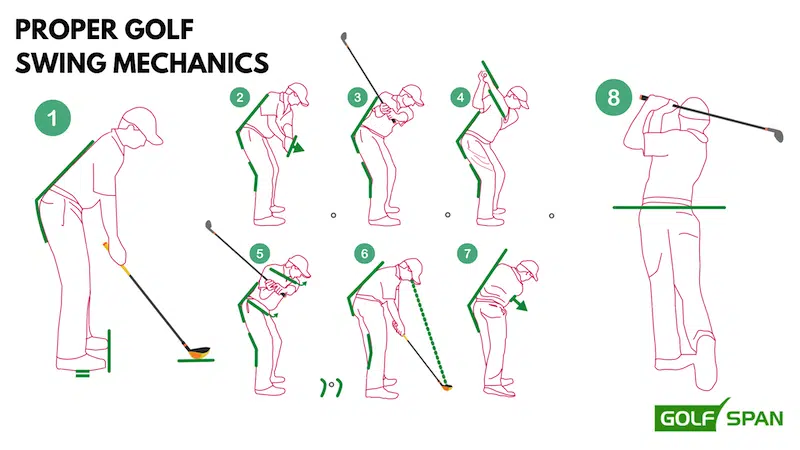
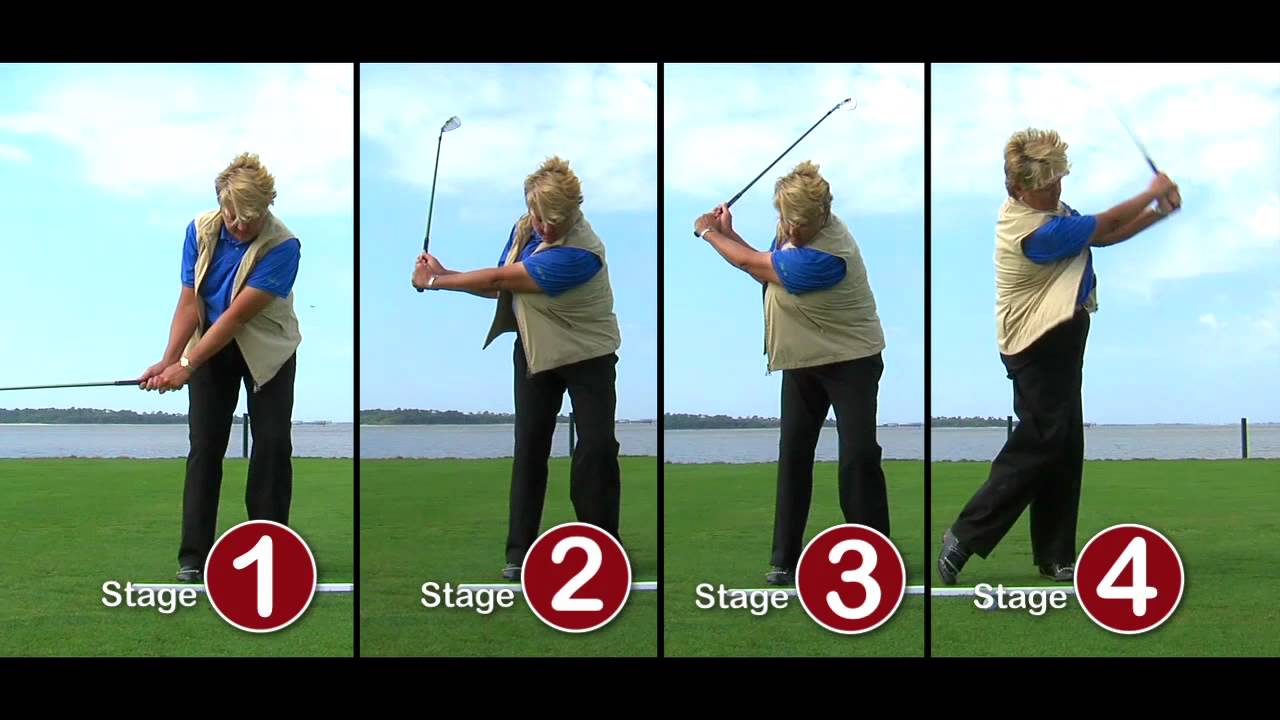
The golf swing works as a chain of movements. The lower body, upper body, arms, hands, and club should work together rather than compete against each other. Improving mechanics means creating better timing between these parts.
During the backswing, focus on turning your shoulders and maintaining balance. Avoid rushing the club away because a quick takeaway often makes the downswing harder to control.
During the downswing, efficient golfers create speed by using body rotation and proper sequencing. Trying to hit the ball only with the arms can reduce consistency and increase timing problems.
Source: druids.com
Backswing improvement
Make a controlled turn while keeping your balance and avoiding excessive movement away from the target.
Transition improvement
Start the downswing smoothly instead of using sudden force that changes the club path.
Impact improvement
Focus on solid contact and controlled clubface position rather than maximum effort.
Practice Slow Swings First
Slow practice swings help golfers understand movement without the pressure of hitting a full shot. They allow you to notice balance, rotation, and club position.
A useful drill is making half-speed swings while focusing on one goal, such as keeping your head stable or improving your finish position.
What to do if progress stops
Return to shorter swings and rebuild the movement before increasing speed again.
Use Effective Golf Swing Drills For Faster Improvement
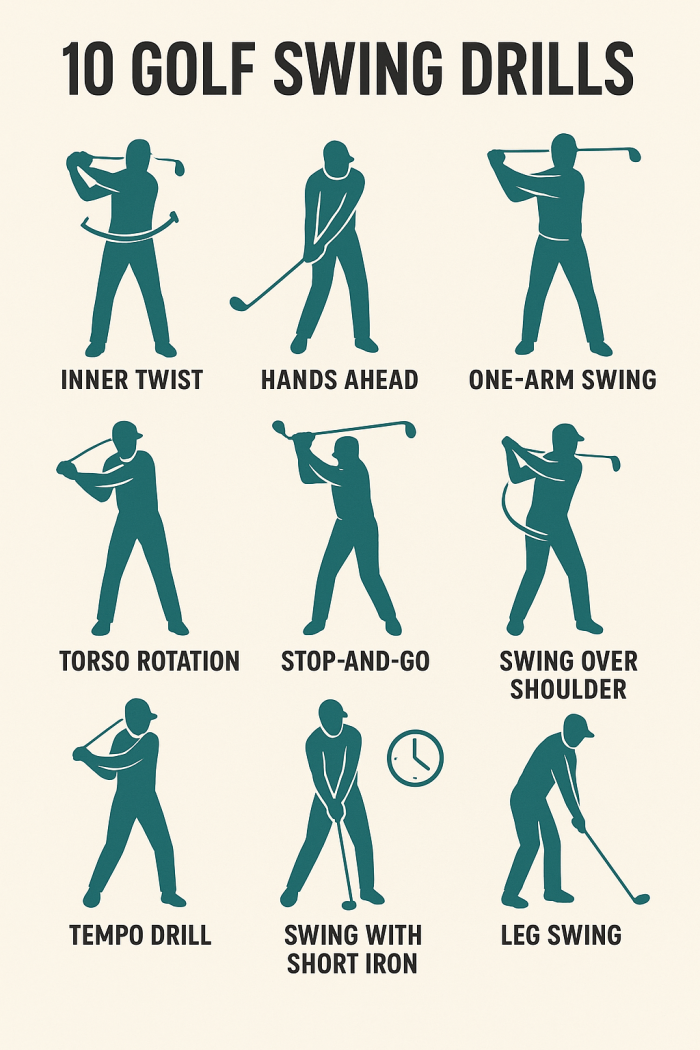
Golf swing drills are useful because they separate complex movements into smaller tasks. Instead of trying to fix everything at once, choose a drill that targets one problem.
The best drill depends on your current issue. A golfer who slices the ball may need a different practice method than someone who struggles with inconsistent contact.
Practice quality matters more than practice length. A focused 20-minute session with a clear goal can be more useful than an unfocused session with hundreds of swings.
Source: exybymfet.blob.core.windows.net
Alignment stick drill
Use a simple alignment aid to improve body direction and club path awareness.
Pause drill
Pause briefly at the top of the backswing to improve transition control.
Impact drill
Practice the position near impact to improve contact and ball striking.
How Often Should You Practice
The ideal practice schedule depends on available time, experience level, and goals. Beginners often benefit from frequent short sessions because repetition helps build movement patterns.
Players should include both technical practice and target-based practice. Technical work improves movement, while target practice teaches you to use the swing on the course.
Combine drills, range practice, and real course situations for better transfer.
Fix Common Golf Swing Problems
Many golf swing problems come from a small number of causes. Identifying the cause is more effective than changing random parts of your technique.
A slice, hook, thin shot, or fat shot is a symptom. The same symptom can have different causes, so golfers should check basic factors before making major changes.
Possible causes include an open clubface, outside-to-inside swing path, or poor timing.
Loss of distance
Possible causes include poor contact, limited rotation, or trying to create speed only with the arms.
Inconsistent contact
Possible causes include changing posture, poor balance, or unstable swing tempo.
Use Video Feedback Carefully
Recording your swing can reveal positions that are difficult to feel. Video is helpful for comparing your movement over time, but it should be used as a tool rather than a reason to copy every position seen in professional golf.
Golfers have different body types and natural movement patterns. The goal is a functional swing that produces reliable results.
Best use
Compare changes over time and focus on clear improvements instead of chasing a perfect-looking swing.
Avoid Mistakes That Slow Golf Swing Improvement
Many golfers struggle because they change too many things at once. A swing improvement plan works better when each change has a clear purpose.
Another common mistake is focusing only on distance. More speed without control can create inconsistent shots and make scoring harder.
Give new movements enough practice time before deciding whether they work.
Ignoring short game
A better full swing helps, but putting and short shots also strongly influence scores.
Practicing without a goal
Know what you are improving before each practice session begins.
When To Get Professional Help
A qualified golf instructor can help when a player has difficulty identifying the cause of repeated problems. Professional guidance may be especially useful after injuries, major swing changes, or long periods without improvement.
Instruction does not replace practice. It provides direction so practice time is spent on the right movements.
Consider help when
Your swing problems continue despite consistent practice and basic troubleshooting.
Frequently Asked Questions
Q
How long does it take to improve a golf swing?
Improvement time depends on experience, practice quality, and the specific problem being corrected. Some setup changes may show results quickly, while movement changes often require repeated practice.
Q
Can beginners improve their golf swing without lessons?
Beginners can improve through structured practice and reliable learning resources. However, professional feedback can help identify mistakes earlier and prevent poor habits from becoming permanent.
Q
Should I swing harder to hit farther?
Swinging harder does not always create more distance. Better contact, efficient movement, and correct timing often produce more useful power.
Q
How often should I practice my golf swing?
Practice frequency depends on your schedule and goals. Regular focused sessions are usually more valuable than occasional long sessions without a plan.
Q
What is the fastest way to improve golf swing consistency?
Build a repeatable setup, practice one change at a time, and use feedback to confirm whether your movement is improving.
✦ Wrapping Up
Conclusion
Learning how to improve golf swing performance requires patience, clear practice goals, and attention to fundamentals. A better swing is built through consistent movement rather than quick fixes or simply trying to hit harder.
Start with your setup, improve one mechanic at a time, and use drills that match your specific needs. Over time, these small improvements can create a swing that feels more natural and produces more reliable shots.
💡 Key Takeaway
Choose one swing area to improve this week, practice it with a clear drill, and measure progress through better contact and consistency rather than only distance.