If you want to work out at home without draining your wallet, you are in the right place. I have built three budget home gyms in small spaces. I know what works, what breaks, and what you can skip. In this guide, I will show you how to build a home gym on a budget with smart buys, simple setups, and clear steps. You will learn how to plan your space, buy only what you need, and get strong without paying premium prices.

Today's Exclusive Deals
Limited-time Exclusive Deals. Check current discount on Amazon.
Check Price on Amazon As an Amazon Associate I earn from qualifying purchases.
Start With A Clear Goal And A Simple Plan
Before you buy anything, define your goal. Do you want to get fit, build muscle, or lose weight? Pick the goal that matters most. Then choose the moves that support it. Keep the plan simple. Simple plans work best and cost less.
Use this approach:
- Choose your main goal. Strength, fat loss, or general fitness.
- Pick 5 moves that cover your whole body.
- Set a budget you can keep.
Why this works:
- It prevents impulse buys.
- It focuses your setup on gear you will use every week.
- It stops clutter and saves space.
From my experience coaching clients at home, the best results come from a small set of tools you use often. Fancy machines collect dust. Simple gear gets used.
Measure Your Space And Make It Safe
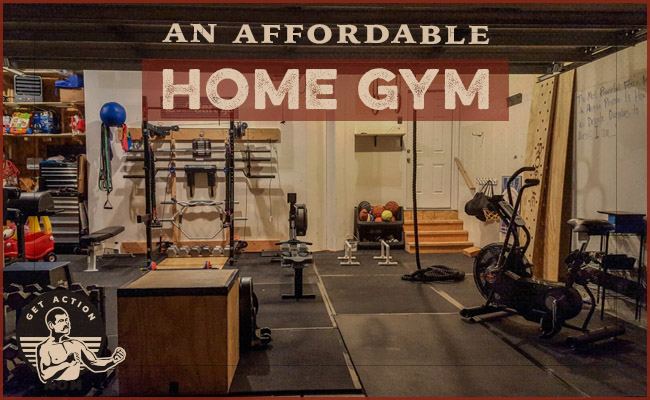
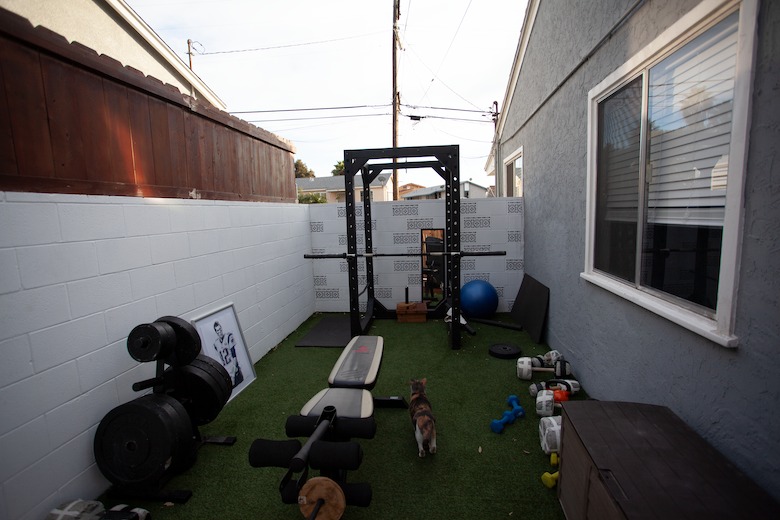
Small space? No problem. You can fit a full routine into a corner. Measure your floor area and ceiling height. Note outlets, windows, and doors.
Use this checklist:
- Floor: At least 6 by 6 feet is enough for most workouts.
- Height: 7 feet is fine for bands and dumbbells. Pull-ups need more.
- Surface: Use rubber mats or dense foam tiles to protect floors.
- Ventilation: A fan or open window helps with airflow and odor.
Safety matters. Keep a clear path around your workout zone. Store gear in bins or on a rack. Good setup makes workouts fast and stress-free.
Spend Smart: The 80/20 Gear Rule
Most of your results will come from a few items. Here is the 80/20 stack for a cheap home gym.
Start with these essentials:
- Resistance bands with handles: Full-body work, low cost, easy to store.
- Adjustable dumbbells or a small fixed set: Great for push, pull, legs, and core.
- A sturdy door anchor and a pull-up bar if your doorway allows: Adds big back and arm work.
- A jump rope: Simple cardio that fits in a drawer.
- A yoga mat or rubber floor tiles: Comfort and safety.
Nice-to-have add-ons:
- Kettlebell: One medium weight is enough for swings, squats, and presses.
- Suspension trainer: Turns any door into a station for rows and core.
- Foam roller: Helps with recovery and mobility.
Price targets to keep you on budget:
- Bands set: 20 to 35 dollars.
- Entry dumbbells or used pairs: 40 to 100 dollars depending on weight.
- Pull-up bar: 25 to 40 dollars.
- Jump rope: 10 to 15 dollars.
- Mat or tiles: 20 to 50 dollars.
With 150 to 250 dollars, you can build a full setup that will last years if you take care of it. Industry tests and user reviews support the durability of bands and iron when used indoors and stored well.
Buy Used, DIY, And Save Big
You can cut your costs by half with secondhand finds and simple DIY.
Where to look:
- Local marketplaces and community boards.
- Garage sales and moving sales.
- Gym closures and school auctions.
What to check before buying:
- Dumbbells and plates: No cracks or deep rust. Light rust is fine.
- Kettlebells: Smooth handle. Stable base. No sharp edges.
- Bands: No cracks, dry spots, or thin areas.
- Bars and racks: Solid welds. No bending. Bolts included.
DIY ideas I have used:
- Sandbag: Fill a contractor bag with play sand. Double-bag it. Put it in a duffel.
- Parallettes: Use PVC pipes and elbows. Glue the joints. Great for push-ups and L-sits.
- Plyo box: Build a strong box with plywood. Use screws and wood glue.
These hacks are cheap and strong. Many coaches use them for group training. Research on load and stability shows that sand and water-filled tools can match traditional weights for certain strength and power drills when used with good form.
Build A Simple Full-Body Program
You do not need many exercises. You need the right ones. Use movement patterns, not random moves.
Choose one from each:
- Push: Push-up, dumbbell press, band chest press.
- Pull: Row with bands, dumbbell row, pull-up or assisted pull-up.
- Hinge: Hip hinge, dumbbell deadlift, kettlebell swing.
- Squat: Bodyweight squat, goblet squat, split squat.
- Core: Plank, dead bug, suitcase carry.
Weekly plan example:
- Day 1: Full-body strength, 30 to 40 minutes.
- Day 2: Cardio and core, 20 to 30 minutes.
- Day 3: Full-body strength, 30 to 40 minutes.
- Day 4: Mobility or a light walk, 15 to 20 minutes.
Reps and sets:
- Strength: 3 sets of 6 to 10 reps.
- Hypertrophy: 3 to 4 sets of 8 to 12 reps.
- Conditioning: Circuits of 20 to 30 seconds work, 20 to 30 seconds rest for 10 to 15 minutes.
Keep rest short. Track your weight and reps. Progress by small steps each week. Studies show that progressive overload, not equipment type, drives gains.
Cardio That Does Not Need Machines
You can get a great cardio session at home with little gear.
Try these:
- Jump rope intervals. One minute on, one minute off for 10 rounds.
- Shadow boxing with light dumbbells. Two to three rounds of three minutes.
- Step-ups on a sturdy step or box. Sets of 1 to 2 minutes per leg.
- Kettlebell swings. Sets of 15 to 20 reps with good form.
- EMOM sessions. Every minute on the minute do 10 burpees or 15 squats.
Mix two or three options. Keep sessions short and sharp. Cardio can be fun and fast when you avoid big machines.

Keep It Safe: Form, Setup, And Recovery
Good form prevents pain and saves money on fixes. Learn the basics from trusted guides and videos. Practice slow before you go heavy.
Use these tips:
- Warm up for five minutes. March in place, arm circles, light band rows.
- Use tempo control. Two seconds down, one second up.
- Stop one rep before form breaks.
- Rest and sleep. Your body grows when you recover.
- Store gear away from sun and heat to extend the life of bands and mats.
I once tore a cheap band by leaving it in a hot garage. Since then, I store bands in a bin indoors. They last much longer now.

Sample $200 Starter Setup And 30-Day Plan
Here is a simple shopping list and a plan to start strong.
What to buy:
- Resistance bands with handles and door anchor.
- Used dumbbells: one light pair and one medium pair.
- Jump rope.
- Floor tiles or a mat.
30-day routine:
- Week 1: Learn form. Two full-body days. One cardio day.
- Week 2: Add a set to each move. Keep cardio day the same.
- Week 3: Add load or harder band. Keep form tight.
- Week 4: Add one more workout day or longer sessions by five minutes.
Track three things:
- Reps and weight.
- Energy and sleep.
- Wins and notes.
This keeps you focused and excited. It also builds a habit that lasts beyond the first month.
Frequently Asked Questions Of How To Build A Home Gym On A Budget?
How much should I spend to start a cheap home gym?
You can start with 100 to 200 dollars. Buy bands, a mat, and a jump rope. Add used dumbbells if you find a deal.
What is the best first piece of equipment?
A set of resistance bands with a door anchor. They cover push, pull, legs, and core. They are cheap, light, and versatile.
Can I build muscle without big machines?
Yes. Progressive overload with bands, dumbbells, and bodyweight builds muscle. Increase reps, sets, or load each week.
How do I find safe used gear?
Check for cracks, sharp edges, and missing parts. Test for stability. Avoid bands with dry or thin spots. Clean gear before use.
What if I have very little space?
Use a corner and vertical storage. Bands, a jump rope, and adjustable dumbbells fit in one bin. You can train full-body in 6 by 6 feet.
Do I need a squat rack?
Not at the start. Goblet squats, split squats, and tempo work build strong legs. Add a rack later if you have space and budget.
How do I avoid injuries at home?
Warm up, use proper form, and progress slowly. Stop sets before your form breaks. Keep floors clear and use stable footing.
Wrap-Up And Next Steps
A budget home gym is within reach. Start with your goal, measure your space, and buy only what you need. Use bands, dumbbells, and your body weight for full-body results. Keep workouts simple and steady. Small, smart steps beat big, expensive gear.
Pick one section above and act today. Make a list, set a budget, and build your corner. If you want more tips, subscribe, share your setup, or ask a question in the comments.