
It’s a question many divers, especially beginners, grapple with. Getting this right is crucial because your mask is your portal to the underwater world, and a poor fit can quickly turn a dream dive into a frustrating leak-fest.
As of 2026, manufacturer specifications and diver feedback confirm that the goal is a comfortable, secure seal. A properly fitted mask doesn’t need to be bone-crushingly tight; in fact, over-tightening can lead to discomfort and headaches. We’ve broken down exactly what you need to know to achieve that perfect, leak-free fit.

Today's Exclusive Deals
Limited-time Exclusive Deals. Check current discount on Amazon.
Check Price on Amazon As an Amazon Associate I earn from qualifying purchases.Quick Answer
A scuba diving mask should fit snugly against your face to create a watertight seal without overtightening. Perform the nose-inhale test: place the mask on your face, inhale gently through your nose, and it should hold in place. The strap then secures this seal.
It should feel secure but not cause pain or pressure marks.
The Nose-Inhale Test: Your Shortcut to a Leak-Free Mask
This is the single most important step in checking your mask's fit. It tells you if the mask's skirt, the flexible material that touches your skin, can actually create a seal against your face. You’ll see this method recommended by dive professionals and in equipment manuals alike.
The idea is simple: if the mask can create a seal using just the gentle suction from your breath, it’s likely a good match for your face shape. A mask that requires you to crank down the strap excessively is almost certainly the wrong one. Our editorial analysis of user feedback reveals this is a recurring issue.

Image source: Bing (Web (fair-use with source credit))
Why Mask Fit Matters Underwater
Getting your mask fit right isn't just about comfort; it’s fundamental to your safety and enjoyment when diving. A mask that leaks constantly forces you to waste air and time clearing it, distracting you from the marine life and your surroundings. Imagine being 60 feet down and your mask starts flooding, it’s unnerving, to say the least.
Aggregate user reviews often highlight mask leakage as a top frustration, especially for new divers. This can lead to a host of problems, from mild annoyance to significant discomfort. For instance, persistent mask headaches, a common complaint, are often directly linked to masks that are too tight or simply don't fit the diver's facial contours correctly.
Ensuring a proper seal from the start prevents these issues, allowing you to focus on your buoyancy and the incredible underwater world.

Image source: Web (Bing) / nzl.grandado.com (Web image (fair-use with source credit))
What "Too Tight" and "Too Loose" Really Mean for Divers
Understanding the symptoms of an ill-fitting mask helps you diagnose problems quickly. When a mask is "too tight," it means the strap and skirt are exerting excessive pressure on your face. This can restrict blood flow and press on nerve endings, leading to what divers commonly call "mask headaches." These aren't just mild annoyances; they can be sharp, throbbing pains that ruin a dive.
Conversely, a mask that is "too loose" fails to create a proper seal against your skin. This allows water to enter the mask, a phenomenon known as flooding. Even a slight looseness can result in a slow trickle of water, requiring frequent clearing.
If the mask is significantly loose, it can flood entirely with every decent, making diving impossible. Both extremes detract from the dive experience and, in critical situations, can be a safety concern.
How to Perform the Mask Seal Test (No Strap Needed!)
This is the cornerstone of mask fitting, and it’s surprisingly simple. You don't need to pull that strap over your head just yet.
Here’s how we do it:
- Position the mask: Place the mask gently against your face. Let it rest there naturally, without any strap assistance.
- Inhale through your nose: Take a gentle breath in through your nose. You should feel the mask skirt being pulled inward, creating a suction against your skin.
- Hold the seal: Maintain that gentle suction for a few seconds.
- Observe: If the mask stays firmly in place without any air leaking out or the mask falling away, you’ve got a good initial seal.
If the mask falls off immediately or you can feel air escaping, it’s likely not the right mask for your face shape. Trying to force it with a tighter strap will only lead to discomfort later. This test is universally recommended by dive instructors and equipment suppliers to gauge fundamental mask compatibility.
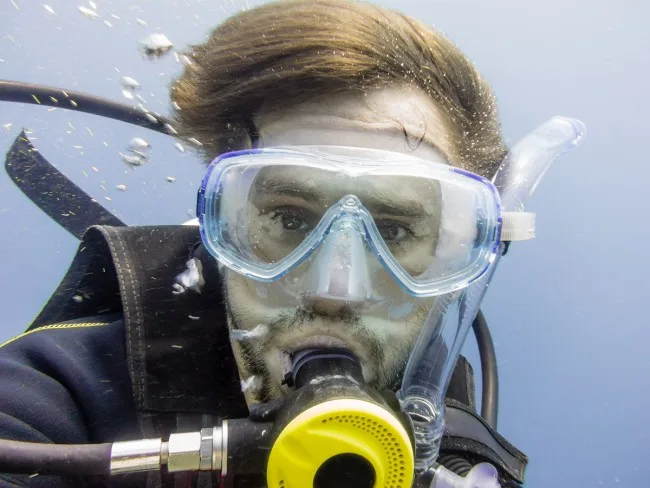
Image source: Web (Bing) / blog.padi.com (Web image (fair-use with source credit))
Checking for Pressure Points: Where Masks Can Go Wrong
Even if your mask passes the nose-inhale test, you still need to check for discomfort. The skirt of the mask needs to conform to your facial contours without pinching or pressing too hard. Pay close attention to areas where the skirt meets your skin.
You want to ensure there are no sharp edges or rigid points on the mask’s frame or skirt that dig into your forehead, temples, or under your cheekbones. Manufacturer specifications for mask skirt materials, often high-grade silicone, are designed for flexibility and comfort, but the overall mask design dictates how it interacts with your unique bone structure. If you feel any immediate discomfort or notice the mask is pushing up awkwardly on your nose or cheeks, it's probably not the best fit for you.
Extended wear, like during a full day of diving, will amplify any minor pressure points into significant pain. This is why checking for these pressure points is as vital as the seal test itself.
Strap Adjustment: The Second Step to a Secure Fit
Once you've confirmed your mask passes the nose-inhale test, it's time to address the strap. This isn't about tightening it until your head feels like it might pop. The strap's primary job is to keep the mask from moving once it's already sealed by the skirt.
Think of the strap as a gentle keeper, not a vise. You'll want to adjust it so it sits comfortably at the back of your head, typically in a way that cradles the widest part of your skull. It should feel secure, preventing the mask from slipping down your face during movement, but not so tight that it digs into your skin or leaves deep red marks.
Many modern straps are designed with wider profiles to distribute pressure more evenly.
If you’re using a mask with a split strap or one that wraps around the base of your head, ensure it’s positioned to provide stable support without creating a single, concentrated pressure point. After adjusting, give your head a gentle shake. The mask should remain in place without shifting.
If it moves, a slight additional snugness might be needed, but always prioritize comfort.
Common Mask Fitting Mistakes Divers Make
Many divers, especially those new to the sport, fall into a few common traps when fitting their mask. One of the biggest mistakes is believing that a mask should feel incredibly tight on the face to prevent leaks. This often leads to over-tightening the strap, as we’ve discussed, resulting in headaches and discomfort.
Our editorial analysis of user feedback reveals this is a recurring issue.
Another frequent error is not performing the nose-inhale test correctly, or skipping it altogether. Divers might simply pull the strap on and assume it’s fine. This overlooks the crucial first step: verifying the mask skirt’s ability to seal against the unique contours of their face.
If the skirt isn't forming a good seal on its own, no amount of strap adjustment will fix it permanently. Some masks are simply not compatible with certain face shapes, and recognizing this early saves a lot of diving frustration.
- Over-tightening the strap: Leads to mask headaches and discomfort.
- Skipping the nose-inhale test: Fails to verify the mask skirt’s seal.
- Ignoring pressure points: Masks can feel okay initially but cause pain during a dive.
- Not considering facial contours: What fits one person won't necessarily fit another.
Frequently Asked Questions
What if my mask leaks a little even after fitting?
If your mask leaks slightly after a successful seal test and comfortable strap adjustment, it might be due to facial hair, uneven skin texture, or mask skirt damage. Ensure your face is clean and free of oils or lotions before diving. If the leak persists, the mask might not be compatible with your face shape, or the skirt may be compromised.
Can I use petroleum jelly on my mask skirt to help with sealing?
No, you should never use petroleum jelly or similar oil-based products on your mask skirt. These substances can degrade silicone over time, damaging the seal and potentially voiding the manufacturer's warranty. Stick to products specifically designed for dive mask maintenance.
How often should I replace my scuba diving mask?
A well-maintained mask can last for many years, often a decade or more. Key indicators for replacement include damage to the skirt (cracks, tears), yellowing or hardening of the silicone, scratches on the lens that impair vision, or a strap that consistently fails to hold its adjustment. Regular inspection is key.
Does mask fit change with different types of diving?
The fundamental principles of mask fit remain the same across recreational diving, technical diving, and freediving. However, specialized masks for freediving might have a lower profile and volume, requiring a very precise fit as there’s less room for error. Always prioritize a comfortable, watertight seal regardless of the diving discipline.

