
If you've ever watched a cricket match or a baseball game, you've probably noticed the bats look similar but feel distinctly different. Understanding the fundamental differences between a cricket bat and a baseball bat is key to appreciating each sport and the equipment designed for it. It's not just about hitting a ball; it's about how that ball is bowled or pitched, and the entire physics of the game.
While both are implements used to strike a ball, their shapes, materials, and intended uses are tailored to their specific sports. For instance, official manufacturer specifications for a high-end baseball bat often dictate a maximum barrel diameter of 2.61 inches, whereas cricket bats can vary more widely, impacting how they connect with the ball. This distinction is crucial for players and enthusiasts alike.

Today's Exclusive Deals
Limited-time Exclusive Deals. Check current discount on Amazon.
Check Price on Amazon As an Amazon Associate I earn from qualifying purchases.Cricket vs Baseball Bat
The core difference between a cricket bat and a baseball bat lies in their design, which is a direct response to the balls they hit and the nature of the sport. A cricket bat features a flat hitting surface and a thick spine, built for power and drives. A baseball bat is uniformly round and tapers, optimized for speed and making contact with fast pitches.
Understanding the Cricket Bat: Shape, Material, and Feel
The cricket bat is a unique piece of sporting equipment, recognizable by its distinctive profile. It's designed for a game that involves a hard ball being bowled at various speeds and spin, demanding a bat that can both defend and attack with considerable force. The way a cricket bat is constructed directly influences the power and control a player has over the ball, aiming to send it vast distances across the field or between wickets.
Cricket Bat Shape: The Flat Face and Rounded Spine
The most striking visual cue of a cricket bat is its shape. Unlike the uniformly round baseball bat, a cricket bat has a flat face that serves as the primary hitting surface. Behind this flat face is a rounded back with a prominent ridge, often called the "spine." This spine redistributes the bat's mass, giving it a powerful sweet spot without making it excessively heavy.
This design is crucial for generating the force needed for powerful shots like drives and sweeps.

Image source: Wikimedia Commons / Harry Pot for Anefo
Cricket Bat Material: English Willow and Beyond
Traditionally, cricket bats are crafted from English Willow wood. This particular type of willow is chosen for its excellent strength-to-weight ratio, allowing for a large hitting area and substantial power without being too unwieldy. The wood is typically air-dried to ensure durability and performance.
While willow remains the gold standard for professional play, composite materials are also used, particularly in lower-grade bats, offering different playing characteristics and price points.
Cricket Bat Weight and Balance for Power
Cricket bats are generally heavier than baseball bats. This added weight is a deliberate design choice, intended to help players generate the immense power required to hit a hard cricket ball long distances. The balance of a cricket bat is also a key factor; it's designed to feel balanced for a powerful swing, allowing a batter to execute both defensive strokes and aggressive drives.
Aggregate reviews of professional-grade bats often highlight their carefully managed weight distribution, which can range from around 2.5 to over 3 pounds (approximately 1.1 to 1.4 kg).
Deconstructing the Baseball Bat: Design for Speed and Contact
The baseball bat is engineered for a different kind of athleticism and a different game. Baseball involves a faster, often smaller ball being pitched with significant velocity. This means the bat needs to facilitate quick swings and precise contact to achieve hits, whether for singles or powerful home runs.
The entire design philosophy of a baseball bat centers on maximizing bat speed and creating a solid connection with the ball.
Baseball Bat Shape: The Smooth Barrel and Taper
A baseball bat is characterized by its smooth, rounded barrel, which tapers down to a narrower handle. Unlike the flat face of a cricket bat, the entire surface of the barrel can technically be used for contact, though a sweet spot still exists. This uniform roundness allows for a consistent feel through the hitting zone and contributes to the bat's aerodynamic efficiency, enabling faster swings.
The taper from barrel to handle also provides a secure grip for the batter.
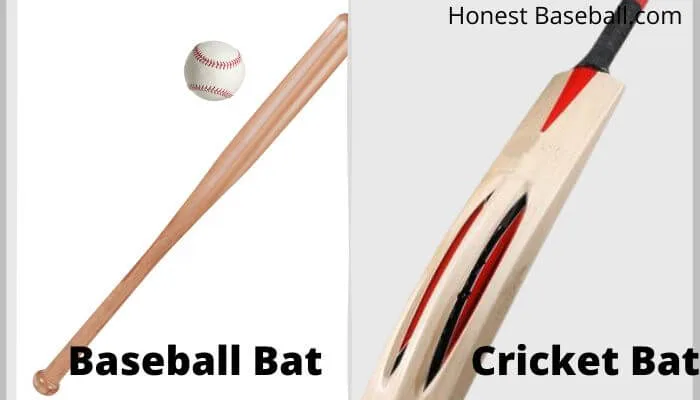
Image source: Web (Bing) / honestbaseball.com (Web image (fair-use with source credit))
Baseball Bat Material: Wood, Aluminum, and Composites
Baseball bats come in a variety of materials, each offering distinct performance characteristics. Traditional wood bats, commonly made from maple, ash, or birch, are the standard in professional baseball for their proven performance and feel. However, aluminum and composite bats are widely used at amateur and youth levels.
These materials are often lighter and can offer a "trampoline effect," where the ball rebounds with greater speed off the bat face, known as higher exit velocity. For example, NCAA baseball rules, as of 2026, permit bats with a specific BBCOR (Batted Ball Coefficient of Restitution) rating to balance performance and safety.

Image source: Web (Bing) / pinterest.com (Web image (fair-use with source credit))
Baseball Bat Weight and Length for Swing Speed
Baseball bats are designed to be swung rapidly. While they can be longer than cricket bats relative to a player's height, they typically have a lighter swing weight. This means less effort is required to accelerate the bat through the hitting zone.
This emphasis on speed is critical for making solid contact with pitches that can travel upwards of 90 miles per hour (approximately 145 km/h). Bat lengths can range from around 24 inches for youth players to 34 inches or more for adults, with corresponding weight differences to optimize swing speed for different age groups and strengths.
Key Cricket Bat vs. Baseball Bat Differences: A Side-by-Side Look
The core differences between these bats are stark and directly influence how they are used. The shape, material composition, and weight distribution are all honed to fit the specific demands of their respective sports.
The Ball: How it Impacts Bat Design
The primary driver behind bat design is the ball itself. Cricket balls are hard and smaller, requiring a bat with a broad, flat face to generate power. Baseball balls are slightly larger and are pitched at very high speeds.
Baseball bats, therefore, are shaped to facilitate quick swings and maximize the energy transfer from these rapid impacts. This difference dictates the bat's sweet spot and its overall effectiveness.
Swing Style: Power Drives vs. Quick Cuts
Cricket batters often aim for powerful, sweeping shots to send the ball great distances. The cricket bat's design, with its flat face and substantial spine, supports this need for forceful, controlled swings. Baseball players, however, need to generate immense bat speed quickly to connect with fast pitches.
Their swings are typically more compact and rapid, prioritizing a clean strike that maximizes exit velocity. Developing such rapid movements can be related to training for explosive lifts, similar to how one might research how to improve your deadlift form.
Hitting Surface and Sweet Spot
A cricket bat’s flat front surface provides a generous hitting zone, with the sweet spot typically centered on the width of the bat. The thick spine behind it helps reinforce this area for power. Baseball bats are round, meaning the entire barrel surface is potentially usable, but the sweet spot is more about the precise point of contact along the circumference.
Achieving this optimal contact is key for performance.
Who is Each Bat For? Matching Bats to Players and Games
The intended user for each bat is intrinsically tied to the sport it serves. Using the wrong bat for the game would significantly hamper a player's ability and enjoyment.
Cricket Bats: Best for Cricket Players and Power Shots
A cricket bat is specifically engineered for the game of cricket. Its flat hitting surface is ideal for the powerful drives, cuts, and sweeps that cricket batters employ. Players focused on sending the ball far and with force will find the cricket bat's design advantageous.
It's the specialized tool for this particular sport, built to handle the specific impact of a cricket ball.
Baseball Bats: Ideal for Baseball Players and Fast Pitches
Conversely, a baseball bat is tailored for baseball. Its rounded barrel and lighter swing weight are optimized for the rapid bat speeds required to hit a baseball pitched at high velocities. Whether a player is aiming for a base hit or a home run, the baseball bat's design supports quick, precise swings.
The material, whether wood or alloy, further fine-tunes its performance for the demands of baseball. Understanding athletic principles, such as what muscles do deadlifts work, can offer insights into the foundational strength needed for such dynamic sports.
Common Mistakes When Comparing Cricket and Baseball Bats
People new to either sport often make simple but significant errors when comparing these bats, usually by assuming they share more similarities than they actually do. These misunderstandings can lead to confusion about their respective uses and designs.
Assuming Interchangeability
The most common mistake is thinking a cricket bat can be used for baseball, or vice versa. Their designs are too specialized. A cricket bat’s flat surface isn't optimized for the quick swing of baseball, and a baseball bat lacks the broad impact area needed for cricket’s power shots.
This fundamental difference means they are not interchangeable tools for hitting a ball.
Misunderstanding Weight and Swing Speed
There's a common misconception about weight. While cricket bats might be heavier in total mass, baseball bats are designed for a lighter swing weight. This means the baseball bat feels faster to accelerate.
This is crucial for hitting high-speed pitches. The cricket bat’s heavier feel is intended for maximizing power on impact, not necessarily for the fastest possible swing. For anyone interested in strength training, understanding the difference between absolute weight and how easily something can be moved is key, much like knowing how often you should deadlift for optimal gains.
Ignoring Ball Differences
The most critical overlooked factor is the ball itself. A hard cricket ball demands a bat capable of absorbing and redirecting that impact force with a flat, reinforced surface. A baseball, pitched at higher speeds, requires a bat that can facilitate quick acceleration and make clean contact, often with materials that enhance rebound.
The very physics of how the ball interacts with the bat surface is a primary driver for the distinct designs we see.
Cricket Bat vs. Baseball Bat FAQs
What is the main purpose of a cricket bat's flat hitting surface?
The flat surface on a cricket bat maximizes the area for striking the ball, allowing for powerful drives and controlled shots. It's designed to make solid contact with a hard cricket ball and send it far.
Why are baseball bats typically round?
Baseball bats are round to facilitate a quick, consistent swing through the hitting zone. This shape allows batters to generate high bat speeds necessary for hitting fast-pitched balls effectively.
Can a wooden baseball bat be used for cricket?
No, a wooden baseball bat is not suitable for cricket. Its rounded shape and weight distribution are not optimized for the flat impact required for cricket shots, and it lacks the specific power-generating design of a cricket bat.
Which bat is generally longer?
Baseball bats are generally longer than cricket bats, relative to the player's height. This length aids in achieving the higher swing speeds needed in baseball.
Do both bats use the same type of wood?
No, cricket bats are traditionally made from English Willow, prized for its strength-to-weight ratio. Baseball bats commonly use maple, ash, or birch, chosen for their durability and ability to withstand powerful impacts.
Choosing the Right Bat for the Game
Selecting the correct bat is about aligning the equipment with the sport's demands. A cricket bat, with its flat face and balanced power, is purpose-built for cricket. A baseball bat, designed for speed and contact via its round barrel and lighter swing weight, is ideal for baseball.
Understanding these specialized designs ensures you have the right tool for the game you're playing, leading to better performance and a more enjoyable experience.

