
Yes — a balance ball can ease back pain when used correctly and combined with targeted exercises.
I have worked with clients and tested rehab programs that use a balance ball for spinal support and core strengthening. This article explains how a balance ball can help with back pain, who benefits most, what exercises work, what risks to watch for, and how to use the tool safely. Read on for practical steps, evidence-based guidance, and real-life tips that you can start using today.

Today's Exclusive Deals
Limited-time Exclusive Deals. Check current discount on Amazon.
Check Price on Amazon As an Amazon Associate I earn from qualifying purchases.
Can a balance ball help with back pain? How it works
Can a balance ball help with back pain by improving posture, core strength, and mobility? Yes. The ball forces small stabilizing muscles to work. Those muscles support the spine and reduce strain on discs and ligaments.
How it helps in simple terms
- The unstable surface increases muscle activation around the spine.
- Improved core endurance means better spinal support during daily tasks.
- Gentle movement on the ball improves flexibility and reduces stiffness.
Key mechanisms
- Neuromuscular re-education: the brain relearns to control posture.
- Load redistribution: pressure moves from painful spots to larger muscle groups.
- Movement tolerance: gradual motion reduces fear and deconditioning.
Can a balance ball help with back pain when used only for sitting? Short answers say no. Sitting passively on a ball without intent rarely produces lasting change. Active use and correct exercises matter more than just swapping your chair.

Benefits of using a balance ball for back pain
Can a balance ball help with back pain by offering concrete benefits? Yes. Here are the main advantages.
Core and trunk strengthening
- Activates deep abdominal and back muscles in small doses.
- Improves endurance of stabilizers that protect the lumbar spine.
Improved posture and alignment
- Encourages neutral spine awareness while sitting or exercising.
- Reduces slumping and forward head posture when used consciously.
Increased mobility and decreased stiffness
- Gentle rocking and pelvic tilts restore movement to a stiff low back.
- Mobilization helps tissues recover and reduces pain with movement.
Low-impact and adaptable
- Exercises can be tailored for beginners and advanced users.
- Safe for many people when paired with guidance or professional input.

Source: care-med.ca

Best balance ball exercises for back pain relief
Can a balance ball help with back pain through specific exercises? Yes. Start slowly and perform the moves with control.
Seated pelvic tilts (beginner)
- Sit on the ball with feet hip-width apart.
- Rock pelvis forward and back 10–15 times to mobilize low back.
Supported bridge (progression)
- Lie on your back with feet on the ball.
- Lift hips into a bridge, hold 2–3 seconds, lower slowly. Repeat 8–12 times.
Ball bird-dog (stability)
- Kneel with ball under chest, extend opposite arm and leg.
- Hold briefly, switch sides. Do 6–10 reps each side.
Wall roll-outs (core control)
- Stand and place ball between lower back and wall.
- Roll down slightly and return to standing, keeping core engaged. Repeat 8–12 times.
Foam-mobility and rotation (mobility)
- Sit or lie and use the ball to support gentle spinal rotations.
- Move into comfortable ranges only; 8–10 slow reps each side.
Progress slowly, and stop if sharp pain occurs. Start with low reps and build endurance over weeks.

Risks, limitations, and when to avoid a balance ball
Can a balance ball help with back pain for everyone? No. There are limits and risks.
When to avoid or be cautious
- Acute injury with severe pain or neurological signs (numbness, weakness).
- Severe osteoporosis or recent spinal surgery unless cleared by a clinician.
- Balance disorders that increase fall risk.
Common mistakes to avoid
- Using the ball as a passive chair all day.
- Pushing into pain to “stretch” out the back.
- Skipping guidance when you have a complex spine condition.
Manage expectations
- A balance ball is a tool, not a cure. It helps when combined with exercise, education, and appropriate medical care.

Source: spine-health.com

How to choose and set up a balance ball safely
Can a balance ball help with back pain if you pick the wrong size or setup? Proper selection matters a lot.
Choosing the right size
- Sit on the ball with knees at about a 90-degree angle. If knees are higher than hips, choose a larger ball.
- Typical sizes: 55 cm for 5'0"–5'6", 65 cm for 5'7"–6'0", 75 cm for taller people.
Inflation and surface
- Inflate so the ball gives but still supports you; it should compress slightly when seated.
- Use a non-slip mat if your floor is slippery.
Safe setup tips
- Wear stable shoes or bare feet for grip.
- Start near a wall or chair for support.
- Use short sessions (5–15 minutes) early on; build up slowly.

Source: youtube.com

Evidence and expert perspective
Can a balance ball help with back pain according to research? Evidence supports modest benefits for stability, core activation, and posture when used correctly.
What studies and experts suggest
- Research shows balance tools increase muscle activation and improve balance and trunk endurance.
- Clinical trials report reduced pain and improved function when stability training is part of a rehab plan.
- Experts recommend using the ball as one component of a broader program that includes strength, mobility, and education.
Limitations of the evidence
- Studies vary in quality and methods. Results are often short-term.
- The ball helps most when paired with guided exercise and proper progression.

Source: northwell.edu
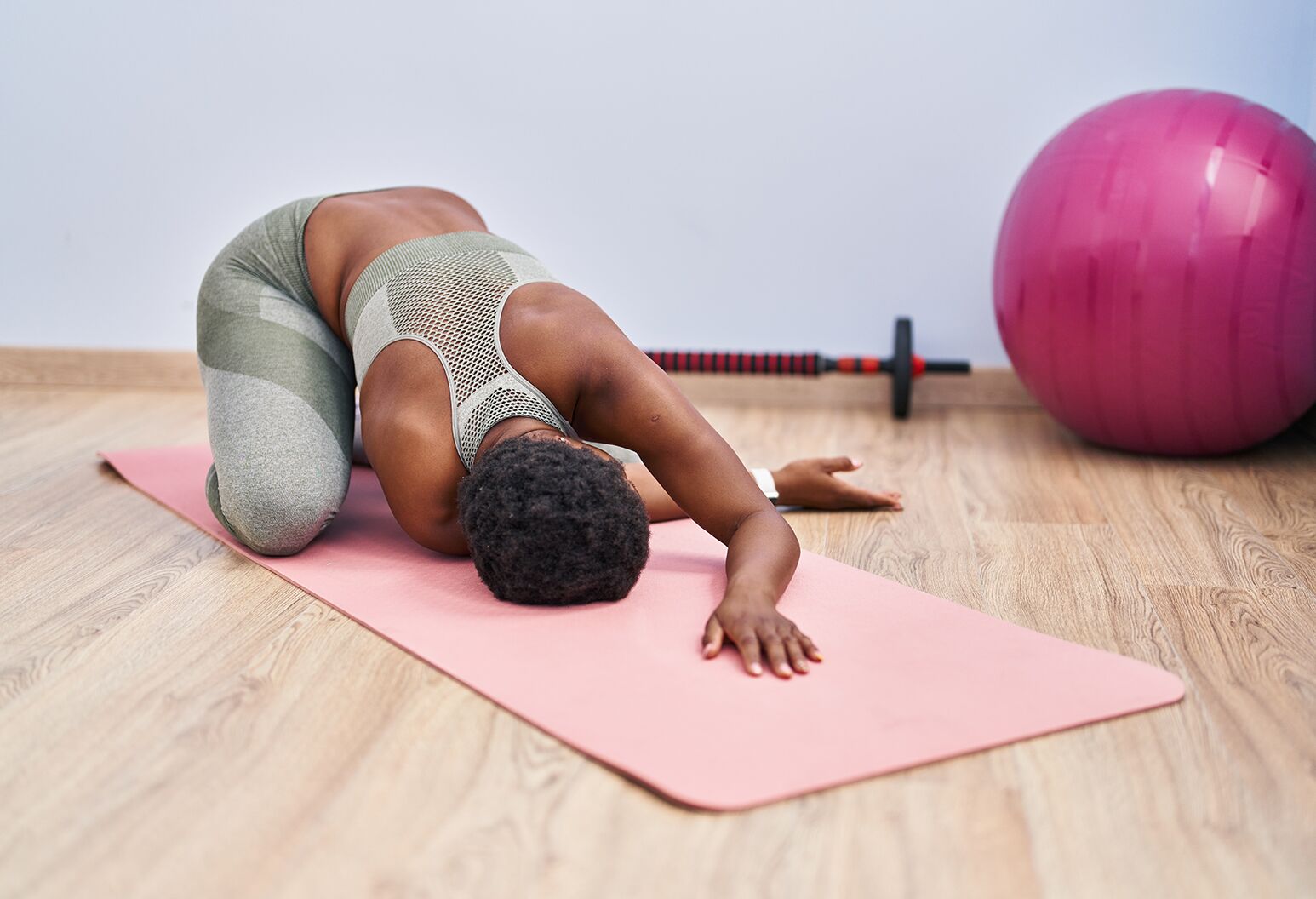
Real-life tips and personal experience
Can a balance ball help with back pain in everyday life? From my experience working with clients, it often does when used right.
What I learned in practice
- Start slow. Many clients felt better after two weeks of short, consistent sessions.
- Combine the ball with walking and targeted strength work for faster results.
- Avoid long, aimless sitting on the ball; structure matters.
Common client mistakes
- Using the ball as a novelty rather than a tool.
- Ignoring posture and moving too fast through exercises.
- Not checking ball size or inflation.
Practical routine to try (10 minutes)
- Seated pelvic tilts — 2 minutes.
- Supported bridge — 2 sets of 8 reps.
- Bird-dog on ball — 6 reps each side.
- Gentle seated rotations — 1 minute each side.
- Cool-down breathing and posture reset — 1 minute.

Source: altaunited.com

Frequently Asked Questions of Can a balance ball help with back pain
What types of back pain respond best to a balance ball?
Mild to moderate mechanical low back pain and stiffness respond well. Chronic pain from poor posture or weak core muscles often improves.
How long until I see results using a balance ball?
Many people notice reduced stiffness and better posture in 1–3 weeks with consistent practice. Lasting strength gains may take 6–12 weeks.
Can I sit on a balance ball all day to fix my back pain?
No. Prolonged passive sitting on the ball can cause fatigue and poor posture. Use the ball for focused sessions and breaks, not as a full-time chair.
Is a balance ball safe after back surgery?
Only with clearance from your surgeon or physical therapist. If approved, start under supervision and follow gradual progressions.
Do I need a therapist to use a balance ball?
You do not always need a therapist, but professional guidance helps you avoid mistakes and tailor exercises to your condition. A few sessions can be very helpful.
Conclusion
A balance ball can help with back pain when used thoughtfully. It strengthens stabilizers, improves posture, and restores gentle mobility. The best results come from combining the ball with a structured plan, gradual progressions, and professional input when needed. Try short, consistent sessions, pick the right size, and focus on quality of movement. If you’re ready, start with a simple routine and track how your pain and function change over weeks. Share your experience, ask questions below, or subscribe to learn more about safe, effective back care.

