
Ever wondered why scuba divers, all geared up, also carry what look like bricks? It’s a smart safety measure designed to help you enjoy exploring the underwater world. When you wear a thick wetsuit or drysuit, air trapped inside makes you naturally float.
This can make descending and controlling your position tricky.

Today's Exclusive Deals
Limited-time Exclusive Deals. Check current discount on Amazon.
Check Price on Amazon As an Amazon Associate I earn from qualifying purchases.Weights are the counter-balance. They help you achieve neutral buoyancy, meaning you can hover effortlessly without sinking or floating. The National Oceanic and Atmospheric Administration (NOAA) emphasizes proper buoyancy control as a cornerstone of safe diving practices.
Getting your weighting right is key to a comfortable and secure dive.
Quick Answer
Scuba divers carry weights to counteract the natural buoyancy of their gear and bodies. This allows them to descend safely, maintain a neutral buoyancy for hovering, and control their movement underwater. Proper weighting is essential for a secure and enjoyable diving experience, preventing uncontrolled ascents or descents.
Why Scuba Divers Need Weights for a Safe Dive
When you're underwater, a whole bunch of forces are at play, and buoyancy is a big one. Think of it like an invisible hand pushing you upwards. Your scuba gear, especially the Buoyancy Control Device (BCD) and exposure suits like wetsuits or drysuits, are designed to trap air for insulation and comfort.
While great for warmth, this trapped air makes you positively buoyant, meaning you want to float.
If you've ever tried to go down a waterslide, you know the feeling of pushing against the water. Underwater, that upward push can be so strong it fights your efforts to descend or stay in place. Without proper weighting, divers would struggle to get below the surface, stay still to observe marine life, or descend to desired depths, like exploring a wreck.
Manufacturer specifications for BCDs often highlight their role in buoyancy compensation, but this compensation needs a counterbalance.
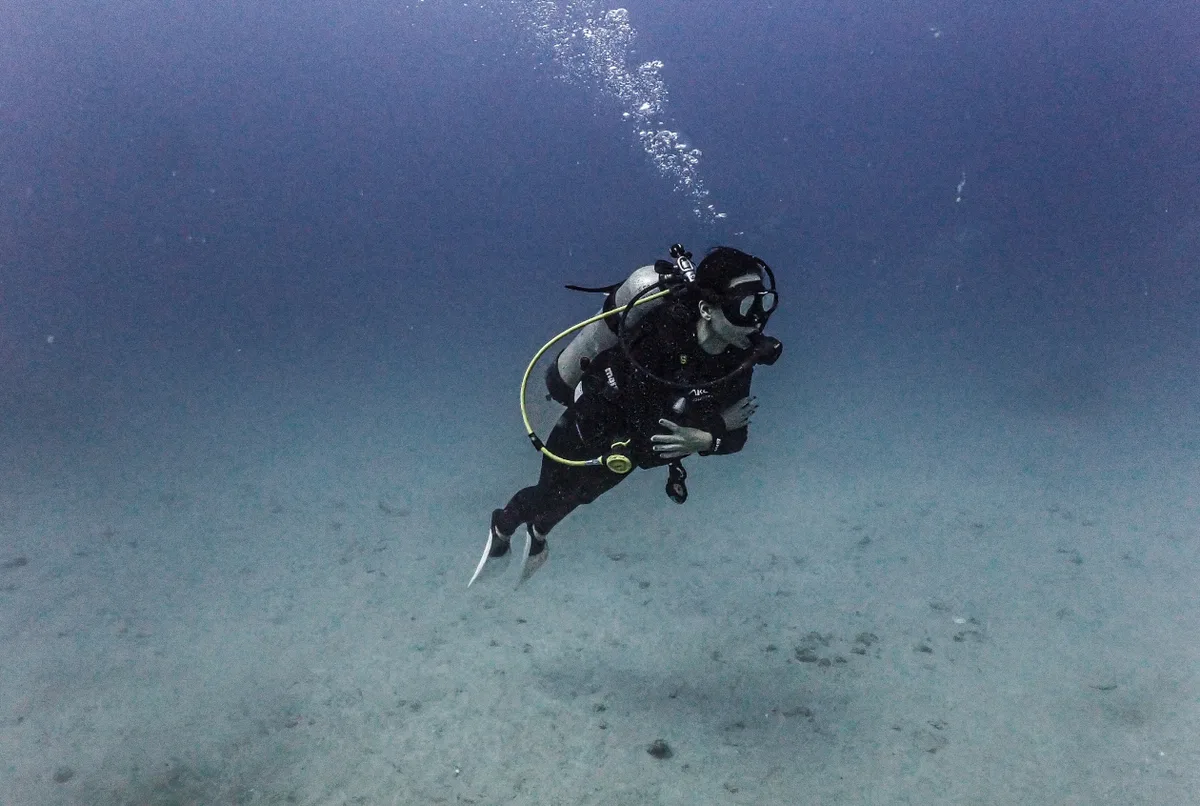
Understanding Buoyancy: The Core Reason for Weights
Buoyancy is fundamentally about displacement. According to Archimedes' principle, an object submerged in a fluid receives an upward buoyant force equal to the weight of the fluid it displaces. For scuba divers, this means the water pushes up on them and their gear.
Your scuba tank, the air inside your BCD, and the air in your wetsuit all contribute to this upward force.
The goal in scuba diving is neutral buoyancy. This is the sweet spot where the upward buoyant force perfectly balances the downward force of gravity on you and your gear. When you're neutrally buoyant, you don't sink and you don't float; you can hover in place with minimal effort.
This is crucial for several reasons:
- Comfort and Relaxation: Not fighting to stay down or up makes diving far more enjoyable.
- Conservation of Energy: Less effort means you can stay underwater longer and explore more.
- Environmental Respect: Proper buoyancy control prevents accidental damage to coral reefs or the seabed.
- Safety: It allows for controlled ascents and descents, a critical safety skill.
Your BCD helps you manage buoyancy by adding or removing air, but it needs help from weights to overcome the inherent positive buoyancy of your equipment. Per standards set by dive training agencies, achieving good buoyancy control is a primary skill.

How Weights Help You Control Your Dive
Weights are the essential counter-force that allows you to manage your buoyancy effectively. They're not just dead weight; they are carefully calculated to balance the positive buoyancy of your other gear. This balance enables precise control underwater.
Counteracting Gear's Natural Float
Your exposure suit, like a wetsuit or drysuit, is a major source of positive buoyancy. A thicker wetsuit, for instance, traps less air than a thinner one. Similarly, a drysuit, designed for colder water, can hold a significant amount of air, making you very buoyant.
Even the BCD, when inflated for buoyancy, adds to this. As aggregate user reviews report, divers often find they need more weight when switching to a thicker wetsuit or a drysuit. Manufacturer specifications for various exposure suits often provide guidance on potential buoyancy changes.
Achieving Neutral Buoyancy
To achieve neutral buoyancy, you need to add enough weight to counteract the upward push from your gear and yourself. When you have the correct amount of weight, you can then fine-tune your buoyancy with your BCD. You'll need just a small amount of air in your BCD to maintain a neutral hover.
This means you're not sinking to the bottom or bobbing up to the surface uncontrollably.
Ensuring Controlled Descents and Ascents
Weights are critical for initiating a descent. Without them, you might have to exhale completely and fight with your BCD to get down. With the right weight, you can begin your descent easily by adding a small amount of air to your BCD and then exhaling.
During ascent, weights help prevent you from shooting to the surface too rapidly. While you'll add air to your BCD to ascend, the weights ensure your ascent is controlled, not a race to the top. This controlled movement is vital, as highlighted by dive safety guidelines from organizations like NOAA.
Key Components: Weight Belts vs. Integrated Systems
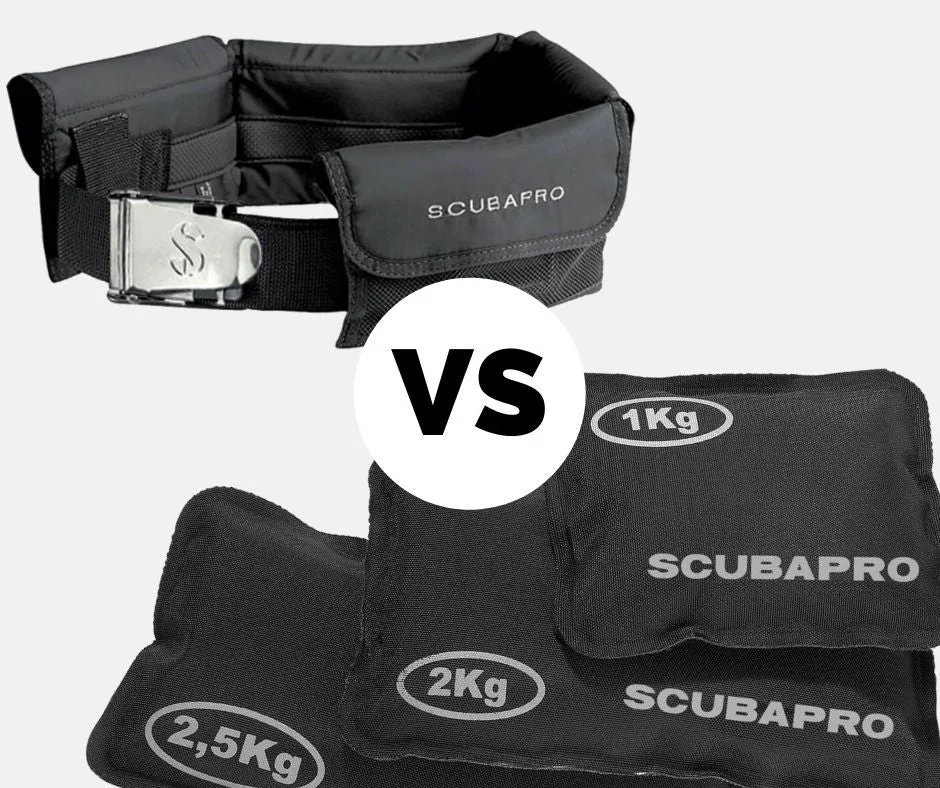
Divers typically use one of two main systems to carry their weights: a traditional weight belt or integrated weight systems found in modern BCDs. Both serve the same purpose but have different characteristics that might suit different divers or dive styles.
Weight Belts: Pros and Cons
A weight belt is a simple strap, usually made of rubber or nylon, with a buckle (often a quick-release buckle) onto which lead weights are threaded.
- Pros:
- Quick Release: The primary safety advantage is the ability to dump the belt quickly in an emergency to gain positive buoyancy.
- Cost-Effective: Generally less expensive than integrated systems.
- Versatile Weighting: Easy to add or remove individual weights to fine-tune your load.
- Distribution: Can be adjusted for comfortable weight distribution.
- Cons:
- Can Slip: If not properly secured, the belt can slip down during a dive.
- Less Streamlined: Can be bulky and may snag on things.
- Weight Distribution: Some divers find it concentrates weight on their lower back.
Integrated Weights: Pros and Cons
Integrated weights are typically pouches that slide into specially designed pockets on a BCD. The pouches themselves usually contain lead or lead-shot material.
- Pros:
- Streamlined: Creates a smoother profile, reducing drag.
- Comfortable Distribution: Weight is often distributed more evenly across the torso.
- Convenient: Weights are kept with your BCD and are less likely to be forgotten.
- Secure: Pouches are usually held in place with Velcro or clips, preventing them from coming loose.
- Cons:
- Emergency Release: While most have quick-release mechanisms, they can sometimes be slower or more complex to operate than a belt buckle in a true panic situation.
- Cost: Can add to the overall cost of a BCD.
- Capacity Limits: The number of weights you can carry may be limited by the BCD's pocket size.
- Potential for Loss: If not fully secured, a pouch could potentially be lost.
Factors Affecting Your Weight Needs
Figuring out exactly how much weight you need is not a one-size-fits-all scenario. Several factors influence the amount of weight required to achieve that crucial neutral buoyancy. Getting this calculation right is a key part of dive preparation.
Your Exposure Suit: Wetsuit vs. Drysuit
This is one of the biggest factors. A thin 3mm wetsuit traps less air than a thick 7mm wetsuit, meaning you’ll need less weight with the thinner suit. Similarly, a drysuit, which is designed to keep water out by maintaining an air space around your body, adds significant positive buoyancy.
As of 2026, it's widely acknowledged that divers using drysuits often need substantially more weight than those using wetsuits, sometimes requiring additional ankle weights to counteract the buoyant legs of the suit. You can see this difference clearly when comparing options for the best scuba diving wetsuit for warm water versus those designed for colder conditions.
Water Type: Saltwater vs. Freshwater
Saltwater is denser than freshwater. This increased density means saltwater provides more buoyant force. Consequently, you'll need less weight to achieve neutral buoyancy in saltwater compared to freshwater.
For example, if you need 10 pounds in freshwater, you might only need around 8 to 9 pounds in saltwater.
Other Gear and Personal Factors
Several other elements also play a role. Your BCD and scuba tank have their own buoyancy characteristics that need to be accounted for. Your personal body fat percentage and lung capacity can also influence how much weight you need.
Even the type of scuba tank used (aluminum versus steel) will affect overall buoyancy.
Common Weighting Mistakes and How to Avoid Them
Making a mistake with your weighting can turn a fun dive into a stressful or even unsafe experience. It’s one of the most common areas where new divers, and sometimes even experienced ones, can run into trouble. Being aware of these pitfalls is the first step to avoiding them.
- Carrying Too Much Weight: This is a common issue, especially for beginners. It leads to an immediate, rapid descent and can make it difficult to control your buoyancy at shallower depths. You might end up sinking uncontrollably, which is exhausting and potentially dangerous. It can also cause you to be negatively buoyant even with a full BCD, making ascents harder.
- Carrying Too Little Weight: If you don't have enough weight, you'll struggle to descend. You might find yourself constantly expelling air from your BCD, kicking hard, or being unable to reach the desired depth. This is not only frustrating but can also lead to increased air consumption and fatigue. It also makes it harder to stay positioned for tasks like photography or observing marine life.
- Incorrect Weight Distribution: Wearing all your weight on a belt that slips down can create an imbalance. Similarly, if integrated weight pouches aren't secured properly, they can shift or even fall out, changing your buoyancy mid-dive. A well-distributed weight system, whether a belt or integrated pouches, feels more comfortable and provides better stability. This is why choosing a good best scuba diving weight belt or ensuring your BCD's weight system is secure is so important.
- Not Adjusting for Conditions: As mentioned, you need different weights for saltwater versus freshwater, and for different exposure suits. Divers who dive in various conditions without adjusting their weights will inevitably struggle with buoyancy. A dive in a thin wetsuit in the tropics will require far less weight than a dive in a drysuit in colder waters.
Essential Safety Practices for Weight Usage
Proper use of scuba weights is not just about comfort; it's a critical safety protocol. Understanding and implementing these practices ensures you can manage your buoyancy effectively in all dive scenarios.
- Perform a Buoyancy Check: Always perform a buoyancy check at the surface before descending. With your BCD empty of air, you should be able to float with just the top of your head out of the water. If you sink immediately, you have too much weight. If you're floating comfortably with your whole upper body out of the water, you likely have too little. Your dive instructor will guide you through this during your training.
- Use a Quick-Release Mechanism: Whether you use a weight belt or integrated pouches, ensure they have a reliable quick-release system. In an emergency where you need to rapidly gain positive buoyancy, being able to jettison your weights instantly is paramount. This is a core skill taught in all entry-level scuba certifications.
- Gradually Adjust Weight: When you are unsure of the exact amount of weight needed, it's always better to start with slightly less and add more as needed. You can carry extra small weights in your gear bag to adjust between dives if necessary.
- Secure All Weights: Whether it's threading weights correctly onto a belt or ensuring integrated pouches are firmly locked into their pockets, double-check that all weights are secure before entering the water. A loose weight can not only cause buoyancy problems but also become a snag hazard or get lost.
- Understand Your Gear's Buoyancy: Be aware of how your specific exposure suit and BCD affect your buoyancy. For instance, as air is used from your scuba tank, it becomes more buoyant. This means you'll generally become more positively buoyant throughout the dive, requiring you to make minor BCD adjustments.
Step-by-Step Process: Getting Your Weighting Right
Determining the correct amount of weight is a process, not a single number. It typically involves a buoyancy check performed in a controlled environment, like a shallow part of the ocean or a swimming pool, before you head out for a real dive. This ensures you're properly weighted before you're deep underwater.
Your dive instructor will guide you through this. First, you'll don all your scuba gear, including your scuba tank filled with air. You'll then inflate your BCD so you're floating at the surface.
Next, you'll slowly release the air from your BCD. At this point, you should be able to hold a normal breath and still float, with only the top of your head out of the water.
If you sink immediately, you have too much weight. If you're floating comfortably with your whole upper body out of the water, you likely have too little. The goal is to find that balance where you can hang neutrally buoyant at about 5 meters (15 feet) with an empty BCD and a normal lungful of air.
This is a critical skill for all divers.
Costs / Pricing / Data / Specs
The cost of scuba weights varies depending on the type and material. Lead is the most common material due to its density and cost-effectiveness.
- Weight Belts: A basic rubber or nylon weight belt can range from $20 to $50, depending on the brand and buckle quality.
- Lead Weights (for belts): Individual lead weights typically cost between $3 to $6 per pound (or approximately $7 to $13 per kilogram). So, a diver needing 20 pounds (9 kg) of weight might spend $60 to $120 just on the weights themselves.
- Integrated Weight Pouches: These usually come with the BCD or can be purchased separately. A set of two pouches, often holding up to 10 lbs (4.5 kg) each, can cost anywhere from $50 to $100. The quality of the buckle and the material of the pouches influence the price.
- Ankle Weights: If needed, a pair of ankle weights can range from $30 to $60.
It's important to invest in good quality weights and a secure system, as they are crucial for safety. While the initial outlay might seem like an added expense, it's an investment in reliable buoyancy control and diver safety.
Expert Tips for Fine-Tuning Your Weight
Getting your weight dialed in might take a few dives. Don't get discouraged if it's not perfect on the first try. Experienced divers often have a few tricks up their sleeve for fine-tuning their ballast.
- Start Conservatively: It's generally safer to be slightly underweighted initially. You can always add a small weight or two if you're struggling to descend. Being significantly overweight is harder to correct underwater in a calm manner.
- Monitor Your Air Consumption: As you become more experienced, you'll notice your air consumption might decrease once your buoyancy is dialed in. This is because you're not expending as much energy fighting to stay neutral.
- Keep a Log: Note the amount of weight you use for different types of dives, environments, and exposure suits. This information can be invaluable for future dives, especially when traveling to new locations. A good best scuba diving computer can help track dive profiles, but a physical log can be useful for weight notes.
- Consider Weight Distribution: If you use a weight belt, ensure the buckle is easy to reach. For integrated systems, check that the pouches are securely seated and don't create an uncomfortable pressure point. Some divers find that a combination of a light belt and integrated weights offers the best balance and comfort.
Frequently Asked Questions About Scuba Weights
How much weight do I need for scuba diving?
The exact amount varies significantly based on your body weight, exposure suit thickness, water salinity, and gear. As a general starting point, a diver might need around 10% of their body weight in pounds, but this is just a rough guide and must be confirmed with a buoyancy check.
Can I use anything other than actual scuba weights?
It's strongly advised against improvising with non-scuba weights. Standard lead weights are designed for this purpose, and their density and quick-release features are critical safety considerations. Homemade or non-standard weights may not release properly in an emergency, posing a serious risk.
How do I know if I have too much weight?
If you sink rapidly when you exhale, or if you have trouble achieving neutral buoyancy even with your BCD completely deflated at the surface, you likely have too much weight. You should be able to hover comfortably with minimal air in your BCD.

