
If you’ve ever wondered what are the must-have items for a home gym, you’re in the right place. I’ve designed, tested, and optimized home gyms in apartments and garages, and I know what gear actually gets used. The best home gym is simple, safe, and built around your goals. In this guide, I’ll walk you through the exact essentials that work for most people, backed by experience and solid training principles. Let’s build a setup that fits your space, budget, and lifestyle—without the fluff.
Source: price.com

Today's Exclusive Deals
Limited-time Exclusive Deals. Check current discount on Amazon.
Check Price on Amazon As an Amazon Associate I earn from qualifying purchases.The Core Strength Setup: The Heart Of Any Home Gym
Strength gear is the backbone of your training. Think versatile, compact, and durable. If you choose right, you can train every muscle group with just a few items.
Start with adjustable tools. I recommend adjustable dumbbells for their space-saving design. Add a set of resistance bands to cover pulling movements and warm-ups. If you have room, a flat or adjustable bench multiplies your exercise options.
Must-have strength items:
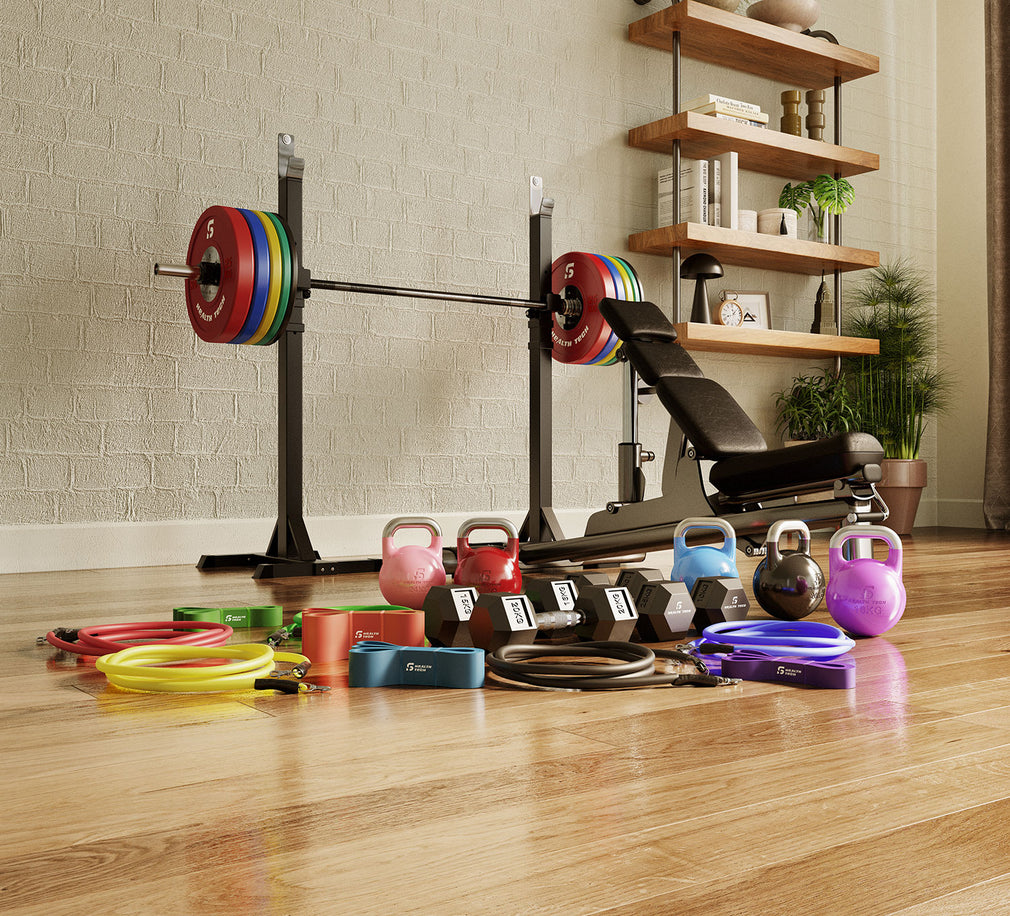
- Adjustable dumbbells Choose a pair that covers 5 to 50 pounds for most users.
- Kettlebell One or two bells, commonly 12 to 24 kg for general strength and conditioning.
- Resistance bands Mix of light, medium, and heavy; include a loop band for glute work.
- Flat or adjustable bench Solid, stable, and easy to move.
If space and budget allow, a barbell with bumper plates and a compact squat stand opens the door to squats, deadlifts, and presses. If you’re new to lifting, start with dumbbells and bands, then upgrade once you build consistency.
Pro tip from hard-earned experience: buy once, cry once. Cheap gear bends, slips, or collects dust. Quality equipment is safer and lasts longer.

Source: scala-santa.com
Space-Savvy Cardio Options That Actually Get Used
Cardio does not need to eat your living room. Choose tools you’ll enjoy and use at least three times a week. The American College of Sports Medicine recommends at least 150 minutes of moderate cardio per week or 75 minutes vigorous. You can hit that with simple tools.
Great cardio picks for small spaces:
- Jump rope Ultra-portable, cheap, and great for coordination.
- Rower Folds upright, low-impact, works legs, core, and back.
- Compact treadmill Look for foldable designs with handrails if needed.
- Stationary bike Quiet, joint-friendly, and easy to progress with time or intervals.
- Battle rope If you have a garage or yard, it’s a killer metabolic tool.
Personal note: when I trained in a studio apartment, a jump rope and an interval timer were my go-to. I could get sweaty in 12 minutes and never worry about neighbors if I stuck to low-impact rounds.
Source: www.rushyashya.net
Pulling Power: Bars And Anchors You’ll Thank Yourself For
Pull-ups and rows build a strong back and improve posture, but they need anchors. A doorway pull-up bar or a wall-mounted unit adds big value. Pair it with rings or a suspension trainer for rows, face pulls, and core work.
Smart additions:
- Doorway pull-up bar Make sure it protects the frame and locks tight.
- Suspension trainer Ideal for rows, push-ups, fallouts, and single-leg work.
- Band door anchor Lets you set pulling angles without drilling.
Mistake to avoid: ignoring pulling volume. Many home gyms go heavy on push movements and skip rows. Your shoulders will thank you if you balance both.

Source: firstfilbio.com
Mobility And Recovery: The Unsung Essentials
Recovery tools help you move better and stay consistent. The best athletes I coach treat mobility as part of training. It takes five to ten minutes and pays off for years.
Recovery staples:
- Foam roller Medium density for most bodies; use pre-workout and on off days.
- Lacrosse or massage ball Great for hips, glutes, traps, and feet.
- Yoga mat Non-slip, thick enough to cushion knees and spine.
- Light band For shoulder warm-ups and joint-friendly activation.
Evidence supports warm-ups, gradual loading, and consistency for injury prevention and long-term progress. Keep it simple and repeatable.

Source: testifysc.com
Flooring, Safety, And Storage: Protect Your Space
Good flooring protects your joints and your home. Safety setups keep you training longer. Smart storage keeps your gym tidy so you actually use it.
What to add:
- Rubber flooring Tiles or horse stall mats to absorb shock and reduce noise.
- Collars and safeties If you use a barbell, lock plates and use spotter arms.
- Storage rack Keep dumbbells, bands, and kettlebells organized and off the floor.
Personal tip: in my first garage gym, stall mats changed everything. The space felt like a real gym and my lifts got smoother because the footing was stable.
Source: i-ec.at
Smart Accessories And Tech To Track Progress
You don’t need fancy tech, but a few tools add clarity and motivation. Track your work, measure effort, and time your rest.
Helpful add-ons:
- Interval timer EMOMs, Tabatas, and rest periods stay on point.
- Heart rate monitor Keep easy days easy and hard days hard.
- Notebook or app Log sets, reps, and RPE for steady progress.
- Mirror or phone stand Check form and record lifts for review.
Research shows that tracking training improves adherence and outcomes. A simple log beats guesswork every time.

Source: mecanica.uaz.edu.mx
Budget And Space Planning: Build In Phases
Start with the essentials, then add as you go. Map your training goals and your square footage. You’ll avoid buyer’s remorse and clutter.
How to plan:
- Define your main goal Strength, fat loss, cardio, or general fitness.
- Choose multi-use gear Adjustable dumbbells, bands, and a bench.
- Set a monthly budget Add one quality item per month or quarter.
- Measure your space Leave room to move safely around equipment.
Rule of thumb: if you won’t use it twice a week, it’s a luxury, not an essential.
Sample Starter Bundles For Any Space
These bundles are tested in real homes and apartments. Pick one that matches your goals and room.
Minimalist strength bundle:
- Adjustable dumbbells, light and medium loop bands, yoga mat, timer.
Small-space cardio and strength:
- Jump rope, suspension trainer, one kettlebell, foam roller.
Garage lifter upgrade:
- Barbell, bumper plates, squat stand with spotter arms, flat bench, rubber flooring.
Wellness and mobility focus:
- Yoga mat, foam roller, light bands, balance pad, heart rate monitor.
Add as you go. The right bundle is the one you’ll use with joy and consistency.
Maintenance And Hygiene: Keep It Clean And Quiet
A clean gym is a healthy, inviting gym. It also extends the life of your equipment. Set a five-minute reset routine after each session.
Do this weekly:
- Wipe handles and mats Use mild cleaner to prevent wear.
- Check bolts and fasteners Tighten racks, benches, and pull-up bars.
- Rotate dumbbell weights Even wear helps adjustable sets last longer.
- Manage noise Add mats and lift with control to keep peace with neighbors.
Transparent note: equipment needs vary by climate and use. Humid garages may need light oil on barbell sleeves and better ventilation.
Frequently Asked Questions Of What Are The Must-Have Items For A Home Gym?
What Is The Minimum Equipment I Need To Start?
A pair of adjustable dumbbells, a set of resistance bands, and a yoga mat. With those three, you can train every major muscle group and do cardio intervals.
How Much Space Do I Need For A Functional Home Gym?
You can train in as little as a 6-by-6-foot area. If you add a squat stand and barbell, plan for about 8-by-8 feet with vertical clearance for presses and pull-ups.
Should I Buy A Treadmill Or Start With A Jump Rope?
Start with a jump rope unless you know you love treadmill running. A rope is cheaper, portable, and effective. Upgrade to a treadmill if you want longer steady runs or low-impact walking.
Are Adjustable Dumbbells Worth It?
Yes for most people. They save space and money over a full rack. Choose a model with fast adjustments and a solid handle. If you lift very heavy, fixed dumbbells or a barbell may suit you better.
How Do I Prevent Injury Training At Home?
Warm up for five minutes, use controlled reps, and follow progressive overload. Balance pushing and pulling, and stop a set if form breaks. Evidence-backed guidelines suggest two to three strength sessions per week and at least one rest day between similar muscle groups.
Wrap-Up: Build The Home Gym You’ll Use Every Week
You don’t need a room full of machines to get strong, lean, and healthy. Start with adjustable dumbbells, resistance bands, a mat, and a simple cardio tool you enjoy. Add a bench, a pull-up bar, and good flooring as you go. Track your sessions, keep it clean, and choose quality over clutter.
Today, pick one essential and set up a small training corner. Do a 20-minute session and log it. Progress comes from consistency, not perfection. If this helped, subscribe for more guides, ask a question in the comments, or share your setup for feedback.

