
I’ve helped hundreds of people build home gyms that actually get used. I know the pain of buying a shiny machine that ends up as a coat rack. If you want to know how to choose the right home gym machine, the key is a clear plan. We’ll match your goals, space, and budget to the best choices. I’ll share real tips, mistakes to avoid, and simple steps so you can make a confident, long-term pick.
Source: www.technogym.com

Today's Exclusive Deals
Limited-time Exclusive Deals. Check current discount on Amazon.
Check Price on Amazon As an Amazon Associate I earn from qualifying purchases.Quick Decision Framework
Start with three questions: What is your main goal? How much space do you have? What is your true budget? Your answer shapes the best machine type, resistance style, and features that matter for you. This simple filter prevents overwhelm.
Use a rule of three. Pick one primary goal, one secondary goal, and one constraint. For example: build muscle, improve cardio, limited space. Then choose the machine that fits those three best. That focus keeps you from chasing gimmicks.
Here’s a smart path I use with clients:
- If you want strength first: pick a rack or cable-based machine.
- If you want cardio first: pick a rower, bike, treadmill, or elliptical.
- If you want both in one: consider a functional trainer with attachments.

Source: maxumfitness.us
Know Your Space and Setup
Measure the footprint and the ceiling height. Many people forget vertical space for pull-ups and overhead presses. Leave room to move around the machine, load weights, and adjust cables. Also check doorways for delivery.
Note flooring and noise. Concrete floors handle weight well. Upper floors need rubber mats to control sound and vibration. If you live in an apartment, a rower or bike is often quieter than a treadmill.
Check power and Wi‑Fi. Smart machines need outlets and a stable signal. If your garage gets cold or hot, pick equipment with sealed bearings and powder-coated frames for durability.
Source: www.technogym.com
Define Your Goals and Training Style
Match the machine to your training style. For muscle gain, choose machines that let you progress load safely. For fat loss or heart health, choose cardio you enjoy and can do often. Enjoyment is a huge predictor of consistency.
Think about movements you love and hate. If you dread running, a treadmill may go unused. If you enjoy intervals, a rowing machine or air bike fits well. If you like free-weight feel but want safety, a functional trainer or Smith machine can help.
Set clear metrics. For strength, plan target loads and rep ranges. For cardio, set pace, watt, or heart rate targets. Machines that track these metrics help you stay honest.
Source: www.nordictrack.co.uk
Types of Home Gym Machines for Strength
Power rack with barbell and plates. Most versatile for compound lifts. Needs space, spotter arms, and good flooring. Great for progressive overload and long-term strength.
Functional trainer (dual adjustable pulley). Smooth cable resistance, many angles, safer solo training. Ideal for full-body work in smaller spaces. Look for high max stack weight, tall column travel, and aluminum pulleys.
All-in-one home gym machines. Compact and guided paths help beginners. Check if the movement patterns match your body. Upgradable weight stacks are a plus.
Smith machine or lever systems. Good for controlled pressing and squats with safety stops. Not as versatile as a rack, but useful if you train alone and want fixed paths.
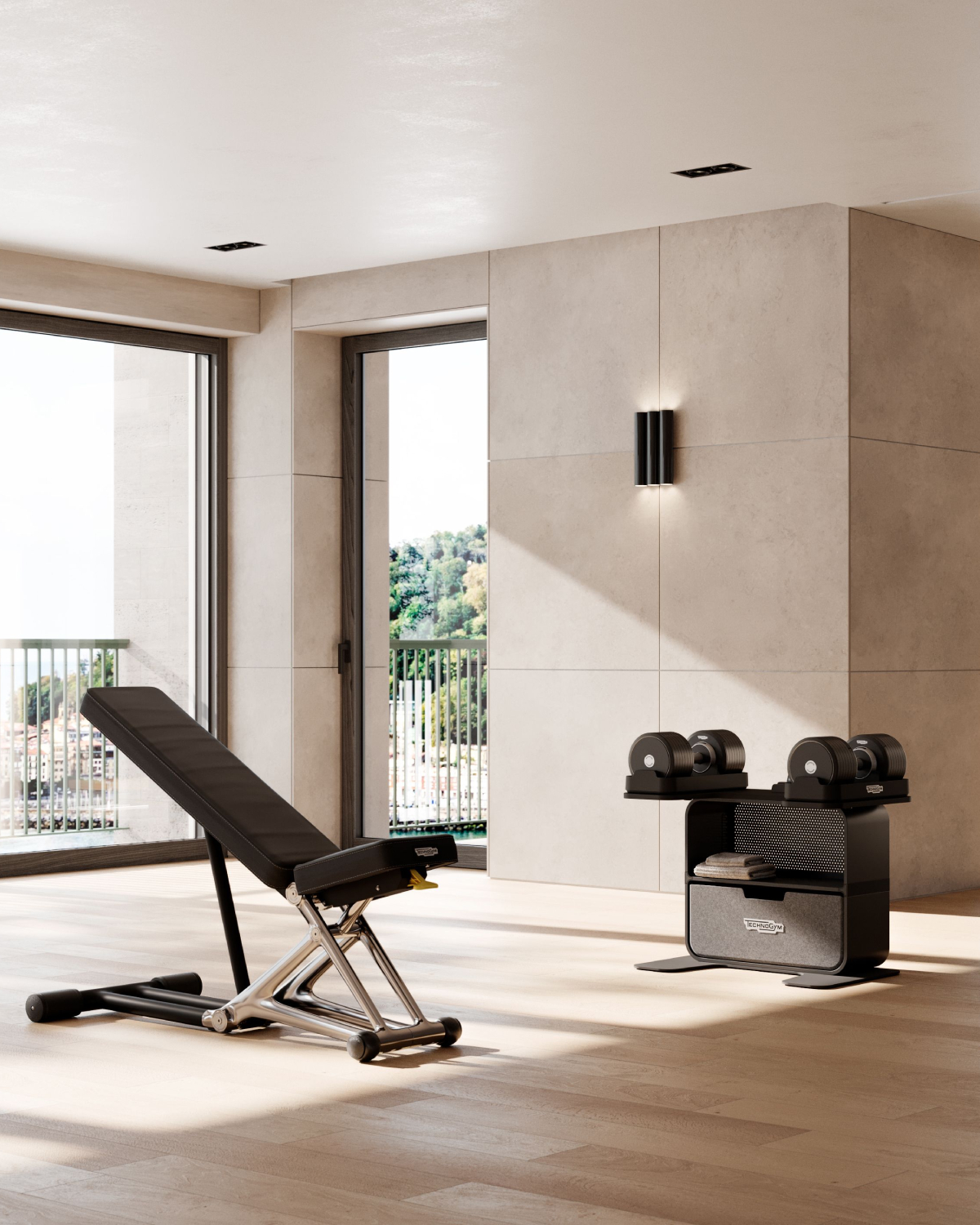
Adjustable dumbbells and bench add-ons. Pair well with cables or racks. They unlock pressing, rowing, and single-leg training with a small footprint.
Source: www.technogym.com
Types of Cardio Machines
Rowing machines. Full-body, low-impact, efficient. Air and magnetic rowers allow fine control of intensity. They store upright and suit small spaces.
Spin or air bikes. Simple, quiet (magnetic) or intense (air). Great for intervals and steady rides. Check adjustability for seat and handlebar height to protect knees and back.
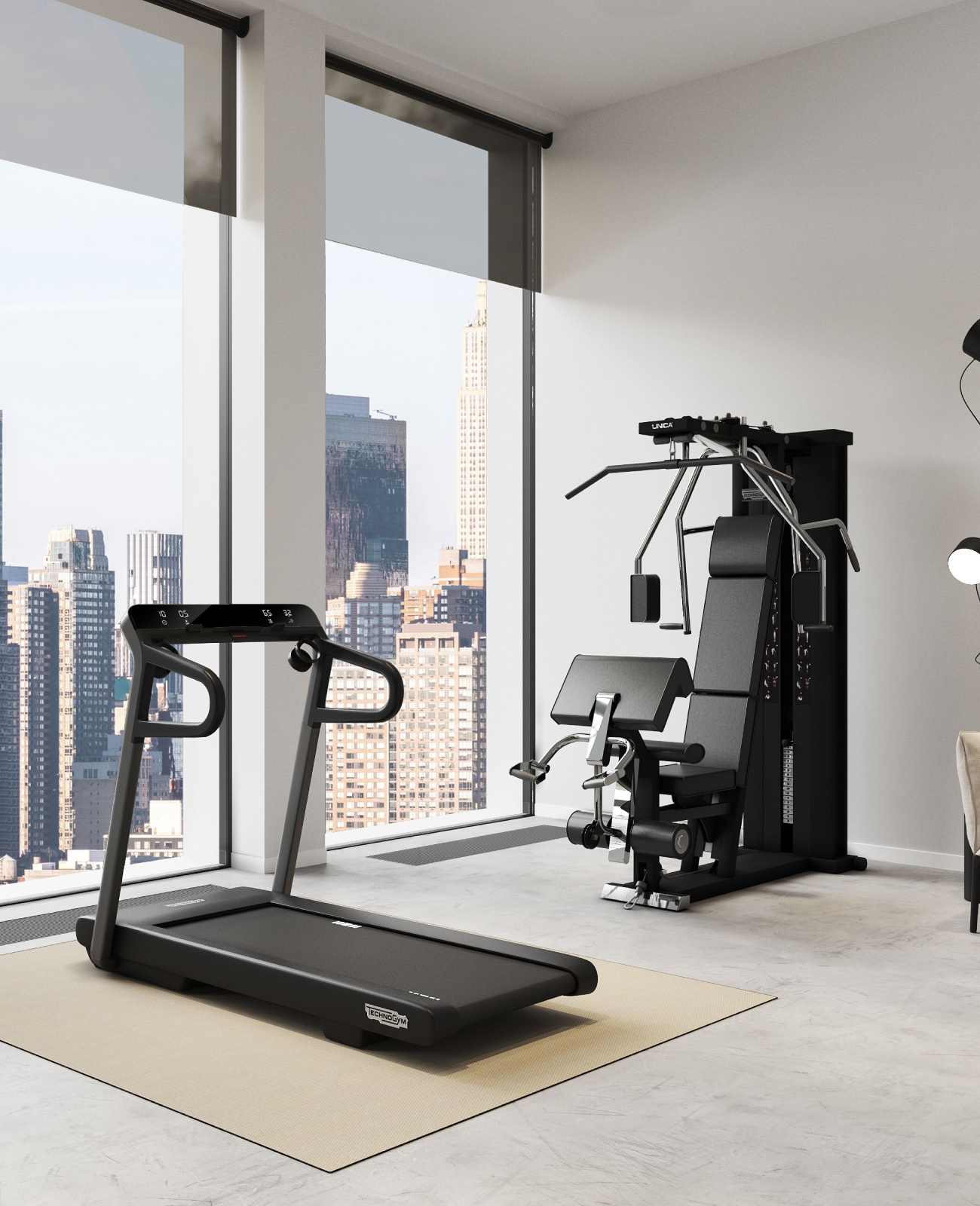
Treadmills. Highest calorie burn if you walk or run. Look for motor power (at least 3.0 CHP if you run), deck size (20 x 60 inches for running), and cushioning. They’re larger and louder.
Ellipticals. Low-impact and joint-friendly. Choose a smooth stride and a stable base. Front-drive units save space, rear-drive often feel smoother.
Climbers/steppers. Compact, very time-efficient. High heart rate at lower speeds. Solid pick for small apartments.
Source: www.technogym.com
Resistance and Progression Mechanics
Weight stacks and plates allow clear progression in small jumps. This is ideal for strength and muscle gain. Check the max load and if you can add plates or upgrade stacks.
Bands and bodyweight systems are portable and cheap. They work for beginners and travel. Load increases are less precise, and resistance can vary across the range of motion.
Magnetic, air, or water resistance on cardio machines each feel different. Magnetic is quiet and steady. Air scales with effort for powerful sprints. Water feels smooth and rhythmic. Pick the feel you enjoy so you stick with it.
Comfort, Ergonomics, and Safety
Adjustability protects your joints. Look for easy seat, handle, pulley height, and bench angle changes. The right fit reduces pain and boosts performance.
Test grips and strap quality. A wobbly seat post or rough handle ruins sessions. For strength machines, check cable smoothness and pulley alignment. For cardio, ensure the step or stride feels natural.
Safety features matter at home. Spotter arms on racks, safety stops on Smith machines, and emergency keys on treadmills can prevent injury. Max user weight and stability ratings should match your needs.
Connectivity, Apps, and Coaching
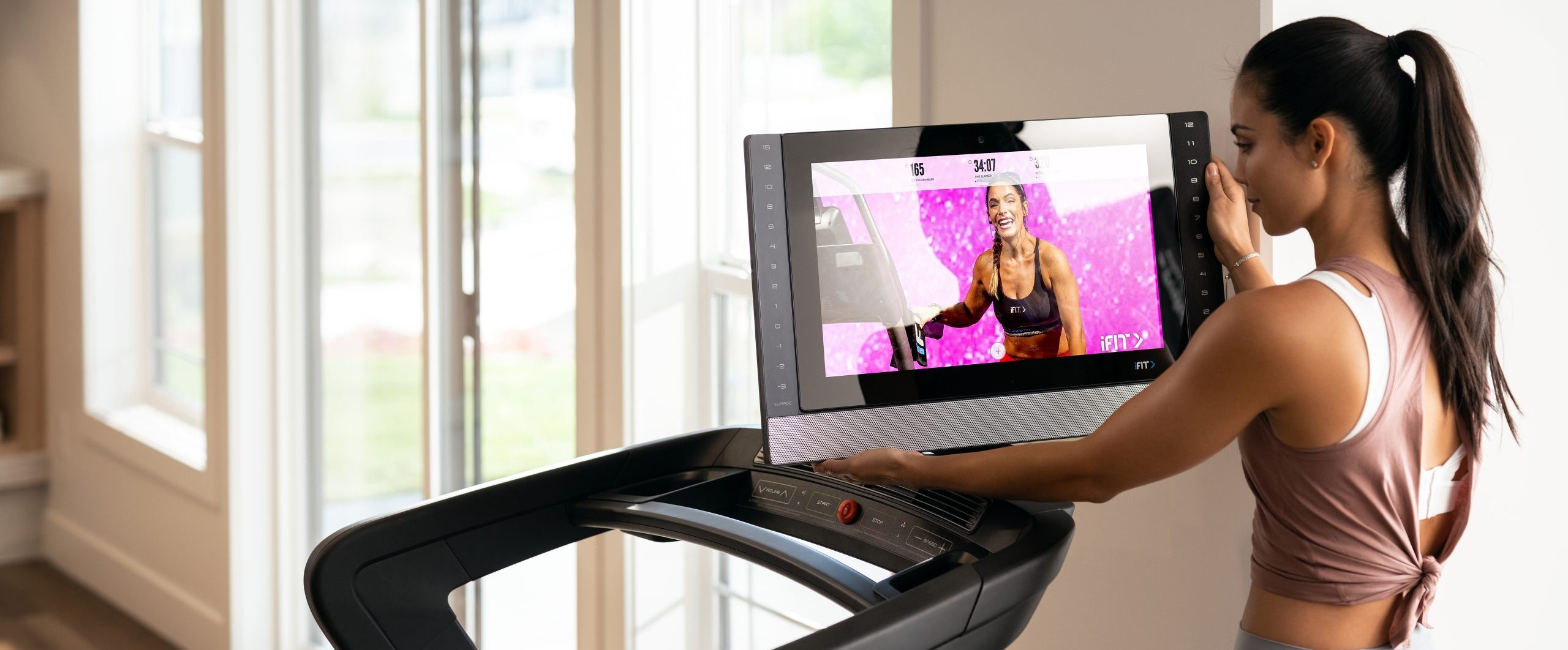
Smart screens and apps can boost motivation. Programs with structured plans and progressive levels keep you consistent. Look for clear metrics and a training calendar.
Beware of paywalls. Many machines require subscriptions. Factor that into long-term cost. If you prefer minimal tech, choose models with simple consoles and ANT+/Bluetooth for heart rate.
Form feedback helps. Some platforms give technique cues and effort zones. Even basic heart rate zones can improve session quality.
Budget, Value, and Total Cost
Set a total project budget. Include delivery, mats, accessories, and possible subscriptions. A balanced setup often beats a single expensive item.
Think cost per use. A $1,000 rower used 200 times a year is $5 per session in year one, then pennies after. Buy once, cry once can make sense if the machine fits your plan.
Used market deals are strong. Metal frames and quality bearings last. Inspect cables, belts, tracks, and consoles. Ask for proof of maintenance if possible.
Testing, Reviews, and Return Policies
If you can, test the machine. Five minutes on a bike tells you more than specs. Ask yourself: do I want to use this every week? Comfort beats hype.
Read reviews for patterns, not one-off praise or rants. Look for comments on durability, customer service, and noise. Pay attention to warranty terms and part availability.
Know the return window. Keep boxes for a few weeks. If a machine rattles or feels wrong, send it back. Good brands make returns smooth.
Sample Setups by Budget and Space
Small space, low budget. Adjustable dumbbells, a foldable bench, and bands. Add a compact rower or stepper. This covers full-body strength and cardio with little clutter.
Garage gym, mid budget. Half rack with spotter arms, barbell, plates, adjustable bench, and a magnetic rower. This setup scales for years and works for families.
Apartment, tech-friendly. Functional trainer with dual pulleys, adjustable bench, and a smart bike. Quiet, versatile, and easy to share.
Maintenance and Longevity
Simple care extends life. Wipe sweat, vacuum dust, and lube rails or chains as recommended. Tighten bolts quarterly. Replace worn cables and belts on schedule.
Choose brands with strong parts support and clear manuals. Check warranty: frame, parts, and labor. A solid warranty shows the company trusts its build.
Log your sessions and issues. A small notebook or app helps track noises, wear, and fixes. That habit keeps your machine safe and smooth.
Frequently Asked Questions
How do I choose between a power rack and a functional trainer?
Pick a rack if you love barbell lifts and have space and good flooring. Pick a functional trainer if you want safer solo training, many angles, and compact strength. Many people pair a trainer with adjustable dumbbells for balance.
What is the best cardio machine for weight loss?
The best one is the one you will use often. Rowers and air bikes burn calories fast. Treadmills are great if you like walking or running. Aim for 150–300 minutes per week at mixed intensities.
How much ceiling height do I need?
For racks with pull-ups, aim for at least your height plus 18 inches. For treadmills, add 6–8 inches to your standing height. Always test overhead moves with shoes on.
Are smart subscriptions worth it?
They help with structure and motivation. If coaching, leaderboards, and metrics keep you consistent, they can be worth it. If you prefer simple training, pick machines with basic consoles and skip the fee.
What should I check when buying used?
Inspect frames for rust, cables for fray, pulleys for smooth spin, belts for wear, and consoles for dead pixels. Test under load. Ask about age, storage, and maintenance history.
Conclusion
A great home gym machine matches your goals, your space, and your habits. Measure your room, set a clear plan, and choose the machine you want to use week after week. Focus on fit, safety, and long-term value. Start small, stay consistent, and upgrade as your needs grow. Ready to build a setup you’ll love? Share your space and goals in the comments, and subscribe for more home gym guides.

