Choosing an inversion table is not easy. With so many features, designs, and safety claims, buyers can feel lost. Two popular models—Teeter FitSpine LX9 and Health Gear ITM5500—stand out. Both promise comfort, support, and relief for your back, but they approach these goals differently. If you want clear answers on which is better for your needs, you’re in the right place. This article compares these two inversion tables across nine key areas, helping you make a confident, informed choice.
Overall Design And Build Quality
First impressions matter, especially for equipment that supports your entire body. The Teeter FitSpine LX9 comes with a premium frame made from heavy-gauge steel. The finish is sleek, with curved lines and a modern look. Its frame feels solid, and the construction quality is obvious. Teeter is also UL-certified for safety standards, showing a commitment to reliability.
Today's Exclusive Deals
Limited-time Exclusive Deals. Check current discount on Amazon.
Check Price on Amazon As an Amazon Associate I earn from qualifying purchases.On the other hand, the Health Gear ITM5500 has a simpler, boxier frame. It uses steel as well, but the welding and joints are not as refined. Its padding and upholstery are thicker, giving a softer feel. However, some users notice that bolts and joints require tightening over time. While both support up to 300 lbs, the LX9 is more stable during inversion. If you want a table that looks and feels like a high-end product, Teeter wins here.
Comfort And Padding
Comfort is key for inversion therapy. The LX9 uses a unique FlexTech bed—a flexible plastic panel with cutouts. This design allows your back to stretch and move naturally. Instead of thick padding, Teeter relies on ergonomic shaping, which may feel strange at first but actually enhances decompression.
Health Gear ITM5500 takes a different path. It offers 4-inch memory foam padding across the backrest. For those who want plush comfort, this feels luxurious and soft. However, thick padding can reduce the effectiveness of spinal decompression. Some users find they sink into the foam, making it harder to feel the stretch.
In summary, the LX9 is better for those who want ergonomic support and real spinal decompression. The ITM5500 is ideal if you prefer a cushioned, softer experience.

Adjustable Features
Customization matters, especially if multiple people will use the table. The Teeter FitSpine LX9 lets you adjust the height easily—from 4’8” to 6’6”. The ankle lock system is self-adjusting, and the angle selector offers preset inversion levels (20°, 40°, 60°). You can also fine-tune the rotation with simple movements.
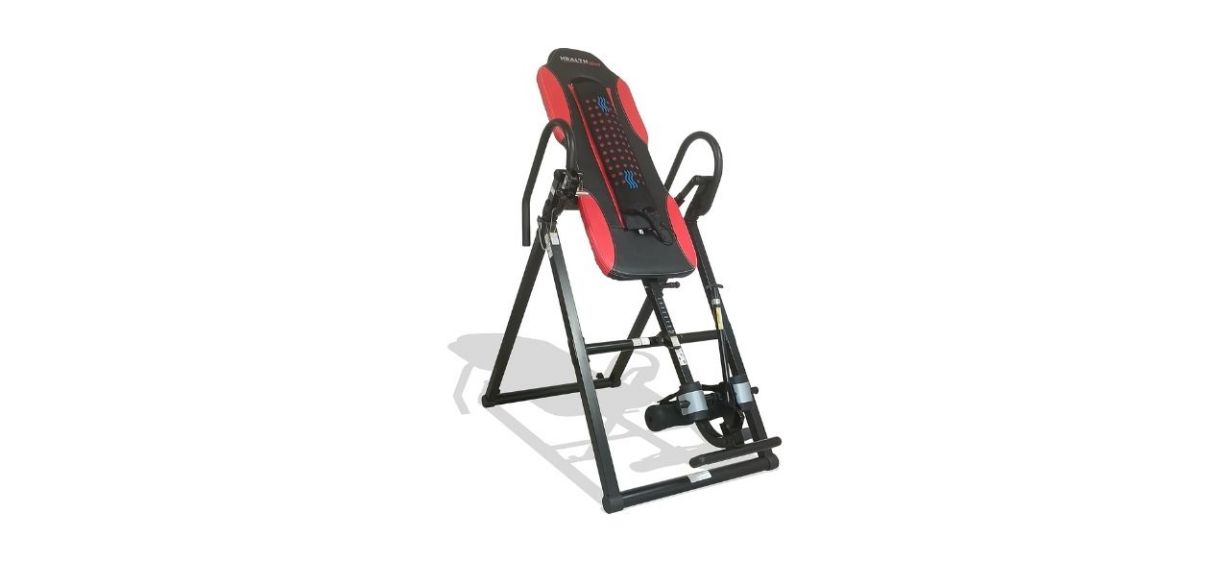
The Health Gear ITM5500 is also height-adjustable, covering 4’10” to 6’6”. Its ankle locking system uses a pull-pin release, which works but isn’t as smooth as Teeter’s. The ITM5500 allows custom angles up to 90°, but requires manual adjustment using a safety strap. This gives flexibility but can be less precise.
Both tables fit most body types. Teeter’s adjustments are faster and more intuitive, while Health Gear’s options take more effort.
Ankle Locking System
Safety during inversion relies on the ankle support. Teeter’s LX9 has a Deluxe EZ-Reach ankle system. The handle is extra long, making it easy to secure your ankles without bending far. The padding is contoured and firm, holding your feet comfortably and securely.
Health Gear ITM5500 uses a standard pull-pin system with foam rollers. The rollers are soft, but some users report discomfort after longer sessions. The handle is shorter, so taller users may have trouble reaching the lock.
For people with mobility challenges or sensitive ankles, the LX9 offers better support and ease of use.
Inversion Angles And Control
The degree of inversion is important for therapy and safety. Teeter LX9 provides three preset angles—20°, 40°, and 60°. These are set using a color-coded lever, making changes quick and safe. The rotation is smooth, and you can control the movement with your arms.
Health Gear ITM5500 allows full inversion—up to 90°. You set the angle using a safety strap, which gives more flexibility but requires trial and error to find your preferred setting. The rotation is fine, but not as smooth as Teeter’s.
Beginners often prefer Teeter’s preset angles, as they reduce the risk of over-inverting. Advanced users may like the ITM5500’s unlimited adjustment.
Therapeutic Features
Both tables aim to relieve back pain and improve circulation, but their extra features are different. Teeter LX9 includes stretch handles, traction bars, and a headrest pillow. These let you deepen your stretch and target different muscles. It also comes with a lumbar bridge attachment for added lower back support.
Health Gear ITM5500 offers a built-in vibrating massage pad and heat therapy. The pad covers the backrest and is removable. Heat and vibration can help relax muscles and ease pain, especially for those with tight or sore backs.
Teeter focuses on stretching and decompression; Health Gear adds comfort and relaxation. Your choice depends on whether you prefer active therapy or soothing features.
Storage And Portability
Space can be a concern. Teeter LX9 folds up easily, but it’s still large and heavy (about 65 lbs). The folded footprint is small enough for a closet, but moving it requires some strength. Its wheels help, but are not designed for long distances.
Health Gear ITM5500 is lighter (about 55 lbs) and folds compactly. It’s easier to move and store, thanks to its smaller size and lighter frame. For people with limited space, ITM5500 is more practical.
Both tables are not meant for daily folding/unfolding, but Health Gear’s lighter weight gives it an edge.
Assembly Process
Many buyers dread assembly. Teeter LX9 comes partially assembled, with clear instructions and online video guides. Most users finish in 30–45 minutes. The parts fit well, and tools are included.
Health Gear ITM5500 arrives in more pieces and requires careful assembly. The instructions are decent, but some steps are tricky. Users often need 60–90 minutes, and a second person helps. Bolts need regular checking after first use.
Teeter’s quick and easy setup is a big benefit for those who dislike complex builds.
Warranty And Customer Support
Warranty shows the maker’s confidence. Teeter offers a 5-year full warranty on the LX9, covering defects and parts. Their customer service is responsive and experienced, with a solid reputation.
Health Gear ITM5500 provides a 1-year warranty. Support is available, but reviews are mixed. Some buyers report slow responses or trouble with replacement parts.
For long-term peace of mind, Teeter is the safer choice.
Comparing Teeter Fitspine Lx9 And Health Gear Itm5500: Key Data
Here is a direct comparison of major specifications:
| Feature | Teeter FitSpine LX9 | Health Gear ITM5500 |
|---|---|---|
| Weight Capacity | 300 lbs | 300 lbs |
| Height Range | 4’8″–6’6″ | 4’10″–6’6″ |
| Backrest Design | FlexTech Panel | 4″ Memory Foam |
| Ankle Lock System | EZ-Reach, Contoured | Pull-pin, Foam Rollers |
| Inversion Angles | Preset (20°, 40°, 60°) | Manual (Up to 90°) |
| Therapy Features | Stretch Handles, Lumbar Bridge, Headrest | Heat & Massage Pad |
| Folded Size | Large | Compact |
| Weight | 65 lbs | 55 lbs |
| Warranty | 5 years | 1 year |
9 Essential Factors Compared
Each factor below can affect your daily experience with an inversion table. Here’s how the LX9 and ITM5500 perform in real life.
1. Build Quality
The LX9’s high-grade steel frame and UL-certification offer unmatched safety. It feels solid and doesn’t wobble even at full inversion. Health Gear ITM5500’s frame is sturdy but less refined; some users notice minor movement when fully inverted.
2. Backrest Comfort
Teeter’s FlexTech bed promotes natural movement and deep decompression. Health Gear’s thick memory foam gives plush comfort but may limit spinal stretch. For therapeutic results, the LX9’s ergonomic design is more effective.
3. Adjustment Range
Teeter’s preset angles and intuitive height adjustments are helpful, especially for beginners. Health Gear’s manual strap allows more customization but is harder to adjust quickly. If you want simple, reliable settings, Teeter wins.
4. Ankle Locking
Teeter’s EZ-Reach handle is longer and easier for users with mobility issues. Health Gear’s shorter handle and foam rollers can cause discomfort during longer sessions. Secure, comfortable ankle locking is crucial for safety.
5. Inversion Control
Teeter’s preset angles make inversion safer and easier to learn. Health Gear’s strap offers flexibility but can be confusing. Beginners will find Teeter less intimidating.
6. Extra Therapy Features
Teeter includes stretch handles, traction bars, and lumbar support for active therapy. Health Gear’s massage and heat pad provide relaxation. If you want active stretching, Teeter’s features are more useful.
7. Portability
Health Gear’s lighter weight and compact fold are ideal for small spaces. Teeter is heavier and takes up more room, but its wheels help with short moves.
8. Assembly
Teeter’s partial assembly and clear instructions make setup fast. Health Gear requires more time and effort, and bolts need checking after use.
9. Warranty
Teeter’s 5-year warranty and strong support give more peace of mind. Health Gear’s 1-year coverage is standard, but not as reassuring.
User Experience: What Real Owners Say
Many users report improved flexibility and less back pain after regular inversion therapy. LX9 owners mention how stable and smooth the table feels, even after months of use. The ability to target specific muscle groups with stretch handles is a big plus.
Health Gear ITM5500 users love the heat and massage pad, especially after workouts or long hours at a desk. However, some wish the ankle lock were more comfortable and the assembly easier.
A non-obvious insight: buyers often overlook the importance of ankle comfort. Long sessions can cause pain if the lock isn’t well-designed. Another common mistake is focusing only on padding; deep decompression is about ergonomics, not softness.
Safety And Certification
Safety should never be ignored. Teeter’s UL certification means it has passed strict mechanical and safety tests. This is important for equipment that inverts your whole body. Health Gear does not have UL certification, but follows general safety standards. For those worried about reliability, certification is a strong advantage.
Maintenance And Durability
Both tables require basic maintenance: checking bolts, wiping surfaces, and avoiding moisture. Teeter’s frame and moving parts last longer, with fewer complaints about wear. Health Gear’s padding may flatten over time, and some parts loosen if not checked.
For lasting performance, stick to regular maintenance and follow the manufacturer’s instructions.
Who Should Buy Each Model?
Choosing between these tables depends on your goals.
- Buy the Teeter FitSpine LX9 if:
- You want deep spinal decompression.
- You need easy, safe adjustments.
- You have mobility issues or want a reliable ankle lock.
- You value long warranty and strong support.
- Buy the Health Gear ITM5500 if:
- You prefer a soft, padded backrest.
- You want heat and massage therapy.
- You need a lighter, more compact table.
- You have a lower budget and don’t mind manual adjustments.
Price Comparison
Teeter LX9 is a premium model, priced around $500–$600. Health Gear ITM5500 usually sells for $250–$350. While LX9 costs more, its features, durability, and warranty justify the price for serious users.

Detailed Comparison Table: Features Breakdown
Here’s a closer look at specific features:
| Category | Teeter FitSpine LX9 | Health Gear ITM5500 |
|---|---|---|
| Frame Material | Heavy-Gauge Steel | Steel |
| Backrest Type | FlexTech, Ergonomic | Memory Foam, Plush |
| Ankle Lock Handle | Long EZ-Reach | Short Pull-pin |
| Massage & Heat | No | Yes |
| Assembly Time | 30–45 min | 60–90 min |
| Warranty | 5 years | 1 year |
Expert Tips For Buying An Inversion Table
- Test the ankle lock before buying if possible. Comfort here is crucial.
- Check the warranty and customer support reviews. Quality support matters.
- Consider your space; measure storage area before purchase.
- Don’t focus only on padding. Ergonomics are more important for real therapy.
- Look for safety certifications like UL for peace of mind.
Common Buyer Mistakes
- Ignoring the ankle lock comfort: This affects long-term use.
- Overvaluing thick padding: It may reduce decompression effectiveness.
- Not checking assembly difficulty: Complex builds can frustrate new users.
- Forgetting about warranty: Short warranties can mean higher risk if parts fail.
Frequently Asked Questions
What Is The Main Difference Between Teeter Lx9 And Health Gear Itm5500?
The LX9 focuses on ergonomic support, easy adjustments, and safety features, while ITM5500 offers more padding, massage, and heat therapy. LX9 suits those wanting deep spinal decompression; ITM5500 suits those wanting comfort and relaxation.
Is Teeter Lx9 Safer Than Health Gear Itm5500?
Yes, because of its UL certification, stable frame, and secure ankle locking. Teeter’s preset angles also help prevent over-inversion, making it safer for beginners.
Does Health Gear Itm5500’s Heat And Massage Really Help?
For many users, heat and vibration relax muscles and reduce pain. However, they do not replace proper spinal decompression. These features are best for short-term relief.
Which Table Is Easier To Assemble?
The Teeter LX9 is easier, arriving partially assembled and with clear instructions. Most users finish in under an hour. Health Gear ITM5500 takes longer and may need two people.
Where Can I Find More Information On Inversion Therapy?
You can find trusted information about inversion therapy and back pain on the Mayo Clinic website.
Making the right choice for your body and lifestyle is important. Both the Teeter FitSpine LX9 and Health Gear ITM5500 offer good value, but their strengths are different. Think about your goals, space, and budget before buying. With the right table, you can enjoy safer, more effective inversion therapy at home.