
Swimming vs. Running: Your Fitness Choice
Choosing between swimming and running can feel like a big decision for your fitness journey. Both offer incredible health benefits, but they impact your body and lifestyle in very different ways. Understanding these distinctions is key to picking the activity that aligns best with your goals and personal needs.

Today's Exclusive Deals
Limited-time Exclusive Deals. Check current discount on Amazon.
Check Price on Amazon As an Amazon Associate I earn from qualifying purchases.Our research shows that as of 2026, both swimming and running are globally recognized for their cardiovascular advantages. For instance, a brisk walk-equivalent swimming pace can burn around 400-500 calories per hour, while running can burn upwards of 600 calories per hour at a moderate pace, according to analyses of exercise physiology data. Let's dive into what makes each unique.
Swimming vs. Running
When asking which is better, swimming vs. running, the answer depends entirely on your personal fitness goals and physical condition. Swimming offers a low-impact, full-body workout ideal for joint health and muscle toning. Running provides a high-impact, accessible, and calorie-intensive cardio session that also strengthens bones.
The Lowdown: Why This Comparison Matters
Deciding between swimming and running isn't just about picking an activity; it's about aligning your exercise with your body's capabilities and your life's practicalities. One offers a gentle, joint-friendly approach that works your whole body, while the other delivers a potent cardiovascular punch that’s readily accessible.

Image source: Web (Bing) / pxhere.com (Web image (fair-use with source credit))
Both activities can be fantastic for heart health, stress relief, and overall fitness. However, their demands on your body, the potential for injury, and the accessibility differ significantly. For example, while running offers significant bone-strengthening benefits due to its weight-bearing nature, swimming is a preferred option for those with joint pain or seeking a less jarring workout.
Swimming: The Gentle Giant Workout
Swimming is often hailed as one of the most comprehensive yet gentle forms of exercise. It leverages the properties of water to provide resistance and support, making it a unique fitness experience. You can achieve a robust cardiovascular and muscular workout without the pounding associated with land-based activities.
Benefits of Hitting the Pool
- Joint-Friendly: Water supports roughly 90% of your body weight, drastically reducing stress on your knees, hips, and spine. This makes it ideal for individuals with arthritis, injuries, or those seeking a low-impact alternative.
- Full-Body Engagement: Every stroke, from the flutter kick to the arm pull, engages major muscle groups across your entire body, shoulders, back, chest, core, glutes, and legs. It’s a truly holistic workout.
- Cardiovascular Improvement: Regular swimming elevates your heart rate and improves endurance. You can tailor the intensity by adjusting your speed and stroke efficiency.
- Enhanced Breathing Control: Swimming requires conscious breath management, which can significantly improve lung capacity and breathing technique over time.
- Calming and Meditative: The rhythmic nature of swimming and the sensation of being suspended in water can be profoundly relaxing, aiding in stress reduction.
Potential Downsides of Swimming
- Accessibility: Access to a pool or safe open water is a prerequisite, which can be a barrier for many.
- Technique Learning Curve: While you can splash around, mastering efficient swimming strokes takes practice and sometimes instruction, which might not appeal to everyone.
- Calorie Burn Efficiency: While effective, swimming typically burns fewer calories per hour than high-intensity running, which might be a consideration for those prioritizing rapid weight loss.
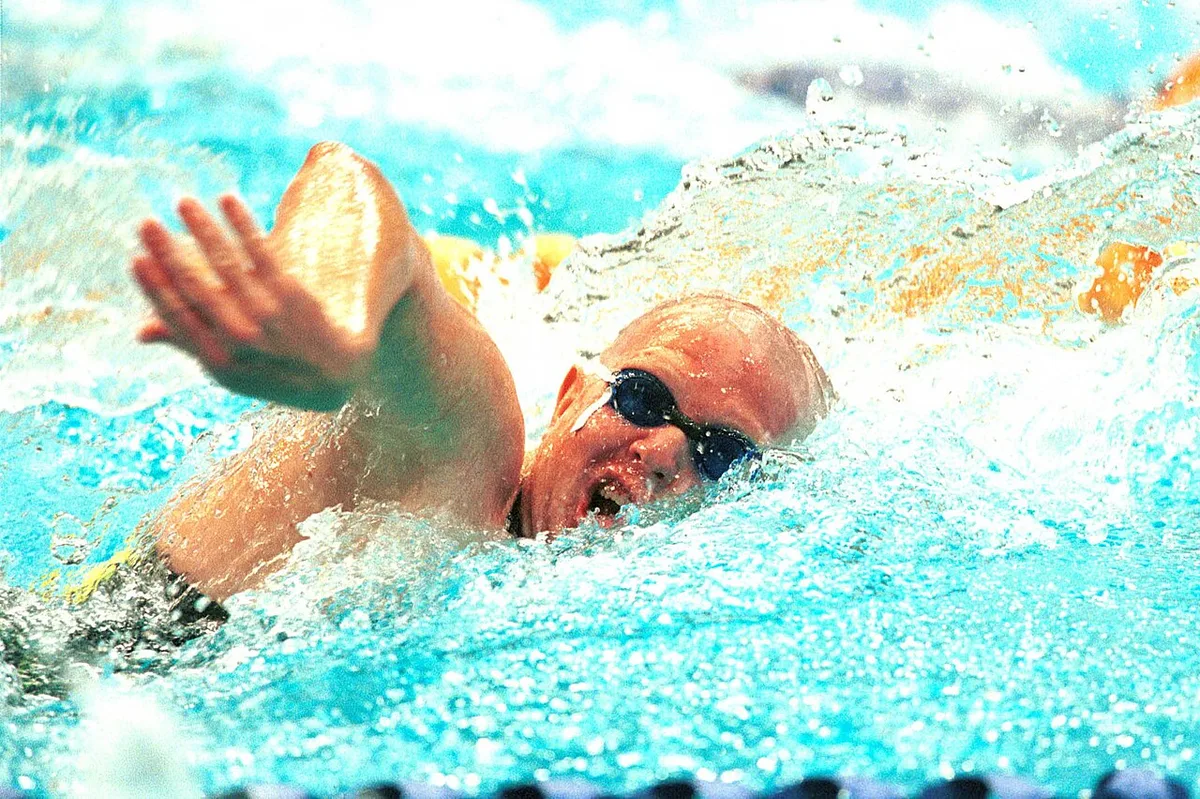
Image source: Wikimedia Commons / Sport the library (CC BY-SA)
Running: The Accessible Powerhouse
Running is one of the most accessible and widely practiced forms of cardiovascular exercise. It requires minimal equipment and can be done virtually anywhere, offering a straightforward path to improved fitness. The impact of running also stimulates significant physiological adaptations.
Benefits of Hitting the Pavement
- Unmatched Accessibility: All you really need is a pair of suitable shoes and a place to run. This convenience makes it easy to fit into busy schedules.
- High Calorie Expenditure: Running is a champion calorie burner. At a moderate pace, it can expend significantly more energy than swimming in the same timeframe, making it effective for weight management.
- Bone Density Improvement: The weight-bearing nature of running places stress on your bones, which, when managed properly, stimulates them to become stronger and denser. This is crucial for preventing osteoporosis later in life.
- Mood Enhancement: The endorphin rush associated with running is well-documented, helping to combat stress, anxiety, and depression. It’s a powerful mental health tool.
- Versatile Training: You can vary running intensity and duration, from sprints to long-distance jogs, to constantly challenge your body and prevent plateaus.
Potential Downsides of Running
- High Impact on Joints: The repetitive pounding can put considerable stress on knees, hips, ankles, and the lower back. This increases the risk of injuries like shin splints, stress fractures, and runner's knee if not managed carefully.
- Weather Dependency: Outdoor running is subject to weather conditions, which can sometimes make it impractical or unpleasant.
- Potential for Monotony: Running the same routes repeatedly can lead to boredom for some individuals, requiring conscious effort to keep training engaging.
Swimming vs. Running: A Head-to-Head Comparison
When pitting swimming against running, the differences in impact, accessibility, and muscle engagement become clear.
| Feature | Swimming | Running |
|---|---|---|
| Impact Level | Very Low | High |
| Primary Benefit | Joint-friendly, full-body toning, cardio | Cardio, bone density, calorie burn, accessibility |
| Accessibility | Requires pool/open water access | Highly accessible, anywhere/anytime |
| Calorie Burn (per hr) | Moderate to High (approx. 400-500) | High to Very High (approx. 600+) |
| Joint Stress | Minimal | Significant |
| Muscle Engagement | Full body, balanced | Primarily lower body, core |
| Bone Strengthening | Minimal | Significant (weight-bearing) |
| Injury Risk | Lower, mainly overuse (shoulder/knee) | Higher, impact-related (shins, knees, hips) |
Who Should Choose Swimming?
Swimming is an excellent choice if you're looking for a comprehensive workout that’s kind to your body. It’s particularly well-suited for individuals who:
- Experience joint pain or have existing injuries affecting their knees, hips, or back.
- Are undergoing physical rehabilitation and need a low-impact exercise.
- Want to develop balanced muscle strength and tone across their entire body.
- Seek a calming, almost meditative exercise to reduce stress.
- Have conditions like arthritis or fibromyalgia where high impact is contraindicated.
Who Should Choose Running?
Running is a fantastic option for those who prioritize convenience, intensity, and bone health. It’s a great fit if you:
- Need an exercise you can do almost anywhere, anytime, with minimal equipment.
- Are aiming for significant calorie expenditure to support weight loss goals.
- Want to build stronger bones and improve cardiovascular endurance.
- Enjoy the mental boost and sense of accomplishment that comes from pushing your physical limits.
- Are looking for a dynamic workout that can be varied to stay challenging.
Common Mistakes to Avoid in Swimming and Running
Whether you choose the pool or the pavement, both swimming and running come with potential pitfalls. Being aware of these can help you maximize your benefits and minimize risks, ensuring your chosen activity remains a positive part of your fitness routine.
- Forgetting to Warm-Up: Jumping straight into intense swimming or running without a warm-up can strain muscles and increase injury risk. A dynamic warm-up, like arm circles and leg swings for running or gentle kicking and arm movements for swimming, primes your body.
- Ignoring Pain Signals: Pushing through sharp or persistent pain is a fast track to injury. Listen to your body; mild muscle fatigue is normal, but joint pain or sharp muscle tears are warnings that need attention.
- Using Improper Form: Incorrect swimming strokes can lead to shoulder issues, while poor running gait can cause knee or hip problems. Focusing on proper technique, perhaps with guidance, is crucial for both.
- Lack of Progression: Doing too much, too soon, is a common mistake in both activities. Gradually increasing distance, intensity, or duration prevents overuse injuries and allows your body to adapt.
- Inadequate Footwear (Running): Running in worn-out or inappropriate shoes can lead to shin splints, plantar fasciitis, and other foot and leg issues. Replacing running shoes every 300-500 miles is a common recommendation from podiatrists.
- Over-reliance on one stroke (Swimming): Sticking to just one swimming stroke, like freestyle, can lead to muscle imbalances. Varying your strokes can provide a more balanced full-body workout and prevent repetitive strain.
FAQs: Your Swimming vs. Running Questions Answered
Which burns more calories, swimming or running?
Running generally burns more calories per hour than swimming, especially at higher intensities, because it’s a weight-bearing exercise against gravity. For instance, running at a 10-minute-mile pace can burn roughly 600-700 calories per hour, whereas swimming at a moderate effort might burn 400-500 calories per hour.
Is running or swimming better for weight loss?
Both are excellent for weight loss when combined with a healthy diet. Running often leads to faster calorie expenditure, which can accelerate weight loss. However, swimming is a great option for those who find running too high-impact, as consistency is key to weight loss, and swimming allows for longer, pain-free workouts for many.
Can I do both swimming and running?
Absolutely. Combining swimming and running is an effective cross-training strategy. This approach can improve overall fitness, reduce the risk of overuse injuries by working different muscle groups, and provide variety to your workout routine.
Many athletes incorporate both to build a well-rounded physique.
Which is better for building muscle?
Swimming engages more muscle groups simultaneously, offering a balanced full-body muscular workout. Running primarily focuses on the lower body and core muscles. Neither is a primary muscle-building exercise like weightlifting, but swimming provides more overall muscle toning due to its full-body resistance.
Is swimming or running easier on the joints?
Swimming is significantly easier on the joints due to water's buoyancy, which supports your body weight. Running is a high-impact activity that places considerable stress on the knees, hips, and ankles. This makes swimming a preferred choice for individuals with joint pain or those seeking a low-impact exercise.

