
Deciding between training in MMA or Muay Thai can feel like choosing between two powerful, yet distinct, paths in the world of combat sports. Both demand serious dedication and offer incredible physical and mental benefits, but they train different skill sets and lead to different outcomes in competition. Our research shows that understanding their core differences is key to picking the right fit for your goals.
Muay Thai, often called the "Art of Eight Limbs," focuses intensely on stand-up striking and clinching. MMA, or Mixed Martial Arts, is a broader discipline that integrates striking, wrestling, and grappling from various martial arts. As of 2026, the global MMA market is valued at over $7 billion, highlighting its immense popularity and the diverse skills fighters need to master.

Today's Exclusive Deals
Limited-time Exclusive Deals. Check current discount on Amazon.
Check Price on Amazon As an Amazon Associate I earn from qualifying purchases.MMA vs Muay Thai
The core difference between MMA and Muay Thai lies in their scope. Muay Thai is a specialized striking art that emphasizes punches, elbows, knees, and kicks, along with a dominant clinch game. MMA, conversely, is a synthesis of multiple fighting disciplines, requiring proficiency in striking, takedowns, and ground fighting, including submissions.
Understanding Muay Thai: The Art of Eight Limbs
Muay Thai is a traditional martial art and combat sport originating from Thailand. It's renowned for its devastating effectiveness in stand-up fighting.
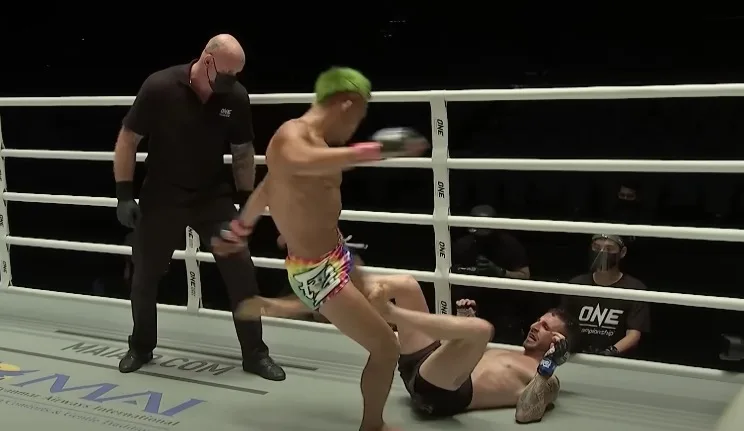
Image source: Web (Bing) / bjjee.com (Web image (fair-use with source credit))
What Muay Thai Is All About
Muay Thai fighters utilize a full arsenal of strikes, earning it the nickname "The Art of Eight Limbs." This means they employ two fists, two elbows, two knees, and two shins/feet in combat. The sport is deeply rooted in technique, power, and conditioning. Training often involves rigorous pad work, bag drills, and conditioning exercises to build stamina and explosiveness.
Key Muay Thai Techniques: Strikes, Knees, Elbows, and Clinch
Muay Thai's distinctiveness comes from its emphasis on specific techniques.
- Strikes: Standard boxing punches are used, but often with less emphasis on defensive boxing footwork and more on delivering powerful, direct blows.
- Kicks: The signature Muay Thai roundhouse kick, often delivered with the shin, can target the legs, body, or head with incredible force.
- Elbows: Short, sharp elbow strikes are a hallmark of Muay Thai, capable of inflicting cuts and stunning opponents at close range.
- Knees: Powerful knee strikes to the body, legs, and head are common, especially during clinching.
- Clinching: This is a crucial element where fighters grapple, controlling their opponent's head and body to deliver knees and elbows, or to off-balance and sweep them. It requires significant strength and technique.
Unpacking MMA: The Complete Combat Athlete
MMA, or Mixed Martial Arts, is a modern combat sport that combines techniques from a wide array of martial arts. Its goal is to create a well-rounded fighter who can adapt to different ranges and situations.

Image source: Web (Bing) / espn.com (Web image (fair-use with source credit))
What MMA Truly Is
MMA is not a single martial art but a discipline that draws from many. Fighters train in striking arts like boxing and Muay Thai, grappling arts like Brazilian Jiu-Jitsu and wrestling, and sometimes others like Judo or Sambo. The aim is to be proficient in striking, defending takedowns, executing takedowns, and controlling or submitting an opponent on the ground.
MMA's Diverse Toolkit: Striking, Wrestling, and Submissions
The variety of skills in MMA is its defining characteristic.
- Striking: Fighters use punches, kicks, elbows, and knees, often blending techniques from different striking styles.
- Wrestling: This is vital for controlling where the fight takes place. Wrestlers excel at initiating takedowns to bring opponents to the ground and defending against them.
- Brazilian Jiu-Jitsu (BJJ): BJJ focuses on ground fighting and submission holds like chokes and joint locks. A skilled BJJ practitioner can often neutralize a stronger opponent on the mat.
Core Differences: MMA's Blend vs. Muay Thai's Focus
The fundamental divergence between MMA and Muay Thai lies in their breadth of focus and the primary methods of engagement. Muay Thai excels in one area, while MMA aims for mastery across several.
Stand-Up vs. All-Around Combat
Muay Thai is a stand-up fighting art. Its rules and training are geared towards striking exchanges and clinching. Fighters develop exceptional power and precision in their upper and lower body strikes.
MMA, on the other hand, requires a fighter to be competent in all ranges of combat: striking on the feet, wrestling to control takedowns, and grappling on the ground to achieve a dominant position or submission. A fighter who is only a great striker, like a pure Muay Thai practitioner, might struggle against a skilled MMA fighter who can take them down.
The Role of the Clinch and Ground Game
The clinch is a major weapon in Muay Thai, used for setting up knees and elbows, or for controlling and sweeping an opponent. While clinching exists in MMA, it's often a transition phase, leading to takedowns or ground control rather than being an end in itself. The ground game is virtually non-existent in Muay Thai competition, whereas in MMA, it's a critical domain.
Mastering submissions and ground control is as important as striking ability for an MMA fighter to win fights.
Who Wins Where: Strengths of Each Style
Understanding the unique strengths of each discipline helps clarify where they shine and what kind of fighter they produce. These strengths often dictate strategic approaches in mixed combat scenarios.
Muay Thai's Dominance in Striking and Clinching
Muay Thai practitioners are typically unparalleled in stand-up striking exchanges. Their powerful kicks, devastating elbows, and vicious knees, combined with mastery of the clinch, make them formidable opponents when the fight remains standing. Training focuses on developing immense power, speed, and durability for these engagements.
The conditioning required for Muay Thai is also exceptionally high, building incredible cardiovascular and muscular endurance suitable for prolonged, high-intensity striking battles.
MMA's Versatility and Adaptability
MMA fighters possess a more varied skill set. Their strength lies in their ability to transition between different fighting ranges. A well-rounded MMA fighter can strike effectively, but also has the wrestling to defend takedowns or secure their own, and the grappling skills to manage opponents on the ground.
This versatility means an MMA fighter can dictate the pace and location of the fight, neutralizing an opponent's specialized strengths by forcing them into uncomfortable situations. As of 2026, the average MMA bout showcases these transitions, with fights often moving from striking exchanges to grappling scrambles within seconds.
Choosing Your Path: Muay Thai or MMA?
Deciding whether to train in Muay Thai or MMA depends entirely on your personal goals, interests, and what you hope to achieve from your martial arts journey. Both offer incredible benefits, but they cater to different aspirations.
When to Choose Muay Thai
You should consider Muay Thai if your primary interest is in mastering the art of stand-up striking. If you're drawn to the raw power of kicks, the precision of elbows, the brutal effectiveness of knees, and the strategic complexity of the clinch, Muay Thai will be incredibly rewarding. It’s also an excellent choice if you're looking for a challenging fitness regimen that builds exceptional conditioning and mental toughness without a significant focus on ground fighting or submissions.
Many find the direct, powerful nature of Muay Thai deeply satisfying.
When to Choose MMA
MMA is the path for you if you aspire to be a complete combat athlete, capable of handling any situation that arises in a fight. If you're excited by the idea of learning and integrating multiple martial arts, striking, wrestling, and Brazilian Jiu-Jitsu, then MMA offers that comprehensive challenge. It's ideal if you want to understand the strategic transitions between different fighting ranges, enjoy the problem-solving aspect of grappling, and aim for versatility in your combat skills.
MMA training prepares you for the unpredictable nature of mixed combat, making it a dynamic and all-encompassing discipline.
Common Mistakes When Comparing MMA and Muay Thai
When people weigh MMA against Muay Thai, a few common misconceptions can cloud their judgment. Understanding these pitfalls helps you make a more informed decision about your training path. Many people new to combat sports see the flashy techniques and immediately draw conclusions, often missing the strategic depth or practical limitations of each.
One frequent mistake is viewing MMA as simply "fighting without rules." In reality, MMA has very specific rule sets governed by organizations like the Association of Boxing Commissions (ABC) which dictate legal techniques, fouls, and weight classes. Another error is assuming that because Muay Thai is a striking art, it's inherently less complex or dangerous than MMA. Both require immense skill, conditioning, and tactical thinking to execute safely and effectively.
Overlooking Muay Thai's Role in MMA
A significant error is underestimating the foundational role Muay Thai plays within MMA. Many successful MMA fighters are primarily Muay Thai practitioners who have cross-trained in grappling. They leverage the power, precision, and devastating effectiveness of Muay Thai striking to set up takedowns or secure finishes.
Simply dismissing Muay Thai as "just striking" overlooks its contribution to a well-rounded MMA fighter's arsenal.
For example, a fighter like Israel Adesanya, a former UFC Middleweight Champion, is renowned for his elite Muay Thai background. His ability to blend striking with defensive grappling has been key to his success. If you see MMA as a system where all techniques are equal, you miss how specific disciplines like Muay Thai provide a powerful edge when applied correctly.
Its techniques are often the first layer of offense and defense for many MMA athletes.
Ignoring the Need for Well-Roundedness in MMA
Conversely, a common mistake for those leaning towards Muay Thai is overlooking the absolute necessity of well-roundedness in MMA. If you train only Muay Thai and enter an MMA bout, you're at a severe disadvantage against an opponent skilled in wrestling and Brazilian Jiu-Jitsu. They can simply take you down, neutralize your striking, and work for submissions.
Our research indicates that fighters who focus solely on one discipline rarely find sustained success in high-level MMA competition.
Think of it this way: you wouldn't train only for a marathon and then expect to win a decathlon. Each requires entirely different skill sets and training methodologies. The same applies to combat sports.
While Muay Thai offers incredible striking prowess, MMA demands that you can defend against, initiate, and transition between striking and grappling. A fighter lacking ground defense, for instance, leaves a huge vulnerability.
FAQs: Your MMA vs. Muay Thai Questions Answered
### Is Muay Thai effective in MMA?
Yes, Muay Thai is highly effective in MMA. Many top MMA fighters incorporate its powerful strikes, such as roundhouse kicks, elbows, and knees, into their game. It provides a strong foundation for stand-up fighting within the broader MMA discipline.
### Can a Muay Thai fighter beat an MMA fighter?
It depends on the MMA fighter's specialization. A Muay Thai fighter would have a significant advantage if the fight stays standing and they can utilize their clinch effectively. However, an MMA fighter skilled in wrestling and BJJ could take the fight to the ground, neutralizing the Muay Thai fighter's striking advantage.
### Which is better for self-defense: MMA or Muay Thai?
Both offer excellent self-defense skills, but MMA provides a more comprehensive approach. MMA training teaches you how to defend against various ranges and situations, including clinching, striking, and ground defense, which can be crucial in real-world altercations. Muay Thai is incredibly potent for striking defense and offense.
### Do I need to be in shape before starting MMA or Muay Thai?
While prior fitness helps, you don't need to be in peak condition to start. Both disciplines offer intense conditioning as part of their training. You'll build your strength, stamina, and agility through regular classes and dedicated workouts.
It's more important to have the desire to learn and commit to the training process.

