
Figuring out how many sets of deadlifts you should be doing can feel like a guessing game. That's because there isn't a single magic number that works for everyone, everywhere, every time. What’s optimal for a seasoned lifter chasing a new personal best is wildly different from what’s best for someone just starting out or focusing on muscle growth.
As of 2026, scientific consensus, supported by organizations like the National Strength and Conditioning Association (NSCA), emphasizes individual programming.

Today's Exclusive Deals
Limited-time Exclusive Deals. Check current discount on Amazon.
Check Price on Amazon As an Amazon Associate I earn from qualifying purchases.This approach means we need to consider more than just the exercise itself. Your goals, how long you've been training, and how well your body recovers all play massive roles. We’ve put together a practical guide to help you determine the right number of deadlift sets for your specific situation, moving beyond generic advice to something truly personalized and effective.
How Many Sets of Deadlifts Should You Do?
The number of deadlift sets you should perform hinges primarily on your training experience, your specific fitness goals, and your body's recovery capacity. Generally, beginners might stick to 1-3 working sets, intermediate lifters could aim for 3-5, and advanced athletes might manage 3-6, but these numbers fluctuate significantly. Focusing on quality over quantity, and aligning sets with intensity and recovery, is key.
Your Deadlift Goal: What Are You Training For?
When you're deciding on deadlift sets, the first thing to nail down is what you actually want to achieve. Are you looking to become incredibly strong, build bigger muscles, or improve your endurance? Each goal demands a slightly different approach to training volume, and this is where the number of sets becomes critical.
Strength vs. Hypertrophy vs. Endurance
- Strength: If your main aim is to lift the heaviest weight possible for low repetitions (1-5 reps), you’ll typically use a higher intensity and might need fewer, but very high-quality, working sets. The focus here is on maximal force production.
- Hypertrophy: For muscle growth, the goal is to stimulate the muscle fibers through moderate rep ranges (6-12 reps) and moderate to high volume. This often means more sets and total repetitions to create the necessary metabolic stress and mechanical tension for growth.
- Endurance: Training for muscular endurance involves higher repetitions (15+ reps) and can also benefit from a moderate number of sets, though the intensity will be significantly lower. This is less common as a primary goal for the barbell deadlift itself but can be a component of overall conditioning.
Understanding your primary objective will guide how you select your working sets. For instance, chasing a one-rep max requires a different set structure than aiming to add an inch to your biceps.
Image source: Web (Bing) / pexels.com (Web image (fair-use with source credit))
Your Experience Level: How Long Have You Been Lifting?
Your training history is a massive determinant in how many deadlift sets you can effectively handle. A brand-new lifter simply won't recover from the same volume as someone who's been training consistently for years. Pushing too hard too soon is a fast track to injury and stalled progress, so being honest about your experience is vital.
Beginner Deadlift Sets
If you're new to the deadlift, you're likely still learning the movement pattern and building basic strength. Your body also hasn't adapted to the high demands of this exercise. For beginners, focusing on mastering form with lighter weights is paramount.
You don't need a high number of sets to make progress.
- Typical Recommendation: 1-3 working sets per session.
- Focus: Perfecting technique, building foundational strength.
- Frequency: 1-2 times per week, ensuring adequate rest between sessions.
It's crucial to prioritize form over adding more sets or weight. This stage is about building a solid base.
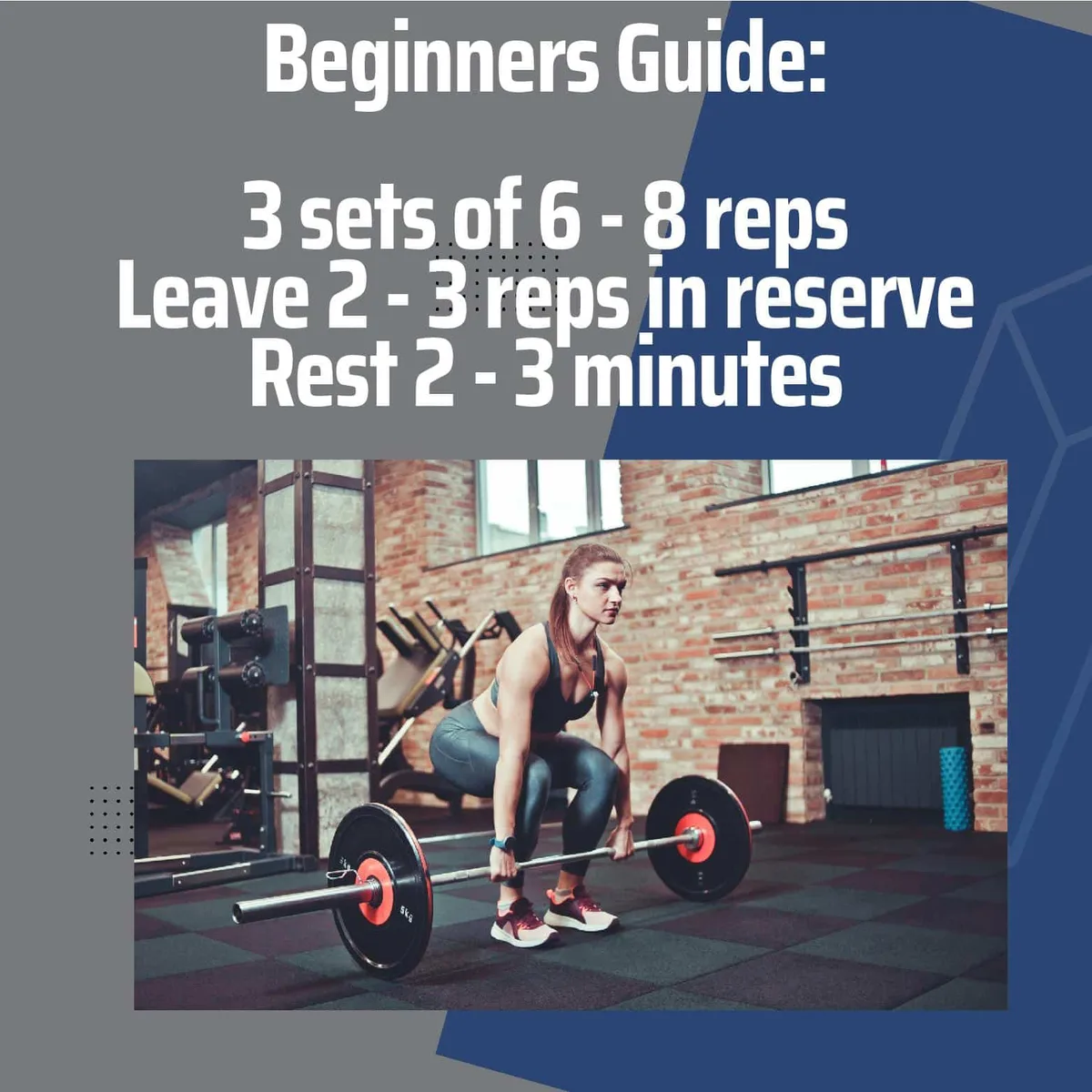
Image source: Web (Bing) / vbafitness.com (Web image (fair-use with source credit))
Intermediate Deadlift Sets
Once you’ve got your deadlift form down and have been training consistently for 6-12 months, you’re likely an intermediate lifter. Your body can handle more stress, and you can typically recover from a bit more volume. This is when you can start to increase your working sets slightly to continue challenging your muscles for strength or hypertrophy.
- Typical Recommendation: 3-4 working sets per session.
- Focus: Increasing strength and/or muscle size, progressively overloading.
- Frequency: 1-2 times per week, depending on recovery and program structure.
You can now start to experiment with different intensities and rep schemes within your sets to target specific goals more effectively.
Advanced Deadlift Sets
Advanced lifters have years of dedicated training under their belt. Their bodies are highly adapted to the stress of heavy lifting, and they often have more robust recovery systems. However, even at this level, deadlifts are incredibly taxing.
Advanced athletes may use more sets but must be highly attuned to their recovery.
- Typical Recommendation: 3-6 working sets per session.
- Focus: Pushing strength limits, advanced hypertrophy, power development.
- Frequency: Often 1 time per week, sometimes less, due to the systemic fatigue deadlifts cause.
For advanced individuals, managing fatigue and optimizing recovery between sessions is just as important as the training itself. They often incorporate deload weeks and carefully monitor their readiness.
Gauging Your Fatigue: Listening to Your Body
This is where the "art" of training comes in. Even with clear guidelines, your body is your ultimate guide. How many sets you can do and recover from will change week to week, sometimes day to day.
Paying attention to your fatigue levels is crucial for preventing overtraining and ensuring consistent progress.
Recognizing Overtraining Signs
Overtraining isn't just feeling tired; it’s a state where your body can’t recover from the training stress, leading to a decline in performance and potential health issues. It's a critical sign that you might be doing too many sets, lifting too heavy, or not resting enough.
- Persistent Muscle Soreness: Soreness that lasts longer than 48-72 hours or feels unusually intense.
- Decreased Performance: You're not able to lift as much weight or perform as many reps as you could previously.
- Increased Resting Heart Rate: Your heart rate is consistently higher than normal, even at rest.
- Sleep Disturbances: Difficulty falling asleep, staying asleep, or feeling unrested after sleep.
- Mood Changes: Irritability, anxiety, or feeling generally run down.
- Increased Illness: Frequent colds or other minor infections.
If you notice several of these signs, it's a strong indicator that you need to reduce your training volume, including the number of deadlift sets, and prioritize recovery.

Image source: Web (Bing) / analyticsforathletes.com (Web image (fair-use with source credit))
Recovery & Neuromuscular Fatigue
The deadlift is a full-body exercise that heavily taxes the Central Nervous System (CNS). This is known as neuromuscular fatigue. While muscle soreness (DOMS) is common, CNS fatigue is a deeper exhaustion that impacts your strength and coordination.
This is why even if your muscles feel okay, your overall performance might dip, suggesting you’ve hit your limit for that session. Adequate sleep, nutrition, and stress management are just as important as the sets you perform. For some, this means fewer sets per workout, or even fewer deadlift sessions per week.
Picking Your Working Sets: Putting It All Together
Now that we've covered the goals and experience levels, let's get into the practical application of choosing your working sets. This isn't about picking a number out of a hat; it’s about making an informed decision based on the variables we've discussed. The key is to find the sweet spot where you're challenged enough to adapt, but not so taxed that you can't recover.
Factors for Set Selection (Intensity, RPE)
The intensity of your sets directly influences how many you can perform. Lifting at 90% of your one-rep max (1RM) for 3 sets will feel very different and require more recovery than lifting at 60% of your 1RM for 5 sets.
- Percentage of 1 Rep Max (% 1RM): This is a direct measure of how heavy you're lifting relative to your maximum. Higher percentages mean fewer reps per set and fewer total sets are typically sustainable. For example, training at 85-90% 1RM usually means sets of 3-5 reps, and 3-4 working sets might be the maximum.
- Rate of Perceived Exertion (RPE): RPE is a subjective scale (usually 1-10) indicating how difficult a set felt. An RPE of 7 means you could have done 3 more reps, while an RPE of 9 means you only had 1 rep left in the tank. Using RPE allows for auto-regulation; if you feel strong, you might do more sets at a lower RPE, or fewer sets at a higher RPE if you’re feeling fatigued. For example, aiming for 3 sets at RPE 8 is generally more taxing than 5 sets at RPE 7.
Set Recommendations by Goal and Experience
Here’s a general guideline to help you decide. Remember, these are starting points; you'll need to adjust based on your personal recovery.
| Experience Level | Primary Goal | Typical Working Sets | Reps per Set | Intensity (% 1RM or RPE) | Notes |
|---|---|---|---|---|---|
| Beginner | Technique/Base | 2-3 | 5-8 | RPE 6-7 | Focus on form; don't push to failure. |
| Intermediate | Strength | 3-4 | 3-5 | RPE 7-8 | Challenge yourself but leave 1-2 reps in reserve. |
| Intermediate | Hypertrophy | 3-5 | 6-10 | RPE 7-8 | Aim for muscular fatigue. |
| Advanced | Strength | 3-5 | 1-5 | RPE 8-9 | High intensity, requires excellent recovery. |
| Advanced | Hypertrophy | 4-6 | 6-12 | RPE 7-9 | High volume, monitor fatigue closely. |
This table offers a framework. If you're performing deadlifts for conditioning or less common goals, the set and rep scheme would shift accordingly.
Common Deadlift Set Mistakes to Dodge
Making common errors with deadlift sets can stall your progress and, worse, lead to injury. Many lifters fall into similar traps, often because they’re focusing too much on the weight and not enough on the process. Being aware of these pitfalls can help you steer clear of them and ensure your training stays effective and safe.
- Doing too many sets: This is the most frequent mistake. You might think more sets equal more gains, but overdoing it leads to burnout and decreased performance. It signals a lack of understanding about recovery needs.
- Not enough rest between sets: Deadlifts are demanding. Skipping adequate rest (2-5 minutes for heavy sets) means your next set will be weaker, increasing the risk of poor form and injury.
- Chasing RPE when you shouldn't: While RPE is useful, pushing to an 8 or 9 on every single set, especially when you're tired, is a recipe for CNS fatigue. Some sets should be lighter, more focused on technique.
- Ignoring fatigue signals: Pushing through persistent, deep exhaustion instead of backing off is how injuries happen and progress halts. If your body is screaming "stop," it's usually best to listen.
Frequently Asked Questions About Deadlift Sets
How many sets of deadlifts should a beginner do?
Beginners should typically perform 1-3 working sets of deadlifts per session, focusing on mastering technique with lighter loads. The goal is to build a solid foundation without overwhelming the body.
Should I do deadlifts every day?
No, deadlifts should not be performed every day. This exercise is highly taxing on the central nervous system and requires significant recovery time. Performing them 1-2 times per week is generally sufficient for most individuals.
Is it better to do more sets of deadlifts with lighter weight, or fewer sets with heavier weight?
This depends on your goal. For strength, fewer, heavier sets (e.g., 3-4 sets of 3-5 reps at 85-90% 1RM) are generally preferred. For hypertrophy (muscle growth), more sets of moderate weight (e.g., 4-5 sets of 6-10 reps at RPE 7-8) are often more effective.
Can I do deadlifts and squats on the same day?
While possible for advanced athletes in specific programming, it's often not recommended for most individuals. Both are highly demanding compound movements. Doing them on the same day can lead to excessive fatigue and compromise performance in one or both lifts.
It's generally better to separate them or prioritize one per session.
What's the difference between warm-up sets and working sets?
Warm-up sets are lighter sets performed before your main working sets to prepare your muscles and nervous system for the heavier loads. Working sets are the sets where you’re truly challenging yourself to achieve your training goals (strength, hypertrophy, etc.). For deadlifts, it's common to do 2-4 warm-up sets, gradually increasing the weight.
Your Personalized Deadlift Set Plan
Creating your own deadlift set plan involves synthesizing all the information we've discussed. It's not just about copying what someone else does, but understanding why they do it and applying that logic to yourself. Your plan should be a living document, adaptable as your experience grows and your goals evolve.
Start by clearly defining your primary training goal and honestly assessing your current training experience. Then, use the typical set recommendations as a starting point. If you're a beginner, begin with 2 working sets.
If you're intermediate and focusing on strength, try 3 working sets at a challenging weight.
Monitor your recovery very closely for at least a few weeks. Are you feeling good for your next session? Is your performance improving?
If you're consistently feeling drained or seeing performance dips, it’s a clear sign you need to reduce your set volume. Conversely, if you're recovering very quickly and feel like you could do more, you might be able to slowly increase sets or intensity over time. The ultimate goal is sustainable progress, not just crushing yourself in every workout.

