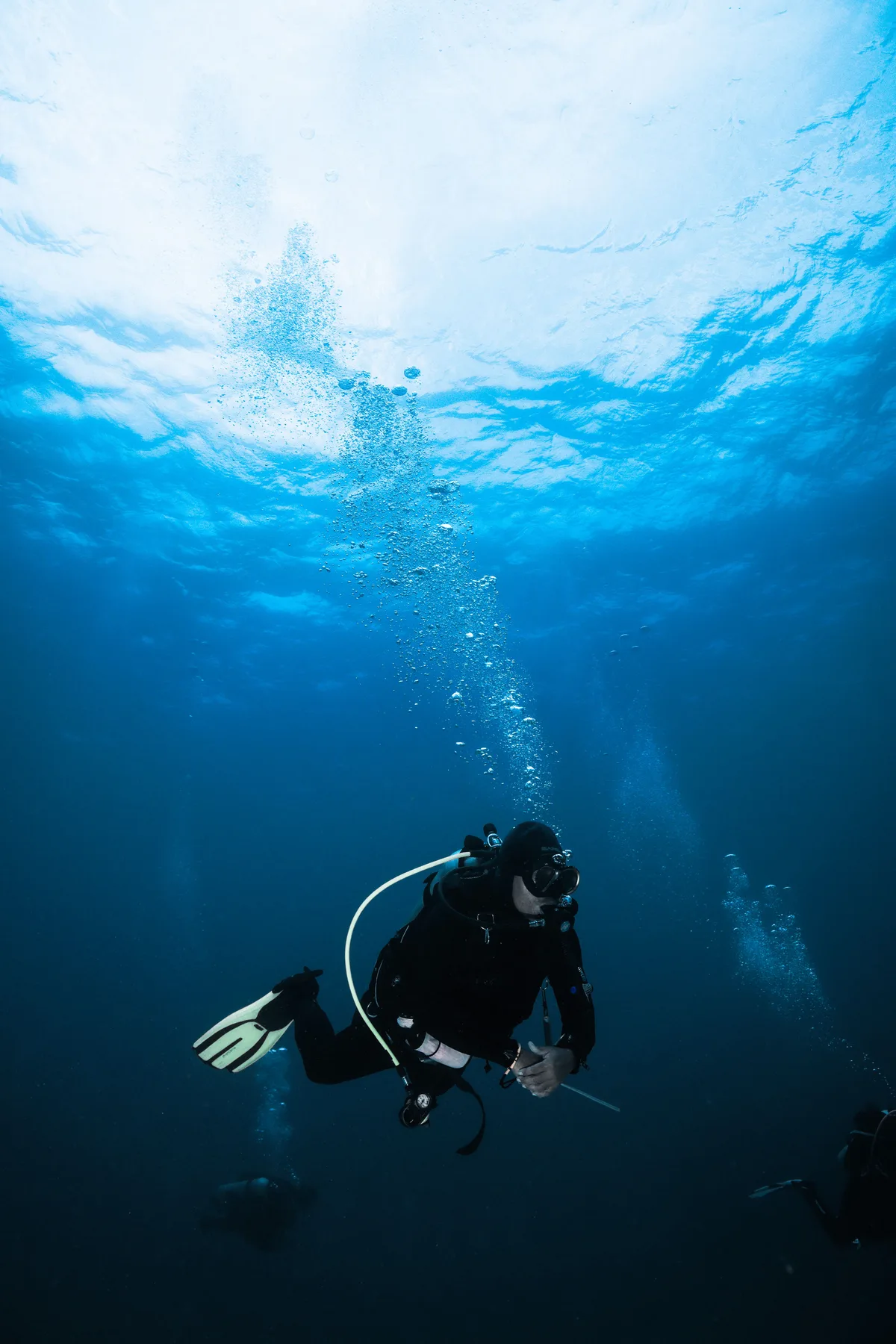
Image source: Bing (Web (fair-use with source credit))

Today's Exclusive Deals
Limited-time Exclusive Deals. Check current discount on Amazon.
Check Price on Amazon As an Amazon Associate I earn from qualifying purchases.So, how deep can you go scuba diving? It’s not just a simple number, but a limit defined by your training, experience, and the equipment you’re using. For most certified divers, the safe recreational limit is around 130 feet (40 meters), but your journey starts much shallower.
As of 2026, understanding these limits is crucial for enjoying the underwater world safely.
Your training agency dictates your initial depth limits, and these are based on extensive research into how pressure affects the human body. For instance, your Open Water Diver certification typically restricts you to 60 feet (18 meters). Going deeper requires additional certifications and a thorough understanding of potential risks.
Quick Answer
Scuba divers can safely go as deep as their training allows. Recreational limits typically cap at 130 feet (40 meters). Open water certified divers are usually limited to 60 feet (18 meters).
Deeper dives require advanced training and careful planning.
Understanding Your Training: The Foundation of Depth
Your certification level is the most important factor determining how deep you can safely dive. Think of it like stages of learning; each level builds upon the last, equipping you with the necessary knowledge and skills for progressively deeper environments. Pushing beyond these limits without the proper training is where things can get risky.
Open Water Certification: Your Starting Point
When you complete your initial Open Water Diver course, you're granted the foundation for exploring the underwater world. This certification signifies you've learned essential scuba skills, safety procedures, and how to manage basic dive situations. Manufacturer specifications and training agency standards, like those set by organizations such as PADI and SSI, clearly define the parameters for this entry-level certification.
- Maximum Depth: Generally, this certification permits dives up to 60 feet (18 meters).
- Focus: Emphasis is placed on buoyancy control, basic navigation, and understanding air consumption.
- Why the Limit? At 60 feet, the ambient pressure is about three times that at the surface. Your body is adapting, but it's also beginning to experience more pronounced effects of dissolved gases, like nitrogen. This depth is considered safe for new divers still mastering their skills without significant risk of nitrogen narcosis or requiring complex decompression calculations.

Image source: Bing (Web (fair-use with source credit))
Advanced Training: Expanding Your Horizons
Once you're comfortable with your Open Water skills and have gained some experience, you can pursue further training. These advanced courses introduce you to new skills and allow you to explore a wider range of dive sites, including those at greater depths. They are designed to build upon your existing knowledge and prepare you for more challenging conditions.
- Advanced Open Water Diver: This widely recognized certification typically allows dives up to 100 feet (30 meters). It involves learning about deep diving, underwater navigation, and other specialty dives like wreck or night diving. You’ll start to learn more about gas management and the physiological effects of increased pressure.
- Deep Diver Specialty: For those specifically interested in going deeper, a Deep Diver specialty course is available. This training focuses intensely on the risks and procedures associated with diving beyond 100 feet. You’ll learn about specialized gas mixes and how to manage them, advanced decompression theory, and emergency procedures tailored for depths down to 130 feet (40 meters).
These courses aren't just about increasing a number; they're about gaining the knowledge and judgment to dive safely at greater depths. For example, understanding how to plan your air consumption accurately becomes even more critical as the duration of your dive at a given depth decreases due to ascent and decompression requirements. Proper gear, like an appropriate best scuba diving computer, is essential for tracking these parameters.
The Science Behind Depth Limits: Pressure and Your Body
The primary reason for depth limits in scuba diving is the effect of increased pressure on the human body as you descend. Water is dense, and its weight creates pressure. For every 33 feet (10 meters) you descend in saltwater, the pressure increases by one atmosphere (atm).
At the surface, you're at 1 atm. At 33 feet, you're at 2 atm; at 66 feet, you're at 3 atm, and so on. This pressure influences how gases behave in your body and breathing equipment.
- Gas Compression: As pressure increases, the volume of gases decreases. This means the air in your tank takes up less space under pressure, so you consume it faster. Your dive computer helps you track this, but understanding the principle is key.
- Gas Absorption: Under pressure, more gases from your breathing mixture (primarily nitrogen) dissolve into your body's tissues. The deeper you go and the longer you stay, the more nitrogen is absorbed.
This increased absorption is the root cause of two major risks: nitrogen narcosis and decompression sickness. Managing these requires understanding the science and strictly adhering to safe diving practices and limits.
Nitrogen Narcosis: Feeling the Effects
Nitrogen narcosis, sometimes called "rapture of the deep," is a reversible condition that can occur at deeper depths due to the increased partial pressure of nitrogen. It’s essentially an intoxicating effect caused by breathing nitrogen under pressure. The deeper you go, the more pronounced the effects can become.

Image source: Web (Bing) / spiritliveaboards.com (Web image (fair-use with source credit))
- What it feels like: Symptoms vary greatly between individuals and can range from mild euphoria, impaired judgment, and overconfidence to anxiety, confusion, and even hallucinations. It's often compared to the effects of alcohol.
- Depth Threshold: While some individuals may feel mild effects around 60-70 feet (18-21 meters), it becomes a significant concern for most divers below 100 feet (30 meters). Our research indicates that by 130 feet (40 meters), severe impairment is common for recreational divers.
- Mitigation: The primary way to avoid nitrogen narcosis is to stay within your training limits and ascend to shallower depths. The effects disappear rapidly upon ascending, with no lasting harm. Using specialized gas mixes like Trimix, which replaces some nitrogen with helium, can also reduce narcosis at extreme depths, but this is strictly in the realm of technical diving.
Because impaired judgment is a symptom, a diver experiencing narcosis might not realize they are in trouble, making it a dangerous condition. This underscores why sticking to depths appropriate for your certification is paramount.
Decompression Sickness: The Risks of Coming Up Too Fast
Decompression sickness (DCS), often called "the bends," is a serious risk associated with scuba diving, especially at greater depths or for extended periods. It occurs when nitrogen, dissolved in your tissues under pressure, forms bubbles as you ascend too quickly. These bubbles can obstruct blood flow or directly damage tissues, leading to a range of symptoms.
- How it Happens: During a dive, your body absorbs nitrogen based on depth and time. Normally, as you ascend slowly and make planned decompression stops (if required), this excess nitrogen is released gradually through your lungs. If the ascent is too fast, the nitrogen comes out of solution too quickly, forming bubbles.
- Symptoms: DCS symptoms can appear immediately after a dive or up to 24 hours later. They can include joint pain (the "bends"), skin rash, dizziness, fatigue, numbness, tingling, and in severe cases, paralysis or even death.
- Prevention: The key to preventing DCS is adherence to dive tables or your dive computer's recommendations. These tools calculate your "no-decompression limit" (NDL) and, if exceeded, dictate mandatory decompression stops at specific depths for specific durations to allow nitrogen to be safely released. Using a reliable best scuba diving computer is crucial for tracking these parameters accurately during and after your dive.
For instance, a dive to 100 feet (30 meters) will have a significantly shorter no-decompression limit than a dive to 60 feet (18 meters). Ascending too quickly from even moderate depths can trigger DCS. The U.S.
Navy Dive Tables, a widely respected standard, provide guidelines for safe ascent rates and decompression schedules based on dive profiles.
Recreational vs. Technical Diving: Different Worlds, Different Depths
It’s important to distinguish between recreational diving and technical diving, as their depth limits and associated risks are vastly different. Recreational diving focuses on enjoyment and exploration within established safety parameters for the average diver. Technical diving, on the other hand, involves planned dives that go beyond these recreational limits, requiring specialized training, equipment, and procedures.
Technical divers often use multiple gas tanks, rebreathers, and advanced navigation techniques to explore deeper wrecks, caves, or remote underwater environments. They might dive to hundreds of feet. This type of diving carries significantly higher risks and is not an extension of advanced recreational training.
For example, planning a technical dive to 200 feet (60 meters) might involve using Trimix gas to mitigate narcosis and requires meticulous decompression planning, often involving staged decompression stops using specialized gases like Nitrox.
Essential Gear for Deeper Dives: Beyond the Basics
While basic scuba gear is sufficient for shallower dives, venturing deeper necessitates certain equipment considerations for safety and efficiency. Your standard best scuba diving regulator and best scuba diving tank are still essential, but their performance at depth becomes more critical.
- Dive Computer: A reliable dive computer is non-negotiable. It tracks your depth, time, ascent rate, and calculates your nitrogen loading and required decompression stops. Models designed for deeper dives often have advanced features and nitrogen-tracking capabilities. A good dive computer, like those reviewed for best scuba diving computer, is your primary safety tool.
- Redundant Air Sources: For deeper dives, especially those approaching the edge of recreational limits, carrying a redundant air source is often recommended or required. This could be a small pony bottle or an octopus regulator setup that allows you to share air with a buddy if needed.
- Exposure Protection: As you descend, water temperature generally decreases. Proper thermal protection, such as a thicker wetsuit or a drysuit, becomes crucial for comfort and to prevent hypothermia. You might need a best scuba diving wetsuit for cold water or even a drysuit depending on the conditions.
- Navigation Tools: While a compass is standard, deeper dives can sometimes involve less visual reference points. Advanced navigation skills and tools can become more important.
Planning Your Dive: Safety Above All Else
Effective dive planning is the cornerstone of safe scuba diving, and it becomes exponentially more critical as you plan for deeper excursions. Recreational dive planning typically involves determining your maximum depth, estimating your bottom time, and ensuring you stay within your no-decompression limits.
Here’s a basic planning breakdown:
- Determine Maximum Depth: Based on your certification and experience, set a clear maximum depth for the dive. For an Advanced Open Water diver, this might be 100 feet (30 meters).
- Calculate No-Decompression Limit (NDL): Use a dive table or, more commonly, your dive computer to determine the maximum time you can spend at that depth without requiring mandatory decompression stops.
- Plan Your Ascent: Always plan a slow, controlled ascent. A general guideline is to ascend no faster than 30 feet (9 meters) per minute.
- Safety Stops: Many dive computers will recommend or require a safety stop at around 15-20 feet (5-6 meters) for 3-5 minutes, even on dives within NDLs. This is an extra precaution to off-gas residual nitrogen.
- Buddy Check: Always conduct a thorough buddy check to ensure both divers' equipment is functioning correctly and they understand the dive plan.
If your planned dive profile approaches or exceeds the NDL, you will need to conduct mandatory decompression stops on your ascent. This requires more rigorous planning and monitoring of your dive computer. A dive to 130 feet (40 meters) will likely involve significant decompression obligations.
Common Mistakes Deep Divers Make
Even experienced divers can fall into bad habits or make mistakes when exploring deeper waters. Awareness of these common pitfalls is crucial for maintaining safety. Our research into incident reports highlights several recurring issues that can lead to problems.
- Ignoring Dive Computer Alarms: Dive computers are programmed with safety algorithms. Alarming means something is deviating from the safe plan, whether it's exceeding your NDL, ascending too fast, or a pressure issue. Ignoring these can directly lead to DCS.
- Poor Gas Management: Underestimating air consumption at depth or not accounting for the faster rate at which air is used can lead to an out-of-air emergency. Always monitor your air closely and have a plan for buddy breathing or using your alternate air source. This is especially critical if you're using a best scuba diving regulator for beginners that might not perform as optimally at extreme depths as a high-end model.
- Not Ascending Slowly Enough: As discussed with DCS, rapid ascents are a major cause of decompression sickness. Sticking to the recommended ascent rate of 30 feet per minute or slower is vital.
- Pushing Limits Without Proper Training: Attempting dives beyond your certification level without the necessary training and experience is one of the most dangerous mistakes a diver can make. This includes diving to depths where narcosis is significant without understanding how to manage it.