
Are deadlifts good for building muscle? Absolutely. When programmed correctly, the barbell deadlift stands out as one of the most effective compound exercises for stimulating muscle growth across your entire body.
It's a demanding, full-body movement that challenges numerous muscle groups simultaneously, making it a cornerstone for anyone serious about building mass and strength.

Today's Exclusive Deals
Limited-time Exclusive Deals. Check current discount on Amazon.
Check Price on Amazon As an Amazon Associate I earn from qualifying purchases.Our research indicates that consistent, progressive deadlifting can lead to significant increases in muscle hypertrophy, particularly in the posterior chain and upper back. For instance, studies published in peer-reviewed exercise science journals show that resistance training programs incorporating deadlifts can yield notable gains in lean muscle mass, often exceeding those seen with isolation exercises alone. This makes understanding the mechanics and benefits of deadlifts crucial for optimizing your training.
Are Deadlifts Good for Building Muscle?
Yes, deadlifts are exceptionally good for building muscle. They act as a potent stimulus for muscle hypertrophy, especially in the hamstrings, glutes, and entire back musculature. This exercise also engages the core and upper body, contributing to overall muscle development.
The Deadlift's Big Impact on Muscle Growth
Deadlifts are a powerhouse for muscle building because they're a compound exercise. This means they recruit a large number of muscle groups to work together, forcing your body to adapt by growing stronger and bigger. When you perform a deadlift, you're not just working one muscle; you're hitting your hamstrings, glutes, lower back, upper back, traps, and even your forearms for grip.
This widespread muscle engagement triggers a significant release of anabolic hormones like testosterone and growth hormone, which are essential for muscle repair and growth.
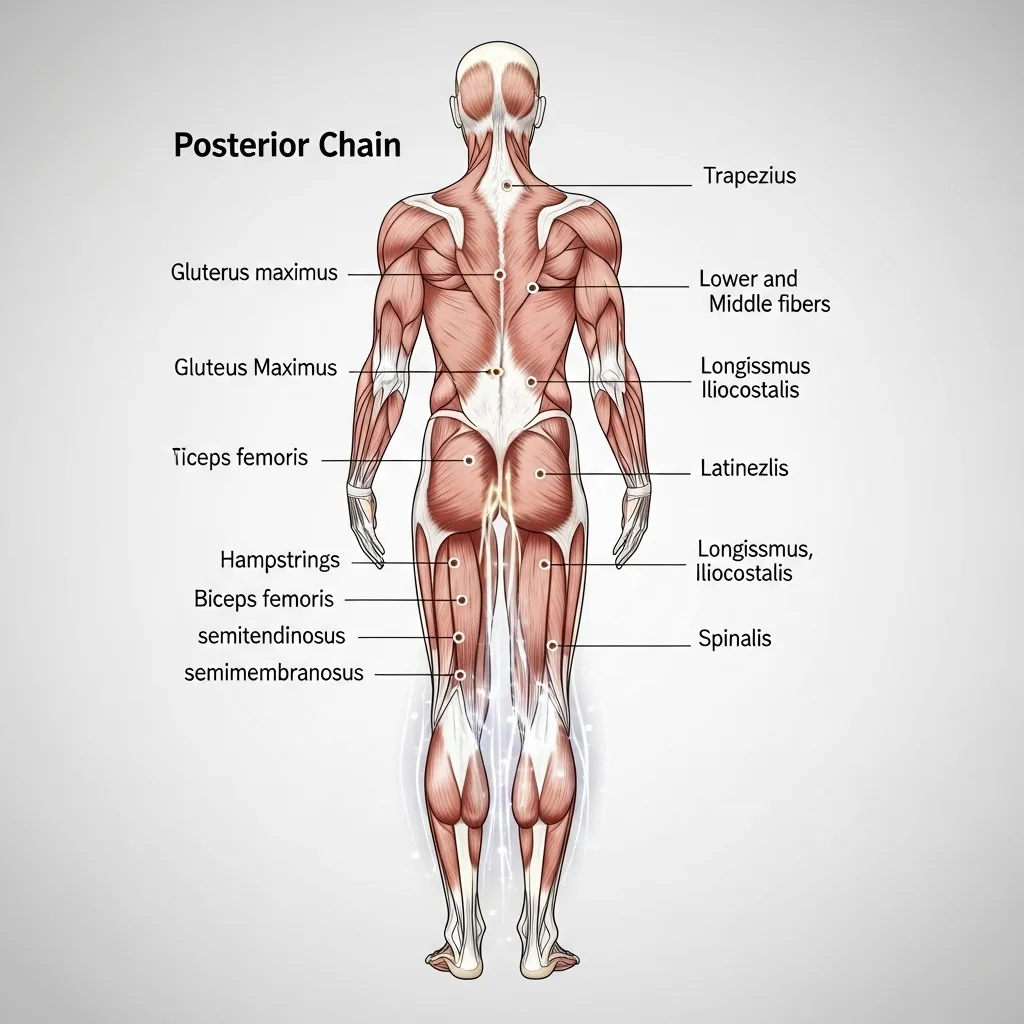
Image source: Web (Bing) / wholeliving.com (Web image (fair-use with source credit))
How Deadlifts Work Their Magic
The magic of deadlifts lies in their ability to create mechanical tension and metabolic stress across a vast network of muscle fibers. As you lift the weight off the floor, your muscles must contract forcefully to overcome gravity and then control the descent. This tension, especially when applied progressively over time, signals to your body that it needs to build more muscle tissue to handle the load.
The sheer number of muscles involved means a greater overall stimulus for growth compared to exercises that target just one or two muscle groups.
Building Key Muscle Groups with Deadlifts
The posterior chain, your hamstrings, glutes, and lower back, gets a massive workout from deadlifts. These muscles are crucial for explosive power, athletic performance, and everyday movements like walking and lifting. For example, the gluteus maximus, the largest muscle in your body, is heavily activated during the lockout phase of the deadlift.
Similarly, your erector spinae muscles, which run along your spine, work overtime to keep your back straight and stable.
The upper back, including the traps and rhomboids, is also heavily engaged, helping to stabilize your shoulder blades and maintain posture. Your grip strength gets a significant boost just by holding onto the barbell, which translates to better performance in other lifts. For anyone looking to develop a strong, balanced physique, deadlifts are indispensable.
You can also explore pairing deadlifts with other effective muscle-building exercises by looking at the best muscle group combinations to workout together.
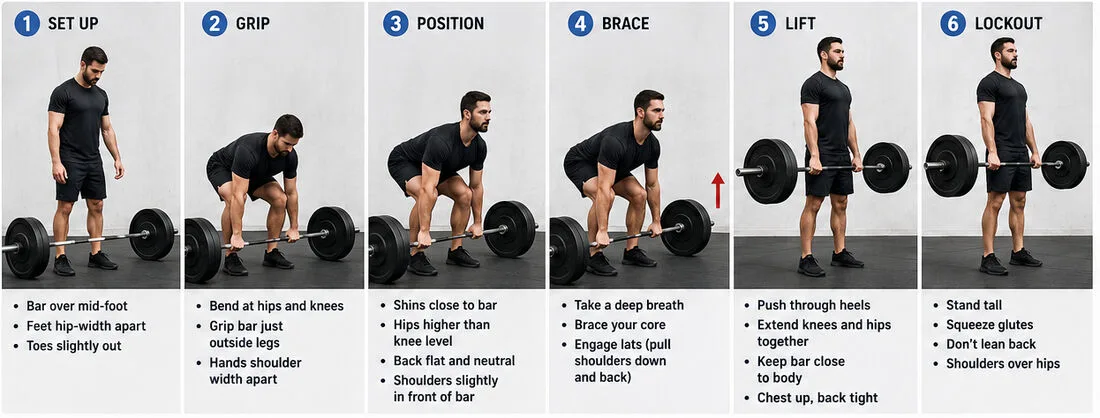
Image source: Web (Bing) / lamuscle.com (Web image (fair-use with source credit))
Different Ways to Deadlift: Choosing Your Weapon
Not all deadlifts are created equal, and the variation you choose can subtly shift the emphasis on different muscle groups. Understanding these differences helps you pick the right deadlift to complement your specific muscle-building goals and physical build. The fundamental movement remains the same, lifting weight from the floor, but the setup and execution vary.
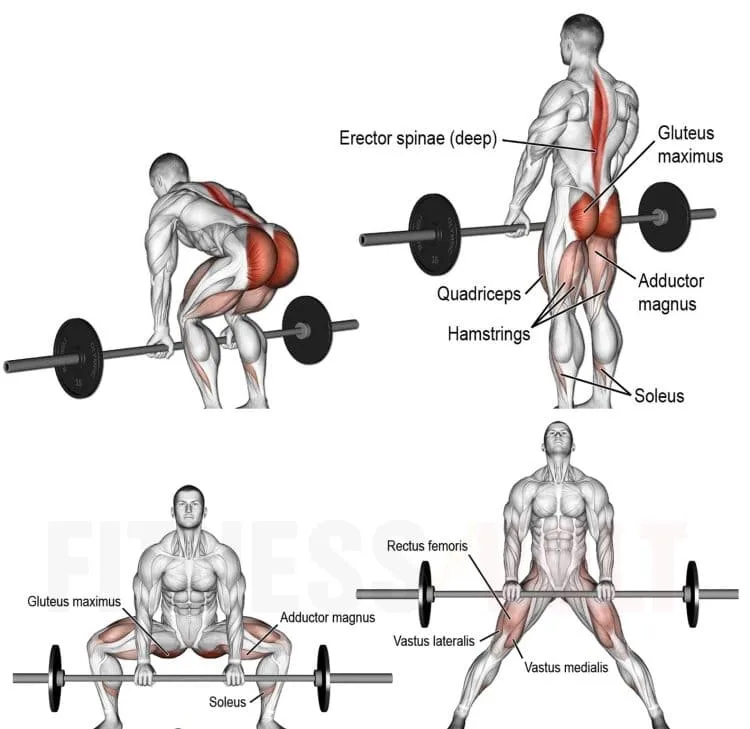
Image source: Web (Bing) / fitnessvolt.com (Web image (fair-use with source credit))
Conventional vs. Sumo: What's the Difference?
The conventional deadlift is what most people picture. Your stance is typically shoulder-width apart, with your hands gripping the bar just outside your shins. This stance tends to place a bit more emphasis on the lower back and hamstrings.
The sumo deadlift, on the other hand, involves a much wider stance, with your hands gripping the bar inside your knees. This wider base shifts more of the workload to the quads and glutes, while potentially taking some strain off the lower back for certain individuals. The choice often comes down to personal biomechanics and what feels strongest and safest for you.
For those who might find traditional deadlifts challenging, learning how to deadlift with dumbbells can be a good starting point.
Romanian Deadlifts: Targeting the Hamstrings and Glutes
The Romanian deadlift (RDL) is a fantastic variation specifically for building the posterior chain. Unlike a conventional deadlift, you don't typically reset the weight from the floor on each rep. Instead, you lower the barbell down your legs, maintaining a slight bend in your knees, until you feel a deep stretch in your hamstrings.
Then, you drive your hips forward to return to the standing position.
This movement really isolates the hamstrings and glutes, making it a key exercise for developing power and size in those areas. Proper form is critical here; it’s all about hinging at the hips, not rounding your back. Mastering the RDL is key, and you can learn exactly how to do Romanian Deadlifts (RDL) to ensure you’re getting the most out of this exercise.
Common Deadlift Mistakes That Stall Progress (and Risk Injury)
Even though deadlifts are great, they come with risks if your form isn't dialed in. Many people make the same few mistakes that not only limit their muscle gains but can also lead to nagging injuries, especially in the lower back. Avoiding these pitfalls is just as important as doing the lift itself.
- Rounding the Lower Back: This is the big one. Your spine should remain neutral, like a straight line, from your head to your tailbone throughout the entire lift. If your lower back rounds, you're placing immense, dangerous pressure on the discs.
- Not Bracing the Core: Before you even pull the weight, you need to brace your core like you're about to take a punch. This creates intra-abdominal pressure that stabilizes your spine. Without it, your back is much more vulnerable.
- Jerking the Weight: Deadlifts should be a controlled pull, not a sudden yank. Trying to rip the weight off the floor too quickly often leads to poor form and a loss of tension.
- Hyperextending at the Top: Once you've locked out the weight, don't lean back excessively. This puts unnecessary strain on your lower back. Stand tall, squeeze your glutes, and stop.
Focusing on technique over weight is paramount. It’s better to lift less weight with perfect form than to ego-lift and risk injury. Remember, consistency with good form is what builds muscle long-term.
Getting the Most from Deadlifts: Real-World Strategy
To truly maximize muscle growth from deadlifts, it’s not just about doing the lift; it’s about how you integrate it into your overall training and lifestyle. This involves smart programming, adequate recovery, and proper nutrition. Think of deadlifts as a powerful tool, but one that needs to be wielded with a well-rounded strategy.
Programming Deadlifts for Hypertrophy
For muscle growth (hypertrophy), we generally aim for slightly higher repetitions than for pure strength. While powerlifters might do singles or triples, muscle-building often benefits from sets of 5-8 reps. This range allows for sufficient time under tension and metabolic stress, both key drivers of muscle growth.
You don't need to deadlift every single day, or even every workout. For most people, incorporating deadlifts once or twice a week is sufficient. Depending on your training split, you might do them on a dedicated leg day, back day, or full-body day.
Ensure you allow ample recovery time between deadlift sessions, as it's a very taxing exercise. For example, a common approach is to alternate deadlifts with heavy squatting days, ensuring at least 48-72 hours of recovery between maximal effort sessions for the posterior chain.
Nutrition and Recovery for Deadlift Gains
Muscle growth doesn't happen in the gym; it happens when you're resting and fueling your body. After a demanding deadlift session, your muscles need protein to repair and rebuild stronger. Aim for adequate protein intake throughout the day, with a focus on consuming protein within a few hours post-workout.
A common guideline from organizations like the American College of Sports Medicine suggests protein intakes ranging from 1.2 to 2.0 grams per kilogram of body weight for active individuals.
Sufficient sleep is also non-negotiable. During sleep, your body releases growth hormone and undergoes crucial repair processes. Aim for 7-9 hours of quality sleep per night.
Hydration plays a role too, as it's vital for nutrient transport and muscle function. Don't underestimate the power of rest and proper fuel; they are just as important as the deadlift itself for unlocking your muscle-building potential.
When to Stick with Deadlifts and When to Try Something Else
While deadlifts are fantastic for muscle growth, they might not be the best choice for everyone, all the time. It's about choosing the right tool for the job, and sometimes that means swapping out the barbell deadlift for an alternative.
For example, individuals with a history of lower back pain or disc issues might find conventional deadlifts too risky. In such cases, focusing on variations like the Romanian deadlift with lighter weight, or opting for leg presses and glute-ham raises, can still target the posterior chain effectively without the same spinal loading. You might also find that how to fix leg press machine issues can be less of a concern than managing deadlift technique.
Similarly, if your primary goal is quad development, heavy squats might take precedence over deadlifts.
Can Other Exercises Match Deadlift Muscle Gains?
Yes, other exercises can contribute significantly to muscle growth. Squats, for instance, are phenomenal for building the legs and glutes. They also engage the core and back for stabilization.
However, a deadlift's unique ability to load the entire posterior chain and upper back simultaneously is hard to replicate. You'd likely need a combination of exercises to achieve a similar overall muscle stimulus. For example, pairing glute-ham raises with heavy rows could mimic some of the posterior chain and upper back benefits.
For those looking at alternatives, understanding how heavy should dumbbells be for accessory work is also key. Ultimately, variety is good, but deadlifts remain a unique stimulus for compound muscle development.
Deadlifts for Muscle: Your FAQ
What if I Have a Bad Back?
If you have a history of lower back pain, you need to be extremely cautious with deadlifts. Always consult a doctor or physical therapist before attempting them. If cleared, start with very light weights, focus on perfect form, and consider variations like the Romanian deadlift or sumo deadlift, which may be gentler on the spine for some.
Never push through back pain.
How Often Should I Deadlift for Muscle?
For muscle growth, most people benefit from deadlifting once or twice per week. This allows for adequate recovery, which is crucial for muscle repair and growth. The exact frequency depends on your overall training volume, intensity, and how well your body recovers.
How Much Weight Should I Lift?
The ideal weight for deadlifts depends on your goals. For muscle hypertrophy, aim for a weight that challenges you to complete 5-8 repetitions with good form. This means the last one or two reps should be difficult, but you must maintain a neutral spine and proper bracing.
If you can easily do more than 8 reps, the weight is likely too light for optimal muscle growth stimulus. Conversely, if you can't complete 5 reps with good form, it's too heavy.

