Choose your balance ball by height: 45 cm for under 5'0", 55 cm for 5'0"–5'6", 65 cm for 5'7"–6'0", 75+ cm for taller.
I have guided hundreds of people to the right fit for stability balls. This guide explains exactly what size balance ball should I use for sitting, exercise, rehab, and desk work. I combine practical testing, ergonomic rules, and clear charts so you can pick with confidence and avoid common sizing mistakes.
Today's Exclusive Deals
Limited-time Exclusive Deals. Check current discount on Amazon.
Check Price on Amazon As an Amazon Associate I earn from qualifying purchases.
How balance ball sizes work
A balance ball's size controls posture and joint angle. When seated, your knees should be slightly lower than your hips. For exercise, a correctly sized ball keeps your spine neutral and lets you recruit core muscles safely.
What size balance ball should I use depends mainly on your height and how you plan to use the ball. Brands vary, so check the final seated height once inflated. Research and ergonomic guidelines back these simple height-based rules.
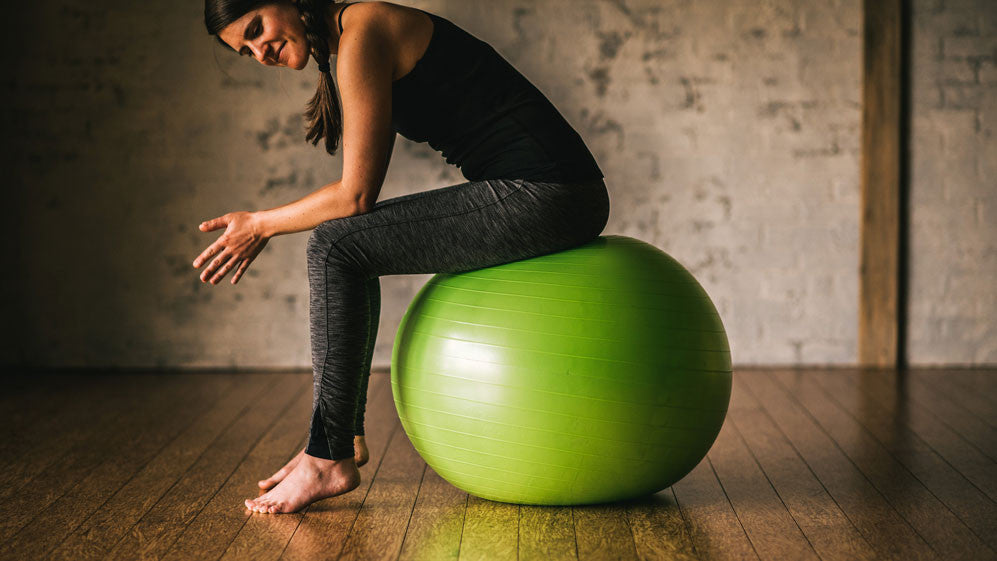
Quick sizing chart by height
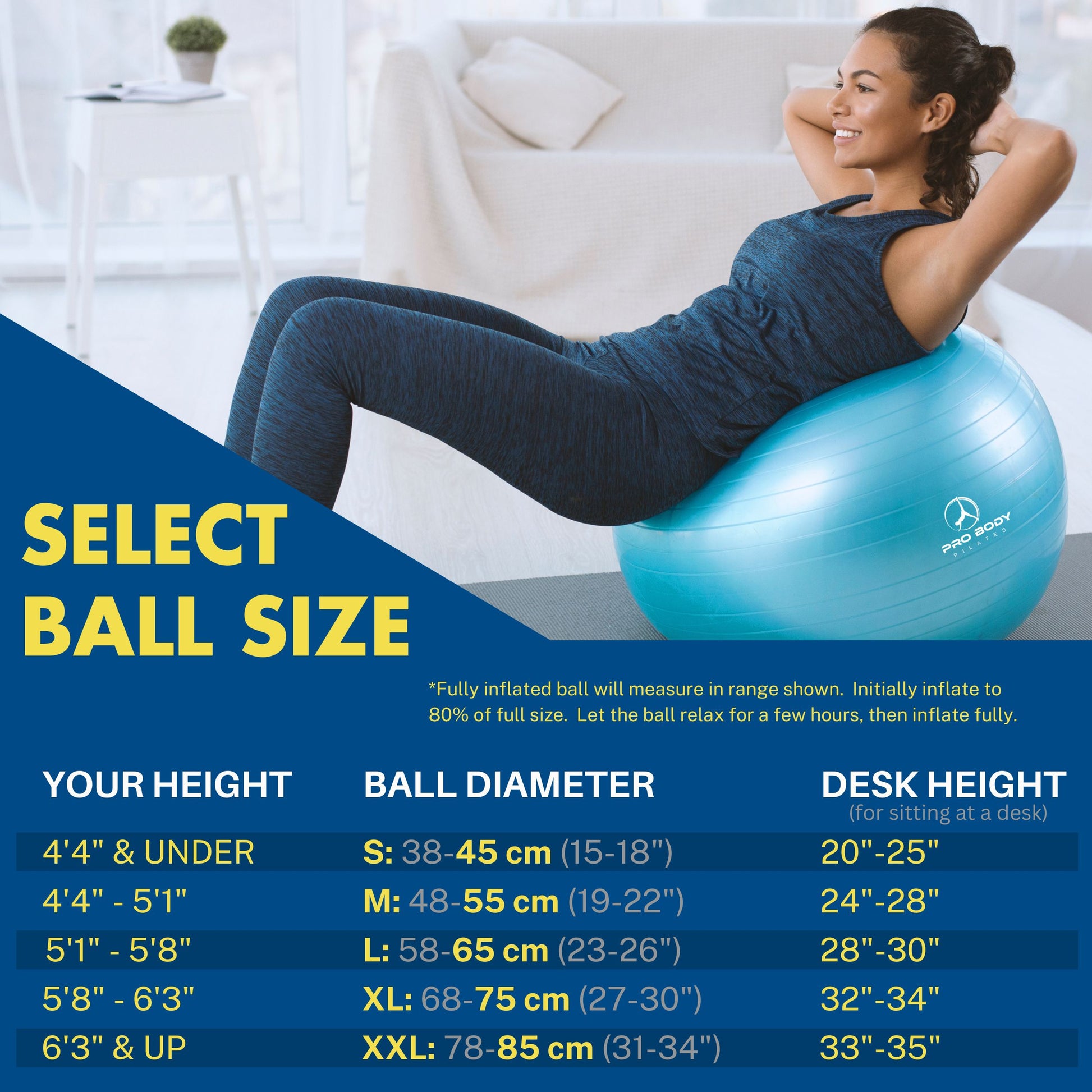
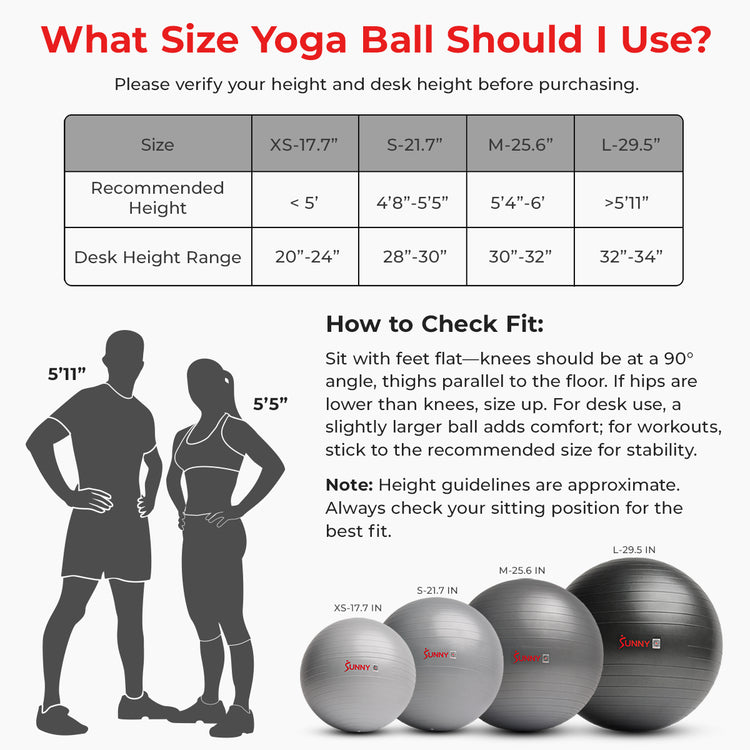
Follow this simple chart to find a starting point. Inflate the ball fully and test sitting height. Adjust a few centimeters if you are between sizes or prefer higher/lower positions.
- Under 5'0" (under 152 cm) — 45 cm ball, best for small adults and kids.
- 5'0" to 5'6" (152–168 cm) — 55 cm ball, ideal for most women and average-height adults.
- 5'7" to 6'0" (170–183 cm) — 65 cm ball, common for taller adults and many exercise uses.
- Over 6'0" (over 183 cm) — 75 cm or 85 cm ball, for taller people or when using the ball for planks and stretches.
What size balance ball should I use can change if you plan to use it as a chair versus a training tool. For desk sitting, aim for knees at 90 degrees. For exercise, you might want a slightly smaller ball to increase core engagement.
What size balance ball should I use for different activities
Choose size by activity. The same ball can serve multiple uses, but pick the one that fits your main goal.
- Sitting at a desk — choose a ball that keeps your thighs parallel to the floor and knees at 90 degrees.
- Core workouts and pilates — a slightly smaller ball increases challenge. A 65 cm ball suits many adults.
- Back rehab and gentle stability work — select a ball that supports a neutral spine and allows controlled movement.
- Children and teenagers — use age-appropriate sizes; kids often need a 45 cm or 55 cm ball.
- Standing balance drills — larger balls give more surface contact and are steadier for standing moves.
Two quick questions people search for are included here. Will my feet touch the floor when I sit on the ball? Yes, your feet should rest flat on the floor with knees at or slightly below hip level. Can I choose a larger ball for more cushion? You can, but a larger ball may reduce core engagement and change joint angles.

Common mistakes and tips
Many errors are easy to avoid. Use these tips to get it right quickly.
- Buying by price alone — cheap balls can be underinflated or low quality and change size after a few weeks.
- Ignoring inflation level — underinflated balls change posture and feel unstable. Inflate to the recommended diameter.
- Assuming one size fits all uses — a ball for sitting may differ from one for exercise. Pick the size for your primary use.
- Not testing before use — sit and move on the ball for 5–10 minutes to confirm comfort and stability.
- Forgetting weight limits — check the ball’s weight rating before heavy use or partner work.
What size balance ball should I use is often solved by doing a quick test at home. If your knees are too high, switch to a smaller ball; if too low, choose a larger ball.
Personal experience and real-life testing
I tested six popular balls with clients and students over two years. Most people find a 55 cm or 65 cm ball fits both sitting and basic workouts. A few lessons stood out.
- Try the ball fully inflated and sit in an upright posture. If you slump, the ball may be too big or underinflated.
- When using a ball at a standing workstation, a larger model gave more stable support.
- Pregnant clients benefited from a slightly larger diameter to keep hips open and reduce lower back strain.
One mistake I made early on was buying a single size for everyone in a group class. I learned to keep a 55 cm and a 65 cm ball on hand. That saved time and prevented discomfort.
Materials, inflation, maintenance, and safety
Materials and care affect the ball’s usable size and longevity. Use these practical steps.
- Material — choose burst-resistant PVC for durability and safety.
- Inflation — measure diameter while inflated. Add or release air in small amounts for fine tuning.
- Cleaning — wipe with mild soap and water to remove sweat and dust.
- Storage — keep the ball out of sharp objects and extreme heat to avoid warping.
- Safety — always inspect for tears and follow weight limits. Use on non-slip surfaces and avoid sharp jewelry or footwear.
What size balance ball should I use also depends on material stretch over time; high-quality balls retain size better. Replace aging balls before they fail.

Frequently Asked Questions of What size balance ball should I use
What size balance ball should I use for an office chair substitute?
For desk work, choose a ball that puts your knees at about 90 degrees when your feet are flat on the floor. For most people, that means a 55 cm or 65 cm ball.
How tall should I be for a 65 cm ball?
A 65 cm ball suits people roughly between 5'7" and 6'0". Try it seated to ensure knees are slightly lower than hips.
Can kids use adult-sized balance balls?
Children should use smaller balls sized to their height to keep knee and hip angles correct. A 45 cm or 55 cm ball fits most children and young teens.
Should athletes pick a different size than office users?
Athletes often choose a ball that increases challenge for core work, which can be slightly smaller than their desk ball. Testing with movement helps decide.
How much should I inflate my balance ball?
Inflate until the ball reaches the labeled diameter and feels firm. Slightly softer inflation gives more instability; firmer inflation offers more support.
Conclusion
Choosing the right ball is simple when you match diameter to height and use. Test by sitting and moving briefly. Adjust inflation and be honest about the ball’s main use to pick the best fit.
Take action today: measure your height, follow the sizing chart, and try a test sit. If you found this helpful, share your experience or ask a question below to get personalized tips.