
Deciding between swimming and walking for your fitness routine can feel like a toss-up, but understanding their unique benefits makes the choice much clearer. Both offer fantastic ways to boost your health, but they work your body differently and suit different needs. We've dug into the research to break down what each offers.
For instance, the Centers for Disease Control and Prevention (CDC) recommends at least 150 minutes of moderate-intensity aerobic activity per week. Both swimming and walking can absolutely help you hit that target, but the way they contribute can vary significantly based on intensity and duration. Let’s dive in and see which one is your best match.

Today's Exclusive Deals
Limited-time Exclusive Deals. Check current discount on Amazon.
Check Price on Amazon As an Amazon Associate I earn from qualifying purchases.Swimming vs Walking
Swimming and walking are both valuable forms of exercise, but swimming generally offers a more comprehensive, low-impact, full-body workout that builds strength and cardiovascular health simultaneously. Walking is highly accessible, excellent for bone density, and a great mood booster, but it primarily targets lower body strength and can be harder on joints than swimming. As of 2026, both remain cornerstones of accessible fitness.
The Quick Rundown: What You Need to Know Right Away
Swimming's Big Wins
Swimming is a remarkable, full-body workout. It engages muscles from your shoulders to your toes, providing both cardiovascular conditioning and resistance training in one go. Because water supports your body weight, it’s incredibly gentle on your joints, making it a top choice for people with arthritis or recovering from injuries.
Walking's Top Perks
Walking is the ultimate accessible exercise. You can do it almost anywhere, at any time, with minimal equipment, just a good pair of shoes. It’s fantastic for improving cardiovascular health, strengthening your legs and core, and has a well-documented positive impact on mental well-being.
It also plays a crucial role in maintaining bone density, especially for older adults.

Image source: Wikimedia Commons / U.S. Navy photo by All Hands Chief Journalist Robert Benson
Deep Dive: How Each Exercise Works for Your Body
Swimming: A Full-Body Immersion Workout
When you’re in the water, you’re essentially working against a fluid medium that provides natural resistance. This resistance means your muscles have to work harder to move you through the water, leading to improved strength and endurance across your entire body. Think about it: your arms pull, your legs kick, and your core stabilizes you, all at once.
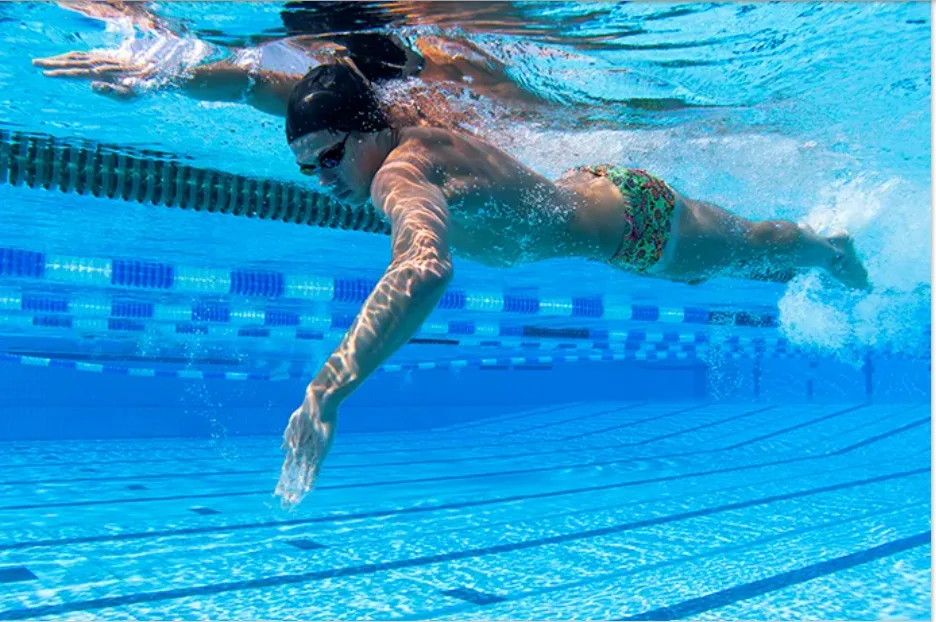
Image source: Web (Bing) / playtri.com (Web image (fair-use with source credit))
Different strokes like freestyle, breaststroke, and backstroke target slightly different muscle groups and offer varying levels of intensity. For example, breaststroke can be more demanding on the inner thighs and glutes, while freestyle is often favored for its overall cardiovascular challenge. The continuous movement and the need to control your breathing also significantly boost lung capacity and efficiency.
Walking: The Accessible All-Rounder
Walking is a weight-bearing exercise, which means your bones and muscles are working against gravity. This is key for strengthening your skeletal system and can help prevent osteoporosis. As you walk, you engage your leg muscles (quadriceps, hamstrings, calves), glutes, and core for balance and stability.

Image source: Web (Bing) / unsplash.com (Web image (fair-use with source credit))
The intensity of your walk can be easily adjusted. A leisurely stroll burns fewer calories than a brisk walk or incorporating hills. Incorporating interval training, where you alternate between periods of faster and slower walking, can significantly boost the cardiovascular benefits and calorie expenditure, similar to how interval training works for other exercises.
Comparing the Two: What Are the Real Differences?
When you're trying to decide which activity fits your life best, looking at the specifics really helps. It’s not just about getting your heart rate up; it’s about how your body responds and what your personal health goals are.
Impact on Joints
This is perhaps the biggest differentiator. Swimming is a zero-impact activity, meaning there’s virtually no stress placed on your joints. The buoyancy of water cradles your body, allowing you to move freely without jarring or pounding.
This makes it an ideal choice for individuals managing conditions like osteoarthritis or those who have experienced joint injuries.
Walking, on the other hand, is considered a low-impact activity. While it’s much gentler than high-impact exercises like running, the repetitive motion of your feet striking the ground still places some stress on your ankles, knees, and hips. For most people, this is manageable, but for those with significant joint pain or a history of joint issues, swimming offers a superior alternative.
Muscle Engagement
Swimming truly is a full-body workout. Most strokes require coordinated effort from your arms, shoulders, back, core, glutes, and legs. The water’s resistance provides a constant challenge to all these muscle groups, building both strength and endurance simultaneously.
Editorial analysis of various fitness routines shows that swimming can engage up to 90% of the body’s muscles.
Walking primarily focuses on the lower body and core. Your leg muscles, quadriceps, hamstrings, calves, do the bulk of the work, along with your glutes for propulsion. Your core muscles are engaged to maintain an upright posture and balance.
While a brisk walk can certainly tone these areas, it doesn’t offer the same comprehensive, upper-body engagement as swimming.
Calorie Burn and Weight Management
Both activities can be effective for burning calories and managing weight, but the numbers often favor swimming, especially at higher intensities. Because swimming engages more muscle groups and requires sustained effort against water resistance, it can lead to a higher calorie expenditure per hour. For instance, a 155-pound person swimming laps vigorously for an hour can burn upwards of 700 calories, while a brisk walk might burn around 300-400 calories in the same timeframe.
However, the accessibility of walking means it’s often easier to incorporate into daily life, leading to consistent calorie burn over time. Ultimately, the most effective exercise for weight management is the one you’ll stick with consistently.
Cardiovascular Benefits
Both swimming and walking are excellent for your heart health. They both improve circulation, lower blood pressure, and increase your cardiovascular endurance. Studies indicate that regular aerobic exercise, like both of these activities, can reduce the risk of heart disease by over 30%.
However, the intensity achievable in swimming often leads to a more robust cardiovascular challenge. The continuous effort required to move through water, combined with the need for controlled breathing, can significantly improve your heart’s efficiency and lung capacity. This can be particularly beneficial for individuals looking to reach advanced fitness levels or train for endurance events.
Accessibility and Practicality
This is where walking shines brightest. You can walk out your front door and go. There’s no need for special facilities, membership fees, or specific weather conditions.
It’s incredibly convenient and can be easily slotted into a busy schedule, whether it's a quick walk during a lunch break or a longer trek on the weekend.
Swimming requires access to a pool or safe open water. This often means gym memberships, public pool fees, or living near a suitable body of water. While dedicated swimmers often find ways to make it work, the logistical requirements can be a barrier for some compared to the sheer ease of simply walking.
Who Wins for What? Best Use Cases for Each
Choosing between swimming and walking isn't about declaring one superior overall, but about figuring out which activity aligns best with your personal health goals and physical needs. Each has a sweet spot where it truly shines, offering specific advantages that others can't match.
Best for Joint Health and Low Impact
If joint pain or the risk of injury is a primary concern, swimming is the clear winner. Its zero-impact nature means you can get a thorough workout without any pounding or jarring that could aggravate existing conditions or cause new ones. This makes it ideal for individuals managing arthritis, recovering from surgery, or anyone seeking a very gentle yet effective form of exercise.
Best for Bone Density and Accessibility
Walking takes the crown when it comes to ease of access and benefits for bone health. As a weight-bearing exercise, it stimulates bone growth and helps maintain bone mineral density, a crucial factor in preventing osteoporosis, particularly as we age. Plus, the ability to walk virtually anywhere, anytime, means it’s incredibly practical for maintaining a consistent routine, which is key for reaping long-term health rewards.
This also ties into discussions on keeping a routine consistent.
Best for Full-Body Strength and Cardio Combined
For a workout that hits nearly every muscle group and provides a powerful cardiovascular challenge simultaneously, swimming is unmatched. The water's resistance acts like a full-body gym, building lean muscle and improving stamina all at once. It offers more balanced muscular development than walking, which tends to concentrate benefits in the lower body.
Best for Weight Loss Goals
Both activities contribute to weight loss, but swimming often has a slight edge due to its higher potential for calorie expenditure per hour, especially at higher intensities. The engagement of more muscle groups means your body works harder overall. However, walking’s accessibility allows for greater frequency and duration for many people, which can lead to significant overall calorie burn over weeks and months.
The key for weight loss is consistency, so the activity you’re most likely to do regularly is often the most effective.
Common Pitfalls to Sidestep
Even with straightforward exercises like swimming and walking, there are common mistakes that can hinder progress or even lead to injury. Being aware of these can help you get more out of your chosen activity.
Swimming Slip-Ups
One frequent issue is neglecting a proper warm-up and cool-down. Jumping into intense swimming without preparing your muscles can increase the risk of strains. Similarly, skipping the cool-down can leave muscles feeling stiff.
Improper technique is another pitfall, as it not only reduces efficiency but can also put unnecessary strain on your shoulders and back. Focusing on form is key.
Another point to consider is overestimating calorie burn or pushing too hard too soon, especially if you’re new to swimming. Make sure to stay hydrated, even though you’re in water; your body still loses fluids.
Walking Woes
For walkers, improper footwear is a major culprit for pain and injuries. Wearing worn-out shoes or shoes not designed for walking can lead to blisters, shin splints, or knee pain. People also sometimes forget to vary their routes or intensity, leading to boredom and plateaus in fitness gains.
Another mistake is neglecting posture. Slouching or looking down can strain your neck and back. Maintaining an upright stance with your shoulders relaxed and gaze forward is essential for efficient and comfortable walking.
Pushing yourself too hard too fast, especially if you're returning to exercise after a break, can also lead to overuse injuries.
Expert Insights: Making the Most of Your Choice
To truly maximize the benefits of either swimming or walking, a few expert strategies can make all the difference. It’s about working smarter, not just harder, and ensuring your chosen activity supports your long-term health journey.
Tips for Getting Started
If you're new to swimming, start with shorter sessions, perhaps 20-30 minutes, focusing on comfort and basic strokes. Don't worry about speed initially; concentrate on feeling the water and smooth movements. Consider a few lessons to nail down fundamental techniques to prevent bad habits from forming early on.
For walking, invest in a good pair of supportive athletic shoes. They're your most important piece of gear. Begin with shorter distances at a comfortable pace and gradually increase duration, distance, or speed as your stamina builds.
Staying Motivated
Consistency is king for any fitness goal. To keep yourself motivated with swimming, try varying your strokes or swimming in different pools if possible to keep things interesting. Finding a swim buddy or joining a group can also add a social element and accountability.
With walking, motivation often comes from changing scenery or setting achievable goals. Explore new trails or parks, listen to podcasts or audiobooks, or use a fitness tracker to monitor your progress and celebrate milestones.
Frequently Asked Questions About Swimming vs. Walking
Is swimming better for losing weight than walking?
Swimming can burn more calories per hour than walking at a similar perceived exertion level, as it engages more muscle groups and works against water resistance. However, the best exercise for weight loss is the one you consistently stick with. If you can walk more often than you swim, walking might lead to greater overall calorie burn.
Can I build significant muscle swimming?
Yes, swimming is an excellent way to build lean muscle tone across your entire body. The water provides consistent resistance, challenging your muscles in a way that promotes strength and endurance without the high impact of lifting weights. It won't build bulk like heavy weightlifting, but it creates a strong, lean physique.
Which is safer for my knees?
Swimming is considerably safer for your knees due to its zero-impact nature. The water supports your body weight, eliminating the stress and jarring that walking can place on knee joints. If you have knee pain or are prone to knee injuries, swimming is generally the preferred exercise.
How often should I swim or walk for good health?
As a general guideline, aim for at least 150 minutes of moderate-intensity aerobic activity per week, as recommended by health organizations like the CDC. This can be achieved through about 30 minutes of brisk walking five days a week, or about 30-40 minutes of moderate swimming five days a week. You can also combine both activities to reach your weekly target.
Making Your Choice: Which Activity Reigns Supreme for You?
Ultimately, both swimming and walking are fantastic avenues for improving your overall health and fitness. Swimming offers a comprehensive, low-impact, full-body workout that excels in joint support and muscle engagement. Walking, on the other hand, is unparalleled in its accessibility, excellent for bone density, and a straightforward path to cardiovascular health.
Consider your personal circumstances: if you have joint issues or are recovering from an injury, swimming might be your best bet. If convenience and building bone strength are your top priorities, walking is likely the way to go. Many people find that incorporating both activities into their routine offers the most balanced and enjoyable fitness experience.

