
So, you're trying to figure out the difference between squash and racquetball, and which one might be the better fit for your game. It's a super common question, especially since both sports involve hitting a ball in an enclosed court.
Both squash and racquetball offer fantastic cardiovascular workouts and sharp mental challenges. As of 2026, these sports continue to draw athletes looking for intense, engaging play. Let’s break down what makes each distinct so you can choose the court that calls to you.

Today's Exclusive Deals
Limited-time Exclusive Deals. Check current discount on Amazon.
Check Price on Amazon As an Amazon Associate I earn from qualifying purchases.Squash vs Racquetball
The primary distinction between squash and racquetball lies in their equipment and court dimensions, leading to vastly different gameplay. Squash uses a smaller, temperature-sensitive ball and is played on a tighter court with angled walls, emphasizing precision and strategy. Racquetball uses a larger, bouncier ball and is played on a bigger court, allowing for more power and open play.
The Core Differences: Squash Ball, Racquetball Ball, and Court Size
When you first step into a facility with both types of courts, you'll immediately notice the visual differences, and those differences really dictate how the game is played.
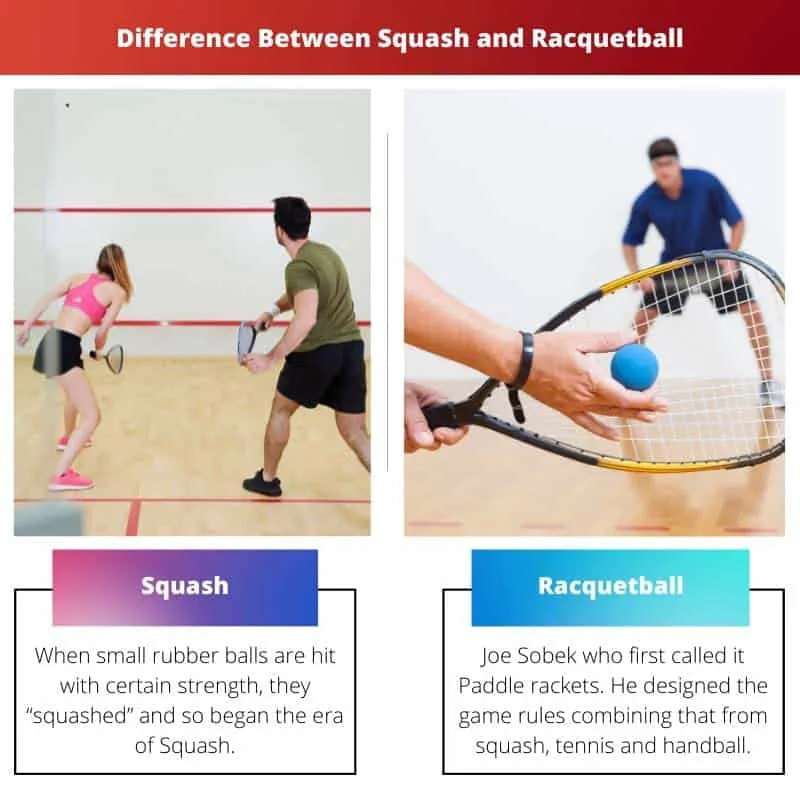
Image source: Web (Bing) / storage.googleapis.com (Web image (fair-use with source credit))
Squash Ball vs. Racquetball Ball
The ball is arguably the most significant differentiator.
- Squash Ball: This is a small, hollow rubber ball. When it's cold, it has a very low bounce rate, meaning it barely jumps off the floor. To get it to play properly, you need to hit it repeatedly with your racquet to warm it up. Once warm, it becomes more lively, but it still requires a precise touch. Manufacturer specifications for a standard squash ball indicate a diameter of approximately 39.5, 40.5 mm.
- Racquetball Ball: In contrast, a racquetball is larger and made from a material that gives it a much higher bounce. It's designed to be playable right out of the gate, with no need for warming up. These balls are typically brighter colored for better visibility. A standard racquetball diameter is around 57 mm.
Court Dimensions and Features
The playing arena itself is a massive factor in how each sport unfolds.
- Squash Court: These are enclosed, four-walled courts that are significantly smaller. Typical internal dimensions are about 32 feet long by 21 feet wide. The front wall is where you serve and return shots. The side walls and back wall are crucial for strategy, as the ball can bounce off them at sharp angles. The lower section of the front and side walls has a "tin" (a metal strip) marking the bottom boundary; hitting this is out.
- Racquetball Court: Racquetball courts are larger, typically measuring 40 feet long by 20 feet wide, with an 18-foot ceiling height (compared to squash's 14.5 feet at the front wall). The walls are generally straight and less angled than in squash, making for more predictable rebounds. This extra space and less severe wall angles contribute to a different style of play.
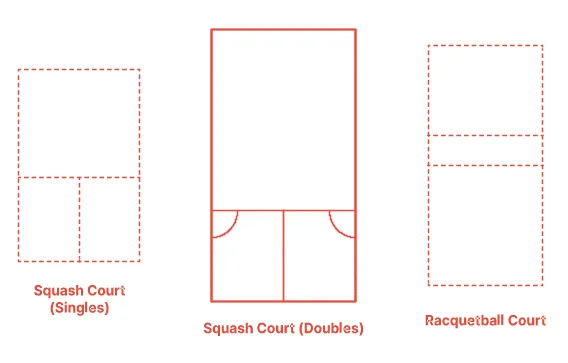
Image source: Web (Bing) / racquetballrules.us (Web image (fair-use with source credit))
Squash: The Fast-Paced, Tactical Game
Squash is renowned for its intense pace and the strategic depth it demands. You’re constantly on the move in a confined space, making quick decisions and precise shots your best friends.
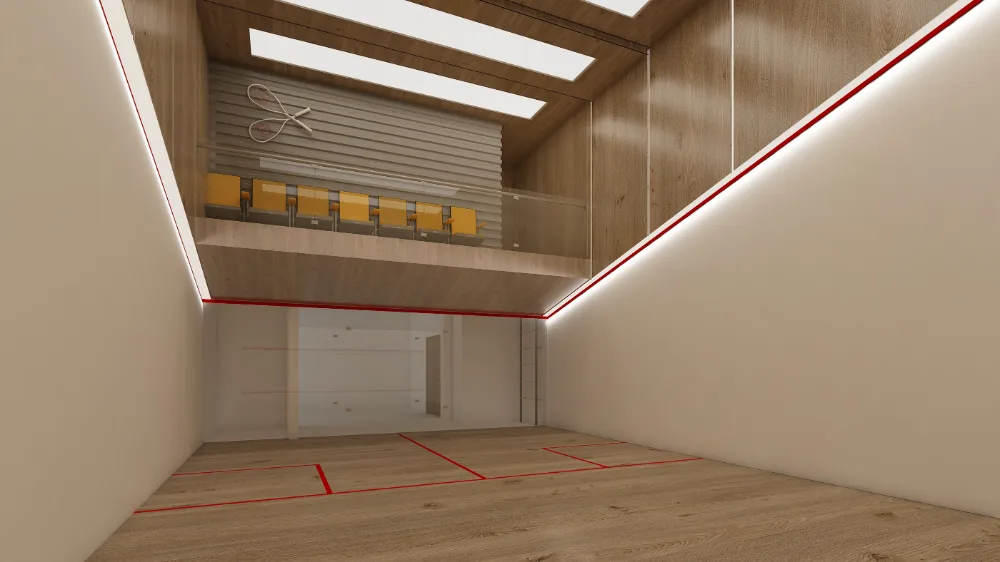
Image source: Bing (Web (fair-use with source credit))
- The "T" and Positional Play: A key element in squash is controlling the "T", the intersection of the short line and the service line. Players aim to return to this central position after hitting their shot, as it gives them the best vantage point and shortest distance to cover for their opponent's next shot. It’s about controlling the court’s geometry.
- Angled Walls and Tricky Bounces: The angled side walls mean the ball can rebound in unexpected ways. Mastering how to read these bounces and use them to your advantage, or to make it difficult for your opponent, is crucial. This tactical aspect is what makes squash feel like a physical game of chess.
- Fitness Demands: Because the court is small and the pace is high, squash is a phenomenal workout. It tests your agility, endurance, and reflexes. You'll be constantly moving, pushing your limits, and developing incredible stamina. Players often report significant cardiovascular benefits, similar to high-intensity interval training. For those interested in structured training for such sports, understanding proper lifting techniques can be beneficial for overall athletic conditioning, as discussed in articles on how to improve your deadlift form.
- Learning Curve: For beginners, squash can present a steeper learning curve. Mastering the serve, understanding how to make the ball die in the corners, and learning to read the angled wall shots takes time and practice. It’s less about raw power and more about finesse and strategic placement.
Racquetball: The Open, High-Energy Rally
Racquetball often feels more open and accessible, especially for newcomers. The larger court and livelier ball contribute to a game that can be incredibly fast but also offers more room to breathe and react.
- Power and Speed: The bouncier ball and larger court encourage powerful shots and long rallies. Players can often hit with significant force and use the angles of the court, including the ceiling, to their advantage. This makes for a thrilling, dynamic game.
- Strategic Use of Walls and Ceiling: Unlike squash, where the angled walls are a primary tactical element, racquetball allows for a different kind of wall play. Shots can rebound off side walls and then the front wall, or vice versa, creating unique opportunities. The ceiling can also be a factor in shot construction, adding another layer of complexity.
- Accessibility for Beginners: Many people find racquetball easier to pick up initially. The ball’s consistent bounce means you don’t have to worry about warming it up, and the larger court provides more space to maneuver. This can make it less intimidating for those new to racket sports, offering a quicker path to enjoying extended rallies.
- Workout Intensity: While it might feel more open, racquetball is still an incredibly demanding sport. The constant movement, reaching for shots, and quick bursts of speed provide an excellent full-body workout. It’s particularly great for developing leg strength and core stability due to the amount of lateral movement and quick turns involved. You can find great routines for conditioning that complement this type of sport.
Comparing Key Features: Ball, Court, and Racquet
To really nail down the differences, let’s put the core components side-by-side. Understanding these will help you visualize how the games differ.
| Feature | Squash | Racquetball |
|---|---|---|
| Ball Size | Smaller (approx. 39.5–40.5 mm diameter) | Larger (approx. 57 mm diameter) |
| Ball Bounce | Low when cold, requires warming up | High and consistent, ready to play immediately |
| Court Size | Smaller (approx. 32' x 21') | Larger (approx. 40' x 20' with 18' ceiling) |
| Court Walls | Angled side walls, tin on lower front/side walls | Straighter walls, ceiling often in play |
| Racquet | Longer, smaller head, focused on precision | Shorter, wider head, focused on power/reach |
| Pace | Very fast, intense, close-quarters | Fast, open play, longer rallies possible |
| Strategy | Positional control, angles, reading bounces | Power, consistent hitting, creative wall/ceiling use |
Who Should Play Squash?
Squash might be your sport if you enjoy a game that’s both physically demanding and intellectually engaging. It’s perfect for players who like to think several steps ahead.
- The Tactical Thinker: If you enjoy strategy games and problem-solving, squash will appeal to your mind. Every shot is a calculated move, and the smaller court means your positioning is paramount. It’s a bit like playing chess, but with a lot more running.
- The Endurance Athlete: Squash provides an exceptional cardiovascular workout. You’ll be constantly moving, pushing your limits, and developing incredible stamina. Those who thrive on high-intensity interval training will find a natural fit.
- The Player Seeking Precision: If you appreciate finesse and control in your game, squash is for you. Mastering the delicate art of drop shots, boasts, and precise drives is incredibly rewarding. It's about outsmarting your opponent as much as outhitting them.
- The Player Up for a Challenge: The learning curve can be a bit steeper with squash, especially when it comes to understanding the ball's behavior and court angles. If you don't mind a challenge and enjoy the process of improvement, you'll find squash deeply satisfying.
Who Should Play Racquetball?
Racquetball often attracts players looking for a sport that’s dynamic, high-energy, and a bit more forgiving for beginners. It’s a game where speed and power meet a unique style of court play.
- The Beginner Racket Sport Player: If you're new to racket sports, racquetball is often considered more accessible. The ball is easier to handle, and the larger court provides more reaction time. You can get into enjoyable rallies much faster than in squash.
- The Power Player: Those who enjoy hitting the ball with force and engaging in fast-paced rallies will love racquetball. The bouncier ball and open court design lend themselves to powerful shots and exciting exchanges.
- The Creative Player: Racquetball offers a lot of room for creativity. Using the side walls, back wall, and even the ceiling to set up shots adds an unpredictable and fun element. It rewards players who can think outside the box.
- The Player Seeking Accessible Fitness: Racquetball delivers a fantastic workout without the steep initial technical barrier of squash. It’s a great way to get your heart rate up, improve agility, and burn calories in a dynamic and engaging way.

