
Determining exactly how many reps you should do for strength isn't about picking a random number. It is about aligning your training volume with your body's neurological capacity to produce force.
As of 2026, research indicates that intensity, rather than total repetition count, is the primary driver of strength adaptation. When you push your muscles near their limit, you force your nervous system to recruit more motor units, leading to greater gains over time.

Today's Exclusive Deals
Limited-time Exclusive Deals. Check current discount on Amazon.
Check Price on Amazon As an Amazon Associate I earn from qualifying purchases.
Image source: Web (Bing) / craiyon.com (Web image (fair-use with source credit))
Quick Answer
You should perform 1 to 6 repetitions for pure strength. These low ranges prioritize heavy loads over high volume. Rest periods must be long to support nervous system recovery.
High intensity is necessary to trigger neuromuscular adaptations. Most trainees find success using 3 to 5 sets.
Why Low-Rep Training is the Foundation of Raw Strength
Strength training requires you to move heavy weight, which necessitates a low repetition range. When you lift a load that represents 85 percent or more of your one-rep max, your body cannot perform many repetitions before it hits failure. This high-load environment teaches your brain to recruit muscle fibers more efficiently.
Think of your nervous system as a computer that needs to be optimized for maximum output. By performing fewer reps with heavy weight, you are essentially coding your muscles to fire together in a single, powerful burst. This neural adaptation is what separates someone who can lift a massive weight from someone who simply has large muscles.
If you are just getting started with a reliable iron setup, focus on building this neural foundation first. Do not worry about chasing the pump or high-rep fatigue. Your main goal is to improve your force production through consistent, high-intensity effort.
The Neuro-Muscular Link: How Your Brain Drives Strength Gains
Strength is a skill. It relies on your central nervous system sending rapid signals to your muscles to contract simultaneously. High-rep training often focuses on metabolic stress, which is great for muscle growth but suboptimal for absolute strength gains.
When you lift heavy, you trigger a process called rate coding and motor unit recruitment. Your body learns to use more of its available muscle mass in every single movement. This is why you can often see strength gains in the first few weeks of training before you even notice significant changes in muscle size.
If you want to see how your equipment holds up during these heavy sessions, choosing durable gear for intense sessions is a smart move. Consistent, heavy practice reinforces the connection between your brain and your muscles. Over time, this becomes automatic, allowing you to move heavier loads with less effort.
Determining Your Rep Range Based on Training Goals
Your training volume should reflect your specific end goal. If you are training for raw power, your range will differ significantly from someone aiming for general fitness. Using the right range prevents you from wasting energy on non-productive work.
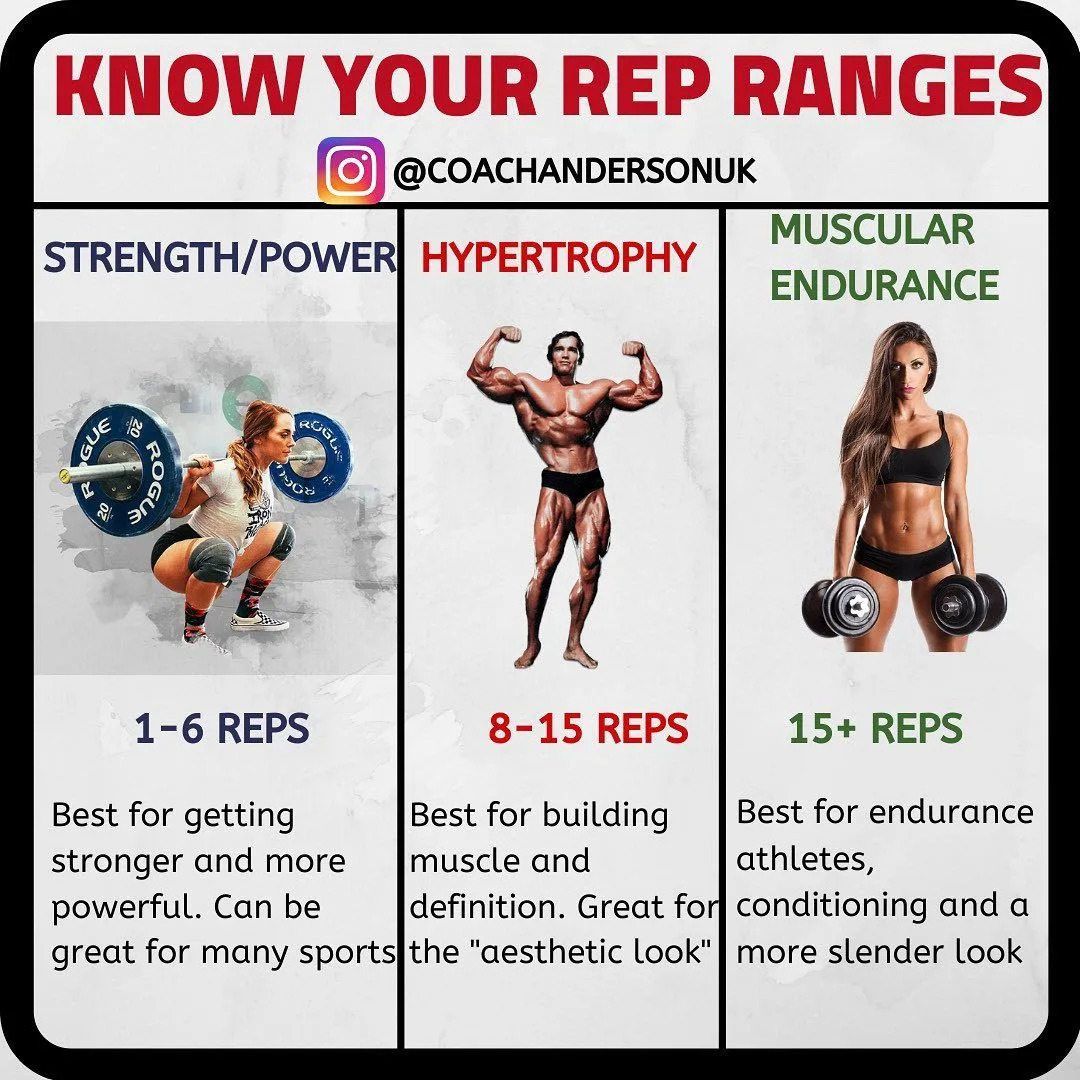
Image source: Web (Bing) / click-city.de (Web image (fair-use with source credit))
Consult the National Strength and Conditioning Association guidelines for how volume impacts your specific outcome. Use this breakdown to plan your next session:
- 1 to 3 Reps: Best for testing absolute maximum strength.
- 4 to 6 Reps: Ideal for building strength while maintaining some muscle mass.
- 8 to 12 Reps: Primarily used for hypertrophy or increasing muscle size.
- 15+ Reps: Focused on muscular endurance and metabolic conditioning.
If you are setting up a system for total body movement, try to stay within the 4 to 6 rep range. It provides the perfect balance for most people. It is heavy enough to build strength but offers enough volume to keep your joints moving through a full range of motion.
Managing RPE and Rest Intervals for Neural Recovery
Managing your Rate of Perceived Exertion (RPE) is essential when training for strength. RPE is a scale from 1 to 10 that helps you gauge how close you are to absolute failure. For strength, you typically want to work at an RPE of 8 or 9.
This means you should finish your set feeling like you could have managed one or two more repetitions if your life depended on it. Pushing to absolute failure on every single set can lead to central nervous system burnout. It makes it impossible to perform at your best in the next session.
Rest is equally critical. Because you are taxing your nervous system, you need longer recovery windows than the standard 60-second rest period. Give yourself 3 to 5 minutes between sets.
This ensures your brain is fully recharged and ready for the next heavy effort.
When you have limited floor space, choosing space-saving gear helps you keep your rest areas organized. Proper recovery allows you to maintain the high intensity required for strength. Don't rush; treat every set with the focus it deserves.
Avoiding the "Junk Volume" Trap and Technical Failure
Junk volume refers to sets performed for the sake of getting the work in rather than pushing your limits. If you are doing 5 sets of 10 at a weight that feels easy, you aren't training for strength. You are just accumulating fatigue.
Technical failure is the point where your form breaks down. If your hips rise too early in a squat or your back rounds during a deadlift, stop the set. Continuing past this point does not build strength, and it significantly increases your risk of injury.

Image source: Web (Bing) / kustomkitgymequipment.com (Web image (fair-use with source credit))
If you're looking for quality equipment for serious lifting, ensure it can handle heavy, controlled reps. Your focus must remain on moving the bar with perfect technique. It is always better to end a set one rep early than to complete a rep with poor form.
- Stop at the first sign of form breakdown.
- Use a weight that challenges you within your target range.
- Track your progress to ensure you are adding load or reps over time.
Strength is a long-term game. Avoid the temptation to add extra sets just to feel tired. Quality repetitions are the only currency that matters when you are building a stronger version of yourself.
How to Structure Your Training Blocks for Long-Term Progress
You shouldn't train at maximum intensity every day if you want to keep seeing results. Instead, divide your training into distinct blocks, often called mesocycles, to balance hard work with necessary recovery. A common approach is to spend four weeks focused on heavy, low-rep sets, followed by a week of deloading.
During the heavy block, your main goal is to push the weight on your compound lifts while staying in that 1 to 5 rep range. Use this time to track your progress carefully in a notebook or app. If the weight isn't moving up over these four weeks, you might need to adjust your recovery or sleep habits before increasing the load again.
The deload week is just as important as the heavy weeks. During this time, you should cut your total volume by about half. You can reduce the number of sets or lower the weight significantly.
This allows your connective tissues and nervous system to catch up to the stress you've placed on them.
If you are using a sturdy barbell setup for these cycles, pay attention to how your joints feel during the transition. If you feel persistent soreness, extend your deload by a few extra days. Long-term strength is about consistency over months and years, not just a single great week of training.
Frequently Asked Questions About Strength Rep Ranges
Should I do the same rep range for every exercise?
No, you should prioritize lower reps for heavy compound movements like squats and deadlifts. These exercises tax your central nervous system heavily. Isolation movements, like curls or lateral raises, are better served by higher reps.
This approach protects your joints while still providing the muscle stimulation needed for growth.
What if I reach failure before I hit my target reps?
If you hit failure, your weight is likely too heavy for the target range. Stop the set immediately to maintain safe technique. Lower the weight by five percent in your next set or next workout.
Training with a weight you can handle with perfect form is always better for strength building.
Does fast lifting produce more strength than slow lifting?
Yes, moving the weight with maximum intended speed is crucial. Even if the weight is heavy and moves slowly, your intent to move it quickly recruits more muscle fibers. This practice, known as compensatory acceleration, teaches your body to generate force rapidly.
Focus on the explosive part of the lift.
How do I know if I am resting long enough?
You are resting long enough if your heart rate has settled and you feel mentally ready for the next set. For heavy strength work, this usually takes three to five minutes. Do not use your phone or get distracted during this time.
Stay focused on your breathing and prepare for the effort ahead.
Can I change my rep range midway through a workout?
It is better to stick to a plan for the entire session. If you start with heavy sets of three, your nervous system is primed for high-force output. Switching to high-rep endurance sets afterward creates conflicting signals for your body.
Plan your session, stick to the range, and track your results consistently.

