
Many people wonder if there's a real difference between running shoes and walking shoes, or if it's just marketing. The truth is, while they both aim for comfort, their designs cater to very different physical demands. Choosing the wrong pair can lead to discomfort, reduced performance, and even injury.
The physics of each activity are distinct. Running involves a higher impact and a unique gait cycle compared to the smoother, rolling motion of walking. This difference is why manufacturer specifications for cushioning, flexibility, and support vary significantly between the two types of footwear.

Today's Exclusive Deals
Limited-time Exclusive Deals. Check current discount on Amazon.
Check Price on Amazon As an Amazon Associate I earn from qualifying purchases.Running Shoes vs Walking Shoes
Generally, running shoes offer more cushioning to absorb impact and greater flexibility for forward propulsion, while walking shoes prioritize stability and a smooth heel-to-toe transition. The optimal choice depends entirely on your primary activity, with specialized designs enhancing comfort and injury prevention. For example, running shoes often feature midsole foams designed to return energy with each stride.
Why the Difference Matters for Your Feet
The way your foot moves and the forces it endures during running versus walking are fundamentally different. Running typically involves a brief moment where both feet are airborne, followed by a much higher impact upon landing, often with increased stress on joints like the knees and ankles. Walking, on the other hand, is characterized by a continuous, rolling motion with your foot in contact with the ground for a larger percentage of the stride.
This means that shoes designed for each activity have distinct engineering principles.
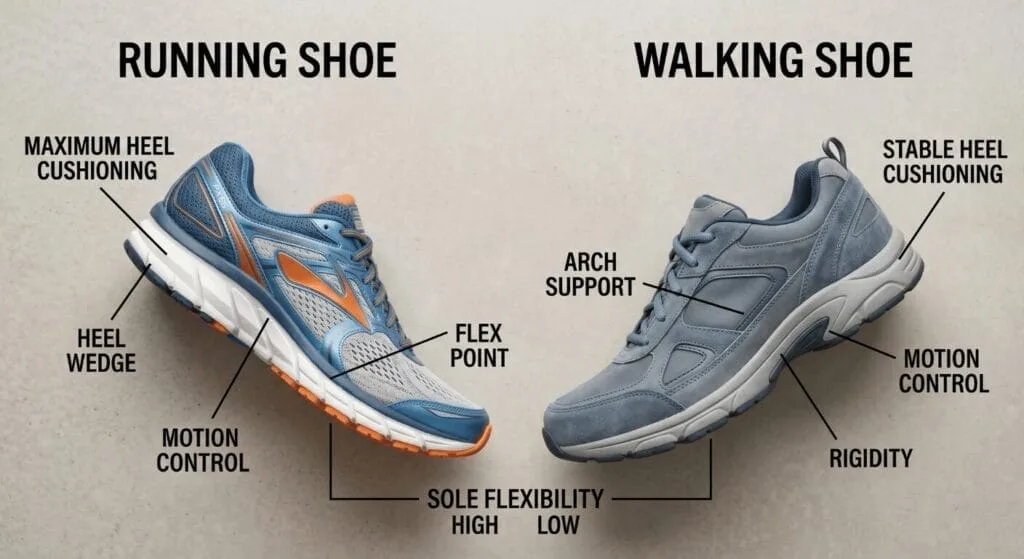
Image source: Web (Bing) / sflmedicalgroup.com (Web image (fair-use with source credit))
Anatomy of a Running Shoe: Built for Speed and Shock
Running shoes are engineered with a primary focus on mitigating the high impact forces associated with running and facilitating a powerful forward motion. Their construction prioritizes shock absorption and energy return to protect your joints and enhance your stride efficiency. These shoes are designed for dynamic movement where your feet experience significant vertical impact.
Cushioning and Impact Absorption
The most noticeable feature of running shoes is their extensive cushioning, particularly in the heel and forefoot. Midsole materials like EVA (ethylene-vinyl acetate) or proprietary foam blends are used to create a soft landing surface. This cushioning absorbs much of the shock that would otherwise travel up your legs, reducing stress on bones, joints, and muscles.
Manufacturer specifications often detail the density and thickness of this cushioning, aiming to provide adequate protection for the average runner.
Flexibility and Propulsion
Running shoes are designed to be flexible, especially in the forefoot, to allow your foot to move naturally through the running stride. This flexibility helps your toes splay and push off the ground efficiently. The outsole pattern and the shoe's overall structure are optimized to provide traction and a responsive feel, aiding in that crucial propulsive phase of running.
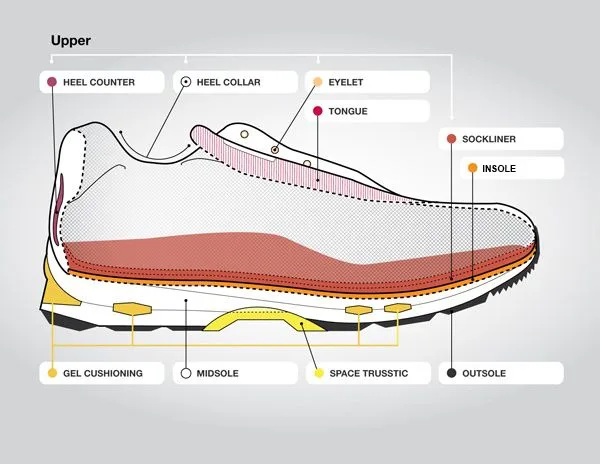
Image source: Web (Bing) / asics.com (Web image (fair-use with source credit))
Anatomy of a Walking Shoe: Stability for the Long Haul
Walking shoes are built to support the natural, rolling motion of the foot during walking. They focus on providing a stable platform that guides your foot smoothly from heel strike to toe-off, rather than absorbing extreme impacts or propelling you forward with great force. Their design emphasizes comfort and support for sustained periods of standing and ambulation.
Firmer Support and Smooth Transition
Unlike the plush cushioning of running shoes, walking shoes often feature firmer, more supportive cushioning. This density helps maintain stability and prevents excessive pronation or supination during the walking gait. The outsole is typically designed to promote a fluid transition from heel to toe, offering good traction without being overly aggressive.
This makes them feel more grounded and less "squishy" than many running models.
Heel Drop and Gait
Many walking shoes have a lower heel drop, the difference in height between the heel and the forefoot, compared to running shoes. This lower drop can feel more natural for walking, which often involves a heel-first strike. This feature encourages a more natural foot strike and can reduce strain on the Achilles tendon for some individuals.
For instance, some walking shoe models offer a heel drop as low as 4mm, promoting a more neutral foot position.
Running Shoes vs. Walking Shoes: Side-by-Side Breakdown
The key differences in running shoes versus walking shoes lie in their construction, intended use, and how they support your foot's movement. Understanding these distinctions helps you pick the right tool for the job, whether you're hitting the track or the sidewalk.
| Feature | Running Shoes | Walking Shoes |
|---|---|---|
| Cushioning | High, often in heel and forefoot | Moderate, often firmer |
| Flexibility | High, bends easily in forefoot | Moderate, designed for rolling motion |
| Support | Varied (neutral, stability, motion control) | Focus on stable platform |
| Heel Drop | Often higher (4-12mm typical) | Often lower (0-8mm typical) |
| Impact | High absorption for landing impact | Designed for less forceful, consistent impact |
| Primary Motion | Forward propulsion, multi-phase impact | Smooth heel-to-toe roll |
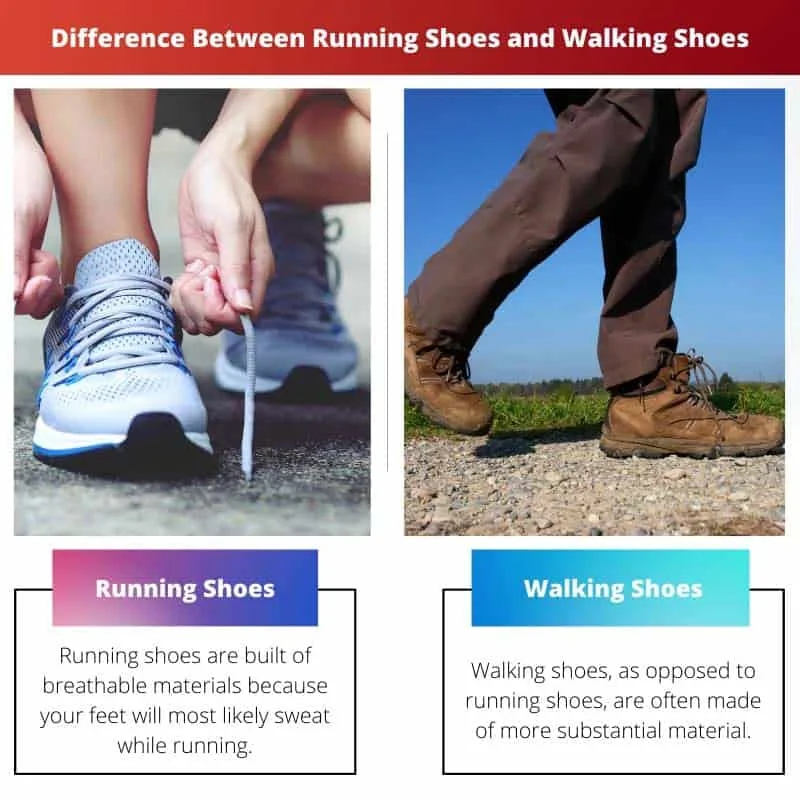
Image source: Web (Bing) / askanydifference.com (Web image (fair-use with source credit))
Who Should Wear What: Matching Shoes to Your Activity
Choosing between running shoes and walking shoes boils down to understanding your primary activity and the biomechanical demands it places on your body. While there can be overlap, specialized footwear is usually best for optimal comfort, performance, and injury prevention. As of 2026, the market still offers distinct designs for these two popular activities.
When to Lace Up Running Shoes
If your main activity involves jogging, sprinting, or any form of running, a dedicated pair of running shoes is essential. These shoes are built to withstand the repetitive, high-impact nature of running. Their advanced cushioning systems, typically featuring specialized midsole foams like EVA or PU blends, are designed to absorb shock and protect your joints from the jarring forces of each stride.
The flexibility in the forefoot also aids in that crucial push-off phase.
When Walking Shoes Are Your Best Bet
For individuals who primarily engage in brisk walking, power walking, or simply use their footwear for daily errands and general comfort, walking shoes are the ideal choice. They offer a stable, supportive platform that complements the natural heel-to-toe rolling motion of walking. Unlike running shoes, they often feature firmer cushioning to provide consistent support without excessive compression, which can feel unstable for walking.
Many walking shoe designs also have a lower heel drop, which aligns with a typical walking gait.
What If You Do Both?
If you're someone who enjoys both running and walking, you might be wondering if one pair can do the job of both. For casual runners who also walk frequently, a well-cushioned, neutral running shoe can often serve adequately for walking. They provide ample shock absorption.
However, if you're serious about both activities and engage in them with significant frequency or distance, having separate pairs is highly recommended. Running shoes might feel too soft or unstable for dedicated walking, while walking shoes lack the necessary impact absorption and propulsion features for running.
Common Mistakes When Choosing Between Them
One common pitfall is assuming all athletic shoes are created equal. Someone might pick up a pair of general "trainers" and try to use them for both running and walking, or even cross-training. While versatile, these often lack the specific cushioning or stability needed for dedicated activities.
Another mistake is focusing too much on looks or brand name rather than the functional design that suits your specific gait and activity.
Furthermore, people sometimes choose shoes based on price alone, opting for cheaper walking shoes for running, or vice-versa. This can lead to inadequate support and impact absorption, potentially causing discomfort or injuries. For instance, using a flexible walking shoe for a high-impact running workout might not provide the necessary joint protection.
Expert Tips for Finding Your Perfect Pair
When shopping, don't hesitate to try shoes on and walk around the store. Pay attention to how your foot feels. Does it feel stable?
Is there enough cushioning where you need it? Your foot's natural pronation, how it rolls inward when you step, is also key.
If you have flat feet or overpronate (your foot rolls inward excessively), you might need shoes with more stability or motion control. If your arch is high and your foot lands on the outside, neutral shoes with plenty of cushioning are usually best. Many specialty running stores offer gait analysis to help you determine your pronation type.
These stores also provide expert advice tailored to your foot shape and activity level.
Frequently Asked Questions About Running and Walking Shoes
Can I wear running shoes for walking?
Yes, you generally can wear running shoes for walking. Their ample cushioning provides comfort and shock absorption for most walking activities. However, they might feel softer or less stable for some compared to dedicated walking shoes.
Can I wear walking shoes for running?
It’s generally not recommended to run in walking shoes. They often lack the necessary cushioning and impact absorption for the forces involved in running, which can increase the risk of injury like shin splints or joint pain.
How do I know if my shoes are worn out?
Look for signs of wear like the tread becoming smooth, the midsole foam compressing or showing creases, or a general loss of cushioning and support. If your old shoes feel less responsive or you start experiencing aches after your usual routine, it’s likely time for a new pair.
What is "heel drop"?
Heel drop refers to the difference in height between the heel and the forefoot of a shoe. A higher heel drop (e.g., 10-12mm) can encourage a heel strike, while a lower heel drop (e.g., 0-4mm) promotes a more midfoot or forefoot strike.
How often should I replace my running shoes?
Most running shoes should be replaced every 300 to 500 miles (about 480 to 800 kilometers), or every 6 to 12 months, depending on usage. Frequent runners logging higher mileage will need to replace them more often.
Your Final Shoe Decision: What's Right for You?
Ultimately, the best shoe for you depends on your primary activity. If you're logging miles on foot daily, walking shoes offer the stability and smooth transition ideal for that motion. If running is your passion, specialized running shoes provide the crucial cushioning and support needed to protect your body.
For those who do a mix of both, a well-cushioned neutral running shoe can often suffice for casual walking, but dedicated athletes benefit from having distinct pairs. Choosing correctly ensures comfort, enhances performance, and helps keep those aches and pains at bay.

