
Tennis vs. Squash: Which Racket Sport Fits You?
Deciding between tennis and squash can be tough when you're looking for a dynamic racket sport. Both offer a fantastic workout and require skill, but they play out in vastly different environments and demand unique abilities. Our research indicates that the choice often comes down to personal preference for pace, space, and style of play.
These two popular sports share some similarities, like using a racket and ball, but a key difference lies in court dimensions. For instance, a standard outdoor tennis court is 78 feet long, while an indoor squash court is only 32 feet long. This fundamental difference shapes the entire experience.

Today's Exclusive Deals
Limited-time Exclusive Deals. Check current discount on Amazon.
Check Price on Amazon As an Amazon Associate I earn from qualifying purchases.Tennis vs Squash
When weighing tennis versus squash, the primary distinction lies in the playing environment and the resulting pace. Tennis is played on a large, open court, often outdoors, emphasizing endurance and covering significant ground. Squash, in contrast, unfolds in a small, enclosed four-walled court indoors, demanding explosive agility and lightning-fast reflexes within a confined space.
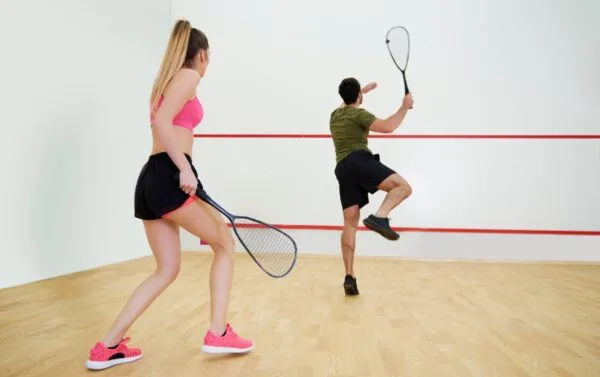
Image source: Bing (Web (fair-use with source credit))
Tennis: The Open Court Game
Tennis is a game of territory and endurance, played on a large rectangular court divided by a net. Players use rackets to hit a hollow rubber ball covered with felt over the net, aiming to land it within the opponent's court in a way they can't legally return. It's a sport that rewards consistent groundstrokes, powerful serves, and the ability to move effectively across a wide playing area.
Tennis Court & Equipment Basics
The standard tennis court, as specified by the International Tennis Federation (ITF), measures 78 feet (23.77 meters) long and 36 feet (10.97 meters) wide for doubles play. Singles courts are 27 feet (8.23 meters) wide. The net, set at 3 feet (0.914 meters) high at the center, divides the court.
Tennis rackets are typically longer, usually between 23 and 29 inches (58-74 cm), and heavier than squash rackets, designed for generating power and reach. The tennis ball itself is a hollow rubber sphere, approximately 2.57, 2.70 inches (6.54, 6.86 cm) in diameter, covered in felt for improved flight characteristics.
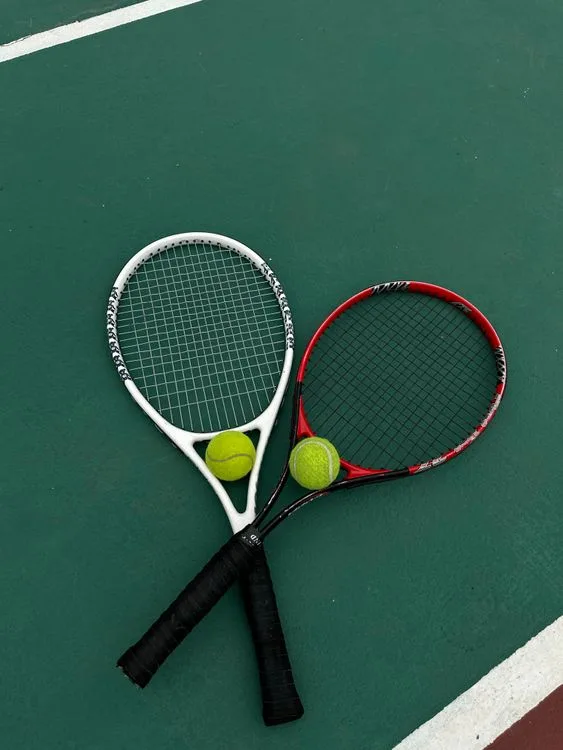
Image source: Web (Bing) / pexels.com (Web image (fair-use with source credit))
Tennis: Key Features & How It Feels
Playing tennis feels like a strategic chase across a large expanse. You'll find yourself sprinting, lunging, and covering distance with each point. The game emphasizes stamina, requiring players to maintain a high level of energy throughout potentially long matches.
The ball, being lighter and bouncier than a squash ball, travels further, allowing for different types of shots and strategic placement. It’s a sport that’s as much about physical conditioning as it is about technical skill and mental toughness.
Squash: The Intense Indoor Duel
Squash is an intensely fast-paced indoor sport played within a four-walled court. Players use rackets to hit a small, hollow rubber ball against the front wall, with the objective of hitting it so it bounces off the floor before the opponent can return it. The defining characteristic of squash is the use of side and back walls, allowing for creative and deceptive shots.
It’s a game of quick reactions, agility, and constant movement within a compact space.
Squash Court & Equipment Basics
A regulation squash court, as defined by the World Squash Federation (WSF), is an enclosed rectangular box measuring 32 feet (9.75 meters) long and 21 feet (6.40 meters) wide. The front wall is 15 feet (4.57 meters) high, tapering to 13 feet (3.96 meters) at the back. Unlike tennis, there’s no net; the front wall is the primary target.
Squash rackets are shorter and lighter, typically around 21.5 to 27 inches (54.6, 68.6 cm), designed for rapid wrist action and close-quarters play. The squash ball is much smaller and denser than a tennis ball, usually around 1.57, 1.65 inches (4.0, 4.2 cm) in diameter, and its low bounce requires players to be constantly on the move.

Image source: Wikimedia Commons / thejackrustles (CC BY-SA)
Squash: Key Features & How It Feels
Playing squash feels like a high-octane, rapid-fire game of chess played with rackets. You're constantly reacting to the ball's trajectory off multiple walls, making sharp, explosive movements in a very confined area. The emphasis is on agility, quick footwork, and lightning-fast reflexes.
Because the court is so small and the ball travels quickly, you're always on your toes, anticipating your opponent's next move and planning your own precise shots to outmaneuver them. It's a fantastic workout that builds incredible stamina and coordination.
Tennis vs. Squash: Side-by-Side Comparison
Deciding between tennis and squash often boils down to personal preference for the environment and the physical demands. They both offer incredible fitness benefits but cater to different playing styles and intensities. Understanding their core differences is key to finding the sport that best suits you.
Court Size & Environment
This is perhaps the most significant differentiator. Tennis is played on a large, typically outdoor court (though indoor courts exist) measuring 78 feet by 36 feet for doubles. This expansive space means a lot of running and covering ground.
Squash, on the other hand, is exclusively an indoor sport played in a much smaller, enclosed rectangular court: 32 feet by 21 feet. This confined, four-walled arena is crucial to the game's dynamics.
Equipment Differences
The equipment reflects the distinct playing styles. Tennis rackets are generally longer and heavier, designed for generating power and reach across that bigger court. They range from 23 to 29 inches in length.
Squash rackets are shorter and lighter, typically between 21.5 and 27 inches, built for quick wrist movements and rapid volleys in tight spaces. The balls also differ significantly; tennis balls are larger and bouncier, while squash balls are smaller, denser, and have a lower bounce, making them more challenging to track and control.
Gameplay Dynamics & Pace
The fundamental flow of each game is miles apart. Tennis involves hitting a ball back and forth over a net, aiming to make it land in bounds on the opponent's side. The rallies can be long, and the pace varies from powerful groundstrokes to strategic lobs.
Squash is about hitting the ball against the front wall so it lands in play before it hits a wall again (or the floor). The use of side and back walls opens up unique angles and makes the game incredibly fast-paced, with rallies often being shorter but more intense and requiring constant reaction.
Physical Demands
Both sports are excellent for cardiovascular health, but the type of physical exertion differs. Tennis demands endurance, requiring sustained running, lateral movement, and lunging across a large area, which can be tough on knees and ankles. Squash is characterized by explosive bursts of energy, requiring incredible agility, quick changes of direction, and rapid reflexes within a small space.
It's a full-body workout that heavily engages the legs, core, and upper body in short, intense intervals. For individuals looking to improve their deadlift form, understanding how different sports train the posterior chain can be insightful; while not directly comparable, sports that emphasize explosive hip extension, like squash, engage similar musculature to some extent.
Who Is Tennis Best For?
Tennis is often the go-to for individuals who enjoy an expansive playing field and a game that emphasizes endurance. If you prefer having ample space to maneuver and appreciate a sport where strategic placement and consistent movement are key, tennis might be your calling. It's an excellent choice for those looking for a robust cardiovascular workout that also builds stamina over longer periods.
Tennis Use Cases & Ideal Players
This sport is fantastic for people who like to be outdoors and don't mind dealing with varying weather conditions. It's also a great option for those seeking a social experience, as doubles tennis allows for teamwork and interaction with partners and opponents. If you're aiming to improve your overall fitness, particularly your leg strength and cardiovascular health, tennis delivers.
For anyone looking to enhance their agility and coordination through dynamic movement, tennis is a solid contender.
Who Is Squash Best For?
Squash appeals strongly to those who thrive on high intensity and quick, reactive play within a contained environment. If you enjoy a sport that demands explosive movements, sharp reflexes, and strategic thinking in tight quarters, squash could be your ideal fit. It offers a demanding workout that is incredibly efficient for improving overall athleticism and reaction times.
Squash Use Cases & Ideal Players
This sport is perfect for individuals who prefer indoor activities, unaffected by weather. It’s also suited for people who enjoy a more intense, fast-paced challenge and are looking for a game that truly tests their agility and quick decision-making. Squash is also excellent for improving core strength and balance due to the constant need for rapid shifts in direction and body control.
If you're looking for a sport that can seriously boost your metabolism and improve your hand-eye coordination in a compact setting, squash is hard to beat.
Common Pitfalls in Tennis & Squash
When you start playing tennis or squash, it's easy to fall into common traps that can hinder your progress or even lead to injury. Understanding these potential issues beforehand can save you a lot of frustration and keep you on the court (or in the court) playing your best. Both sports require a specific kind of conditioning and technique to avoid these common problems.
Mistakes Beginners Make
In tennis, a frequent mistake is swinging too hard or with poor form, leading to missed shots and potential arm strain. Beginners often underestimate the importance of footwork, staying stationary instead of moving to the ball. For squash, common errors include a lack of proper anticipation, leading to being out of position, or swinging too much like a tennis racket, which is less effective in the smaller court.
Not respecting the "let" rule, which is crucial for safety in close-quarters squash, is another significant oversight. Additionally, in both sports, failing to warm up properly increases the risk of muscle pulls.
FAQs About Tennis and Squash
Is tennis or squash harder?
Both sports are incredibly demanding in different ways. Tennis requires more endurance due to the large court size, while squash demands explosive power and quicker reflexes due to the fast pace and small, enclosed court. Which is "harder" depends on your personal fitness and what kind of challenge you prefer.
Which sport is better for weight loss?
Both tennis and squash can be excellent for weight loss, as they provide intense cardiovascular workouts. Squash, with its rapid-fire rallies and constant movement in a small space, often burns more calories in a shorter period due to its higher intensity. However, the duration and consistency of play are also major factors.
Can I play tennis if I have knee problems?
If you have knee issues, tennis can be challenging due to the constant running, stopping, and lunging. While possible with modifications and proper conditioning, squash might also pose risks due to its explosive movements. Consulting a physical therapist for sport-specific conditioning or exploring low-impact alternatives is advisable before committing.
Is squash safer than tennis?
Squash has a higher risk of eye injuries if proper protective eyewear isn't worn, due to the small, fast ball and close proximity to the front wall. Tennis has risks associated with overuse injuries from repetitive motions and impact on joints from court surfaces. Both require attention to form and proper technique to minimize risk.

