
Hitting a plateau in your lifting routine is often a sign that your body needs a more calculated approach to mechanical tension. Learning how to increase weights in strength training is less about brute force and more about strategic, incremental loading that protects your joints while challenging your muscles.
As of 2026, research indicates that the most effective way to stimulate muscle protein synthesis is through consistent, progressive overload. If you have spent weeks using the same weight, your neuromuscular system has likely adapted to the stress, and it is time for a change.

Today's Exclusive Deals
Limited-time Exclusive Deals. Check current discount on Amazon.
Check Price on Amazon As an Amazon Associate I earn from qualifying purchases.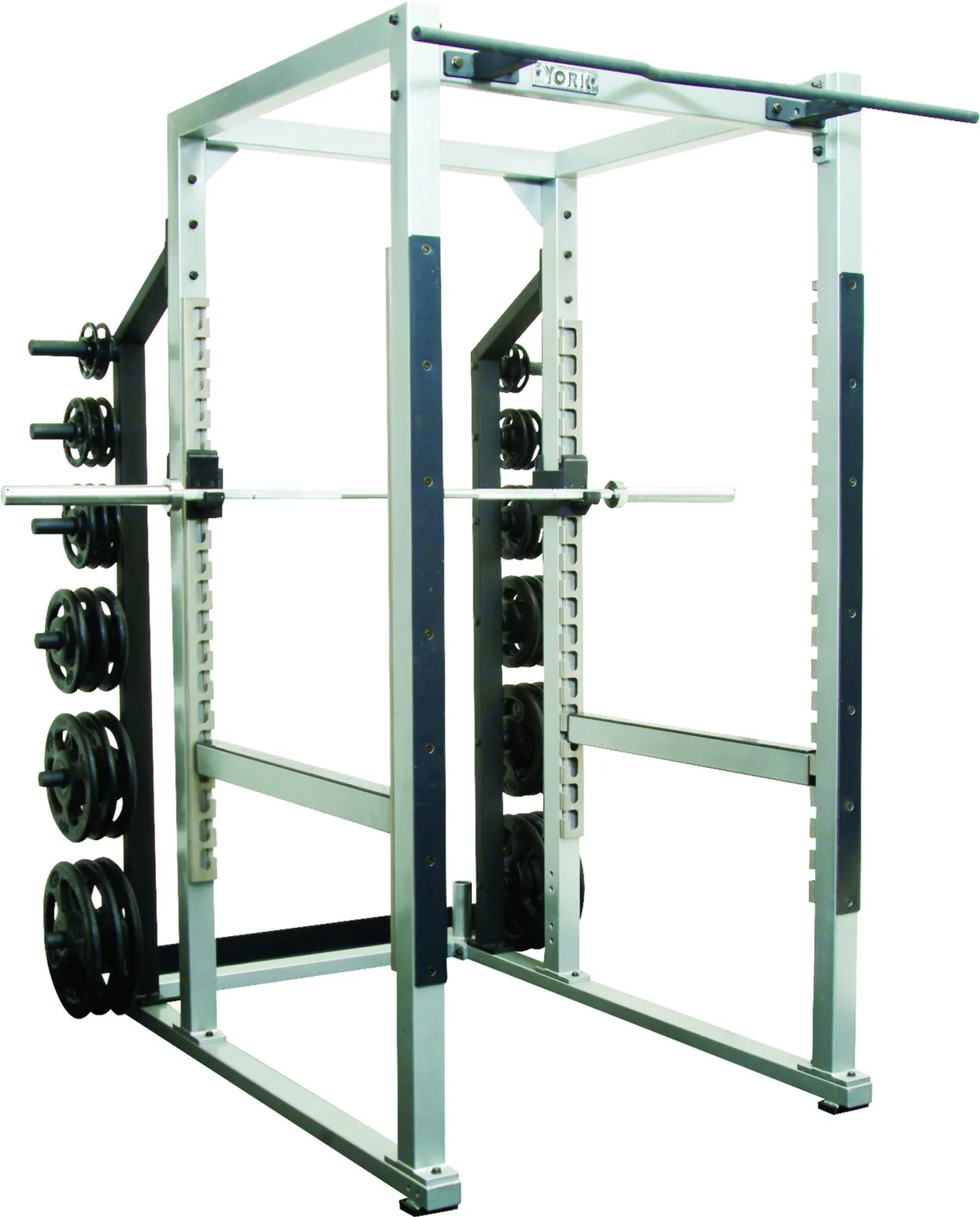
Quick Answer
You must apply progressive overload to stimulate further strength adaptations safely. Increase resistance only after hitting your target repetition range with perfect form. Use the smallest possible weight increments to avoid stalling your progress.
Track every set to monitor your performance gains over time. Maintain focus on controlled movement rather than lifting maximal loads.
The Real Reason Your Strength Gains Have Stalled
When you first start lifting, your body adapts quickly to almost any stimulus. You might find that you can add five or ten pounds to the bar every single week without much trouble. Eventually, this linear progress stops because your central nervous system and connective tissues need more time to recover than your muscles do.
Stagnation often happens when you push for more weight before your form is ready. If you rely on momentum or cheating to get the bar up, you aren't actually training the target muscle effectively. You are just moving a load from point A to point B.
Research published by the National Strength and Conditioning Association highlights that strength is a skill. You need to practice moving heavy loads with precision. If your technique breaks down as the weight climbs, your body will naturally restrict your output to prevent injury.
You might want to review your setup for muscle growth to ensure you are using equipment that supports proper mechanics. When you stop chasing the number on the plates and start focusing on the quality of the rep, you will often find that the strength gains return naturally.
Why Progressive Overload is More Than Just Adding Weight
Progressive overload is the fundamental principle of strength training that involves gradually increasing the stress placed upon the body. While most people define this strictly as adding weight to the barbell, it is actually a broader concept. You can overload your muscles by increasing your volume, density, or overall quality of movement.
Think of it as a hierarchy of progression:
- Repetition volume: Perform more reps with the same weight.
- Set volume: Add an extra set to your routine.
- Rest density: Reduce the time you spend resting between sets.
- External load: Increase the actual weight on the bar.
If you are struggling to add weight, try increasing your total volume first. A lifter using high-quality gear for powerlifting understands that if they cannot add five pounds to their squat, they should focus on hitting an extra set of five reps at their current weight. This builds the work capacity necessary to handle heavier loads in the future.
Mapping Your Progress: Double Progression vs. Fixed Loading
The Double Progression method is a reliable way to manage weight increases without hitting a wall. Instead of trying to add weight every session, you work within a specific rep range until you hit the top number consistently. Once you can perform all sets at the high end of your rep range with perfect form, you increase the load by the smallest possible increment.
If you are setting up your own space, choosing the right gear for your home setup is essential for this method. Precision is easier when you have access to various plate sizes.
How to use Double Progression
- Select a rep range: Aim for 8 to 12 reps per set.
- Choose a weight: Find a weight where you can barely hit 8 reps on the last set.
- Stay consistent: Use that weight until you can complete 12 reps on every single set.
- Bump the weight: Once you hit your target, increase the weight by the smallest amount allowed by your gear.
Managing Intensity with RPE and Reps in Reserve (RIR)
The Rate of Perceived Exertion (RPE) scale is a subjective way to measure how hard a set feels on a scale of 1 to 10. Using this method helps you avoid the mistake of taking every single set to absolute failure. If you consistently push to failure, you will burn out and increase your risk of injury.
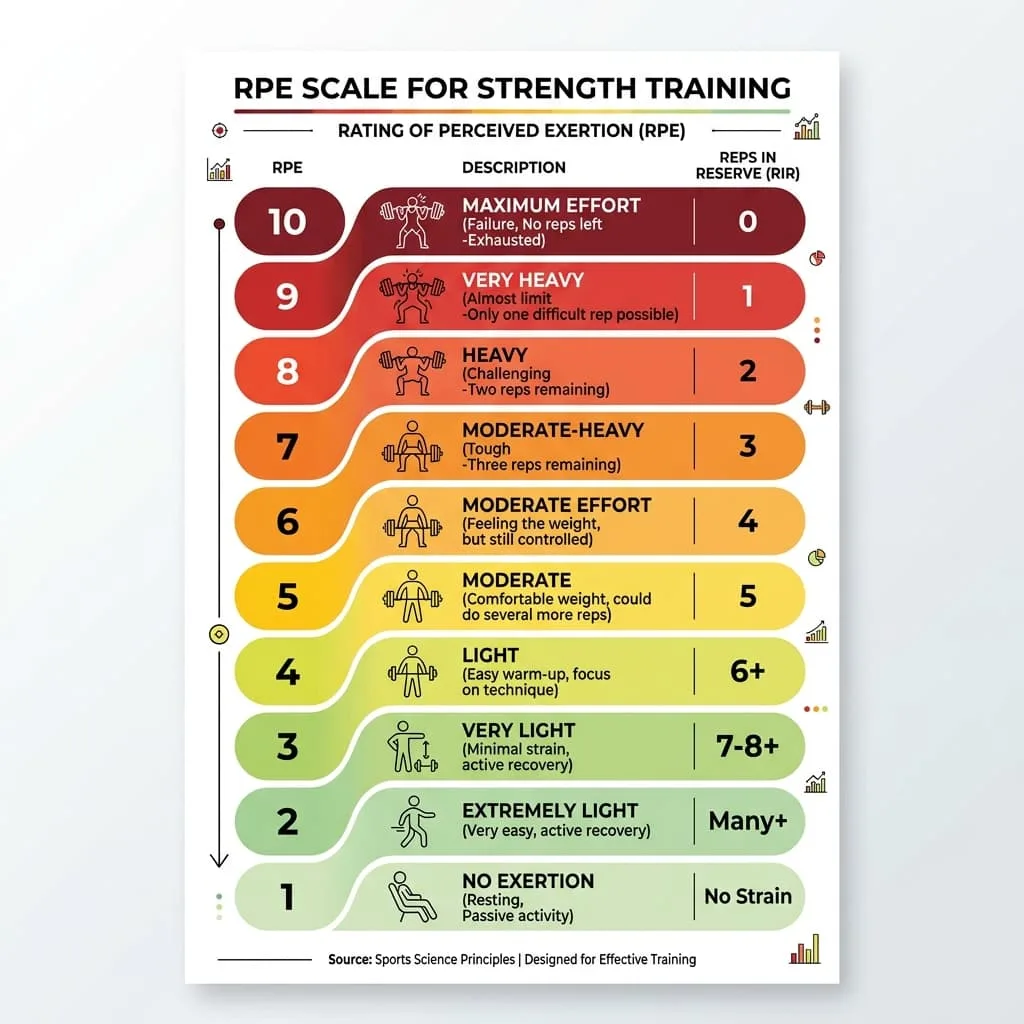
Reps in Reserve (RIR) go hand-in-hand with RPE. If you are training at an RPE 8, you should have roughly 2 reps left in the tank (RIR 2) when the set ends. Training with a slight buffer allows you to maintain technique and recover faster for the next session.
| RPE Level | RIR (Reps in Reserve) | Effort Description |
|---|---|---|
| RPE 7 | 3 | Could do 3 more with perfect form. |
| RPE 8 | 2 | Could do 2 more with perfect form. |
| RPE 9 | 1 | Could do 1 more with perfect form. |
| RPE 10 | 0 | Could not do another rep. |
Most strength training sets for full body routines should be performed at an RPE 8. This provides enough intensity to stimulate growth while keeping your nervous system fresh. It is also a great way to gauge when you are ready to add weight.
If a set feels like an RPE 6, you are likely ready to increase the load.
The Technical Checklist: When You’re Actually Ready to Add Load
Before you add weight, verify that your movement pattern is stable. If you find your hips shifting, your elbows flaring, or your lower back rounding, you are not ready to increase the resistance. Adding weight to poor mechanics is the fastest way to hit a plateau or end up with a strain.
If you are looking to get more comfortable with these movements, consider an entry-level barbell set to build your foundation. Focus on the following checkpoints before each increase:
- Control the tempo: You should be able to lower the weight slowly without it crashing into your chest or the floor.
- Range of motion: You must hit the same depth or distance on every rep.
- Consistency: You hit all prescribed sets and reps for at least two weeks in a row.
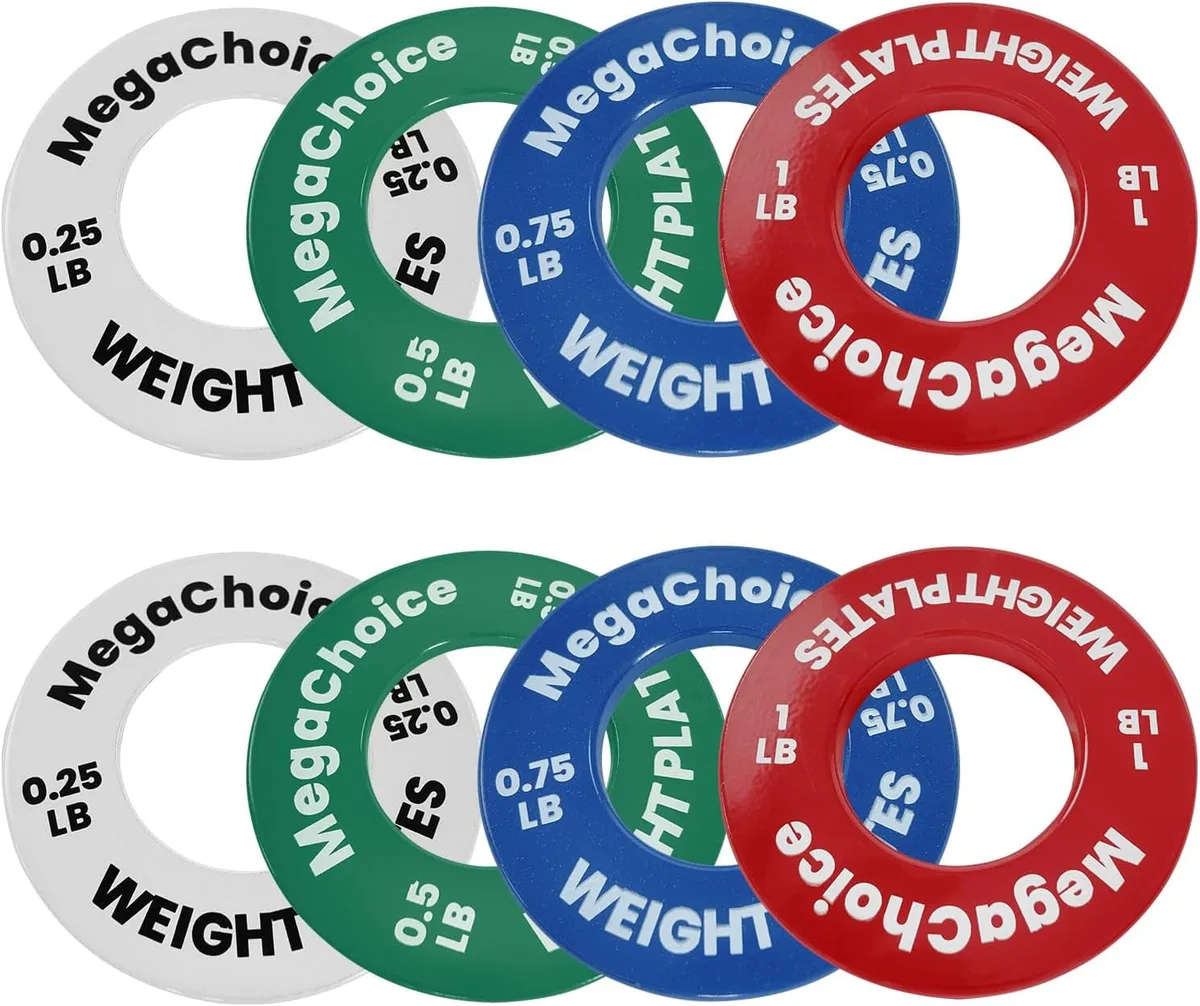
Do not be afraid to use fractional plates if you have them. Increasing by 0.5 pounds or 1 pound is far more sustainable than jumping by 5 pounds, especially for upper body movements like the overhead press. It might feel slow, but those incremental wins compound significantly over the course of a year.
Common Pitfalls: Ego Lifting, Form Breakdown, and CNS Fatigue
Ego lifting is the most common reason lifters stall or get hurt. It happens when you prioritize the number on the plates over the quality of the movement. If you find yourself struggling to maintain a neutral spine or your joints start aching, your ego is likely outrunning your physical adaptation.
Form breakdown is the body’s way of saying the load is too high. You might notice your knees caving during a squat or your back arching during an overhead press. If you have to change your technique to complete a rep, that rep does not count.
Lower the weight and master the pattern before trying to progress again.
Central Nervous System (CNS) fatigue is another subtle but dangerous factor. Unlike muscle soreness, which you feel locally, CNS fatigue makes your entire body feel sluggish and heavy for days. It often occurs when you push to failure too frequently.
Give yourself a deload week if you feel consistently exhausted despite hitting your sleep and nutrition targets.
Essential Safety Protocols for Heavy Training
Safety starts with proper preparation and having a realistic understanding of your limits. Before attempting any personal record, ensure you are in a safe environment. If you train alone, use safety arms or pins on your power rack to catch the bar if you fail a lift.
Range of motion is the best indicator of a safe, effective set. Always use the full range of motion that your anatomy allows. If you cut your squats short or skip the bottom of a bench press, you are not training the muscle through its full potential.
Recovery is just as important as the actual training session. Your muscles do not get stronger while you are in the gym. They get stronger while you are resting, eating enough protein, and sleeping at least 7 to 9 hours a night.
Skipping recovery is essentially sabotaging your own progress.
Frequently Asked Questions
How often should I increase the weight?
Increase the weight only when you hit the top of your target rep range with perfect form. Some lifters can progress every week, but others might take two or three weeks to adapt. There is no set schedule.
Listen to your body and prioritize consistency over speed.
What should I do if I fail a rep?
Failing a rep is part of the process when you are pushing your limits. If you fail, safely rack the bar and rest longer before your next attempt. If you fail to complete the target reps for two sessions in a row, it is time to lower the weight by 10 percent.
Why does my form change when I get tired?
Fatigue forces your body to find easier ways to move the weight, which leads to poor technique. This is why we use RPE and RIR to manage intensity. If your form starts to wobble, stop the set before you accidentally reinforce bad habits that could lead to injury.
Should I use a lifting belt?
A belt can help you increase intra-abdominal pressure and provide a target for your core to push against. It does not replace core strength, but it helps when you are lifting heavy, compound loads. Use it for your heaviest sets, but keep your warm-ups belt-less to keep your body functional.
What counts as a plateau?
A plateau is when you have spent three or four weeks hitting the exact same reps with the same weight. It usually means your current program needs a change in volume or a period of recovery. Do not force more weight, as that will likely result in a stall or a setback.

