Choosing the right inversion table can make a real difference for anyone seeking back pain relief or better spinal health. Two popular models—the Teeter FitSpine LX9 and the Harison Inversion Table—stand out with unique features and designs. If you’re deciding between them, it’s easy to feel overwhelmed by technical terms and marketing claims. But beneath the surface, these tables offer distinct experiences. This guide will help you compare them in detail, covering the nine most important factors people care about. You’ll find real data, practical insights, and everything you need to make a confident choice.
1. Build Quality And Materials
The quality of materials in an inversion table affects not only its durability but also how safe and comfortable it feels during use. Both the Teeter FitSpine LX9 and the Harison Inversion Table use steel frames, but there are important differences in design and finish.
Today's Exclusive Deals
Limited-time Exclusive Deals. Check current discount on Amazon.
Check Price on Amazon As an Amazon Associate I earn from qualifying purchases.The Teeter FitSpine LX9 is built with heavy-gauge steel and features a powder-coated finish, which helps prevent rust and scratches. The frame feels solid, with reinforced joints and welded supports. Teeter’s attention to detail shows in the smooth, rounded edges and high-grade plastic parts. The LX9 is also FDA-registered as a medical device, which means it meets strict safety and material standards.
The Harison Inversion Table uses a strong steel frame too, but often with a chrome or painted finish. Its construction is robust, but some users notice minor wobbling if the floor isn’t perfectly flat. The stitching on the backrest and padding is decent, but not as refined as the Teeter. However, Harison’s table is known for its stability under normal conditions and can handle heavy weights without bending.
A less obvious detail: The Teeter LX9 uses auto-locking hinges and specialized pivot bearings, making the inversion movement smoother and more secure. These components are built to last for years, even with regular use—something beginners might overlook when comparing tables.
Today's Exclusive Deals
Limited-time Exclusive Deals. Check current discount on Amazon.
Check Price on Amazon As an Amazon Associate I earn from qualifying purchases.2. Comfort And Ergonomics
Comfort is a big factor, especially if you plan to invert often or for longer periods. The design of the bed, padding, and ankle restraints can all affect your experience.
The Teeter FitSpine LX9 stands out with its FlexTech bed. Instead of traditional foam padding, it has a flexible plastic surface with 8-point floating suspension. This design moves with your body and allows for better stretching. There are small openings for accessories like lumbar bridges and acupressure nodes, which you can add for targeted relief. The bed is contoured to fit your spine, providing more natural support.
For ankle comfort, the Teeter uses its patented Ankle Comfort Dial and Ergo-Embrace supports. The foam is thick and the supports wrap around your ankles, reducing pressure points. This is important if you feel discomfort in your feet during inversion.
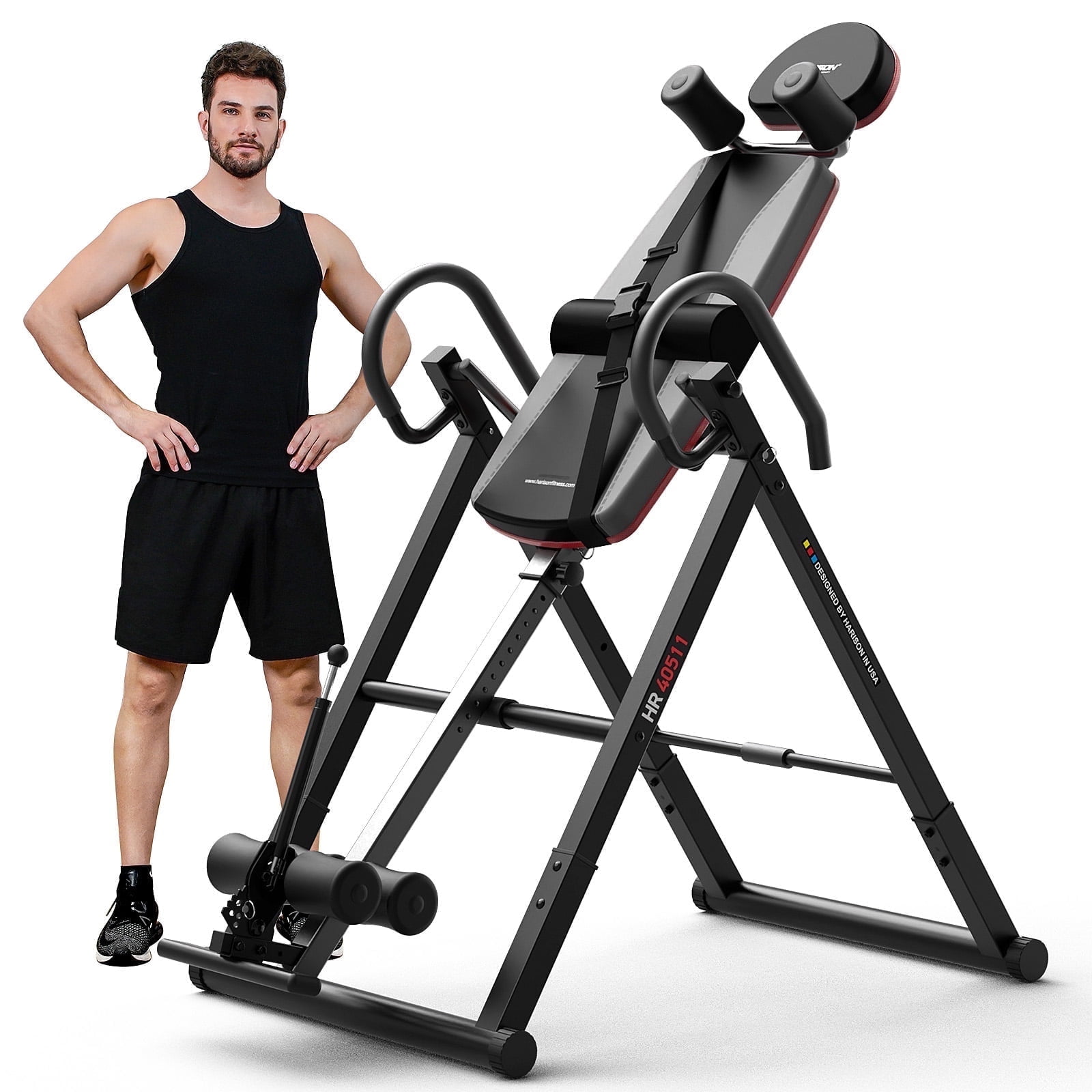
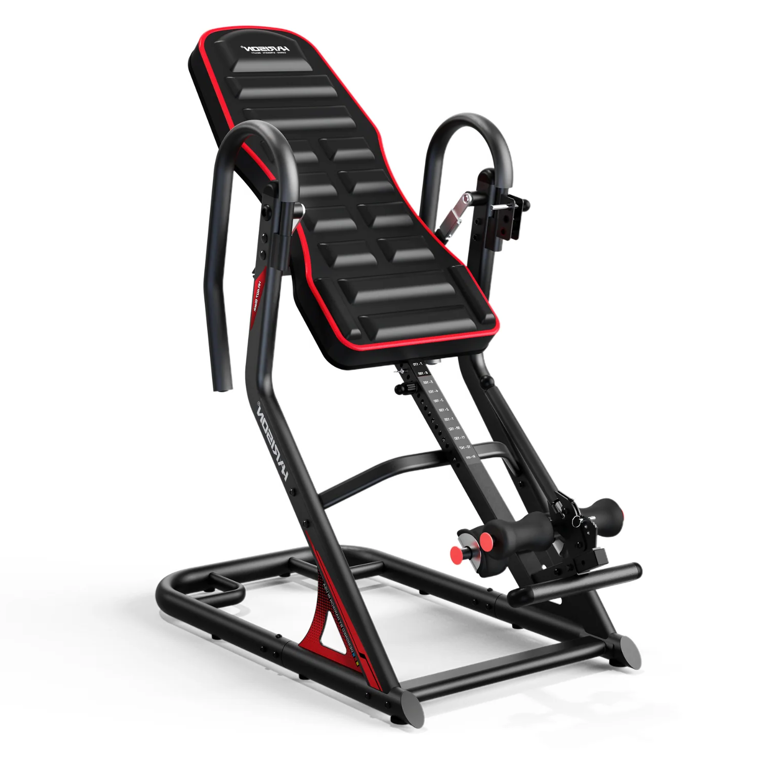
The Harison Inversion Table uses a thick, memory-foam padded backrest that feels soft and supportive. Some users prefer this if they want a plush surface. The ankle holders are adjustable, but they use a simpler foam roller and cup design. For some people—especially those with sensitive ankles—this can be less comfortable than Teeter’s system. The table does include a safety lock pin for quick adjustments.
Today's Exclusive Deals
Limited-time Exclusive Deals. Check current discount on Amazon.
Check Price on Amazon As an Amazon Associate I earn from qualifying purchases.A subtle point: Teeter’s floating bed helps reduce heat buildup and sweating, which is noticeable during longer sessions. Many beginners don’t realize how much this can affect their willingness to use the table regularly.
3. Safety Features
Inversion therapy involves hanging upside down, so reliable safety features are essential. Both brands include basic safety mechanisms, but there are key differences.
The Teeter FitSpine LX9 has a precision balancing system that prevents sudden drops or fast movements. The auto-locking hinges and cam locks are designed to keep the table securely in place at any angle. The extended handle for ankle release allows you to get in and out without bending over too far. For added stability, the base includes non-slip rubber feet and extra-wide tubing.
The Harison Inversion Table comes with a secure safety lock pin that prevents accidental release. The frame is fitted with anti-skid stabilizers at the base, and the backrest includes safety handles for easy return to the upright position. Harison also offers a secondary locking mechanism for added peace of mind.
A non-obvious insight: The Teeter’s UL certification means it has passed independent safety tests for strength and durability, not just basic factory checks. This is a strong indicator of overall safety for frequent users.
Here’s a quick comparison of the main safety features:
| Feature | Teeter FitSpine LX9 | Harison Inversion Table |
|---|---|---|
| Auto-locking hinges | Yes | No |
| UL safety certification | Yes | No |
| Precision balancing | Yes | Basic |
| Secondary safety lock | No | Yes |
| Non-slip feet | Yes | Yes |
4. Inversion Range And Adjustability
How far you can tilt—and how easily you can set your angle—matters for both beginners and experienced users. Greater adjustability also means the table can accommodate different body types.
The Teeter FitSpine LX9 offers full inversion up to 180 degrees. You can lock the table at preset angles (20, 40, 60 degrees) with the included angle tether, or go for free inversion by removing the strap. The pivot system allows for very smooth, controlled movement. Adjusting height is straightforward using the sliding main shaft with clear markings for different user heights (4’8” to 6’6”).
The Harison Inversion Table also supports full inversion, with a similar range up to 180 degrees. Angle adjustment is controlled by a 3-position safety pin system, which lets you set the maximum angle quickly. User height can be set from about 4’10” to 6’6”, making it suitable for most people.
A useful detail: Teeter’s system allows for micro-adjustments within its preset ranges, so you can fine-tune the angle even more. For users who want to experiment with different inversion angles for therapy, this is a real benefit.
5. Weight Capacity And Suitability
The maximum user weight is a key consideration for safety and stability. Both tables are designed to handle most adults, but the specifics differ.
The Teeter FitSpine LX9 supports users up to 300 pounds (136 kg). Its robust frame and locking mechanisms maintain stability, even at higher loads. The bed and ankle system are tested to hold this weight without excessive flexing.
The Harison Inversion Table is rated for up to 350 pounds (159 kg), which is higher than many tables in its price range. This makes it a good choice for heavier users or those who want extra reassurance. The frame is reinforced at key stress points.
A non-obvious insight: While both tables handle high weights, if you are near the maximum limit, the Teeter’s advanced ankle system may provide greater comfort under load, reducing pressure on sensitive areas.
Here’s a quick data snapshot:
| Model | Max User Weight | User Height Range |
|---|---|---|
| Teeter FitSpine LX9 | 300 lbs | 4’8” – 6’6” |
| Harison Inversion Table | 350 lbs | 4’10” – 6’6” |
6. Assembly And Storage
Setting up an inversion table can be tricky if you’re not handy. How easy a table is to assemble—and how much space it takes to store—are practical factors worth considering.
The Teeter FitSpine LX9 arrives about 85% pre-assembled. Most users can finish setup in 20–30 minutes with basic tools. The instructions are clear, and there’s a helpful assembly video. The table folds up for storage, but because of its solid frame, it’s a bit heavier and less compact than some lighter models.
The Harison Inversion Table requires more assembly, with most parts packed separately. Expect to spend 45–60 minutes putting it together. The included instructions are adequate, but not as detailed as Teeter’s guides. Harison’s table also folds, but the backrest is thicker, so it takes up more space when stored upright.
A practical tip: Teeter’s pre-assembly means fewer chances to make mistakes (like attaching parts backwards), which is a common beginner error and a source of frustration.
7. Price And Value For Money
Cost is always a big factor. But value for money depends on more than just the price tag—it’s about what you get for what you pay.
The Teeter FitSpine LX9 is typically priced higher, ranging from $450–$550 depending on sales or bundles. For this price, you get premium features like the FlexTech bed, precision balancing, and extra accessories. Teeter also includes a 5-year warranty and FDA registration.
The Harison Inversion Table is more affordable, often selling for $200–$350. It offers strong basics—good weight capacity, solid build, and comfortable padding—but lacks some of Teeter’s advanced features. The warranty is usually 1–2 years.
A subtle insight: While Teeter’s higher price may seem steep, the longer warranty and advanced design can make it less expensive in the long run if you plan to use the table for years.
Here’s a side-by-side look at what you get for your money:
| Feature | Teeter FitSpine LX9 | Harison Inversion Table |
|---|---|---|
| Typical Price | $450–$550 | $200–$350 |
| Warranty | 5 years | 1–2 years |
| FDA Registration | Yes | No |
| Premium Accessories | Included | Few |
8. Ease Of Use And User Experience
A good inversion table should feel intuitive to use, even for beginners. Details like the smoothness of inversion, how easy it is to get in and out, and how well the controls work all add up to a better experience.
The Teeter FitSpine LX9 is praised for its precision balancing. Once you set your height and angle, the table responds to small arm movements, allowing you to control inversion easily. The extra-long handles give you more leverage to return upright. The ankle release handle is also longer, so you don’t have to bend down too much to get your feet out.
The Harison Inversion Table is straightforward to use but requires a bit more effort to control inversion. The padded backrest is comfortable, and the adjustment controls are simple, but the balance isn’t as fine-tuned as on the Teeter. Some users report that returning to upright from full inversion takes more arm strength, especially for lighter individuals.
A beginner’s insight: Many first-time users find it challenging to invert smoothly on lower-end tables. Teeter’s micro-adjustment and balancing system can make a big difference in comfort and confidence—something you might not notice until you try both.
9. Accessories And Customization
Extra accessories can enhance your inversion therapy, especially if you want targeted relief or more challenging workouts. The ability to customize your table also extends its usefulness over time.
The Teeter FitSpine LX9 comes with several accessories in the box: a lumbar bridge for extra lower back support, acupressure nodes for trigger point massage, and a cell phone holder. The design of the FlexTech bed lets you attach or remove these accessories easily, depending on your needs. You can also buy more add-ons from Teeter, such as vibration cushions or exercise bands.
The Harison Inversion Table typically includes a detachable headrest pillow and a removable lumbar support pad. Some models offer an extra safety strap or resistance bands, but these are less common. The backrest is not designed for as many attachments, so customization options are more limited.
A non-obvious benefit: The ability to add or remove accessories on the Teeter LX9 means you can adapt the table for stretching, core exercises, or focused pain relief—making it a more versatile tool as your needs change.
Teeter Fitspine Lx9 Vs Harison Inversion Table: Direct Comparison
To make it easier to see how these two models stack up, here’s a summary of their main features side by side:
| Category | Teeter FitSpine LX9 | Harison Inversion Table |
|---|---|---|
| Frame Material | Heavy-gauge steel, powder coated | Steel, chrome/painted |
| Backrest | FlexTech suspension, contoured | Thick memory foam, flat |
| Ankle Support | Ergo-Embrace, Comfort Dial | Foam roller & cup |
| Weight Capacity | 300 lbs | 350 lbs |
| Height Range | 4’8” – 6’6” | 4’10” – 6’6” |
| Inversion Range | 20°-180°, micro-adjustable | 3 preset angles, up to 180° |
| Warranty | 5 years | 1–2 years |
| Assembly | 85% pre-assembled | Full assembly needed |
| Accessories | Lumbar bridge, acupressure nodes, phone holder | Headrest pillow, lumbar pad |
| Price | Higher | Lower |

Which One Should You Choose?
Both the Teeter FitSpine LX9 and the Harison Inversion Table are strong options, but they serve different needs.
- Choose the Teeter FitSpine LX9 if you want top-tier comfort, advanced safety, and long-term reliability. It’s ideal for users with sensitive backs, people who want lots of accessories, or anyone who plans to use the table for years. The higher price is justified by the build quality and extra features.
- The Harison Inversion Table is a budget-friendly, sturdy choice for users who want a reliable inversion experience without extra bells and whistles. It handles higher weights and provides good comfort, though with fewer customization options.
One last point: If you plan to share the table with family members of different body types or with specific health needs, the adjustability and accessory system of the Teeter may offer more flexibility.
For more on how inversion therapy can help with back pain and posture, check out this resource from the Spine-Health website.
Frequently Asked Questions
What Is The Main Difference Between The Teeter Fitspine Lx9 And Harison Inversion Table?
The main difference is the level of comfort, customization, and safety. The Teeter LX9 uses a flexible suspension bed, advanced ankle system, and has more accessories. Harison offers a softer backrest and higher weight capacity but fewer accessories.
Are These Inversion Tables Safe For People With Back Problems?
Both tables are designed with safety in mind and can help relieve back pain. However, it’s important to consult a doctor before starting inversion therapy, especially if you have chronic or serious spinal conditions.
How Much Space Do I Need For Each Table?
Both models fold for storage but require about 7–8 feet of floor space when in use. The Teeter is slightly heavier and may take up more room when folded.
Which Table Is Easier To Assemble For A Beginner?
The Teeter FitSpine LX9 is easier to assemble because it arrives mostly pre-assembled and includes clear instructions. Harison’s table takes more time and effort to put together.
Can I Use These Tables If I’m Over 6 Feet Tall Or Over 300 Pounds?
Yes, both tables accommodate taller users (up to 6’6”). However, only the Harison table is rated for users up to 350 pounds, while the Teeter LX9 supports up to 300 pounds.
Finding the right inversion table is about more than price—it’s about matching your needs for comfort, safety, and long-term use. By understanding the real differences between the Teeter FitSpine LX9 and Harison Inversion Table, you can choose the model that fits your life best and feel confident in your investment.