
Use a balance ball to build core strength, improve balance, and add stability work to any routine.
I’ve taught clients, coached group classes, and trained personally with stability balls for years, so I know what works and what doesn’t. This article explains exactly how to use a balance ball for exercise, step by step. You’ll get safe setup tips, simple progressions, sample workouts, common mistakes to avoid, and real-world advice from hands-on experience. Read on to learn practical, evidence-informed ways to add the balance ball into your workouts and daily life.

Today's Exclusive Deals
Limited-time Exclusive Deals. Check current discount on Amazon.
Check Price on Amazon As an Amazon Associate I earn from qualifying purchases.
Benefits of using a balance ball and why it works
A balance ball makes exercises less stable. That instability forces your nervous system to recruit your core and small stabilizer muscles. How to use a balance ball for exercise matters because the technique changes the training effect.
Using the ball boosts balance, posture, core strength, and functional control. It can also reduce low-back pain when used correctly and can be easier on joints than some high-impact moves. Short, focused sessions on the ball can be very efficient for busy people.
Preparing and safety basics for using a balance ball
Start with the right ball size. Sit on the ball with feet flat on the floor; knees should be at about 90 degrees. How to use a balance ball for exercise starts with inflation: the ball should be firm but slightly compressible.
Wear shoes with grip or work barefoot. Clear space around you and use the ball near a wall or chair if you’re new to balance work. Stop if you feel sharp pain, dizziness, or loss of control.
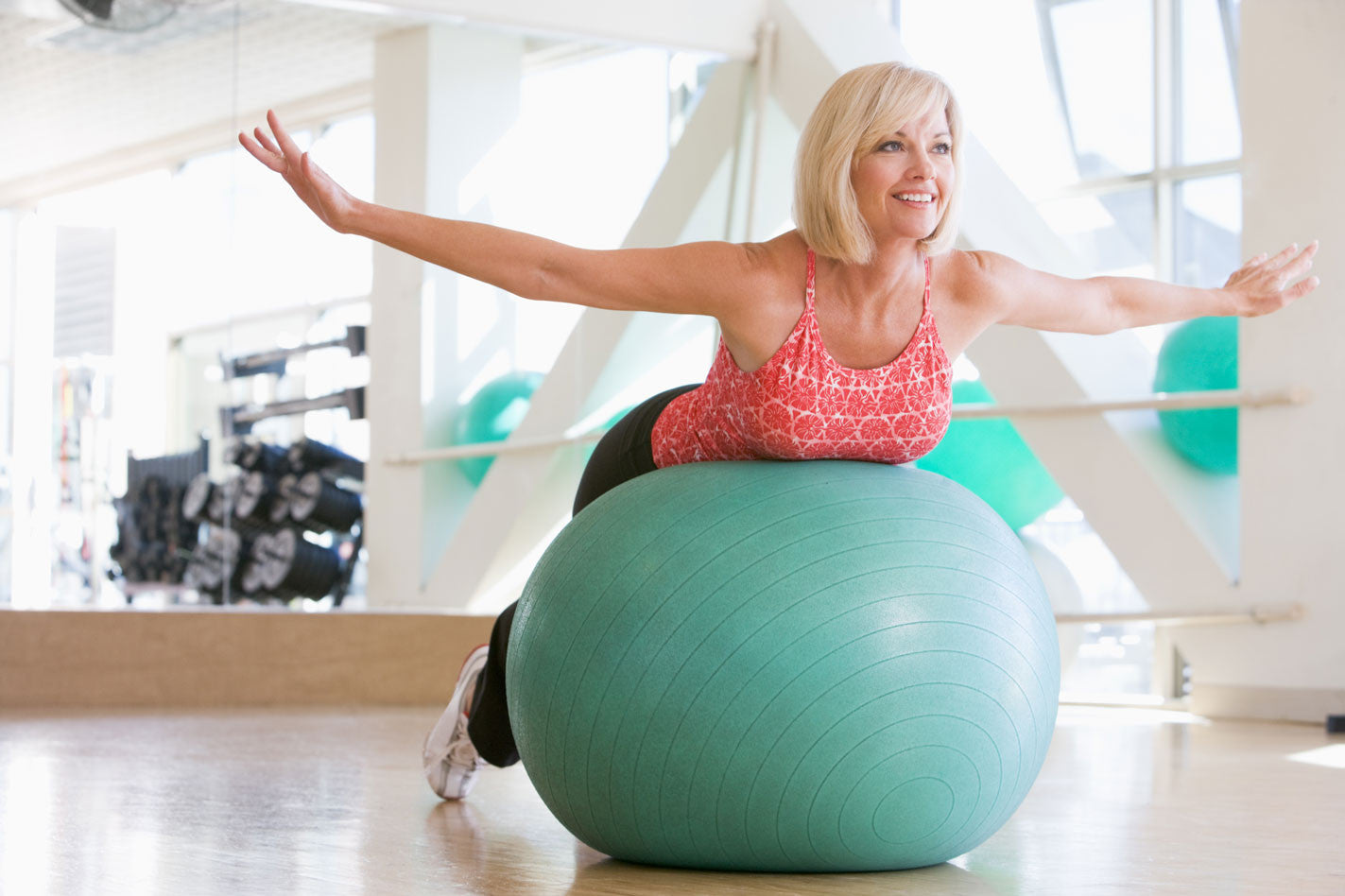
How to use a balance ball for exercise: setup and posture cues
Set up with these cues on every rep:
- Sit tall and draw your ribs gently down. Keep your neck neutral and gaze forward.
- Anchor through your feet. Imagine pushing the floor away to engage the core.
- Breathe evenly. Exhale on effort and avoid holding your breath.
How to use a balance ball for exercise safely is mostly about posture and control. Move slowly, and prioritize form over range of motion.

Core and stability moves (beginner to advanced)
Start simple and progress. Below are clear steps for common moves and how to progress them.
Ball Sit (Beginner)
- Sit on the ball with feet hip-width. Rock gently forward and back to find balance.
- Practice 1–3 minutes to build comfort. This is the base for many exercises.
Pelvic Tilt on Ball (Beginner)
- Lie with your lower back on the ball, feet flat and knees bent. Tilt pelvis to flatten lower back.
- Do 10–15 slow tilts to engage the deep core.
Ball Bridge (Beginner–Intermediate)
- Heel on top of the ball while lying on your back. Lift hips into a bridge, squeeze glutes.
- Hold 2–3 seconds at top. Repeat 8–12 times.
Ball Plank with Feet on Ball (Intermediate)
- Place shins on the ball and hands on the floor. Keep a straight line.
- Hold 20–45 seconds. Progress by reducing hand width or lifting one foot.
Pike on Ball (Advanced)
- From a plank with shins on the ball, drive hips up into a pike. Return slowly.
- Perform 6–10 controlled reps.
How to use a balance ball for exercise well means respecting progressions. If a move feels unstable, step back to the prior level and build strength there.
Sample 20-minute balance ball routine
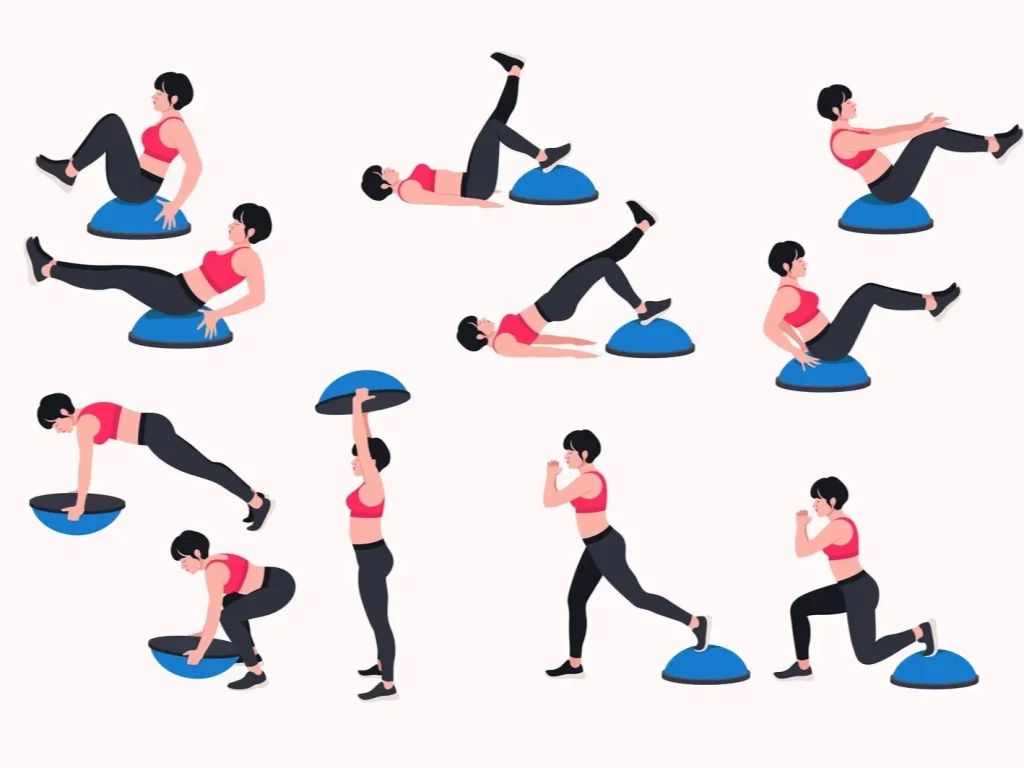
Follow this sample for a full-body stability session. Rest 30–60 seconds between sets.
- Warm-up: 3 minutes of gentle rocking and hip circles on the ball.
- Circuit (3 rounds)
- 10 Ball Bridges
- 30-second Ball Sit hold with small rhythmic taps of one foot (alternate)
- 8 Ball Roll-outs (knees on floor)
- 20-second Ball Plank
- Cool-down: 2 minutes gentle pelvic tilts and deep breaths on the ball.
This routine shows how to use a balance ball for exercise even when short on time. Adjust reps and holds based on your fitness.

Programming and progressions to build strength and balance
Start with 2 sessions per week and add more as skill improves. Track progress by increasing reps, hold time, or moving to harder variations. How to use a balance ball for exercise effectively includes mixing it into strength days, active recovery, or mobility work.
Use the ball as a finisher to challenge core stability after compound lifts. For long-term gains, pair balance ball work with resistance training and consistent practice.
Common mistakes and how to avoid them
Many people make these simple errors when learning how to use a balance ball for exercise. Fix them early to stay safe.
- Sitting too far forward on the ball
- This causes forward lean and poor mechanics. Sit centered with equal weight on both sits bones.
- Holding breath during effort
- Breathing stabilizes your core. Exhale during exertion.
- Using momentum instead of control
- Move slowly and deliberately. Control creates strength, momentum creates risk.
- Inflating the ball incorrectly
- Too soft or overinflated balls reduce the intended challenge. Aim for firm with slight give.
- Skipping progressions
- Jumping too fast can cause falls or compensate with larger muscles instead of stabilizers.
Equipment, maintenance, and buying guide
Choose the right size: common sizes are 55 cm (short people), 65 cm (average), and 75 cm (tall). Pick a burst-resistant (anti-burst) ball for safety. How to use a balance ball for exercise relies on consistent quality equipment.
Check inflation monthly and wipe the ball clean with mild soap. Store the ball away from sharp objects and sunlight to extend its life. Getting a pump that measures PSI helps maintain ideal firmness.
My experience, tips, and lessons learned
I started using a balance ball to rehab a low-back flare years ago. Gradual, patient progress made the biggest difference. How to use a balance ball for exercise felt awkward at first, then became a reliable tool for core control and posture.
Quick tips I use with clients:
- Limit session time early on to avoid fatigue-driven poor form.
- Pair ball work with breathing drills for better transfer to daily tasks.
- Use a wall to catch you during new progressions.
One mistake I made early was pushing sets to failure; that increased back tension. Avoid that by stopping when form degrades.
Limitations and when not to use a balance ball
Balance balls are not a cure-all. They add instability but are less effective than heavy resistance training for maximal strength and hypertrophy. If you have severe vestibular issues, uncontrolled dizziness, or certain spine conditions, consult a clinician before trying balance ball work. How to use a balance ball for exercise must be tailored to your goals and health status. Be honest about limitations and modify as needed.
Frequently Asked Questions about How to use a balance ball for exercise
Is a balance ball good for core strength?
Yes. A balance ball forces deeper core and stabilizer engagement by creating instability, which increases muscle recruitment during many movements.
How often should I use a balance ball each week?
Start with two short sessions per week and progress to three as you gain control. Keep sessions 10–20 minutes to avoid fatigue-related form loss.
What size ball should I buy for my height?
Use a 55 cm ball for people under 5'4", 65 cm for 5'5"–6'0", and 75 cm for over 6'0". Proper size helps maintain correct knee and hip angles for safe exercise.
Can a balance ball help with back pain?
When used properly, balance ball exercises can improve core support and posture, which may reduce some types of low-back pain. Consult a health professional for persistent or severe pain.
Are balance ball exercises safe for beginners?
Yes, with proper setup and progressions. Start near a wall, use basic seated drills, and build confidence before advancing to dynamic moves.
Do I need supervision to start using a balance ball?
Supervision helps, especially for those with balance issues or injuries, but many beginners can safely learn with clear instructions and gradual progress.
Conclusion
You can use a balance ball for exercise to improve core strength, balance, posture, and functional control. Start with proper setup and simple moves, and progress slowly to harder variations. Keep sessions short, focus on control, and pair the ball with a broader strength program for best results. Try one ball routine this week, track how you feel, and adjust as you grow stronger and more stable. If you found this guide useful, subscribe for more practical tips, leave a comment about your experience, or share your favorite balance ball move.

