
A balance ball strengthens your core by forcing constant stability and activating deep core muscles.
I’ve trained clients and practiced with a balance ball for years, and I can say with confidence that this simple tool is one of the best ways to build a functional, resilient midsection. In this guide I explain how a balance ball improve core strength, how the ball changes the way muscles work, which exercises to use, safety tips, and how to progress. Read on for clear, tested steps you can use at home or in the gym.

Today's Exclusive Deals
Limited-time Exclusive Deals. Check current discount on Amazon.
Check Price on Amazon As an Amazon Associate I earn from qualifying purchases.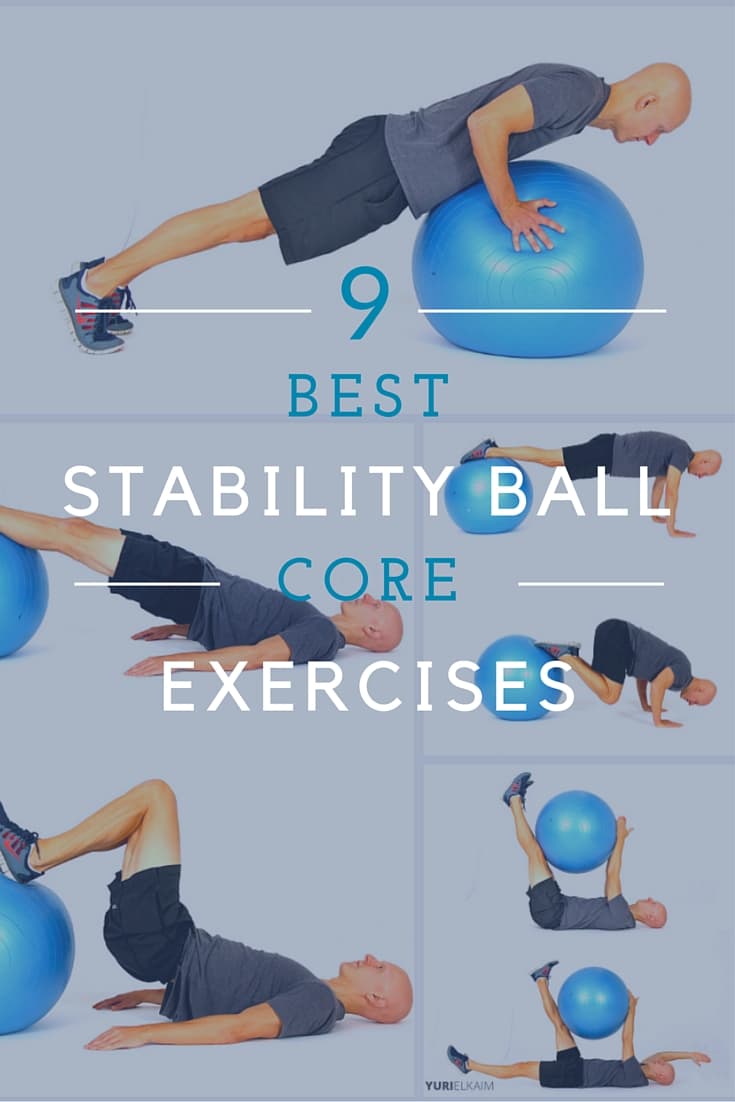
How a balance ball works to train the core
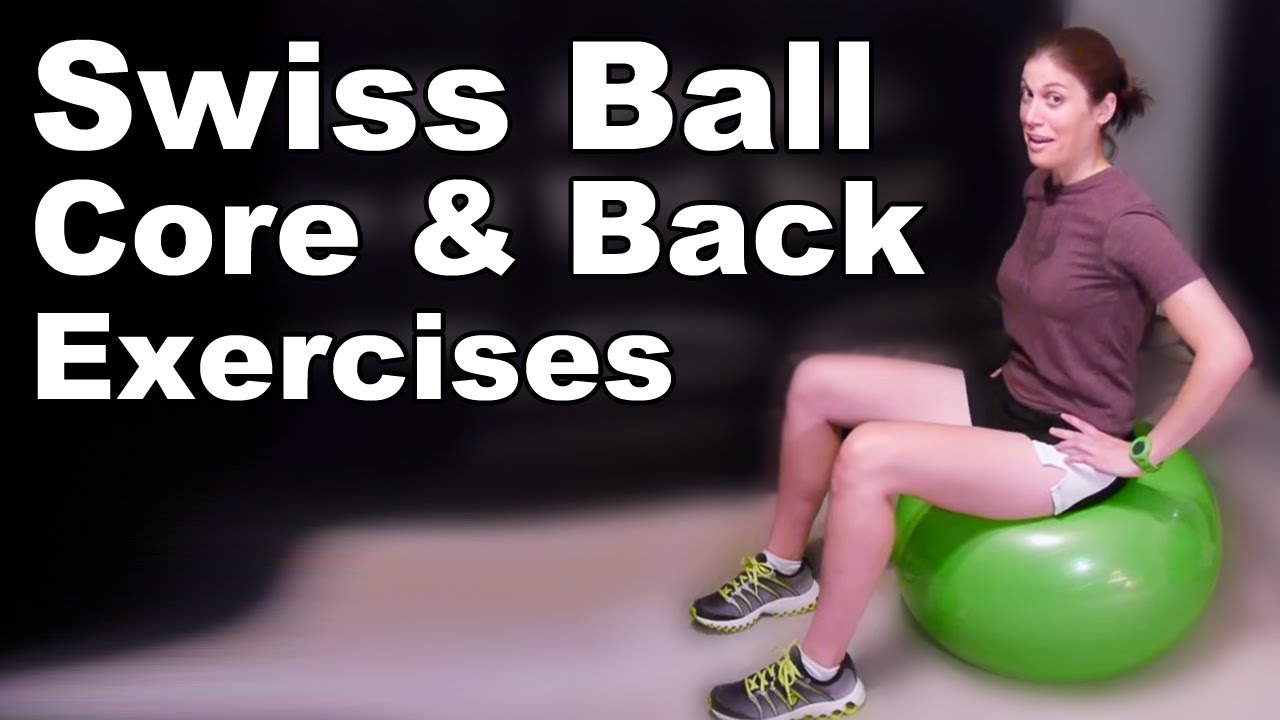
A balance ball creates instability. When you sit, lie, or move on the ball your body must react. That reaction recruits deep stabilizers like the transverse abdominis and pelvic floor. The result is more muscular engagement for a given movement than doing the same move on a stable surface.
Using a balance ball improve core strength by increasing demand for balance, coordination, and postural control. Small, automatic muscle contractions happen every second you are on the ball. Over weeks, those contractions lead to better muscle endurance and joint support.
Muscles targeted and the physiology behind gains
Core strength is not just the abs you see. It includes deep and superficial layers and the hips and back. A balance ball trains these systems together. Key targets include:
- Transverse abdominis — stabilizes the spine and resists unwanted motion.
- Internal and external obliques — support rotation and side stabilization.
- Rectus abdominis — helps with flexion and visible core definition.
- Erector spinae and multifidus — control the back and posture.
- Glutes and hip stabilizers — assist in pelvic control and power transfer.
Instability forces co-contraction. That means front and back muscles fire together to keep you steady. This trains the nervous system as much as the muscles. Training the nervous system improves timing and efficiency, which is why a balance ball improve core strength faster for many people than isolated crunches.

Scientific basis and evidence summary
Research shows that unstable surfaces increase muscle activation during common exercises. Studies comparing stable and unstable setups often find higher activity in deep stabilizers with instability. Clinical work supports using instability training for rehab, posture, and chronic low back care when done appropriately.
That evidence supports why a balance ball improve core strength in both healthy people and those recovering from injury. Still, the best outcomes come from consistent practice and progression from easy to harder positions.
Practical exercises to build core strength with a balance ball
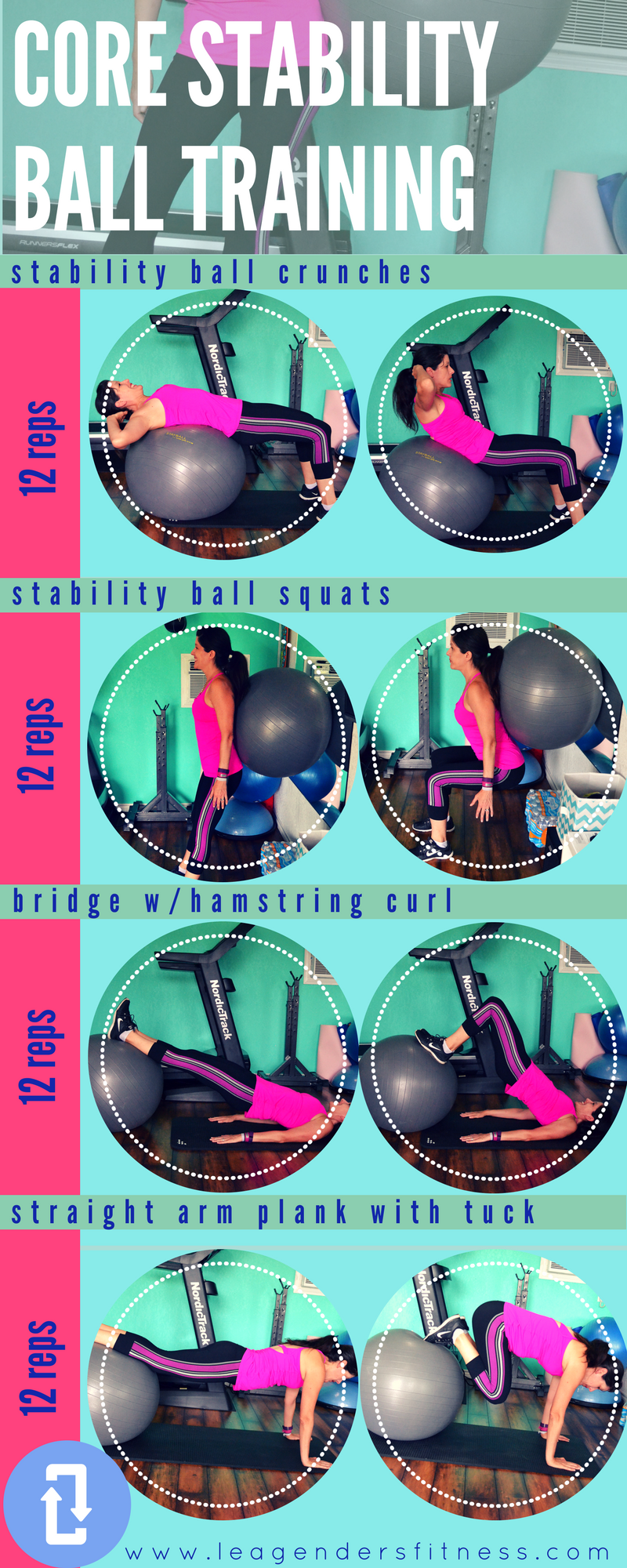
Start with basic moves and progress by adding range, reps, or dynamic elements. Below are beginner to intermediate exercises with short cues.
- Seated pelvic tilts — sit on the ball, tilt the pelvis forward and back, feel low abdominals engage.
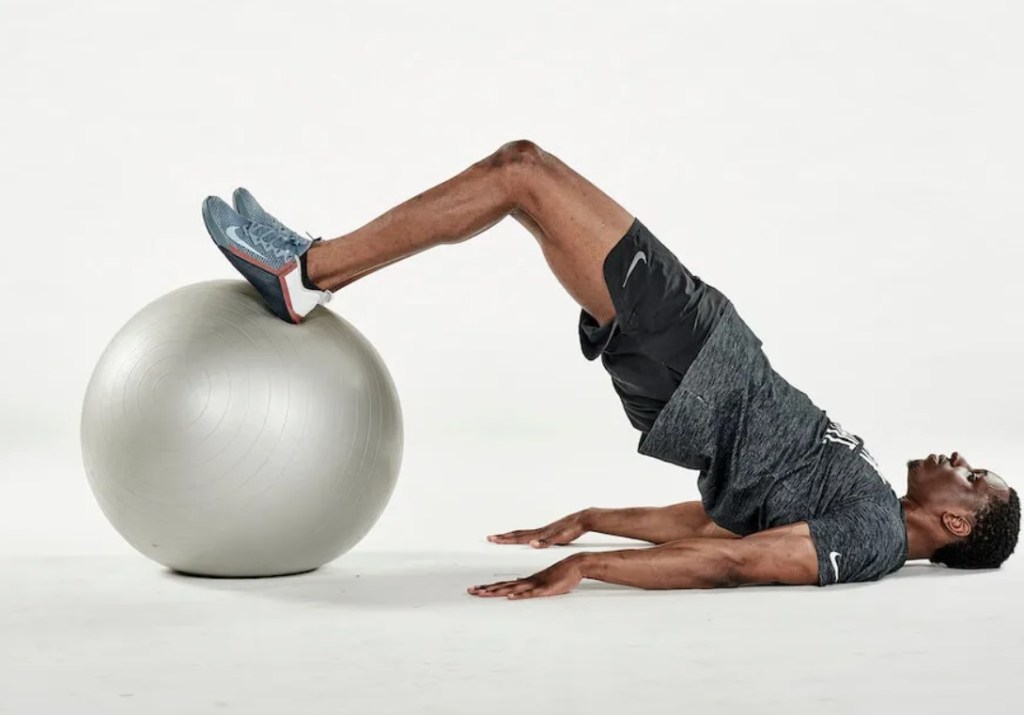
- Ball bridge — feet on the floor, shoulders on the ground, hips lifted with ball under feet to challenge glutes and core.
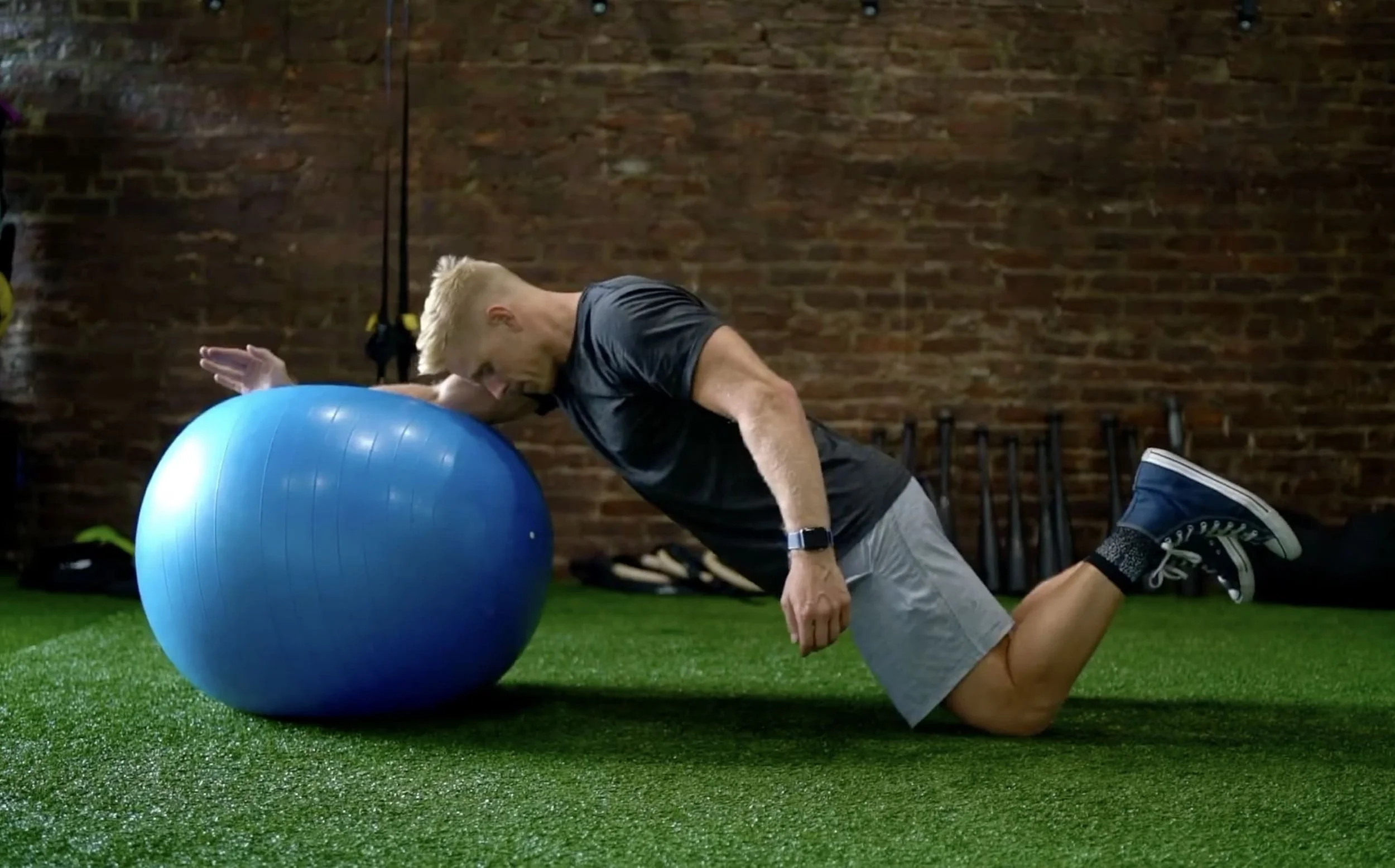
- Ball plank — elbows on the ball or hands on the ball for an extra balance demand.
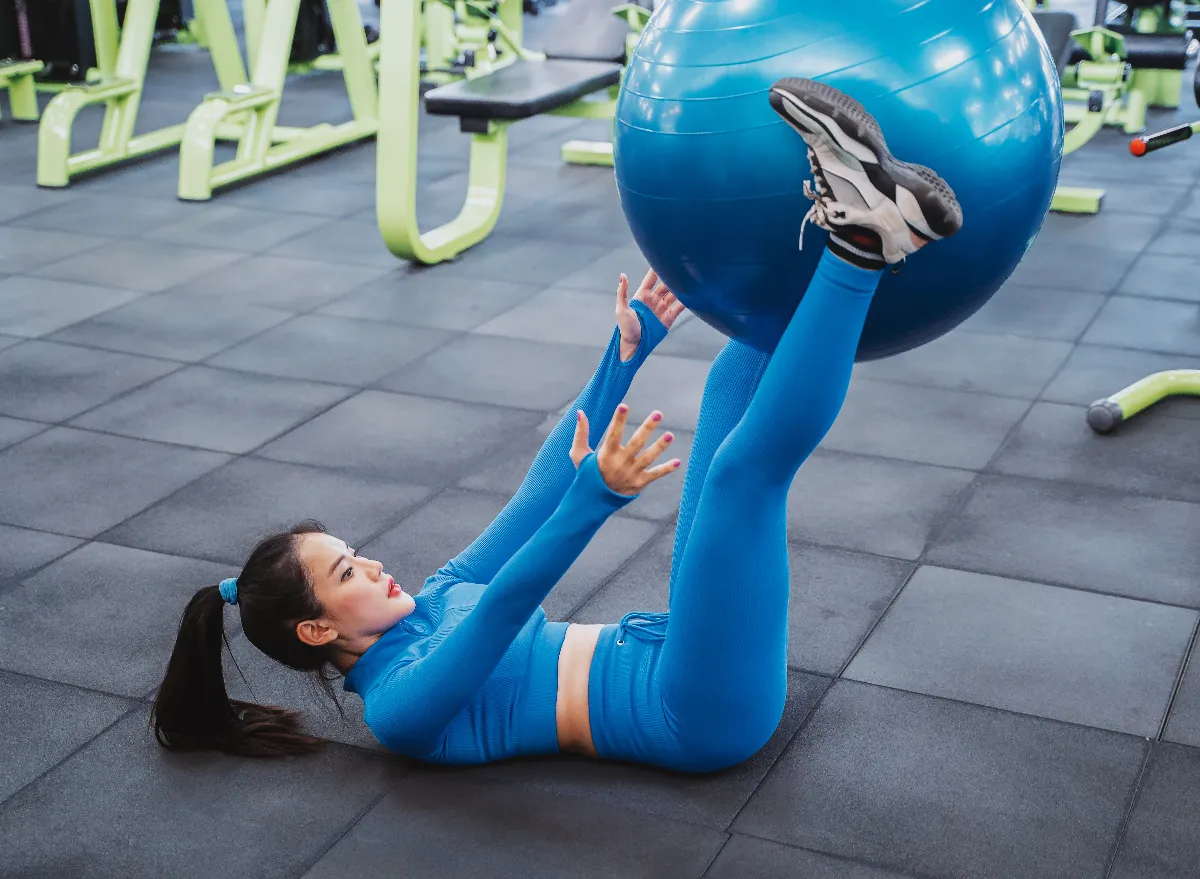
- Dead bug on ball — lie with lower back supported on the ball, alternate leg lowering while keeping core stable.
- Stir-the-pot — in plank with elbows on ball, draw small circles with forearms to work obliques and deep stabilizers.
Begin with 2–3 sets of 8–12 controlled repetitions. Focus on breathing and form. Proper breathing helps the deep core engage and reduces strain on the neck and back.
How to program balance ball work into your routine
Consistency and progression matter. Use this simple approach to get steady gains.
- Frequency — 2–4 sessions per week is enough for most adults.
- Volume — 10–20 minutes of focused balance ball work per session.
- Progression — add time, increase instability, or add movement complexity.
- Integration — pair balance ball work with strength training for balanced results.
When planning, remember that the balance ball improve core strength best when combined with full-body strength and cardio. The ball is a tool, not a complete program.
Safety, limitations, and common mistakes
A balance ball is safe if used correctly. But there are pitfalls people often miss.
- Poor posture — slouching prevents proper core activation and can strain the back.
- Overdoing intensity — jumping to advanced moves too quickly increases injury risk.
- Ignoring breathing — holding breath reduces deep core engagement and raises blood pressure.
- Using wrong ball size — a ball that’s too big or small changes joint angles and reduces effectiveness.
If you have balance issues, recent surgery, severe pelvic pain, or uncontrolled medical conditions, check with a clinician before starting. Correct form and gradual progression are essential so the balance ball improve core strength without causing harm.
Personal experience: lessons from coaching and training
I started using a stability ball in rehab after a minor back flare. Within weeks, my posture felt better and my low back pain eased. Coaching clients, I saw athletes gain better movement control and desk workers reduce pain by learning to activate deep stabilizers.
Lessons learned
- Start slow and prioritize form over reps.
- Use the ball as a bridge between rehab and full-strength training.
- Track small wins: longer plank holds, less sway in loaded lifts.
- Mistake to avoid: thinking the ball alone builds abs. It builds control and endurance; combine it with strength work.
These practical tips make it easier to use the balance ball improve core strength in real life.
PAA-style questions (brief answers)
Will a balance ball help with lower back pain?
Yes. When used correctly, the ball trains deep stabilizers that support the spine, which can reduce some types of lower back pain. Always check with a healthcare provider for persistent pain.
How long until I see core strength improvements?
Many people notice better balance and posture in 2–6 weeks with consistent practice. Strength and endurance gains continue with ongoing use.
Can seniors safely use a balance ball?
Yes, with supervision and proper progressions. Gentle seated and supported exercises are effective for mobility and core control.
Frequently Asked Questions of How does a balance ball improve core strength
What makes a balance ball better than floor exercises?
A balance ball adds instability, which increases muscle activation and neuromuscular control. This combined demand helps train deeper core fibers that floor exercises may miss.
How often should I use a balance ball to see results?
Aim for 2–4 short sessions per week focused on core control. Consistency over months produces the best results.
Can beginners use a balance ball safely?
Yes. Start with simple seated or supported moves and progress slowly. Keep sessions short and prioritize correct breathing and alignment.
Is a balance ball good for athletes?
Absolutely. Athletes gain improved stability, better transfer of force through the trunk, and refined movement patterns. Use sport-specific progressions for best carryover.
Will balance ball work replace weight training for core strength?
No. Balance ball work complements weight training. Use both to get endurance, stability, and strength across different movement demands.
Conclusion
A balance ball improve core strength by forcing continuous stability, recruiting deep and surface muscles, and training the nervous system for better control. It is simple, affordable, and versatile for rehab, general fitness, and athletic training. Start with basic moves, progress slowly, and combine ball work with strength training for the best results.
Try adding two short balance ball sessions this week. Track how your posture and balance change. If you liked this guide, subscribe for more practical tips or leave a comment about your balance ball wins and questions.

