If you’re walking into the gym and guessing what to lift, you’re missing out on the primary feedback loop of training. Knowing how to track strength training progress turns your sessions into data, allowing you to see exactly where you’re growing and where you’re plateauing.
Consistent logging is the single most effective tool for long-term improvement. As of 2026, research suggests that individuals who record their lifting volume are significantly more likely to adhere to a structured strength program compared to those relying on memory.

Today's Exclusive Deals
Limited-time Exclusive Deals. Check current discount on Amazon.
Check Price on Amazon As an Amazon Associate I earn from qualifying purchases.
Image source: Web (Bing) / stockcake.com (Web image (fair-use with source credit))
Quick Answer
Track your strength progress by logging weight, sets, and repetitions per session. Use a notebook, app, or spreadsheet for consistency. Aim for incremental gains in total training volume over time.
Compare your data every few weeks to identify real progress. Stop guessing and rely on your recorded numbers.
The Psychology of Tracking: Why Intuition Fails
Human memory is unreliable when it comes to physical exertion. If you rely on intuition, you will likely default to the same weights you lifted last week, creating a stagnation loop. True growth requires objective documentation of your performance to ensure you are actually applying stress that forces adaptation.
When you record your lifts, you remove the guesswork from your home training gear. You aren't just going through the motions. You are actively attempting to beat your previous performance.
This transition from exercising to training is the shift that separates consistent results from plateaus.
Tracking also acts as a safety mechanism. By documenting your fatigue levels and performance with specific equipment, you learn to recognize when your body needs a deload week. You prevent overtraining before it results in injury.
Data acts as an honest mirror, reflecting whether your effort matches your goals.
Selecting Your Tracking Architecture: Apps vs. Spreadsheets vs. Paper
The best tracking system is the one you will actually use every single time you hit the floor. If a system is too complex, you will skip logging your full body sets. Choose your method based on how you prefer to interact with data.
- Paper Journals: Ideal for those who want to avoid screens. A physical log provides a tactile record that doesn't suffer from battery drain or software updates.
- Digital Spreadsheets: Best for data lovers who want to graph their long-term lifting capacity. You can automate calculations like total volume or relative intensity.
- Fitness Applications: Designed for speed. They often come with pre-built programs and timers, making them useful if you prefer a streamlined interface.

Image source: Web (Bing) / pngtree.com (Web image (fair-use with source credit))
Whichever tool you choose, ensure it allows for quick entry. If you have to spend ten minutes navigating menus, you will eventually stop tracking altogether. Efficiency is the key to longevity.
The Hierarchy of Metrics: What Actually Moves the Needle
Not all data points are created equal. Focus your attention on the metrics that drive physiological change. Total volume is the most fundamental metric for hypertrophy.
It is calculated by multiplying sets by repetitions by the weight moved.
When you track volume, you can see if you are truly doing more work over time. If your volume trends upward, your muscles are receiving a consistent signal to grow. This is why beginners using basic kits often see such rapid results when they start tracking this simple calculation.
| Metric | Primary Function | Why It Matters |
|---|---|---|
| Total Volume | Volume Load | Indicates overall work capacity. |
| Top Sets | Intensity Tracking | Ensures you are challenging your strength. |
| Rest Intervals | Efficiency | Measures recovery between sets. |
Focus primarily on your compound movements. Overhead presses, squats, and deadlifts are where your strength base is built. Don't worry about logging every isolation exercise with extreme precision, as these are secondary to your compound output.
Standardizing Your Data: RPE, Tempo, and Range of Motion
Consistency in how you record your data is just as important as the data itself. If you perform a repetition with poor form one week and perfect form the next, the weight might stay the same, but the stimulus is different. Organizations like the National Strength and Conditioning Association emphasize that movement quality must remain constant to evaluate progress accurately.
Use the Rate of Perceived Exertion (RPE) to gauge your intensity. An RPE 8 means you could have performed two more repetitions with good form. This subjective scale allows you to adjust based on daily energy levels.
You avoid grinding every set, which preserves your central nervous system.
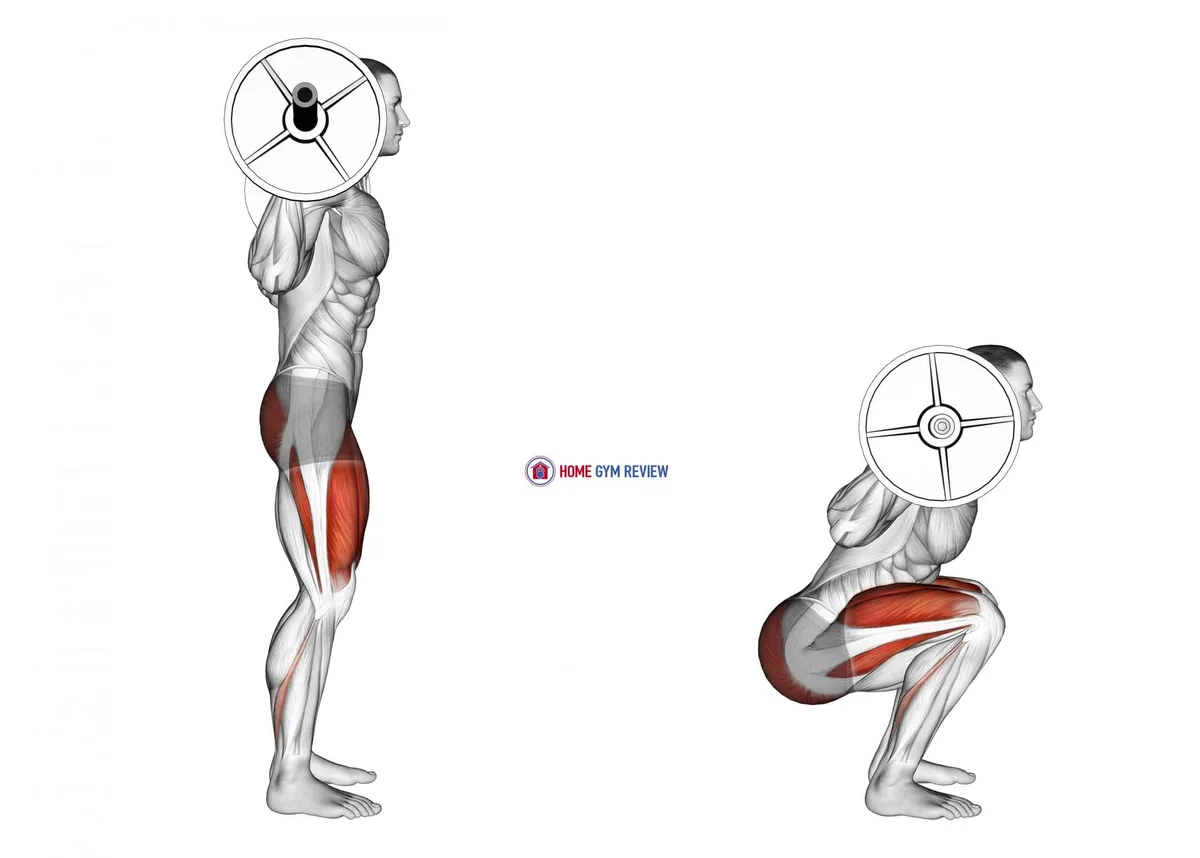
Image source: Bing (Web (fair-use with source credit))
Tempo is another standard often ignored. If you move the weight at a different speed each session, your data is compromised. Aim to control the lowering phase of every lift.
Standardize your tempo, such as a two-second descent, to ensure your muscle-building sessions remain comparable week after week.
Interpreting the Feedback Loop: Identifying Plateaus and Progress
When your logs show a multi-week stagnation, don't jump to the conclusion that your program is ineffective. Analyze your recovery variables first. Did you sleep seven to nine hours?
Is your protein intake sufficient? Has your stress level been higher than usual?
Sometimes, you need to reduce the load to break through a plateau. This is called a deload. Reduce your volume by 30 to 50 percent for one week to allow your body to fully recover.
Often, you will return the following week with newfound strength.
Look for non-linear signs of progress as well. Are you feeling more stable under the load? Is your range of motion cleaner?
Are you able to recover from a set in less time? These are all valid metrics of success. Strength is not just about moving more weight; it is about bettering your ability to perform the movement safely and efficiently.
Maintenance and Optimization: The Long-Term Review Cycle
You should conduct a deep-dive review of your progress every four to six weeks. This isn't just about looking at your personal records. You need to analyze the data to determine if your current programming aligns with your physical objectives.
Calculate your average intensity and volume across the last cycle. If you find your total work capacity is stagnant, it is time to adjust your progressive overload strategy. You might need to introduce a variation in set structure, such as changing your rep ranges to prioritize hypertrophy or strength-specific adaptations.
Consulting official guidelines on training volume helps ensure your adjustments remain within safe, evidence-based parameters. If you don't review your logbooks, you are flying blind. Periodic analysis allows you to see the big picture trends that you will otherwise miss while focused on individual daily workouts.
Use this downtime to verify your technique as well. If your log shows that you haven't been able to increase weight for two consecutive cycles, film your top sets. You will often see small form errors that are preventing you from accessing your full strength potential.
Correcting these form issues is a form of progress that doesn't always show up as a higher number on the bar.
Frequently Asked Questions
Why do I feel weaker even though my logs show progress?
Daily strength levels fluctuate based on hydration, sleep, and overall stress. Your logbook captures the long-term trend, which is a much more reliable metric than how you feel on any given day. If your numbers are trending up over weeks, you are getting stronger despite feeling tired in a single session.
How often should I increase the weight?
Increase the weight only when you can complete all prescribed sets and repetitions with perfect technique. Many people rush to add load before they have mastered the current intensity. Consistent, sustainable increases are always superior to rapid, erratic jumps that lead to form breakdown and injury.
What do I do if I missed a workout in my log?
Don't try to make up the lost work by doubling your training the next day. Simply resume your program as planned and move forward. Missing an occasional session will not ruin your long-term progress.
Consistency over the course of several months is the primary driver of strength adaptation.
Should I track my rest time between sets?
Yes, tracking rest time is vital for monitoring density. If you find yourself taking longer rests just to complete the same amount of work, your conditioning might be slipping. Keeping rest periods consistent allows you to accurately measure if your muscular output is truly increasing relative to the time spent training.
When should I stop tracking my lifts?
Most experienced lifters continue to track their primary movements indefinitely. Tracking provides the necessary data to prevent plateaus and manage fatigue. Even elite athletes use logs to ensure they are meeting their training stimulus goals.
You should consider tracking a standard part of your gym routine for as long as you plan to train.