Athletic conditioning improves when training targets the specific physical qualities your sport demands: aerobic capacity, speed, power, strength, mobility, and recovery. The fastest way to get better conditioning is to train with purpose, progress gradually, fuel and hydrate well, and measure results with repeatable tests.
For athletes in the United States, that means building a plan around your season, your practice schedule, and your medical history—not copying a generic program from social media. The best conditioning plan is the one you can recover from consistently while still improving performance.
Today's Exclusive Deals
Limited-time Exclusive Deals. Check current discount on Amazon.
Check Price on Amazon As an Amazon Associate I earn from qualifying purchases.What athletic conditioning means
Athletic conditioning is the process of improving the body’s ability to perform sport-specific work repeatedly and recover between efforts. It is broader than “getting in shape.” A well-conditioned athlete can sprint, change direction, sustain effort, and keep technique stable when fatigued.
In practical terms, conditioning includes several traits:
- Aerobic endurance: the ability to sustain effort and recover between hard bouts
- Anaerobic capacity: the ability to perform intense work for short periods
- Power: producing force quickly, such as jumping or sprinting
- Strength: the ability to produce force against resistance
- Movement efficiency: good mechanics and mobility under load
- Recovery capacity: how quickly the body restores performance after training or competition
These qualities overlap, but they are not identical. A long-distance runner, a basketball guard, and a football lineman need different blends of them.
How to improve athletic conditioning
The most effective approach is to train in this order: assess your current level, match training to your sport, progress workload gradually, and recover enough to adapt.
1. Start with a baseline
You should know where you are before deciding what to improve. A baseline helps you choose the right training intensity and track whether your plan works.
Useful baseline checks include:
- Resting heart rate, if you track it consistently
- A timed run or repeat-sprint test appropriate to your sport
- Vertical jump or broad jump for explosive power
- Basic strength markers such as squat, deadlift, push-up, or trap-bar deadlift variation
- Perceived exertion after standard workouts
- Practice performance late in sessions, when fatigue is higher
If you are returning from injury or have a medical condition, choose tests that are safe and approved by a qualified clinician or strength coach.
2. Train the energy system your sport uses most
Different sports demand different conditioning. The goal is not to do every type of conditioning equally; it is to prioritize the energy systems that matter most.
| Sport demand | Main conditioning focus | Examples |
|---|---|---|
| Soccer, basketball, hockey | Repeated high-intensity efforts with short recovery | Shuttle runs, small-sided games, interval work |
| Football, baseball, tennis | Power, speed, and short-burst recovery | Sprints, resisted acceleration, repeated explosive drills |
| Distance running, rowing, cycling | Aerobic endurance with some threshold work | Tempo runs, longer intervals, steady-state sessions |
| Combat sports | Aerobic base plus repeated anaerobic bursts | Interval circuits, technical rounds, conditioning rounds |
Sport-specific work usually beats random conditioning because it trains the exact pace, movement, and fatigue pattern you must perform in competition.
3. Build a strong aerobic base
Aerobic conditioning supports recovery between plays, sets, sprints, and training days. Even in explosive sports, a better aerobic base often improves the ability to repeat high-intensity efforts.
Good aerobic work includes:
- Easy runs, rides, rower sessions, or swims
- Tempo intervals at moderate effort
- Longer submaximal conditioning sessions
- Sport-based continuous movement when appropriate
A simple rule: most athletes improve when a large share of conditioning is done at a manageable intensity, with fewer hard sessions layered on top. That allows more total work without excessive fatigue.
4. Add high-intensity intervals carefully
High-intensity intervals improve the ability to tolerate and repeat hard efforts. They are useful, but they also create more fatigue than easy conditioning.
Examples include:
- 10 to 30-second sprints with full or near-full recovery
- 30 to 60-second hard efforts with controlled rest
- Shuttle runs or court-based intervals
- Repeat-sprint training with a clear work-to-rest structure
The key is dose. Too many hard intervals can reduce quality in strength training, skill practice, and games. Start with 1 to 2 hard conditioning sessions per week for many athletes, then adjust based on recovery and sport demands.
5. Keep strength training in the program
Strength supports conditioning by improving force production, movement economy, and resilience. Stronger athletes often tolerate sport workloads better because each movement costs less relative effort.
Prioritize compound lifts and patterns such as:
- Squat variations
- Hinge patterns such as deadlifts or hip hinges
- Push movements
- Pull movements
- Single-leg work
- Trunk stability and anti-rotation work
For many athletes, strength training should remain year-round, even when conditioning volume changes in-season.
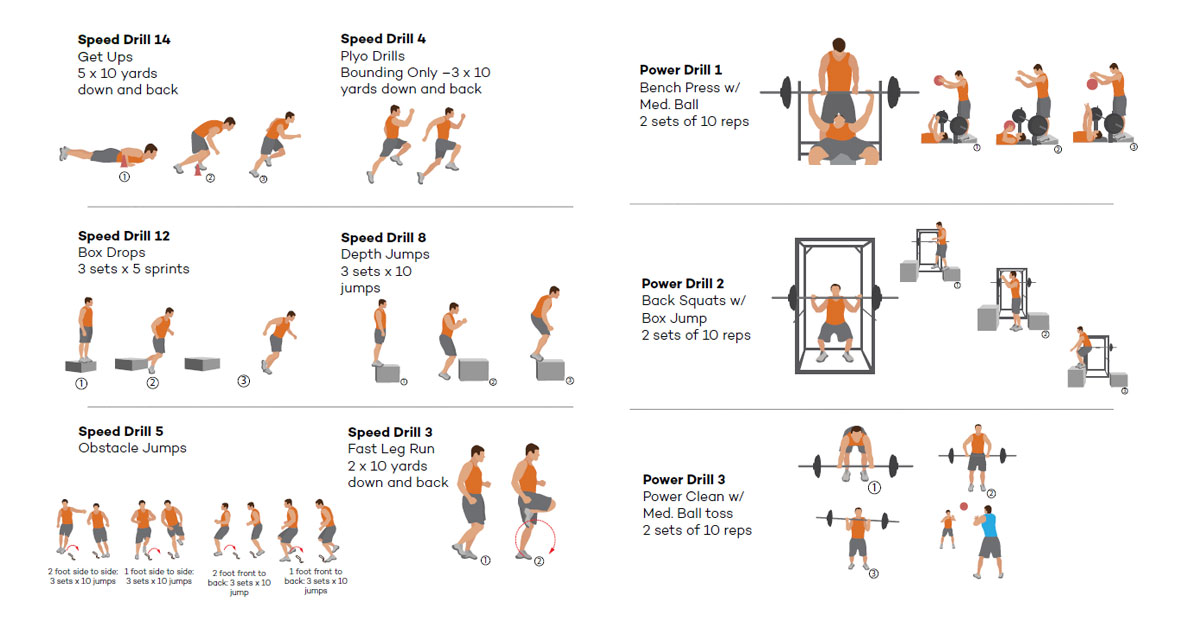
6. Use speed and power work, not only fatigue work
Conditioning should not mean “getting tired on purpose” every session. Speed and power are important parts of athletic conditioning, especially in sports with short, explosive actions.
Include:
- Acceleration drills
- Flying sprints
- Jump training
- Med ball throws
- Low-volume plyometrics
- Change-of-direction work with crisp mechanics
These sessions should usually be done when fresh. If you only train speed while exhausted, you may build fatigue tolerance without improving true speed.
7. Recover enough to adapt
Conditioning improves during recovery, not during the workout itself. If recovery is poor, performance stalls.
Support recovery with:
- Adequate sleep, ideally on a consistent schedule
- Enough calories for training load
- Enough protein to support repair
- Carbohydrates when training volume is high
- Hydration before, during, and after exercise
- Planned rest days or lower-load days
If you constantly feel flat, sore, irritable, or slower than usual, your plan may need less volume, fewer intense sessions, or more recovery time.
Source: Bing
A simple weekly structure that works for many athletes
A good week balances stress and recovery. The exact schedule depends on the sport, season, and training age, but a common structure looks like this:
Off-season example
- Monday: Strength training + short acceleration work
- Tuesday: Aerobic conditioning or tempo intervals
- Wednesday: Strength training + mobility
- Thursday: High-intensity intervals or sport-specific conditioning
- Friday: Strength training + power work
- Saturday: Light conditioning, skill work, or active recovery
- Sunday: Rest
In-season example
- Day after competition: Recovery work and light mobility
- Midweek: Strength maintenance and brief speed work
- One conditioning day: Short, controlled work tied to sport demands
- Other days: Practice, tactical work, and restoration
If you compete multiple times per week, your conditioning should often come from practice and games. In that case, extra conditioning may need to be reduced so you do not accumulate too much fatigue.
How to know conditioning is improving
You are improving conditioning when effort feels more controlled and performance holds up better under fatigue.
Common signs include:
- Faster times in repeat runs or sprint tests
- Lower heart rate at the same workload
- Better practice quality late in sessions
- Quicker recovery between hard efforts
- Less drop-off in speed, technique, or accuracy
- Lower perceived exertion at familiar workloads
Track a few metrics consistently rather than chasing every possible number. Repeated measures matter more than one-off highs or lows.
Common mistakes that slow progress
Many athletes work hard but still fail to improve because the program is too random or too fatiguing.
1. Doing too much high-intensity conditioning
Too many all-out sessions can hurt recovery and reduce quality in strength work and sport practice. Most athletes do better with a mix of easy, moderate, and hard work.
2. Ignoring strength and power
Conditioning alone does not make an athlete more explosive. Without strength and power work, you may improve work capacity but still lose the physical qualities that matter in competition.
3. Copying a program that does not match the sport
A distance runner’s plan is not ideal for a basketball player. The movement pattern, rest periods, and energy demands should match the sport.
4. Progressing too fast
Sudden jumps in volume or intensity increase the risk of excessive fatigue and overuse problems. Build gradually.
5. Skipping recovery basics
No conditioning plan works well if sleep, nutrition, and hydration are consistently poor.
How to progress safely
Progress one main variable at a time:
- Volume: more total work
- Intensity: harder efforts
- Density: less rest between efforts
- Complexity: more demanding movements or sport specificity
A simple progression might be:
- Add a small amount of total work.
- Keep movement quality high.
- Increase intensity only after adaptation.
- Deload when performance or recovery starts to drop.
For most athletes, slow progress is better than repeated overtraining cycles.
When to adjust or stop conditioning
You should reduce load or seek professional evaluation if you have:
- Chest pain, fainting, unusual shortness of breath, or heart palpitations
- Sharp pain that changes your movement
- Persistent swelling or joint instability
- Dizziness, nausea, or symptoms of heat illness
- Performance decline that does not improve with rest
If you are managing asthma, diabetes, a cardiac condition, a recent concussion, or a recent injury, get individualized guidance from a qualified medical professional or licensed sports clinician.
Key takeaways
- Athletic conditioning improves best when training matches your sport’s actual demands.
- A blend of aerobic work, intervals, strength, speed, and recovery usually works better than random hard sessions.
- Track baseline measures so you can tell whether the program is helping.
- Recovery is part of conditioning, not separate from it.
- If symptoms are unusual or severe, stop and get professional help.
FAQs
How often should athletes do conditioning?
Many athletes do well with 2 to 4 conditioning sessions per week, but the right number depends on the sport, season, and practice load. In-season athletes often need less extra conditioning than off-season athletes.
Is running enough to improve conditioning?
Running can improve conditioning, but it is not always enough for multi-directional sports or power-based athletes. The best conditioning matches the movement and energy demands of the sport.
Should conditioning happen before or after strength training?
It depends on the goal. If speed or power is the priority, do that work when fresh. If conditioning is secondary, it can follow strength work. Avoid pairing very hard conditioning and heavy lifting so often that recovery suffers.
How long does it take to improve athletic conditioning?
Many athletes notice early changes in 2 to 4 weeks, but bigger improvements often take several months of consistent training. Progress depends on training age, sport demands, recovery, and starting fitness.
What is the biggest mistake athletes make?
The most common mistake is doing too much intense work without enough recovery. That can make every session feel hard while slowing long-term improvement.
Final recommendation
If you want to improve athletic conditioning, focus on the basics that transfer to performance: assess your current level, train the right energy systems, keep strength work in the plan, and recover well enough to adapt. The best program is not the hardest one—it is the one that matches your sport, fits your schedule, and can be repeated consistently.