
Agility improves when you train your body to change direction quickly, control your center of mass, and keep your joints stable under movement. The most effective approach combines deceleration practice, change-of-direction drills, strength training, balance work, and sprint mechanics. For most healthy adults in the United States, the fastest progress comes from training agility 2 to 4 times per week, with simple drills that match your current fitness and sport demands.
Agility is not just “moving fast.” It is the ability to move, stop, reorient, and reaccelerate efficiently. That matters in sports, but it also matters for daily tasks like avoiding a trip, pivoting on a job site, or reacting to unexpected movement.

Today's Exclusive Deals
Limited-time Exclusive Deals. Check current discount on Amazon.
Check Price on Amazon As an Amazon Associate I earn from qualifying purchases.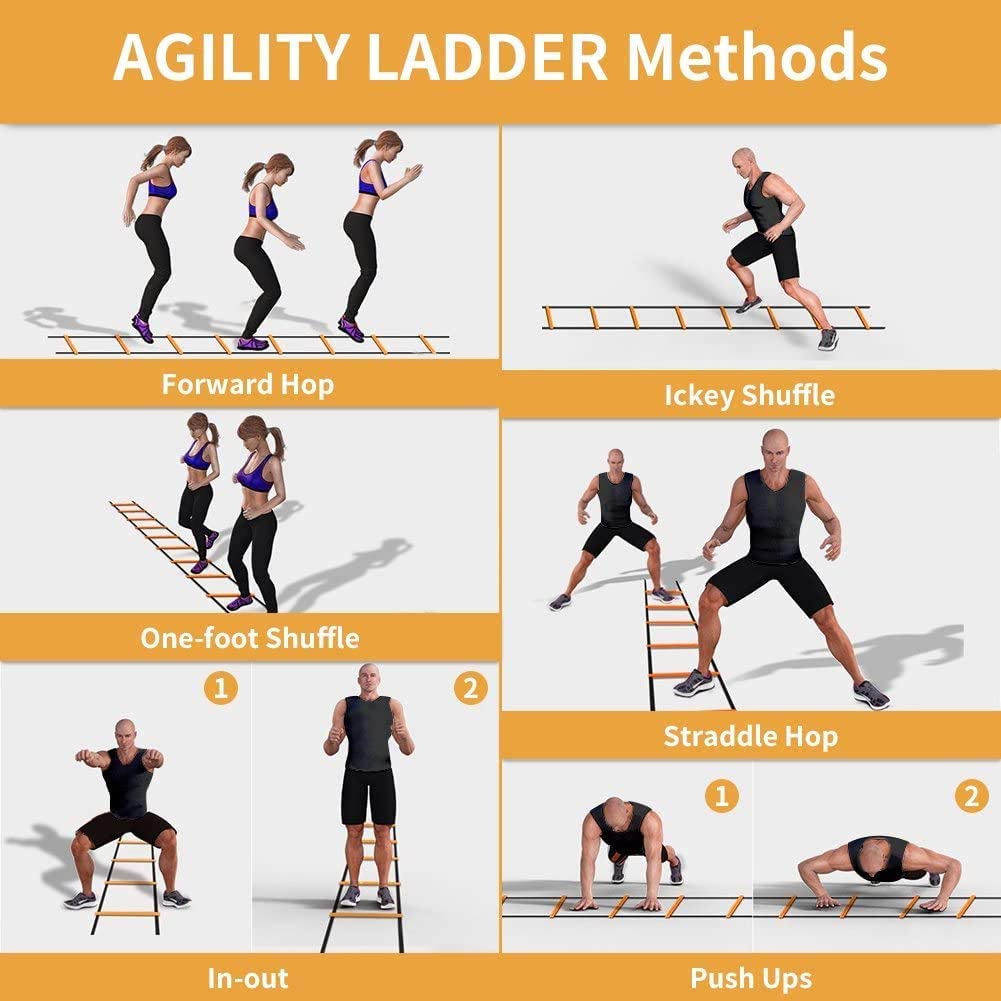
What Agility Means and Why It Matters
Agility is the combination of speed, balance, coordination, and reactive control. In practical terms, it is how well you can start, stop, shuffle, cut, turn, and recover without losing form.
For training purposes, agility has two parts:
- Change-of-direction speed: pre-planned movement, such as a cone drill
- Reactive agility: movement in response to an unpredictable cue, such as a defender or coach’s signal
That distinction matters because a person can be very fast in straight-line sprinting and still struggle with quick direction changes. Agility depends on more than leg speed. It also requires:
- lower-body strength
- ankle, knee, and hip control
- trunk stability
- foot placement and braking ability
- good visual reaction and decision-making
Why improving agility helps
Better agility can improve:
- athletic performance in court, field, and combat sports
- fall resistance and movement confidence
- the ability to move efficiently in daily life
- joint control during fast tasks
It is also useful for injury prevention efforts, because many noncontact lower-body injuries happen during abrupt deceleration or cutting. Training cannot eliminate injury risk, but better mechanics and progressive loading may reduce risky movement patterns.
Before You Start: Prerequisites and Safety Checks
You should begin agility training only after you can perform basic movements without pain or major instability. If you have recent injury, recurring joint swelling, dizziness, or unexplained pain, get evaluated by a qualified clinician before starting.
Good prerequisites
You are ready to start if you can:
- walk and climb stairs without pain flare-ups
- squat to a comfortable depth with control
- balance briefly on one leg
- jog lightly without symptom worsening
- land from a small hop without collapsing inward at the knee
Safety boundaries
Use extra caution if you have:
- a recent ankle, knee, hip, or back injury
- a history of falls
- chronic joint instability
- a neurologic condition affecting balance
- symptoms that worsen with quick direction changes
Stop a session if you feel sharp pain, joint giving-way, dizziness, chest pain, or unusual shortness of breath.
The Best Ways to Improve Agility
The most reliable way to improve agility is to train the movement patterns that agility uses in real life: accelerate, decelerate, cut, and react.
1. Build deceleration skill first
Deceleration is the ability to slow your body under control. Many people train acceleration but neglect braking, which is a common weak point.
Practice:
- short sprint starts followed by controlled stops
- forward runs into stick landings
- lateral shuffles with a stable finish
- forward-to-backward transitions
Goal: land with knees aligned, trunk controlled, and feet under you rather than far ahead of your center of mass.
2. Use change-of-direction drills
These drills teach you to plant, redirect, and reaccelerate.
Useful options include:
- cone cuts at 45 degrees
- T-drill patterns
- shuttle runs
- zigzag runs
- lateral shuffle to sprint transitions
Start with predictable patterns before adding speed. If your form breaks down, reduce distance or slow the drill.
3. Train reactive agility
Reactive agility means responding to an external signal.
Examples:
- partner points left or right
- coach calls a direction
- light-based reaction drills
- ball-handling drills with unpredictable movement
This matters because game situations are not pre-scripted. A planned cone drill helps, but a reactive drill better reflects sport demands.
4. Improve strength in key movement muscles
Agility depends heavily on lower-body and trunk strength. Stronger muscles help you absorb force, hold positions, and reaccelerate.
Prioritize:
- squats or squat variations
- lunges and split squats
- step-ups
- Romanian deadlifts or hip hinges
- calf raises
- core bracing exercises
Stronger hips and legs usually improve your ability to decelerate and cut cleanly.
5. Add plyometrics for elastic power
Plyometrics train the body to use and release force quickly. They can support agility when used correctly.
Examples:
- line hops
- snap-downs
- squat jumps
- skater jumps
- bounds
Start low and progress gradually. Quality matters more than quantity. If landing mechanics look sloppy, the drill is too advanced.
6. Work on footwork and body control
Fast feet alone do not create agility. You need efficient foot placement and controlled posture.
Drills can include:
- ladder drills used for coordination, not as a magic fix
- quick-feet taps
- carioca
- split-step timing
- mirror drills
These are most useful when they reinforce better positioning, not when they are treated as the main solution.
7. Improve mobility where it affects movement
Limited ankle, hip, or thoracic mobility can make cutting and squatting less efficient.
Pay attention to:
- ankle dorsiflexion
- hip rotation
- hip extension
- thoracic rotation
Mobility work should support better mechanics, not replace strength or sprint training.
A Simple Agility Training Plan
A practical weekly plan is to combine strength, speed, and agility rather than doing only drill work.
Sample 3-day plan
| Day | Main focus | Example work |
|---|---|---|
| Day 1 | Strength + deceleration | Squats, split squats, stick landings, short stops |
| Day 2 | Agility + reaction | Cone cuts, shuttles, mirror drills, cue-based changes |
| Day 3 | Power + movement quality | Jumps, lateral bounds, acceleration sprints, shuttle repeats |
How to progress
Progress one variable at a time:
- Speed: move faster only after form is stable
- Complexity: go from planned to reactive drills
- Volume: add reps gradually
- Load: add resistance only after bodyweight work is clean
- Fatigue resistance: practice maintaining form later in the session
A good progression is to begin at about 70% to 80% effort, then increase intensity as mechanics improve.
Drills That Actually Help Most
Some drills transfer better to real agility than others because they train braking, redirection, and positioning.
High-value drills
- 5-10-5 shuttle: useful for change-of-direction speed
- T-drill: combines forward, lateral, and backward movement
- L-drill: tests turning and acceleration
- Mirror drill: strong for reactive agility
- Skater hops: useful for lateral force and control
- Sprint-stop-sprint: builds deceleration and restart ability
Lower-value drills if used alone
- ladder drills with no movement purpose
- endless cone patterns at low effort
- high-repetition foot taps without braking or redirecting
- drills that look fast but do not challenge control
These are not useless, but they work best as accessories, not the core of an agility program.
What Good Form Looks Like
You are improving if your movement becomes faster without losing control.
Signs of good agility mechanics
- you stop without taking extra recovery steps
- your knees stay aligned instead of collapsing inward
- your trunk stays fairly upright and stable
- your feet land under your body more often
- you accelerate again quickly after changing direction
- you recover balance with minimal wobble
Signs your technique needs work
- loud, uncontrolled landings
- feet crossing awkwardly during cuts
- excessive upper-body leaning
- knee cave-in during landings
- losing balance after each turn
- slowing down because you cannot brake well
If those problems show up, slow the drill and reduce complexity before adding speed.
Common Mistakes That Limit Progress
Many people do plenty of “agility work” without actually becoming more agile.
Mistake 1: training only speed, not braking
If you cannot stop well, your change-of-direction ability will stay limited. Braking is part of agility.
Mistake 2: doing drills too fast too soon
Speed without control builds poor movement patterns. Master positions first.
Mistake 3: skipping strength training
Weak hips, legs, and trunk muscles make it harder to cut safely and efficiently.
Mistake 4: using too much volume
Agility work is high quality, high intent training. Excessive reps often turn into sloppy conditioning.
Mistake 5: ignoring recovery
Your nervous system and connective tissues need recovery. Doing intense cutting drills every day can increase overload.
Mistake 6: not matching drills to the goal
Basketball, soccer, football, tennis, and daily movement do not all demand the same patterns. Choose drills that fit the direction changes you actually need.
How to Tell If Your Agility Is Improving
Look for measurable improvement, not just better “feeling.”
Useful signs of progress
- faster cone or shuttle times
- smoother cuts at the same speed
- fewer extra steps when stopping
- better balance after landing
- less fatigue-related breakdown in form
- improved confidence during quick direction changes
Simple self-check
Record the same drill every 2 to 4 weeks and compare:
- time to complete
- number of recovery steps
- quality of body position
- symmetry left vs. right
If time improves but form gets worse, slow down and rebuild control.
How Often Should You Train Agility?
Most healthy adults improve with 2 to 4 sessions per week, depending on intensity and experience.
General frequency guide
| Experience level | Frequency | Notes |
|---|---|---|
| Beginner | 2 times per week | Keep sessions short and simple |
| Intermediate | 2 to 3 times per week | Add reaction and moderate intensity |
| Advanced athlete | 3 to 4 times per week | Balance agility with strength and recovery |
Shorter, higher-quality sessions usually beat long fatigue-heavy sessions.
When to Get Professional Help
You should see a physical therapist, athletic trainer, or sports medicine clinician if:
- you have repeated ankle sprains or knee giving-way
- pain increases with cutting or landing
- one side is clearly weaker or less stable
- you return to sport after injury and feel unsure about movement
- you are recovering from surgery or a major joint injury
A qualified professional can check movement quality, identify asymmetries, and tailor a plan to your sport or diagnosis.
Key Takeaways
- Agility improves through deceleration, direction change, reaction training, strength, and control.
- The best drills teach you to brake, plant, redirect, and reaccelerate.
- Start with predictable movements, then add speed and randomness.
- Strength and plyometrics support agility, but they do not replace movement practice.
- Quality matters more than volume. Clean mechanics beat sloppy speed.
- If pain, instability, or recent injury is present, get professional guidance first.
FAQs
What is the fastest way to improve agility?
The fastest practical route is to combine strength training, deceleration drills, and change-of-direction practice several times per week. Pure foot-speed drills alone are usually not enough.
Are ladder drills good for agility?
Ladder drills can help coordination and rhythm, but they work best as a small part of training. They should not replace cutting, stopping, and reactive drills.
Can you improve agility at home?
Yes. You can use bodyweight strength work, line hops, shuffles, cone markers, and reaction drills in a driveway, garage, yard, or open room if the surface is safe.
How long does it take to get more agile?
Many people notice better control within a few weeks if they train consistently, but meaningful performance gains usually take longer. Progress depends on training quality, recovery, strength, and injury history.
Does stretching improve agility?
Stretching alone does not make you agile. Mobility can help if stiffness limits movement, but agility improves most through practice of the actual movement pattern plus strength and control work.
Conclusion
If you want to improve agility, train the skills that make quick movement possible: braking, redirecting, reacting, and reaccelerating. Pair those drills with lower-body strength, core control, and enough recovery to keep your mechanics sharp. That combination gives you the most reliable path to better agility in sports and everyday movement.

