
Tennis is a game of skill, speed, and strategy. But for many people, one question often comes up: How long does a tennis match last? If you’ve watched a few matches or played at your local club, you know the answer isn’t simple. Sometimes a game wraps up in under an hour, while at other times, players battle for several hours. Understanding match length is important whether you are a casual fan, new player, or a parent supporting a young athlete. The duration can affect how you plan your day, your physical endurance, and even your mental strategy on the court.
Tennis is unique because there is no fixed time limit. The clock does not run out. Matches continue until someone wins by the rules. This article will break down all the factors that decide how long a tennis match lasts.
You’ll learn about the differences between professional and amateur play, how scoring systems affect match time, and why some matches become legendary marathons. We’ll also compare match lengths across major tournaments, look at examples from history, and answer the most common questions about match duration.
By the end, you will have a complete understanding of what to expect, whether you’re heading to your first lesson or watching the finals at Wimbledon.
What Determines The Length Of A Tennis Match?
Several elements work together to decide the duration of a tennis match. Unlike sports with quarters or halves, tennis is based on a point, game, set, and match system. Let’s break down what really matters.
Scoring System
Tennis matches are made up of points, games, and sets. To win a set, a player usually needs to win six games, with at least a two-game difference. Matches can be played as best of three sets (first to win two sets) or best of five sets (first to win three sets). The more sets required, the longer a match can last.
Format: Best Of Three Vs. Best Of Five
Men’s Grand Slam singles are typically best of five sets, while most other matches (including women’s matches and regular ATP/WTA events) are best of three sets. Best of five can mean matches run much longer, especially if sets are close.
Tiebreaks And Deciding Sets
When players reach 6-6 in games within a set, a tiebreak is often used. This speeds up the set, but not every tournament uses tiebreaks in the final set. Some, like Wimbledon until 2019, used to require a two-game lead in the final set, which sometimes led to extremely long matches.
Player Style And Skill
Big servers may win games quickly, while baseline rallies can drag games out. The style of play—aggressive vs. defensive—can change match time by an hour or more. Even player experience matters: seasoned pros are often more efficient, but evenly matched players can create long battles.
Surface And Conditions
Clay courts slow the ball down and create longer rallies, while grass courts tend to create shorter, faster points. Weather, temperature, and even crowd noise can impact how fast or slow the game feels and moves.
Breaks And Interruptions
Medical timeouts, bathroom breaks, weather delays, and even crowd interruptions can extend match length, especially in outdoor tournaments.
Average Match Lengths: What To Expect
Knowing the typical match durations can help you plan your viewing or playing schedule. Here’s what you’ll usually see:
| Match Type | Average Duration |
|---|---|
| Best of 3 sets (Pro Men/Women) | 1.5 to 2 hours |
| Best of 5 sets (Men’s Grand Slam) | 2.5 to 4 hours |
| Doubles (3 sets) | 1 to 1.5 hours |
| Junior/Amateur | 45 minutes to 1.5 hours |
Most regular pro matches end in under two hours. However, close matches, or those with lots of long rallies, can go longer, especially in men’s Grand Slam events.
Match Lengths At Different Tournaments
The Grand Slam tournaments (Australian Open, French Open, Wimbledon, US Open) each have their own traditions and rules, which affect match duration. Let’s look at each:
Australian Open
Both men and women play on hard courts. Men’s singles use best of five sets, women’s singles use best of three. The tournament uses tiebreaks in the final set (first to 10 points).
Typical match times:
- Men’s singles: 2.5 to 4 hours
- Women’s singles: 1.5 to 2.5 hours
French Open (roland Garros)
Played on clay, which creates longer rallies. Men’s singles are best of five, women’s singles are best of three. Final set tiebreak (since 2022) is a 10-point breaker at 6-6.
Typical match times:
- Men’s singles: 3 to 4.5 hours
- Women’s singles: 1.5 to 2.5 hours
Wimbledon
Grass courts mean faster games. Recently, a 10-point tiebreak is played at 6-6 in the final set for all events.
Typical match times:
- Men’s singles: 2 to 3.5 hours
- Women’s singles: 1 to 2 hours
Us Open
Hard courts, with tiebreaks in every set. Matches tend to be efficient, but upsets and epic battles can stretch the time.
Typical match times:
- Men’s singles: 2.5 to 3.5 hours
- Women’s singles: 1.5 to 2.5 hours
Atp And Wta Tour Events
Most use best of three sets for both men and women, with tiebreaks in all sets. Matches are usually shorter.
Typical match times:
- Singles: 1 to 2 hours
- Doubles: Under 1.5 hours
Examples: Shortest And Longest Tennis Matches
Tennis history is full of both sprints and marathons. Here are some notable examples:
Shortest Matches
Some matches end very quickly, especially when there is a big skill difference or a player retires due to injury.
- Steffi Graf vs. Natasha Zvereva (1988 French Open Final): Graf won 6-0, 6-0 in just 34 minutes.
- Jarkko Nieminen vs. Bernard Tomic (2014 Miami): Lasted only 28 minutes, one of the shortest ATP matches.
Longest Matches
Epic contests can last for hours, especially before modern tiebreak rules.
- Isner vs. Mahut (Wimbledon 2010): The longest match ever, lasting 11 hours and 5 minutes over three days. Final set ended 70-68.
- Fabrice Santoro vs. Arnaud Clément (2004 French Open): 6 hours, 33 minutes.
- Kevin Anderson vs. John Isner (Wimbledon 2018): 6 hours, 36 minutes.
These marathon matches are rare, but they show why match length in tennis can be so unpredictable.
Scoring Systems And Their Impact On Match Time
The way tennis is scored is different from most sports. This system is one reason why match lengths can change so much.
Standard Scoring
Each game consists of points: 15, 30, 40, and game. If players reach 40-40 (deuce), one must win two points in a row. Games form sets, and sets form matches.
Tiebreak System
Tiebreaks were introduced to prevent never-ending sets. At 6-6, most events use a 7-point or 10-point tiebreak. This keeps sets from running too long.
Advantage Sets
Before tiebreaks, a set could only be won by a two-game margin. This led to marathon matches, such as Isner-Mahut at Wimbledon. Now, almost all events use a tiebreak in the final set.
Fast4 And Short Formats
For some amateur and club events, or special exhibitions, formats like Fast4 are used. Sets go to 4 games, and tiebreaks are played at 3-3. These matches usually last under an hour.
Singles Vs. Doubles: How Match Length Differs
Singles matches are usually longer than doubles because:
- More rallies: Singles have longer points.
- Fewer quick winners: Doubles players use volleying and teamwork to finish points faster.
- Scoring: Many doubles matches use a match tiebreak (first to 10 points) instead of a third set.
For example, a typical professional doubles match lasts about 1 to 1. 5 hours, while singles can go much longer.
Men’s Vs. Women’s Matches
The main difference is the number of sets:
- Men’s Grand Slams: Best of five sets.
- Women’s Grand Slams and almost all other matches: Best of three sets.
Because of this, men’s matches in Grand Slams are usually longer. However, women’s matches can still be epic, especially with long rallies or close scores.
Amateur, Junior, And Club Matches
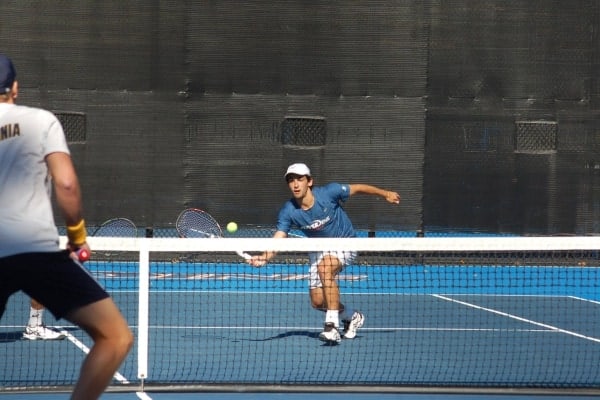
Not all tennis matches follow professional rules. At the local club or junior level, matches can use different formats to fit time constraints.
- Timed matches: Some clubs set a time limit (such as 1 hour).
- Pro sets: First to 8 games, often used in high school or college play.
- No-ad scoring: At deuce, next point wins the game. This makes matches shorter.
On average, expect a junior or club match to last from 45 minutes to 1. 5 hours. These formats let more people play in a single afternoon and help beginners avoid fatigue.

The Role Of Surface And Weather
The court surface has a big impact on how long matches last.
Clay Courts
- Slower balls
- Longer rallies
- Matches often last longer (French Open is the best example)
Grass Courts
- Faster balls
- Shorter points
- Matches are usually quicker (Wimbledon matches are often shorter than those on clay)
Hard Courts
- Middle ground between grass and clay
- Match length depends more on player style
Weather also matters. Hot conditions can cause more breaks for hydration, while rain delays can extend the total time spent at the venue.
Player Matchups: Why Some Battles Last Longer
When two players have similar skills and styles, matches tend to be longer. For example, two defensive baseliners (like Rafael Nadal and Novak Djokovic) might play five-hour matches full of long rallies. In contrast, if a strong server faces a weaker returner, games can go by quickly.
Also, left-handed vs. right-handed matchups, and players with different strategies, can change the pace and flow. Even psychological battles—where neither wants to give up—can add time.
How Fitness And Endurance Matter
Tennis is not just about hitting the ball. Stamina and mental strength are critical. In long matches, especially those over three hours, fatigue sets in. Players who are fit and well-prepared recover better between points, making them more likely to win in the late stages.
This is why the top pros spend hours training off the court. Proper hydration, nutrition, and rest are also key. Sometimes, a match is won or lost simply because one player handled the long duration better.
Two Insights Most Beginners Miss
Many new fans or players think every tennis match will fit into a neat time slot. Here are two details often overlooked:
- Warm-up is not included in match time: Professional matches have a short warm-up after players walk on court. This is not counted in match duration, so plan for an extra 10-15 minutes before the first ball.
- Changeovers and breaks add up: Every two games, players switch sides and get 90 seconds to rest. This can add 10-20 minutes to a long match, especially if there are medical or bathroom breaks.
Famous Marathon Matches In History
Some matches are remembered not just for who won, but for how long they lasted. Here are a few:
| Match | Duration | Score | Year |
|---|---|---|---|
| Isner vs. Mahut (Wimbledon) | 11 hours, 5 minutes | 6–4, 3–6, 6–7, 7–6, 70–68 | 2010 |
| Anderson vs. Isner (Wimbledon) | 6 hours, 36 minutes | 7–6, 6–7, 6–7, 6–4, 26–24 | 2018 |
| Santoro vs. Clément (French Open) | 6 hours, 33 minutes | 6–4, 6–3, 6–7, 3–6, 16–14 | 2004 |
These matches are rare but show the extremes of tennis.
How Television And Scheduling Affect Match Time
Television broadcasters and tournament organizers need to plan schedules, but unpredictable match lengths make this a challenge.
- Night matches: Sometimes matches start late and run past midnight. The 2008 Wimbledon final, for example, ended after 9 p.m. due to rain delays.
- Back-to-back matches: If a match runs long, the next one on that court is delayed. This can affect TV schedules and player routines.
Some tournaments use a second court or allow matches to finish the next day if they run too long.
How Technology Is Changing Match Duration
Recent years have seen changes designed to speed up play:
- Shot clock: Since 2018, a 25-second shot clock ensures players serve promptly.
- No-let rule: In some junior/pro doubles, lets on serve are played, reducing delays.
- Electronic line calling: Faster decisions mean fewer arguments and less wasted time.
These changes make matches more predictable but tennis still has its surprises.
Practical Tips For Planning Around Tennis Match Length
If you’re going to a tennis match or playing in one, here’s how to prepare:
- Expect the unexpected: Matches can be short or long. Always allow extra time.
- Pack snacks and water: Especially for outdoor venues or long club matches.
- Dress for comfort: Weather can change, and you may be sitting or playing for hours.
- Check the rules: Tournament websites usually explain the match format.
- Monitor the score: If following live scores, keep in mind that a match at 5-5 in the final set could last much longer.
Comparing Tennis To Other Sports
Tennis is one of the few sports where there is no game clock. Here’s how it compares:
- Soccer: 90 minutes plus stoppage time.
- Basketball: 48 minutes (NBA), with clock stoppages.
- Baseball: 3 hours average, but no clock—like tennis.
- Tennis: 1 to 6+ hours, depending on sets and score.
This makes tennis both exciting and unpredictable.
Common Mistakes When Estimating Match Duration
- Assuming all matches are short: While most are under two hours, finals and close matches can go much longer.
- Forgetting about breaks: Changeovers, medical timeouts, and weather delays can add significant time.
- Ignoring format differences: Club and junior matches often use shorter formats.
- Not checking the draw: Early-round matches can be lopsided and quick, but later rounds are often closer and longer.
Watching Or Playing: What To Expect
If you’re new to tennis, expect some matches to finish quickly, especially in the early rounds or between players of different skill levels. However, be ready for long, drawn-out battles in the later rounds, or when the score is close.
If you’re playing, focus on endurance and mental strength. Matches can swing back and forth, and the winner is often the player who can stay sharp and focused for the longest time.
External Resource For Tennis Fans
For more on the history and rules of tennis, you can visit the official Wikipedia Tennis page.

Frequently Asked Questions
How Long Is A Typical Professional Tennis Match?
A typical professional singles match lasts 1.5 to 2 hours for best of three sets, and 2.5 to 4 hours for best of five sets, especially in men’s Grand Slam events. Doubles matches are usually shorter, often under 1.5 hours.
What’s The Longest Tennis Match Ever Played?
The longest match in history was Isner vs. Mahut at Wimbledon in 2010. It lasted 11 hours and 5 minutes over three days, with a final set score of 70–68.
Why Do Some Matches Last Much Longer Than Others?
Match length depends on number of sets, player style, surface, and whether there are tiebreaks or not. Defensive battles, long rallies, and close scores can add hours to a match.
How Do Weather And Delays Affect Match Time?
Rain, heat, and other weather issues can cause delays and interruptions. Matches can be paused and resumed later, sometimes even the next day. Outdoor tournaments are more affected than indoor events.
Can A Tennis Match End In Less Than An Hour?
Yes. If one player dominates and wins quickly, especially in junior or club matches, or if a player retires due to injury, matches can finish in 30–45 minutes. However, this is rare at the professional level.
Understanding tennis match length helps you enjoy the game more—whether you’re watching, coaching, or on the court yourself. With no set time limit, tennis remains one of the most exciting and unpredictable sports in the world.
