
Figuring out how to maintain scuba diving equipment can seem like a lot, but it’s actually quite straightforward once you get the hang of it. Proper care not only keeps your gear working when you need it most but also significantly extends its lifespan. This isn't just about saving money; it's about ensuring your safety underwater.
Manufacturer specifications confirm that regular maintenance can prevent common failures. For instance, regulator O-rings, crucial for sealing, can degrade within two years if not properly cared for, impacting breathing performance. We'll walk through the essential steps that ensure your gear is always ready for your next adventure.

Today's Exclusive Deals
Limited-time Exclusive Deals. Check current discount on Amazon.
Check Price on Amazon As an Amazon Associate I earn from qualifying purchases.Quick Answer
To maintain scuba diving equipment, rinse it thoroughly in fresh water after every dive, especially after saltwater exposure. Dry all components completely out of direct sunlight. Store gear in a cool, dry place.
Regularly inspect hoses and seals. Follow manufacturer guidelines for professional servicing of regulators, typically every 1-2 years.
Why Your Scuba Gear Needs Regular Care
Your scuba diving equipment is a complex system designed for harsh underwater environments. Saltwater, sand, and sun exposure are constant adversaries, and neglect can lead to costly repairs or even dangerous equipment malfunctions. Think of your gear as your life support system; it demands respect and consistent attention.
When you invest in good scuba gear, you're investing in your ability to explore the underwater world safely and enjoyably. Skipping maintenance can lead to issues like a regulator free-flowing unexpectedly, a BCD failing to inflate, or a mask leaking constantly. Per general diver training standards, understanding and implementing basic care routines is as critical as mastering buoyancy control.
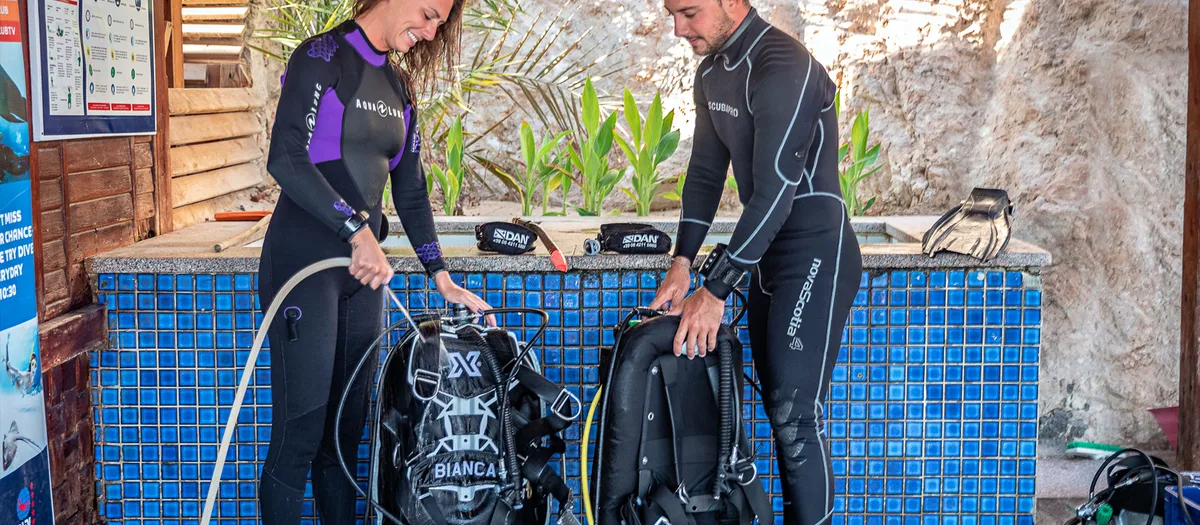
Image source: Web (Bing) / alertdiver.eu (Web image (fair-use with source credit))
The Core Routine: Post-Dive Rinse & Dry
This is the absolute bedrock of scuba gear maintenance. Seriously, don't ever skip this. Manufacturer specifications for most dive gear, from regulators to buoyancy compensators (BCs), emphasize immediate freshwater rinsing.
- Saltwater is Corrosive: If you've been diving in the ocean, the salt residue left behind can wreak havoc. It can dry into abrasive crystals that damage seals and metal components. Even freshwater diving can leave behind minerals and potential contaminants.
- How to Rinse:
- Regulators: Crucially, make sure the dust cap is securely on the first stage before rinsing. Never immerse the first stage with the cap off. Rinse the second stage (mouthpiece) and all hoses thoroughly. Some professionals recommend gently flushing regulator internals with a low-pressure freshwater source.
- BCDs: Inflate your BCD partially and rinse the exterior thoroughly. If it's been in very salty conditions, consider rinsing the inside bladder too, then drain it completely.
- Masks: Rinse the lens and skirt to remove any salt, sand, or gunk.
- Fins: A quick rinse helps remove any lingering debris.
- Drying is Key: Once everything is rinsed, hang your gear in a well-ventilated area to air dry. Crucially, keep it out of direct sunlight. UV rays can degrade neoprene, rubber, and plastic components over time, leading to brittleness and cracking.
- BCDs and Wetsuits: Hang them so they can dry fully, both inside and out.
- Regulators: Let them hang freely.
- Masks: Place them somewhere they won't get scratched while drying.
Proper rinsing and drying are the single most effective steps you can take to prevent corrosion, mineral buildup, and material degradation.
Regulator Servicing: Keeping It Breathing Smooth
Your regulator is arguably the most critical piece of scuba gear, as it delivers breathable air from your tank. Because of its complexity and importance, it requires periodic professional servicing. Manufacturer specifications for most regulators, such as those found on best scuba diving regulator 2026: top picks for every diver, typically recommend servicing every 1-2 years or after a certain number of dives (often 100-200 dives), whichever comes first.
Why Professional Service Matters
- Internal Components: Regulators have delicate internal parts, including diaphragms, O-rings, and springs. These parts wear down over time and can become damaged by salt, sand, or improper handling.
- Performance: A well-serviced regulator provides air easily and reliably. If it's not functioning correctly, you might experience issues like a free-flowing second stage, increased breathing resistance, or leaks.
- Safety: Malfunctioning regulators can be a serious safety hazard, potentially leading to air starvation or discomfort that distracts from situational awareness.
What Does Servicing Involve?
A trained technician will typically:
- Disassemble: Take the regulator apart to inspect all components.
- Clean: Thoroughly clean all parts to remove any residue or corrosion.
- Replace Parts: Swap out worn-out O-rings, diaphragms, and other wear items with manufacturer-approved replacements.
- Lubricate: Use specialized, safe lubricants on moving parts.
- Reassemble & Test: Put it back together and test it under pressure to ensure it meets performance specifications. They'll check inhalation resistance and intermediate pressure.
Most reputable dive shops offer regulator servicing. It’s worth checking your best scuba diving regulator for beginners 2026: top picks reviewed documentation or asking your local dive center about their specific recommendations and pricing.

Image source: Web (Bing) / dev.scubadiving.com (Web image (fair-use with source credit))
BC & Suit Maintenance: Beyond the Rinse
Your buoyancy compensator (BC) and dive suits (wetsuits or drysuits) are your other major pieces of gear that need attention beyond a simple rinse. These items protect you and manage your buoyancy, so keeping them in good order is vital.
Buoyancy Compensator (BC) Care
- Inflator Hose: Regularly inspect the power inflator hose for cracks or signs of wear. Ensure the oral inflator works and doesn't stick. If you notice a musty smell inside the bladder, you might need to rinse the interior more thoroughly.
- Valves: Check that the over-pressure relief valves and exhaust valves are clean and free of debris.
- Webbing & Buckles: Inspect all straps, buckles, and D-rings for damage or excessive wear. Your 8 best scuba diving BCD 2027: top picks for every diver selection has many different designs, but all require this general care.
- Storage: Store your BC partially inflated to prevent the internal bladder from sticking together, but not fully inflated, which can stress the material. Keep it out of direct sunlight and extreme heat.
Wetsuit and Drysuit Care
- Cleaning: After rinsing, if your wetsuit or drysuit has stubborn grime or odors, you can wash it with a specialized wetsuit shampoo or a mild, pH-neutral soap. Rinse exceptionally well to remove all traces of the cleaner.
- Zippers: Zippers on wetsuits and drysuits are critical. Keep them clean and lubricated with a paraffin-based wax or a specialized zipper lubricant. This prevents them from seizing and makes them easier to operate.
- Seals (Drysuits): For drysuits, inspect the latex or neoprene neck and wrist seals regularly for cracks or tears. Damaged seals can compromise your dryness and warmth.
- Drying and Storage: Always dry suits thoroughly in a cool, shaded, well-ventilated area. Avoid hanging wetsuits by the shoulders on thin hangers, as this can stretch the neoprene. A wide, padded hanger is better, or lay it flat. For drysuits, ensure the inside is completely dry before storing. You might store them in a best scuba diving gear bag 2027: top picks for easy travel or a dedicated suit bag.
Proper care ensures these items continue to function as intended, keeping you comfortable and safe on your dives.

Image source: Bing (Web (fair-use with source credit))
Common Gear Maintenance Mistakes to Dodge
Even with good intentions, divers sometimes make mistakes that can shorten the life of their equipment or compromise its function. Being aware of these common pitfalls can save you a lot of trouble and expense.
- Skipping the Rinse: This is number one. Thinking "it was only a short dive" or "it was freshwater, so it's fine" can lead to salt buildup or mineral deposits that are hard to remove later.
- Storing Gear Wet: Never pack away your gear if it's still damp. This creates a perfect environment for mold and mildew to grow, which can damage materials and cause unpleasant odors.
- Leaving Gear in Direct Sunlight or Heat: Sun's UV rays and excessive heat (like in a car trunk) can degrade rubber, plastic, and neoprene, making them brittle and weak.
- Improper Regulator Rinsing: Submerging a regulator's first stage without its dust cap is a fast track to internal contamination and potential damage. Water getting into the first stage is a serious issue.
- Ignoring Small Issues: A small leak in a mask, a stiff zipper, or a regulator that sounds a bit "off" might seem minor, but these can be early warnings of larger problems. Address them promptly.
- Using Harsh Chemicals: Avoid abrasive cleaners, solvents, or strong detergents on your gear. These can strip protective coatings, damage seals, and degrade materials. Always stick to fresh water or specialized, mild cleaners if needed.
Learning from these common errors is just as important as knowing the correct maintenance procedures.
When to Call the Pros: Beyond Basic Upkeep
While you can handle much of your scuba gear maintenance yourself, certain tasks are best left to certified professionals. These jobs require specialized tools, training, and a deep understanding of the equipment's internal workings.
- Regulator Servicing: This is the most critical professional service. Technicians have the knowledge and equipment to ensure your regulator performs to manufacturer specifications. Attempting to service a regulator yourself without proper training can void warranties and, more importantly, compromise your safety. Manufacturer specifications for brands like Aqualung or Scubapro typically outline service intervals.
- Drysuit Repairs: Beyond minor seal cleaning, significant repairs to drysuit zippers, valves, or seams usually require professional attention. A faulty drysuit seal can lead to a dangerous loss of thermal protection.
- Complex BC Issues: While you can check hoses and valves, if your BC has a persistent deflation issue or the internal bladder seems damaged, a dive shop can diagnose and repair it. This is especially true for more integrated or technical BCD designs.
- Tank Hydrostatic Testing: Scuba tanks (cylinders) themselves require periodic hydrostatic testing (usually every 5 years in the US) to ensure they can withstand pressure. This is a government-mandated service done by certified hydro-testing facilities. You'll see a sticker with the test date.
- Dive Computer Battery Replacement: While some dive computers allow user battery replacement, others require specialized tools and seals. It’s often safer to have a professional do it to ensure water-tight integrity. If you're unsure about your specific best scuba diving computer 2026: top picks for safe underwater adventures model, check its manual or consult a dive shop.
Trusting professionals for these tasks ensures your life-support equipment is in safe, reliable working order for every dive.