
When you’re looking to get stronger, one of the most fundamental exercises you’ll come across is the deadlift. But standing at the gym or planning your home workouts, you might wonder: are trap bar deadlifts better than conventional deadlifts? It’s a question that pops up because both lifts share similarities but offer distinct experiences and benefits.
Our research indicates that the choice often hinges on individual goals, mobility, and comfort. For instance, many trap bar designs accommodate weights up to 700 pounds (317.5 kg) on the sleeves, whereas conventional barbells typically support around 1,000 pounds (453.6 kg). Understanding the nuances of each can help you pick the right path to strength.

Today's Exclusive Deals
Limited-time Exclusive Deals. Check current discount on Amazon.
Check Price on Amazon As an Amazon Associate I earn from qualifying purchases.Are Trap Bar Deadlifts Better Than Conventional Deadlifts?
No, trap bar deadlifts are not inherently "better" than conventional deadlifts; they are different tools for different goals. Trap bar deadlifts are often more accessible for beginners and easier on the lower back, while conventional deadlifts excel at building maximal posterior chain strength and overall raw power. The "best" choice depends entirely on your training objectives, physical capabilities, and personal preference.
Conventional Deadlifts: The Classic Strength Builder
What They Are and How They Work
The conventional deadlift is the quintessential exercise for building brute strength. You stand with your feet about hip-width apart, shins close to the barbell. Grabbing the bar on the outside of your legs with an overhand or mixed grip, you hinge at your hips and bend your knees to initiate the pull.
The goal is to lift the weight off the floor by extending your hips and knees simultaneously, keeping your back straight and chest up until you're standing tall. This movement pattern is a foundational test of full-body strength.
Key Muscles Worked and Benefits
This lift is a powerhouse for developing the posterior chain, which includes your hamstrings, glutes, and erector spinae (lower back muscles). It also significantly engages your trapezius muscles (traps) and lats for upper back strength, along with your forearms for grip. The benefits extend beyond just muscle growth; it builds incredible core stability and can improve posture by strengthening the muscles that support your spine.
Many athletes use it to develop explosive power off the floor.
Potential Drawbacks and Mobility Needs
The conventional deadlift requires a good degree of hip and ankle mobility to achieve a safe and effective starting position. If your hips or ankles are stiff, you might struggle to maintain an upright torso and a neutral spine, increasing the risk of injury. The sheer load placed on the lower back can also be a concern if your core bracing isn't solid or if your form falters.
Grip strength can also become a limiting factor, preventing you from lifting as much weight as your legs and back could otherwise handle.

Trap Bar Deadlifts: The Accessible Power Move
What They Are and How They Work
The trap bar deadlift, also known as a hexagonal deadlift, offers a different mechanical advantage. You stand inside a hexagonal-shaped bar with parallel handles. This neutral grip and the bar's positioning allow for a more upright torso and a shorter range of motion compared to conventional deadlifts.
The lift starts by driving through your heels and extending your hips and knees to stand up, similar to a squat, but with the weight closer to your body.
Key Muscles Worked and Benefits
While still a full-body exercise, the trap bar deadlift tends to emphasize the quadriceps more due to the more upright posture and knee bend. It strongly recruits the glutes and hamstrings as well, and engages the traps and core. A significant benefit is its accessibility; many find it more comfortable and easier to learn than the conventional deadlift, making it a great entry point for those new to lifting heavy or for individuals with specific mobility limitations.
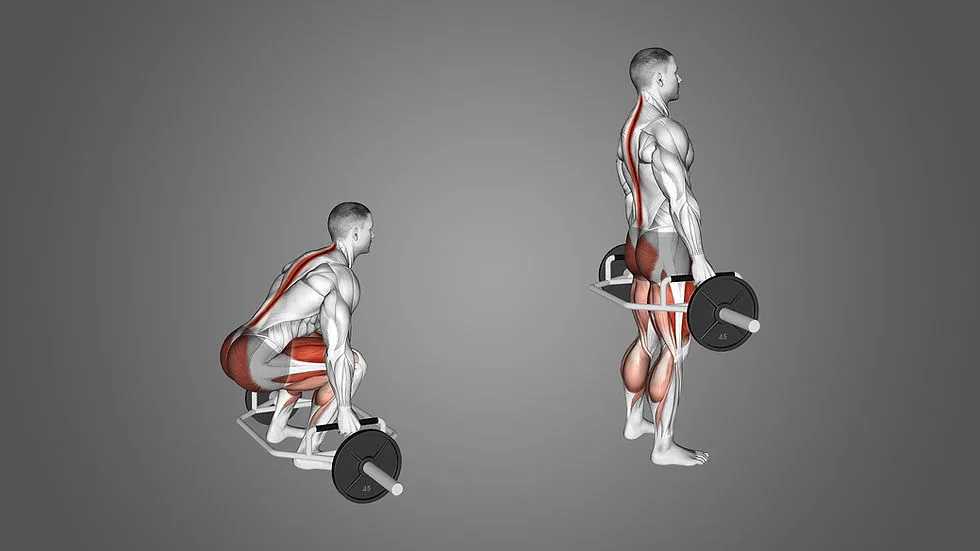
Lower Back Friendliness and Accessibility
For many people, the trap bar deadlift is noticeably easier on the lower back. The neutral grip and the bar's placement within the handles mean the load is distributed differently, and you typically don’t need to lean forward as much. This reduced forward lean and closer bar path can decrease shear forces on the lumbar spine.
Consequently, individuals who experience discomfort or pain with conventional deadlifts often find the trap bar deadlift a more sustainable option, allowing them to continue training their lower body effectively.
Conventional Deadlifts vs. Trap Bar Deadlifts: A Side-by-Side Look
Starting Position and Form Differences
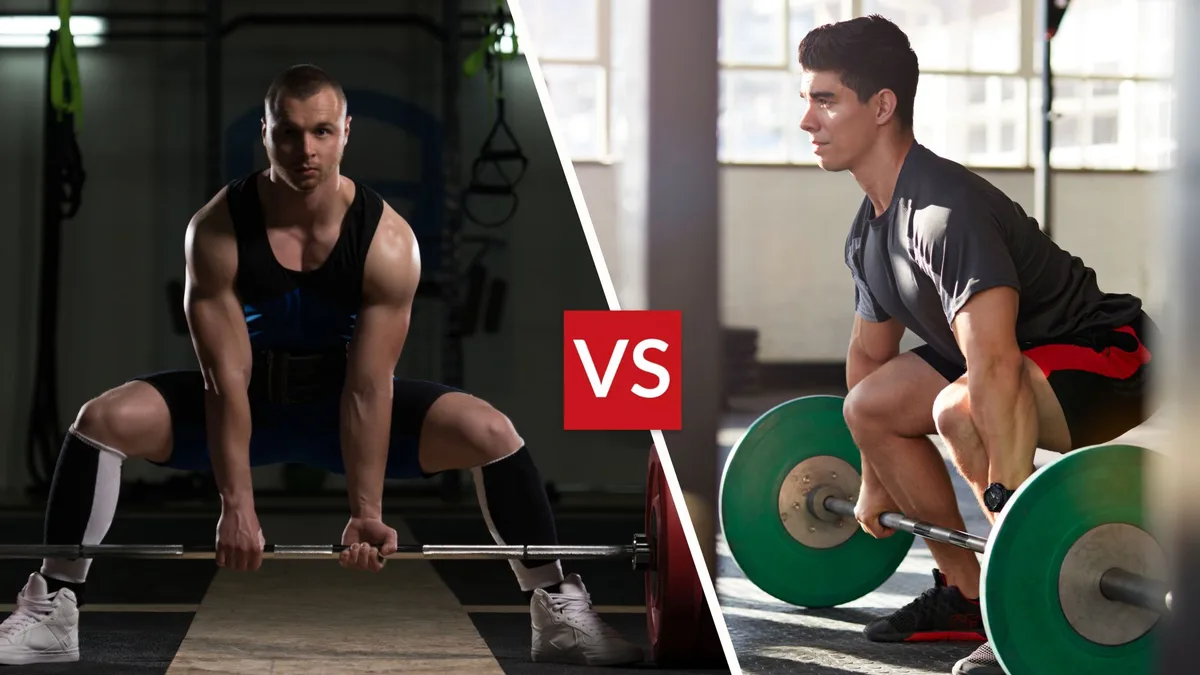
The fundamental difference lies in how you grip the bar and your initial posture. In a conventional deadlift, you stand outside a straight barbell, feet hip-width, shins close to the bar, and your hips are lower with a more pronounced forward lean. Your arms hang outside your legs.
For a trap bar deadlift, you stand inside the hexagonal bar, gripping handles at your sides. This allows for a higher hip position and a more upright torso, with your arms hanging directly at your sides.
Range of Motion and Bar Path
Because of the starting position and bar shape, the range of motion in a trap bar deadlift is generally shorter than in a conventional deadlift. The weight starts and finishes closer to your center of mass. This can lead to a feeling of greater efficiency.
The bar path in a conventional deadlift tends to be a straight vertical line. In a trap bar deadlift, the bar path is also largely vertical, but the handles can sometimes allow for a slightly different pull depending on individual mechanics.
Grip Variations and Their Impact
Conventional deadlifts offer more grip options. You can use an overhand grip, but for heavier weights, lifters often switch to a mixed grip (one palm facing forward, one facing backward) to prevent the bar from slipping. Some also use a double overhand hook grip.
Trap bar deadlifts typically use a neutral grip on the parallel handles, which is generally easier to hold and less demanding on the wrists and grip strength compared to lifting a straight barbell. This means grip is rarely the limiting factor in trap bar lifts.
Who Should Choose Which Deadlift?
Best For Building Max Overall Strength (Conventional)
If your primary goal is to build absolute maximal strength, particularly in your posterior chain, the conventional deadlift is often the preferred choice. Its mechanics are designed to load the hamstrings, glutes, and lower back to an extreme degree. For athletes focused on powerlifting or sports requiring immense pulling power from the floor, mastering the conventional deadlift is usually essential.
It's a true test of how much force your body can generate in a single, powerful movement.
Best For Beginners and Mobility Issues (Trap Bar)
For individuals new to deadlifting, or those struggling with limited hip or ankle mobility, the trap bar deadlift presents a much more forgiving entry point. The neutral grip and upright posture make it easier to learn the fundamental hip hinge pattern safely. If you find the starting position of a conventional deadlift uncomfortable or can’t achieve a flat back, the trap bar allows you to build foundational strength and confidence without the same technical demands.
You can learn how to deadlift with dumbbells if you're looking for lighter variations to start.
Best For Quad Emphasis and Lifting Heavier Loads (Trap Bar)
The trap bar deadlift often allows individuals to lift more weight than they can with conventional deadlifts. This is due to the biomechanics, which can resemble a squat more closely, and the superior grip facilitated by the handles. If your goal is to increase overall leg strength, particularly in the quads, and you want to handle heavier loads safely, the trap bar is an excellent option.
Many lifters find it helps them push their strength limits more effectively.
Best For Challenging Grip Strength (Conventional)
While trap bar deadlifts have a built-in advantage for grip, conventional deadlifts actively challenge and build grip strength. If developing a vice-like grip is a specific training goal, then conventional deadlifts are superior. The need to maintain an overhand or mixed grip under heavy loads directly trains the forearms and hand endurance.
Many athletes consider strong grip an essential component for overall strength and performance in various sports and activities.
Common Mistakes to Avoid with Both Lifts
Rounding the Back and Poor Bracing
One of the most critical mistakes with any deadlift is rounding the lower back. This puts excessive stress on the spinal discs and can lead to serious injury. Proper bracing, where you tighten your abdominal muscles as if preparing for a punch, is essential.
This creates intra-abdominal pressure, supporting your spine. If your back rounds significantly during the lift, it's a sign you're lifting too much weight, or your core stability and form need work.
Incomplete Lockout
Failing to achieve a full lockout at the top of the lift is another common error. This means not standing up completely straight with your hips and knees locked out, and your shoulders pulled back. It’s not just about getting the weight up; it’s about finishing the movement with control.
Leaving the lockout incomplete means you’re not fully engaging your posterior chain and can create an awkward position at the top.
Ego Lifting and Form Breakdown
Perhaps the biggest pitfall is ego lifting. This happens when you try to lift more weight than you can handle with good form, simply to impress or chase numbers. When form breaks down, that's when injuries occur.
It’s always better to use a lighter weight and perform the deadlift with perfect technique. This applies to both trap bar and conventional deadlifts; prioritize perfect execution over sheer poundage.
Expert Insights for Maximizing Your Deadlifts
Progressive Overload Strategies
To keep getting stronger, you need to progressively overload your muscles. This doesn't just mean adding more weight every session. You can also increase the number of repetitions, add an extra set, reduce rest times between sets, or focus on improving the quality of each rep.
For example, if you're conventional deadlifting 200 pounds for 5 reps, you might aim for 205 pounds for 5 reps next week, or perhaps do 210 pounds for 3 reps.
Incorporating Both Lifts
Many people find great benefit in incorporating both trap bar and conventional deadlifts into their training program. They can complement each other. You might use the conventional deadlift as your primary heavy pull, focusing on maximal strength and posterior chain development.
Then, you could use the trap bar deadlift for higher volume work, targeting quads and glutes, or as a less taxing accessory movement on a different day. This approach allows you to reap the benefits of both biomechanics.
Listening to Your Body
This is perhaps the most crucial expert tip. Your body will tell you what it can handle. If a particular lift causes sharp pain, or persistent soreness that doesn't subside, it's time to re-evaluate.
Maybe you need to reduce the weight, improve your form, or take a deload week. For example, if conventional deadlifts consistently aggravate your lower back, but trap bar deadlifts feel fine, that's a clear signal to lean more heavily on the trap bar. As of 2026, continued advancements in recovery protocols also support listening to these signals.
Frequently Asked Questions About Trap Bar vs. Conventional Deadlifts
Which Deadlift Is Harder?
The conventional deadlift is generally considered harder due to its technical demands, requiring greater mobility and strength in specific positions. It also typically allows for a longer range of motion and places more direct stress on the lower back and grip.
Can I Do Trap Bar Deadlifts if I Have Back Pain?
Many people with lower back pain find trap bar deadlifts more manageable. The neutral grip and upright torso reduce shear forces on the spine. However, it's always best to consult with a healthcare professional or physical therapist before starting any new exercise program if you have pre-existing pain.
Which Deadlift Is Better for Building Muscle Mass?
Both deadlift variations are excellent for building muscle mass, especially in the legs and posterior chain. Conventional deadlifts may be slightly superior for overall posterior chain hypertrophy due to the higher load and longer range of motion. Trap bar deadlifts are excellent for quad development.
How Do I Choose the Right Weight for Deadlifts?
Start with a weight that allows you to perform 5-8 repetitions with perfect form. If you can easily complete the target reps without struggling and maintaining good technique, the weight is too light. If you can barely complete the last rep or your form breaks down, it's too heavy.
Focus on progressive overload over time.
Final Verdict: Choosing Your Best Deadlift
Deciding whether trap bar or conventional deadlifts are "better" boils down to your individual circumstances and what you aim to achieve. If raw strength and challenging your posterior chain to its maximum capacity is the goal, the conventional deadlift is your champion. It demands more mobility and technical precision but offers unparalleled strength-building potential.
On the other hand, if you're new to lifting, have mobility limitations, or seek a movement that's generally kinder to the lower back while still building significant leg and glute strength, the trap bar deadlift is an outstanding choice. Its accessibility allows more people to engage in heavy lifting safely. Many athletes and fitness enthusiasts incorporate both lifts into their routines, using each for its unique benefits to build a well-rounded and powerful physique.

