
Image source: Bing (Web (fair-use with source credit))

Today's Exclusive Deals
Limited-time Exclusive Deals. Check current discount on Amazon.
Check Price on Amazon As an Amazon Associate I earn from qualifying purchases.Learning how to improve buoyancy control while scuba diving is key to unlocking a more enjoyable, efficient, and environmentally friendly underwater experience. Mastering this skill allows you to hover effortlessly, conserve air, and protect the fragile marine environments you're exploring. It’s the difference between feeling like you’re wrestling with your gear and feeling like a graceful part of the underwater world.
Manufacturer specifications for BCDs often highlight their role in buoyancy management, but achieving true neutral buoyancy requires more than just the right equipment. It’s about understanding how your body, your breath, and your gear interact. As of 2026, continuous training and focused practice remain the most effective methods for divers to refine these critical skills.
Quick Answer
Improve scuba diving buoyancy control by mastering your weight, adjusting your BCD precisely, and using your breath effectively. Start with proper weighting to achieve a slow descent. Add or remove tiny amounts of air in your BCD for fine-tuning.
Utilize slow, controlled breathing to make minor adjustments. Practice these steps in calm water to build muscle memory for better stability.
Why Buoyancy Control Is Your Dive Superpower
Think of buoyancy control as your superpower underwater. It’s not just about looking good; it’s fundamental to a safe, comfortable, and responsible dive. When you achieve neutral buoyancy, you become a silent, weightless observer in the underwater world.
You’re not fighting gravity to stay up, nor are you sinking uncontrollably.
This means you can hang motionless, making it easier to observe marine life without disturbing it. It also means you’re far less likely to accidentally kick up silt, which can ruin visibility for everyone, or damage delicate coral reefs and other sessile organisms. From a practical standpoint, efficient buoyancy control conserves your precious air supply, allowing you to stay underwater longer.
Achieving this state of effortless hovering is a goal for every diver, from beginner to seasoned pro.
Get Your Weighting Right: The Foundation of Float
Getting your weighting dialed in is the absolute bedrock of good buoyancy control. If you’re carrying too much weight, you’ll be fighting to stay neutral or will have to constantly dump air from your BCD, making fine-tuning impossible. If you’re under-weighted, you’ll be struggling to descend or might hover too high without realizing it.
The goal is to have just enough weight so that with a normal breath and your BCD holding minimal air, you sink slowly.
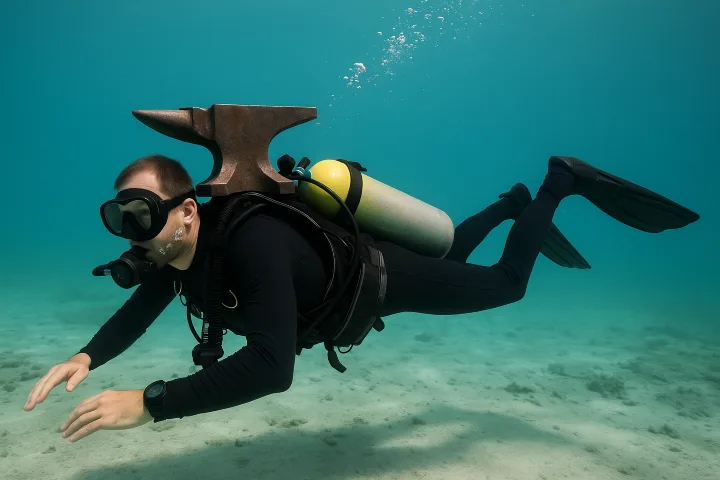
Image source: Web (Bing) / theintrovertraveler.com (Web image (fair-use with source credit))
This initial setup is crucial because all subsequent buoyancy adjustments rely on a correctly weighted base. For instance, manufacturer specifications for wetsuits often suggest the amount of additional weight needed based on thickness; a 5mm wetsuit typically requires more weight than a 3mm suit to achieve the same buoyancy profile. Getting this initial amount right means you won’t be constantly overcompensating with your BCD or breathing throughout the dive.
Choosing a best scuba diving weight belt that allows for easy adjustment can be helpful here.
The Barely Sink Test: Your First Buoyancy Check
This test is your go-to method for confirming your weighting, best performed in a controlled environment like a swimming pool or very shallow, calm water. It's designed to simulate the conditions at the start of your descent.
- Gear Up: Put on all your scuba gear exactly as you would for a regular dive: tank, regulator, BCD, weights, mask, fins, and exposure suit.
- Full Breath: Take a deep, full breath of air and hold it.
- Partial Exhale: Slowly exhale until you have about one-third of your lung capacity remaining. This is a critical step, you're not completely emptying your lungs, but reaching a point that mimics breathing normally at depth.
- Observe: At this point, you should be sinking very, very slowly. If you're sinking rapidly like a stone, you're too heavy. If you're easily staying suspended or even floating upwards, you're too light.
Adjust your weight system in small increments, adding or removing about 1 to 2 pounds (0.5 to 1 kg) at a time, and repeat the test until you achieve that slow, controlled sink. This method is based on the principle of Archimedes, where the upward buoyant force on an object submerged in a fluid equals the weight of the fluid displaced by the object. Proper weighting ensures that the downward force of your gear and body mass slightly exceeds the upward buoyant force only when your lungs are not fully inflated.
Master Your BCD: The Air-Adjusting Essential
Your Buoyancy Control Device (BCD) is your primary tool for fine-tuning your buoyancy once you're underwater. It's essentially an inflatable vest that allows you to add air to become more positively buoyant (float higher) or release air to become more negatively buoyant (sink). The key to mastering it isn't about how much air you add or release, but how subtly you do it.
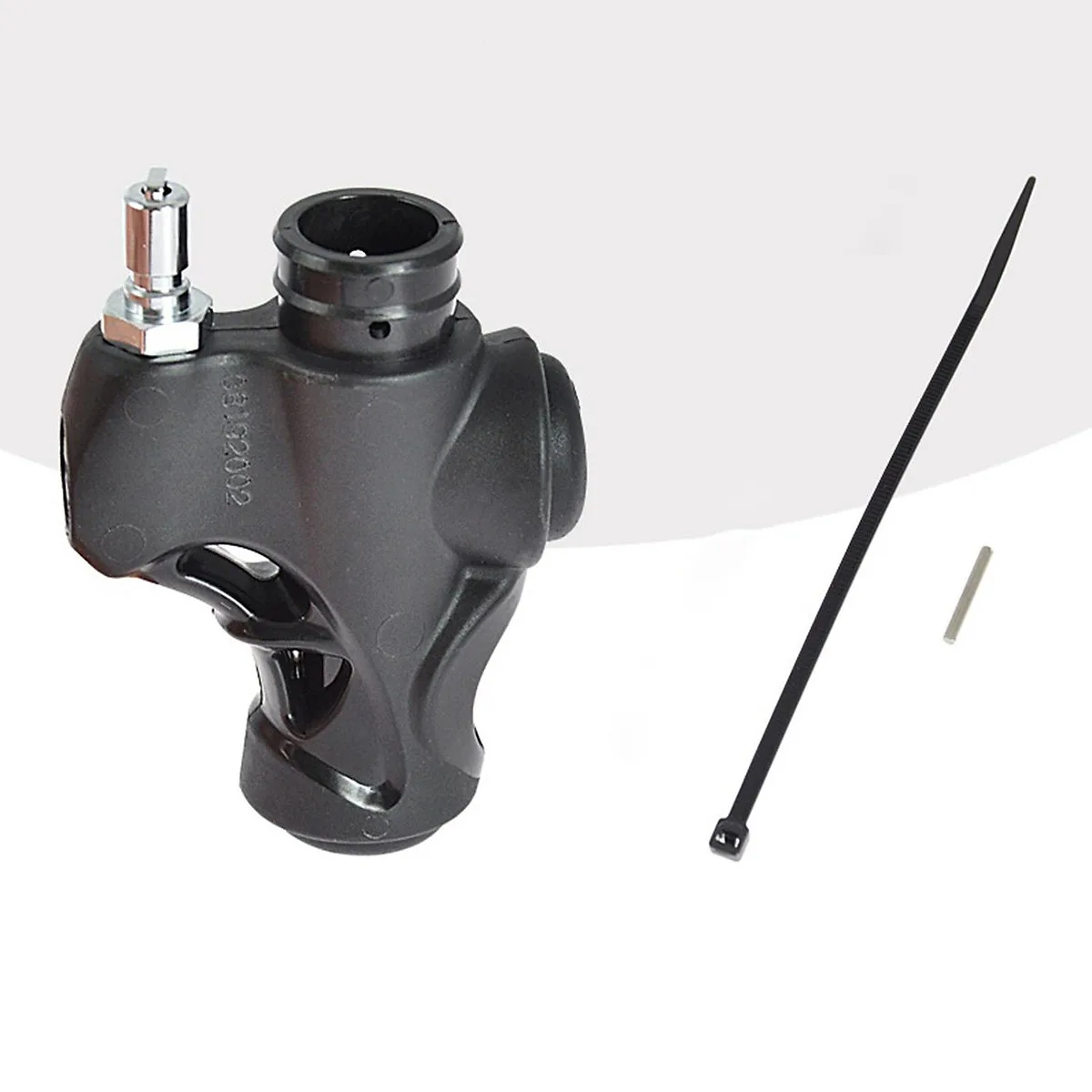
Image source: Web (Bing) / e3audiomiennam.com (Web image (fair-use with source credit))
Think of your BCD as a very sensitive thermostat for your depth. You're not trying to make huge temperature swings; you're making tiny adjustments to keep things perfectly stable. Many modern BCDs, like those reviewed for best scuba diving BCDs, offer efficient inflation and deflation mechanisms designed for this precision.
The goal is to reach a point where you can hover motionless mid-water, using minimal puffs of air from your inflator and tiny releases from your deflator.
Tiny Puffs, Big Difference: BCD Control Practice
This practice is best done in shallow, calm water, like a pool or a protected cove, where you can focus without worrying about currents or depth. It’s all about developing a feel for your BCD and how it responds to small inputs.
- Establish Neutrality: First, get as close to neutral buoyancy as you can using your weighting and breath control.
- Minute Adjustments: If you notice yourself sinking slightly, press the BCD inflator button for just one second. If you start to rise too much, press the low-pressure inflator (LP) oral inflator or power inflator deflator button for just one second.
- Observe and React: Continue making these tiny adjustments. The goal isn't to find a perfect static position immediately, but to develop the muscle memory and awareness of how even a small amount of air impacts your buoyancy.
- Hovering Focus: Once you're comfortable with these small inputs, try to hold yourself perfectly still mid-water for a sustained period. This means your BCD adjustments should be infrequent and small.
This constant, subtle adjustment is what separates a struggling diver from a proficient one. It’s about constantly sensing your position and making micro-corrections. Mastering these subtle BCD inputs will also help when you're choosing best scuba diving fins for strong currents because good buoyancy means you won't have to rely on fin power to stay put.
Breathing Your Way to Neutrality
Your lungs are a powerful, built-in buoyancy tool. Consciously using your breath can make fine-tuning your depth and hover almost effortless, working in tandem with your BCD. It's a common misconception that you should always breathe normally; understanding how your breath cycle affects buoyancy is key.
When you inhale deeply, your chest cavity expands, and the air in your lungs takes up more volume. This added volume increases your overall buoyancy, causing you to rise slightly. Conversely, when you exhale fully, you reduce your volume and therefore your buoyancy, causing you to sink slightly.
This natural process is something you can learn to control.
The objective isn't to hold your breath, that's a critical safety no-no in scuba diving. Instead, it's about controlling the pace and depth of your normal breathing. By taking slow, deep breaths when you need to rise slightly and exhaling more fully when you need to sink a bit, you can make subtle, continuous corrections without even touching your BCD.
This technique is essential for maintaining a stable position, especially when observing marine life or taking underwater photos, where a steady platform is crucial for best scuba diving cameras.
The Descent: Starting Your Dive with Control
A controlled descent is your first opportunity to practice buoyancy management on any dive. It’s not about rapidly dropping to the bottom; it’s about managing your descent rate to reach your target depth comfortably and with the right amount of air in your BCD. A common benchmark for well-weighted divers is to be neutrally buoyant at around 15-20 feet (5-6 meters) with approximately half a tank of air remaining.
Here's how to approach it:
- Pre-Dive Prep: Ensure you've completed your weight check and have the appropriate amount of weight for the dive conditions (e.g., saltwater vs. freshwater, exposure suit thickness).
- Flood Your BCD: At the surface, completely empty your BCD of air.
- Initiate Descent: Take a normal breath. As you begin to exhale, press the low-pressure inflator (LP) oral inflator or power inflator deflator button to release a small amount of air from your BCD.
- Monitor and Adjust: Watch your depth gauge and feel your descent. If you're descending too quickly, stop releasing air or even add a tiny puff. If you're not descending, exhale more or release slightly more air.
- Reach the Benchmark: Aim to reach your target depth (e.g., 15-20 feet) with about half your air remaining and feel yourself becoming neutrally buoyant. If you consistently overshoot or undershoot this, it’s a strong indicator that your weighting needs adjustment for your next dive.
This controlled approach not only conserves energy but also allows your ears to equalize properly, preventing discomfort or injury. It sets a positive tone for the rest of your dive, reinforcing good habits. Getting this right means you won't have to fight your buoyancy later, which is especially helpful if you're using gear like a best scuba diving regulator for beginners that provides reliable air delivery.
Mid-Dive Hovering: Staying Steady and Still
Once you've descended and are exploring, the ability to hover in mid-water is a sign of excellent buoyancy control. This isn't about kicking your fins to stay in place; it's about achieving a state where you are neither sinking nor rising, and you can hold that position with minimal effort. This is where the synergy between your BCD and breath control truly shines.
To achieve a hover:
- Sense Your Position: Pay attention to whether you are slowly sinking or rising.
- BCD Micro-Adjustments: If you're sinking, add a very small puff of air to your BCD using the low-pressure inflator. If you're rising, release a tiny bit of air. Remember, we're talking about seconds of inflation/deflation, not long blasts.
- Breath Control for Fine-Tuning: Use slow, controlled breaths to make even finer adjustments. A slightly deeper inhale can cause a gentle rise, while a more complete exhale can initiate a slow descent.
- Minimize Fin Use: Avoid "hovering" by constantly sculling with your fins. This is inefficient and can stir up the bottom. Instead, aim to be so neutrally buoyant that you barely need to move your fins to maintain your position.
This skill is invaluable for many aspects of diving, from photography, where a steady platform is essential for sharp images, to simply resting and observing. It’s a hallmark of a diver who truly understands their equipment and their body's interaction with the water. Properly balanced buoyancy also means you're less likely to drag gear like your best scuba diving gear bag across the seabed accidentally.