
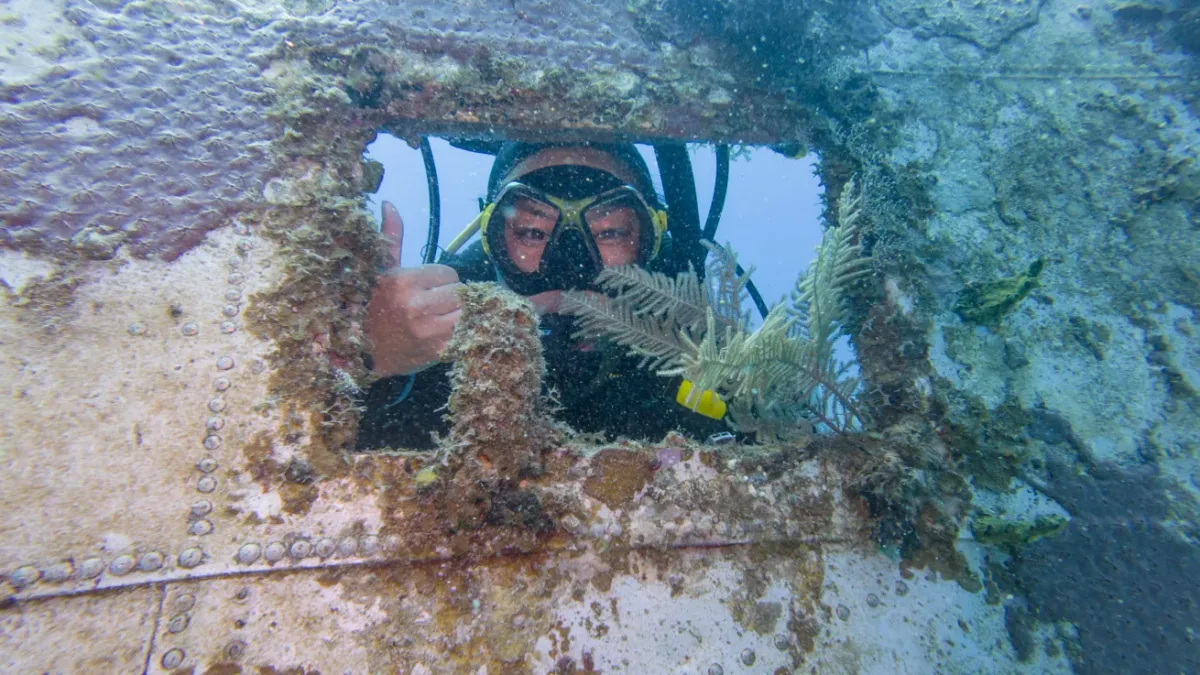
Image source: Bing (Web (fair-use with source credit))

Today's Exclusive Deals
Limited-time Exclusive Deals. Check current discount on Amazon.
Check Price on Amazon As an Amazon Associate I earn from qualifying purchases.Planning a dive trip often means thinking about plane tickets, too. You've probably seen the ads for incredible dive destinations and imagined yourself exploring vibrant coral reefs. But before you book that flight, a crucial question looms: how long should you wait to fly after scuba diving?
It's not just a suggestion; it's a vital safety consideration that directly impacts your well-being.
Ignoring this waiting period can lead to serious health issues. The primary concern is decompression sickness (DCS), commonly known as "the bends," which occurs when dissolved nitrogen in your tissues forms bubbles during ascent to lower pressure environments like an airplane cabin. Adhering to recommended surface intervals, like the commonly cited minimum of 12 hours after a single no-decompression dive, significantly reduces this risk.
The Real Risk: Why Flying After Diving Needs a Wait
When you dive, your body absorbs nitrogen from the breathing gas under pressure. Think of it like a soda bottle being shaken up; the gas wants to escape. As you ascend from a dive, the pressure decreases, and this dissolved nitrogen starts to come out of solution.
If you ascend too quickly, or if your body hasn't had enough time to off-gas this nitrogen, it can form bubbles in your tissues and bloodstream. This is decompression sickness (DCS).
Now, imagine going from sea level pressure to the significantly lower pressure of an airplane cabin. This rapid pressure change can exacerbate the problem, turning tiny, harmless bubbles into larger, painful, or even dangerous ones. It’s why organizations like Divers Alert Network (DAN) have put extensive research into establishing safe flying guidelines after diving.
As of 2026, their recommendations are still the gold standard for recreational divers.

Quick Answer: How Long is the Magic Number?
Wait at least 12 hours after a single, no-decompression dive. For multiple dives per day or multi-day diving, extend this to a minimum of 18 hours. Flying sooner increases DCS risk.
Understanding Nitrogen: What Your Body Does After a Dive
During a scuba dive, you're breathing a gas mixture (usually air, which is about 79% nitrogen) under increased pressure. Your body tissues absorb this nitrogen over time. The deeper you go and the longer you stay down, the more nitrogen your body takes in.
It's a gradual process, and your body can handle a certain amount of dissolved nitrogen.
The key to avoiding DCS lies in how effectively your body can release this excess nitrogen after your dive. This process happens during the surface interval, the time you spend on the surface between dives, and crucially, before you get on a plane. A sufficient surface interval allows your body to expel the accumulated nitrogen safely through your lungs.
If this off-gassing period is cut short, especially before a significant pressure change, the risk of bubble formation increases dramatically.
Dive Profiles and Their Impact on Your Wait Time
Not all dives are created equal, and neither are the wait times required before flying. Your dive profile, essentially, the depth and duration of your dives, directly influences how much nitrogen your body has absorbed and how long it needs to recover. This is why guidelines often differentiate between types of dives.
Single Dives vs. Repetitive Dives
A single dive, especially a shallow one, results in less nitrogen absorption than making multiple dives over the same day. When you dive again without adequate surface time, the nitrogen from the first dive hasn't fully cleared, and you're starting to absorb more on top of what's already there. This cumulative effect means you need a longer waiting period before flying.
After a single, shallow dive, the minimum wait might be 12 hours. However, after two or more dives in a single day, that minimum jumps to 18 hours, as per standard recreational diving protocols.
Decompression Dives vs. No-Decompression Dives
This is a critical distinction. Most recreational diving stays within "no-decompression limits" (NDLs). This means you can ascend directly to the surface without needing mandatory decompression stops.
However, if your dive plan takes you beyond these limits, you must perform decompression stops at specific depths on your way up to allow for controlled nitrogen off-gassing.
If you've performed a dive requiring decompression stops, your body has absorbed significantly more nitrogen. Consequently, the post-dive flying interval is longer. While specific timings can vary based on the exact profile, a general rule of thumb is that any dive involving decompression stops requires a considerably longer wait before flying, often upwards of 24 hours or more, to ensure safety.
Your dive computer plays a vital role here in tracking these limits precisely.
The Science Behind the Surface Interval Recommendations
Those recommended waiting times aren't arbitrary numbers pulled out of a hat. They're the result of decades of research, physiological studies, and real-world incident analysis. The foundation of these recommendations lies in understanding how gases behave under pressure, a principle described by Boyle's Law and Henry's Law.
Henry's Law, for example, states that the amount of gas dissolved in a liquid is directly proportional to the partial pressure of that gas above the liquid. In diving terms, the higher the ambient pressure (deeper water), the more nitrogen dissolves into your blood and tissues. When you ascend, the ambient pressure drops, and for the dissolved nitrogen to safely come out of solution, it needs a gradual process to avoid forming bubbles.

Organizations like Divers Alert Network (DAN) continuously collect data and refine these guidelines. They analyze reported incidents of DCS and conduct scientific studies to determine safe ascent rates and necessary surface intervals. Their findings are often translated into algorithms used by dive computers and printed on dive tables, forming the basis for what divers and instructors teach worldwide.
DAN's research underpins the generally accepted 12-hour minimum for a single no-decompression dive and 18 hours for multiple dives or deco dives.
When Can You Safely Head to the Airport?
Deciding when you're good to go for air travel after diving depends on a few key factors. It's not a one-size-fits-all answer, and understanding these variables is crucial for making a safe decision. Your dive plan, how many dives you did, and the depth of those dives all play a role.
DAN's Guidelines: A Standard Approach
Divers Alert Network (DAN) provides widely accepted guidelines for flying after diving. These are based on extensive research into DCS.
- Single No-Decompression Dive: A minimum surface interval of 12 hours is recommended before flying.
- Multiple Dives per Day or Multi-Day Dives: A minimum surface interval of 18 hours is recommended before flying.
- Dives Requiring Decompression Stops: A minimum surface interval of 24 hours is recommended before flying.
These are minimums. If you've had particularly strenuous dives, dived in colder water, or are feeling fatigued, it's always wise to extend your surface interval even further. DAN also notes that these are for flying at typical commercial aircraft cabin altitudes (around 6,000-8,000 feet).
Flying at higher altitudes or in unpressurized aircraft requires even longer waiting periods. For accurate dive planning and equipment choices, consider a reliable scuba diving computer.
Dive Computer Recommendations: Your Personal Watchdog
Modern dive computers do more than just track depth and time; they are sophisticated instruments that calculate your nitrogen loading in real-time. Based on your dive profiles, they continuously update your "no-fly time." This is usually displayed directly on the computer's screen and takes into account your recent dive history.
When a dive computer indicates a "no-fly" status, it means it has calculated that your nitrogen levels are too high for safe air travel at that moment. Ignoring this warning is a significant risk. For divers who regularly use dive computers, this is often the most practical and reliable way to monitor their personal readiness for flying.
They are programmed with algorithms that incorporate the principles of dive physiology and the latest research, often exceeding the basic guidelines. You can learn more about the underlying principles of safe dive computer usage by visiting the official Divers Alert Network (DAN) website.
Step-by-Step Process: Planning Your Post-Dive Travel
Putting this knowledge into practice means planning ahead. Once you know your dive schedule, you can strategically book your flights. If you plan to dive multiple times on your last day of vacation, a late evening flight or an early morning flight the day after your last dive is often the safest bet.
Always factor in buffer time. A travel delay is one thing, but a health emergency from rushing to catch a flight is far worse.
Here’s a simple way to think about it:
- Day 1 Dives:
- Single, no-decompression dive: Minimum 12 hours surface interval before flying.
- Multiple dives or a deco dive: Minimum 18-24 hours surface interval before flying.
- Last Day of Diving:
- Plan your flight for at least 18 hours (for multiple/deco dives) after your last dive. Ideally, 24 hours offers more safety margin.
Don't forget to check your dive computer for its specific "no-fly" indication. It's your most reliable guide for personalized safety. For divers planning extensive trips, consider packing a reliable scuba diving gear bag that makes organizing and protecting your equipment easy, especially if you're on the move between dive sites and airports.
Common Mistakes Divers Make That Put Them at Risk
Despite the clear guidelines, some divers still cut their surface intervals too short. One common mistake is miscalculating the total nitrogen load, especially after a multi-day diving trip where many dives have occurred. People might only think about the last dive rather than the cumulative effect of all dives.
Another error is confusing the surface interval between dives with the surface interval required before flying.
Overestimating your body's ability to off-gas nitrogen is also a pitfall. Factors like fatigue, dehydration, or even alcohol consumption can impair your body's ability to eliminate nitrogen efficiently. Therefore, relying solely on the absolute minimum wait times without considering your personal condition or external factors can be risky.
It’s always better to err on the side of caution.
Signs You Might Be Experiencing Decompression Sickness
Recognizing the symptoms of DCS is crucial for immediate action. These symptoms can range from mild to severe and might not appear immediately after landing; sometimes, they can emerge hours later. Joint pain, particularly in the shoulders, elbows, and knees, is a hallmark symptom.
You might also experience skin rashes, dizziness, or a persistent headache.
Neurological symptoms are more serious and can include numbness, tingling, weakness in limbs, difficulty walking, or even vision disturbances. Fatigue, nausea, and shortness of breath can also be indicators. If you experience any of these symptoms after diving and before flying, or shortly after, it's imperative to seek medical attention immediately.
Inform medical personnel that you have been scuba diving.
What to Do If You Suspect DCS
If you suspect you have DCS, the first and most important step is to contact emergency medical services. Do not delay. It's also advisable to alert your dive operator if you're still at a dive resort.
- Hydrate: Drink plenty of water, but avoid caffeine and alcohol.
- Rest: Lie down and stay warm.
- Seek Oxygen: Administering 100% oxygen can help reduce bubble size and symptoms. This is often available through emergency services or dive operators.
- Get to a Hyperbaric Chamber: Recompression therapy in a hyperbaric chamber is the primary treatment for DCS and must be administered by medical professionals. Prompt treatment is key to a full recovery.
FAQ: Your Burning Questions About Diving and Flying Answered
What is the most important factor determining flight wait time?
The total amount of nitrogen your body has absorbed from diving is the most critical factor. This is directly influenced by dive depth, duration, and the number of dives performed.
Can I fly immediately after a very shallow, short dive?
Generally, no. Even a very shallow, short dive introduces some nitrogen. Most guidelines still recommend at least a few hours, if not a full day, depending on the specific profile and whether it was part of multiple dives.
Does drinking alcohol before flying after diving increase risk?
Yes, significantly. Alcohol can impair your body's ability to off-gas nitrogen and also contribute to dehydration, both of which increase the risk of DCS. It’s best to avoid alcohol entirely until well after your surface interval is complete.
What if my dive computer says I can fly sooner than the guidelines?
Dive computers are sophisticated, but the guidelines are based on averages. If your computer suggests a shorter wait than standard recommendations (e.g., 12 hours for a single dive), it’s often safer to stick with the longer, more conservative interval, especially if you're unsure about any specific dive factors.
Are these guidelines the same for freediving?
No. Freediving does not involve breathing compressed gas under pressure, so the risk of nitrogen-related decompression sickness is not present. Therefore, there are no specific waiting periods required before flying after freediving.
Final Recommendation: Prioritize Safety Above All
When it comes to flying after scuba diving, the message is clear: patience and planning are your best allies. The potential consequences of rushing can be severe, ranging from uncomfortable symptoms to life-threatening decompression sickness. Adhering to the established guidelines from organizations like DAN, and always paying attention to your dive computer's recommendations, ensures you can enjoy your underwater adventures and travel home safely.
Always remember that an extra day on land is a small price to pay for your long-term health and safety as a diver.