
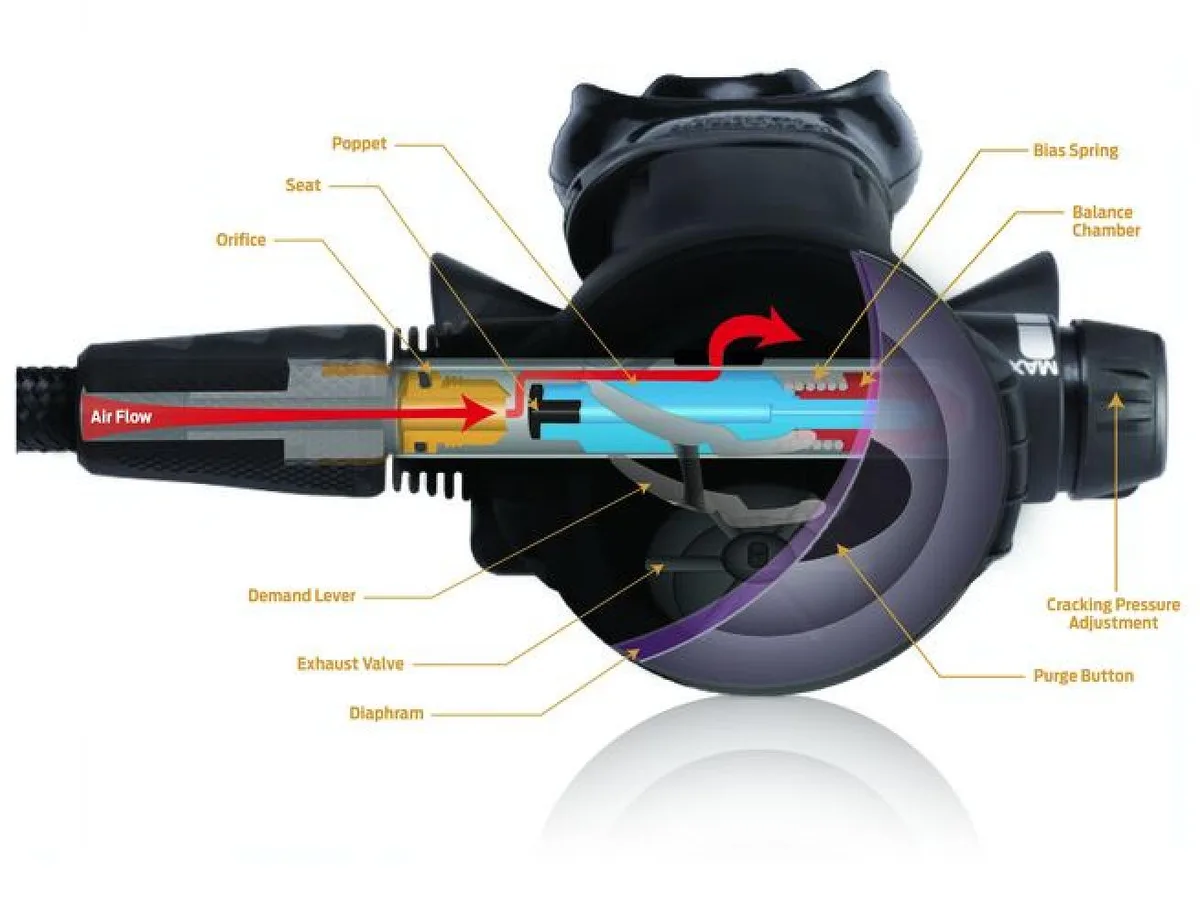
Image source: Web (Bing) / dev.scubadiving.com (Web image (fair-use with source credit))

Today's Exclusive Deals
Limited-time Exclusive Deals. Check current discount on Amazon.
Check Price on Amazon As an Amazon Associate I earn from qualifying purchases.Ever taken a breath underwater and wondered about the complex system that makes it possible? Your scuba regulator is the ingenious device that converts high-pressure tank air into breathable air, allowing you to explore the underwater world. It’s a critical piece of equipment designed for safety and comfort, ensuring you can inhale easily at any depth.
Understanding how this technology works involves looking at its core components and their precise functions. While specific models vary, the fundamental principles behind pressure reduction remain consistent across the industry, adhering to standards like those set by the CGA (Compressed Gas Association). Let's dive into the mechanics that make underwater breathing a reality.
Quick Answer
A scuba diving regulator works by reducing high-pressure air from a tank to ambient water pressure. It uses a two-stage system: the first stage lowers tank pressure to an intermediate level, and the second stage further reduces this to the surrounding water pressure, allowing easy inhalation. Essential components include the first and second stages, a submersible pressure gauge, and an alternate air source.
The Two-Stage Heart of Your Regulator: First and Second Stages Explained
The magic behind breathing underwater lies in your regulator's two-stage design. This system systematically lowers the immense pressure from your scuba tank to a level you can comfortably and safely inhale. Think of it as a carefully controlled cascade, where each stage handles a specific part of the pressure reduction process.
What the First Stage Does: Tank to Intermediate Pressure
The first stage is the part that directly attaches to your scuba tank valve. Its primary job is to take the incredibly high-pressure air stored in the tank, often exceeding 3000 PSI (200 bar), and reduce it to a much lower, but still elevated, "intermediate pressure." This intermediate pressure is consistent and much easier for the second stage to handle.
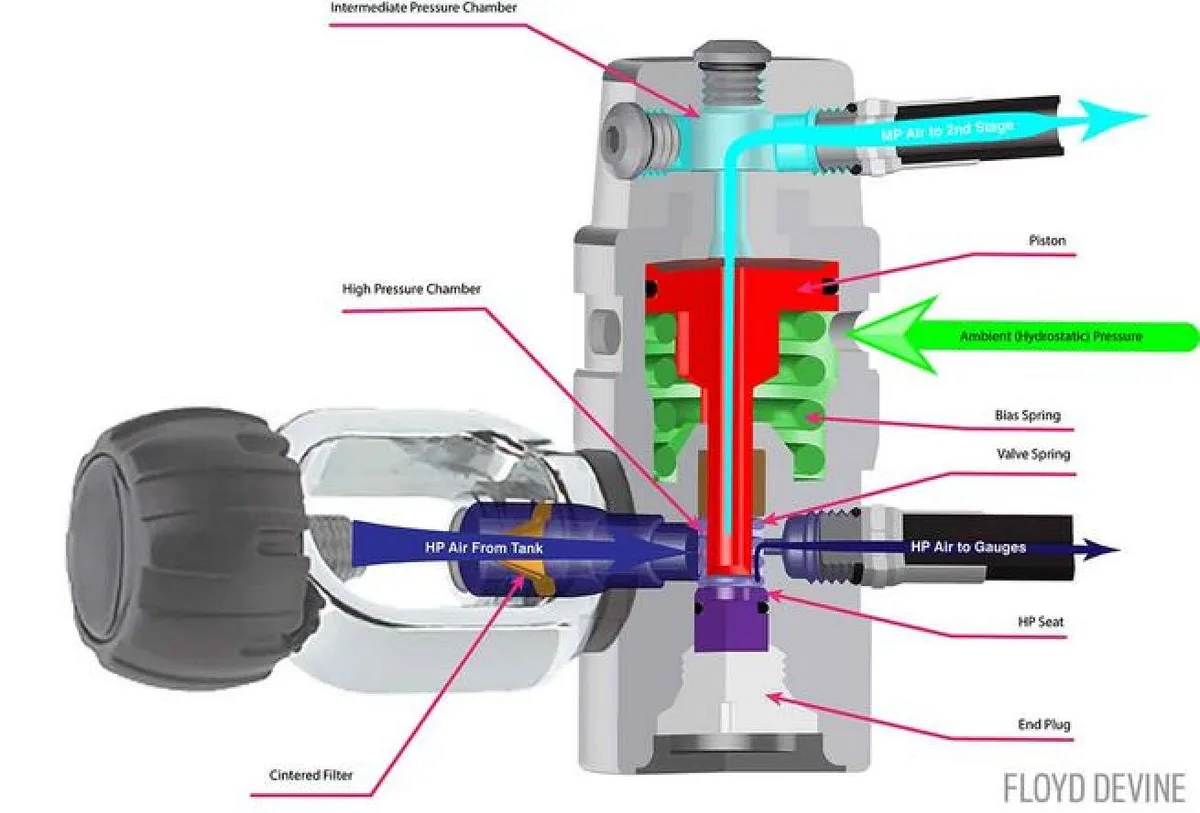
Image source: Web (Bing) / scubadiving.com (Web image (fair-use with source credit))
Manufacturer specifications for first stages confirm they typically reduce tank pressure down to around 120-150 PSI (8-10 bar). This is achieved through a spring-loaded valve mechanism controlled by a diaphragm. When you inhale, the demand for air creates a slight vacuum inside the first stage.
This vacuum pulls on the diaphragm, which in turn opens the main valve, allowing high-pressure air from the tank to flow through. As the air passes the valve, its pressure is significantly lowered before it exits the first stage and travels through a hose to the second stage. The design ensures that this intermediate pressure remains stable, regardless of your tank's remaining air supply or the surrounding water pressure.
What the Second Stage Does: Intermediate to Breathable Pressure
The second stage is what you actually put in your mouth. Its critical function is to take that intermediate-pressure air delivered by the first stage and reduce it further, down to the exact pressure of the water surrounding you, what we call ambient pressure. This ensures that breathing feels natural and requires minimal effort, whether you're near the surface or at your maximum dive depth.
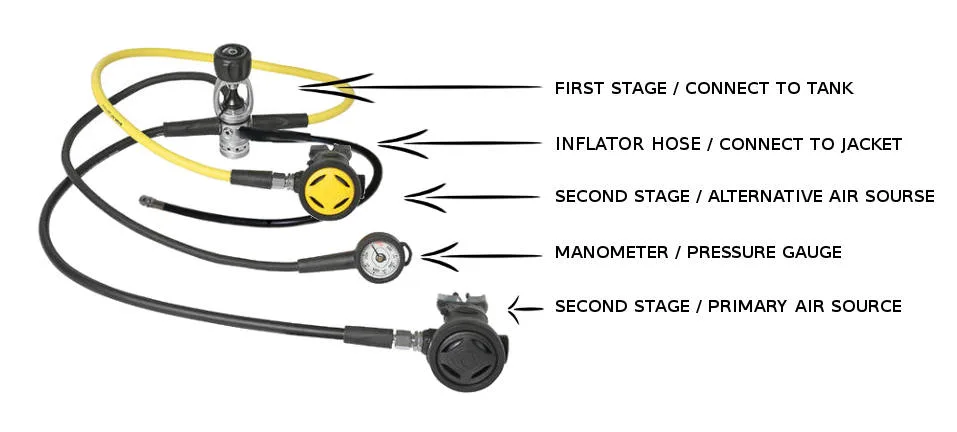
Image source: Web (Bing) / zensem.com (Web image (fair-use with source credit))
This stage also features a diaphragm and a lever system. When you take a breath, the suction you create pulls on the diaphragm. This movement activates a lever, which opens a valve, allowing the intermediate-pressure air to flow from the first stage into the second stage.
As this air enters the second stage, it expands into the larger chamber, and its pressure drops to match the external water pressure. This process makes the air easy to inhale. When you exhale, your exhaled breath is directed out through a separate purge valve, preventing it from contaminating the incoming air.
The efficiency of this system is crucial; as of 2026, regulatory testing standards emphasize consistent delivery and low breathing resistance across a range of depths.
The Essential Extras: SPG, Octopus, and BCD Inflator
While the first and second stages handle your primary breathing needs, a complete regulator setup includes other vital components that contribute significantly to your safety and comfort underwater. These accessories are connected to the first stage via hoses and ensure you have essential information and backup capabilities.
- Submersible Pressure Gauge (SPG): This is your most crucial gauge. It’s a small, robust dial or digital readout connected to the first stage via a high-pressure hose. The SPG tells you exactly how much air is left in your tank. Consistent monitoring of your SPG is a fundamental safety practice in scuba diving, preventing you from running out of air unexpectedly.
- Alternate Air Source (Octopus): This is essentially a second, usually yellow-colored, second stage regulator. It’s connected to the first stage via a medium-pressure hose. The octopus provides a backup breathing source for you or, more commonly, for a buddy who may have a problem with their own regulator. It operates on the same principle of pressure reduction as your primary second stage.
- Low-Pressure Inflator Hose: This hose connects to your Buoyancy Control Device (BCD). It uses intermediate-pressure air from the first stage to inflate and deflate your BCD, allowing you to control your buoyancy for ascending, descending, and hovering underwater.
Together, these components form a comprehensive life support system, ensuring you not only breathe but also manage your position and have a safety net. You can explore options for related gear in our guide to best scuba diving gear for beginners 2026.
Why Visuals are Key to Understanding Regulator Mechanics
To truly grasp how a scuba regulator works, visualizing its internal mechanisms is incredibly helpful. While we can describe the flow of air and the pressure changes in text, seeing how the diaphragms, valves, and levers interact makes the process click. Diagrams and detailed illustrations are instrumental in showing the sequential steps and the physical movement of parts.
For instance, imagine a cross-section of the first stage. You'd see how the tank valve connects, how air enters the chamber, and how the diaphragm flexes to open the primary valve. Similarly, a visual representation of the second stage would clearly show how your inhale pulls on the diaphragm, actuating the lever to release air from the intermediate-pressure hose.
These visuals help explain why breathing is easy, it’s not just air magically appearing, but a system responding directly to your breath. When researching best scuba diving regulator for beginners 2026, you’ll often find diagrams included that highlight these working parts.
Common Regulator Concerns for Divers
Even with robust engineering, divers can encounter issues with their regulators. Understanding these common problems can help you recognize when something might be wrong and what to do about it. Most of these relate to the complex interplay of pressure, seals, and moving parts within the regulator.
- Free-Flow: This is when the second stage regulator continuously releases air uncontrollably, creating a strong stream of bubbles. It can happen if the second stage is accidentally triggered (e.g., by surge or impact) or if there's an internal issue with the first or second stage valve. If your regulator free-flows, it’s critical to try and stop it by either turning off your tank valve or inverting the second stage, then ascending and seeking professional help.
- Difficulty Breathing: If you feel like you're working much harder than normal to get a breath, or if the air flow feels restricted, it could indicate a problem. This might be due to a partially closed tank valve, a blocked intermediate hose, or a malfunction in either the first or second stage. This symptom requires immediate attention and a controlled ascent if underwater.
- Leaking: Any audible hissing sound from your regulator usually indicates a leak. This could be a faulty O-ring on the first stage connection, a problem with the hose fittings, or an issue with the second stage valve or mouthpiece. Small leaks are often manageable for a short period but should be addressed by a technician.
Regular servicing by a certified technician is the best way to prevent these issues. For example, per industry standards, regulators typically require servicing by authorized technicians every 1-2 years or after a set number of dives to ensure optimal performance and safety.
Expert Tips for Regulator Use and Care
Keeping your regulator in top condition is vital for safety and performance. A well-maintained regulator ensures reliable air delivery on every dive. Proper care starts from the moment you unpack it and continues through its entire service life.
- Rinse Thoroughly After Every Dive: Immediately after exiting the water, give your regulator a thorough freshwater rinse, especially the second stage. Ensure water gets inside the mouthpiece and purge button area. This washes away salt, sand, and chlorine, which can corrode internal components and damage seals.
- Dry Properly: After rinsing, hang your regulator in a cool, shaded place to air dry completely. Avoid direct sunlight, as UV rays can degrade rubber and plastic parts over time. Ensure the first stage dust cap is securely in place to prevent debris from entering the intake orifice.
- Store Carefully: When storing your regulator long-term, use a regulator bag designed to protect it. Keep it away from sources of ozone, such as electric motors or certain chemicals, as ozone can degrade rubber. Ensure the first stage dust cap is always on when not connected to a tank.
- Annual Servicing: Manufacturer specifications and diving safety guidelines strongly recommend having your regulator professionally serviced by a certified technician at least once a year, or after a set number of dives (often 100-150 dives). This ensures internal parts are cleaned, lubricated, and replaced if necessary, maintaining optimal breathing performance and safety. For example, brands like Scubapro and Aqua Lung outline specific service intervals in their manuals.
Maintenance: Keeping Your Regulator Dive-Ready
Regular maintenance is non-negotiable for any piece of life-support equipment. Your regulator is no exception. Neglecting maintenance can lead to costly repairs and, more importantly, dangerous malfunctions underwater.
Pre-Dive Checks: What to Look For
Before every dive, perform a quick check of your regulator system. Ensure your Scuba Diving Mask for Beginners 2026: Top Picks for Easy Underwater Exploration and fins are also in good working order.
- Visual Inspection: Look for any obvious signs of damage, such as cracks, cuts, or abrasions on hoses, the mouthpiece, or the housing of the first and second stages.
- Connection Check: Ensure the first stage is securely attached to the tank valve and that the O-ring is intact and properly seated. A damaged O-ring is a common cause of leaks.
- Breathing Test: Connect the regulator to a tank with air. Turn the tank valve on slowly. Listen for any hissing sounds indicating a leak. Take a few deep breaths. The air should flow easily, and the second stage should not free-flow.
- SPG Function: Verify that your submersible pressure gauge (SPG) is reading the correct tank pressure and that the needle moves smoothly.
Post-Dive Care: The Rinse and Repeat
The rinsing procedure after diving is critical. Saltwater is corrosive, and sand can clog delicate internal mechanisms. Always rinse the regulator thoroughly with fresh, clean water.
Pay special attention to the second stage, gently pressing the purge button while rinsing to ensure water flushes through the internal valve and out the exhaust ports.
After rinsing, gently shake off excess water. Some divers prefer to leave the first stage dust cap off until the regulator is completely dry to prevent moisture from being trapped inside. Proper drying and storage are just as important as the initial rinse.
Avoid storing your regulator in direct sunlight or extreme temperatures, which can degrade the materials.
How a Regulator Handles Different Depths
Your scuba regulator is designed to deliver breathable air consistently, regardless of how deep you are. This is one of its most impressive engineering feats, as the pressure of the water surrounding you changes significantly with depth. The regulator automatically adjusts the air pressure it delivers to match these changing conditions.
At the surface, the ambient pressure is about 1 atmosphere (ATM). As you descend, this pressure increases by 1 ATM for every 10 meters (approximately 33 feet) of depth. For example, at 30 meters (about 100 feet), the ambient pressure is 4 ATM.
Your regulator's second stage actively responds to this external pressure.
Ambient Pressure and Breathing
The second stage contains a diaphragm that is exposed to the surrounding water pressure. When you inhale, you create a slight vacuum in the second stage. This vacuum pulls on the diaphragm, which, in turn, opens the second stage valve.
The amount the valve opens is precisely controlled to allow just enough intermediate-pressure air to flow in until the pressure inside the second stage equals the external water pressure.
This means that whether you are at 5 meters or 30 meters, the air you inhale from the regulator is always at the same pressure as the water around you. This automatic adjustment is what makes breathing feel so natural and effortless, allowing you to focus on your dive without struggling against the water's increasing pressure.
Safety First: Using Your Regulator Responsibly
Using a scuba regulator responsibly is paramount for your safety and the safety of those around you. Because it's a life-support device, understanding its limitations and following best practices is crucial. This involves proper handling, routine checks, and knowing what to do in case of a problem.
- Always Check Your SPG: This can't be stressed enough. Regularly glance at your submersible pressure gauge (SPG) throughout the dive. Know your tank's starting pressure and monitor your consumption. A common guideline is to ascend when you reach a certain reserve pressure (e.g., 500 PSI or 50 bar), but this can vary based on dive plan and conditions. Consider a reliable Scuba Diving Computer 2026: Top Picks for Safe Underwater Adventures to help track this.
- Buddy Check: Before every dive, conduct a thorough buddy check, which includes verifying each other's regulator function. This involves confirming you can both breathe comfortably from your primary and alternate air sources and checking each other’s SPGs.
- Controlled Ascents: If you experience a regulator malfunction underwater, the immediate priority is to maintain breathing and perform a controlled ascent. If your regulator free-flows, try to stop it. If breathing is difficult, you may need to share air with a buddy using their octopus. In an emergency, use your Scuba Diving Surface Marker Buoy to signal for assistance.
- Professional Servicing: As mentioned, regular professional servicing is key. A technician can identify issues that you might not see or feel, ensuring your regulator meets manufacturer standards and safety requirements. Unserviced regulators are a significant risk factor.
Frequently Asked Questions
How often should I get my regulator serviced?
Manufacturer specifications and safety guidelines generally recommend professional servicing of your scuba regulator every one to two years, or after approximately 100-150 dives, whichever comes first. This ensures optimal performance and safety.
What is intermediate pressure, and why is it important?
Intermediate pressure is the pressure the air is reduced to by the first stage regulator, typically around 120-150 PSI above ambient pressure. It's crucial because it's a stable, manageable pressure that the second stage can easily reduce further to match the surrounding water pressure for easy breathing.
Can I breathe from my octopus regulator if my main regulator fails?
Yes, that's exactly what the alternate air source, or octopus regulator, is for. It's designed to provide a backup breathing supply for you or to share with a buddy in an emergency, functioning the same way as your primary second stage.
What causes a regulator to free-flow?
A regulator free-flows when air is released uncontrollably. This can happen due to mechanical issues, such as a stuck valve or diaphragm, or external factors like strong water currents hitting the second stage, or if the second stage is accidentally pressed while not in your mouth.