The best way to improve tennis footwork is to build better movement habits through split-step timing, balance training, recovery steps, and regular footwork drills.
Deal
Today's Exclusive Deals
Limited-time Exclusive Deals. Check current discount on Amazon.
Across tennis courts in the United States, players at every level often focus on serves, forehands, and backhands while overlooking the movement skills that make those shots possible. Good footwork helps a player reach more balls, prepare earlier, and recover before the next shot. Whether you play recreational tennis at a local club, compete in school programs, or train for tournaments, better movement can improve every part of your game.
Tennis footwork is not only about running faster. It is the ability to start quickly, stop under control, stay balanced, and place your body in the right position before contact. This guide explains practical ways to improve tennis footwork, including drills, common mistakes, training steps, and signs that your movement is improving.
Source: partnershipcopy26.pythonanywhere.com
What Tennis Footwork Means And Why It Matters
Tennis footwork is the collection of movement skills used to position the body before, during, and after each shot. It includes starting, stopping, changing direction, recovering to position, and maintaining balance. A player with strong footwork spends less energy chasing the ball because each movement has a purpose.
Good footwork creates better shot opportunities. When a player arrives in balance, the upper body can rotate more freely and the racket can move through the ball with better control. Poor footwork often causes rushed swings, weak contact points, and defensive shots.
Improving movement does not require professional-level equipment. Most players can make progress with a court, a few markers, and regular practice sessions focused on quality movement patterns.
Efficient steps help players reach the ideal contact area instead of hitting while stretched or off balance.
Faster reactions
Training quick starts helps players respond sooner after reading an opponent’s shot.
Improved recovery
Recovery movement allows players to prepare for the next ball instead of remaining stuck after a shot.
Master The Basic Tennis Footwork Patterns
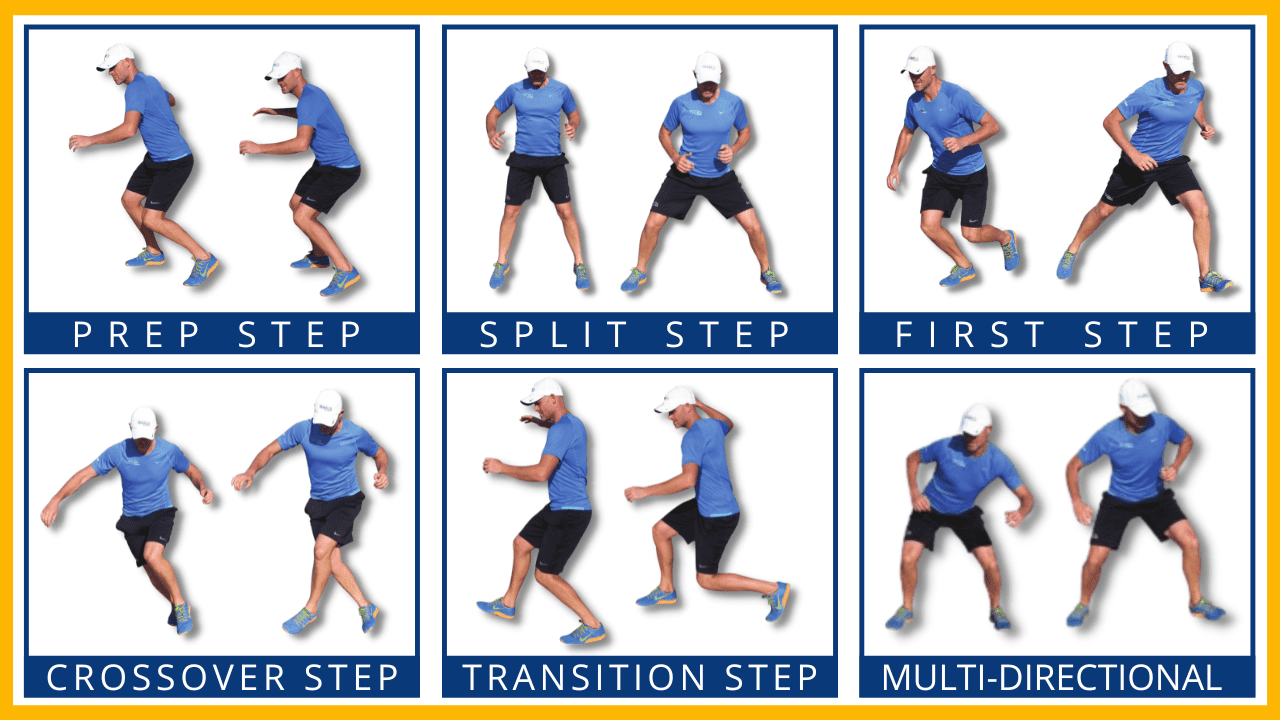
The fastest way to improve tennis footwork is to practice the basic patterns until they become automatic. Tennis movement is built from a few repeated actions that appear in almost every rally.
Players should focus on smooth movement rather than rushing. Quick feet are useful only when they help the player arrive in the correct position with enough time to prepare the racket.
Source: graphicfolks.com
Split step
Perform a small hop as the opponent makes contact with the ball. This keeps the body ready to move in any direction.
First step
Push strongly from the outside leg and move toward the ball immediately after recognizing its direction.
Adjustment steps
Use small steps near the ball to fine tune spacing before making contact.
Recovery step
Move back toward an effective court position after each shot to prepare for the next rally.
Why The Split Step Improves Reaction Time
The split step works because it places the body in a ready position before movement begins. A player who stays flat-footed may need extra time to push off and change direction. Practicing the split step with every opponent contact can make movement feel more natural.
Practice method
Have a partner feed balls while focusing only on timing the split step before each movement.
Use Tennis Footwork Drills To Build Speed And Control
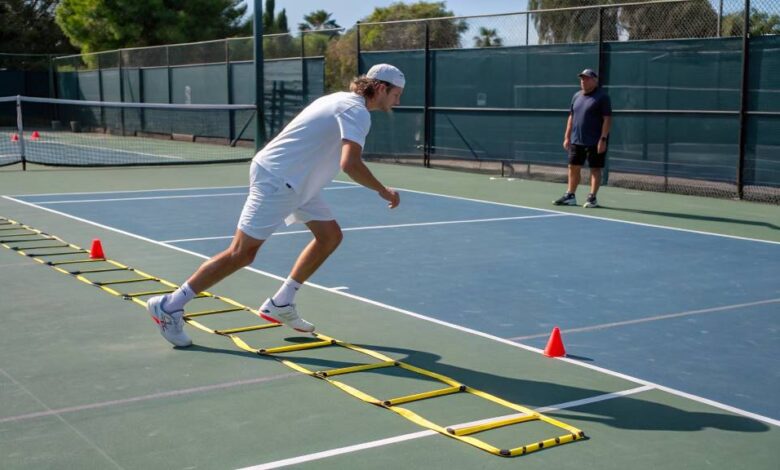
Footwork drills improve movement because they isolate specific skills. A good drill should have a clear purpose, such as faster reactions, better balance, or smoother direction changes.
Players should perform drills with proper technique instead of only trying to move as fast as possible. Poor movement habits repeated during practice can become difficult to correct later.
Source: storage.googleapis.com
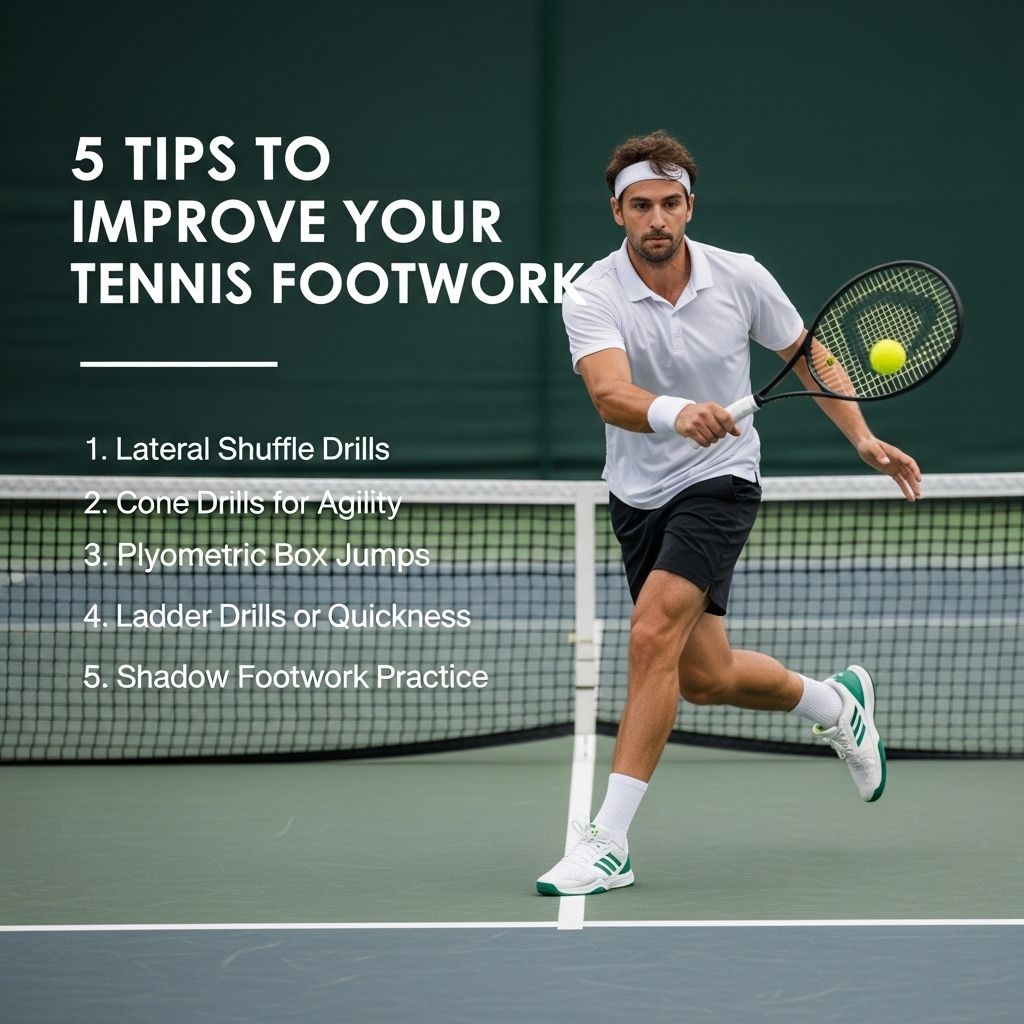
Side-to-side shuffle drill
Move between two points using controlled lateral steps. This develops court coverage and defensive movement.
Cone reaction drill
Place cones in different directions and react to a partner’s signal to improve quick changes.
Shadow tennis drill
Practice moving through imaginary rallies without hitting a ball to focus on positioning and recovery.
Many players benefit from short footwork sessions added before or after tennis practice. The exact amount depends on fitness level, schedule, and goals. Consistent practice is usually more useful than occasional intense sessions.
Beginner approach
Start with simple drills that build balance and movement confidence before adding speed.
Improve Balance, Strength, And Body Control
Footwork depends on more than quick feet. Strength, coordination, and balance help players control their bodies when stopping, changing direction, and recovering after wide shots.
Simple athletic exercises can support tennis movement. Players often use activities such as single-leg balance work, controlled lunges, and movement drills that challenge stability.
Source: storage.googleapis.com
Single-leg balance
Standing on one leg improves stability needed for reaching and recovering during rallies.
Many players struggle with movement because they repeat small mistakes during practice and matches. Identifying the cause is the first step toward improvement.
Footwork problems are often connected to timing, positioning, or decision making rather than a lack of effort. Correcting one habit at a time can create steady progress.
Source: hiwindsaruba.com
Standing still after shots
Players should begin recovery movement after contact instead of watching the ball without preparing for the next shot.
Taking large unnecessary steps
Small adjustment steps near the ball usually create better control than reaching with one large step.
Moving too early
Players need to read the opponent’s shot while staying ready rather than guessing too soon.
Ignoring technique
Fast movement with poor balance can reduce consistency and increase fatigue.
Signs Your Footwork Is Improving
Improvement appears when movement becomes more efficient. Players may notice that they reach difficult balls with better balance, recover faster, and feel less tired during long rallies.
Better timing
You arrive earlier and have more time to prepare your stroke.
Create A Tennis Footwork Training Plan
A simple training plan helps players turn drills into lasting improvement. The goal is not only faster movement but more reliable movement during real points.
Players should combine technical drills, tennis practice, and physical conditioning. Tracking progress through match situations can reveal which movement skills need more attention.
Source: YouTube
Warm up with movement
Use dynamic movements and light footwork before hitting to prepare the body.
Practice with purpose
Choose drills based on specific needs such as recovery, speed, or balance.
Review match habits
Notice when you miss shots because of poor positioning or late movement.
Frequently Asked Questions
Q
How long does it take to improve tennis footwork?
The timeline depends on practice frequency, current ability, and the specific movement skill being trained. Many players notice better coordination after regular practice, but advanced movement requires ongoing training.
Q
Can beginners improve tennis footwork quickly?
Yes. Beginners can make noticeable improvements by learning basic patterns such as the split step, recovery movement, and balanced positioning before adding complex drills.
Q
What is the most important tennis footwork drill?
There is no single drill that works best for every player. Split-step practice, movement patterns, and shadow tennis are commonly useful because they train skills used in many situations.
Q
Does faster footwork make you a better tennis player?
Speed helps, but effective footwork also requires timing, balance, and decision making. A player who moves efficiently can often perform better than a faster player with poor positioning.
Q
Should tennis footwork be practiced every day?
Daily practice is not required for everyone. Players should choose a schedule that allows quality training and proper recovery based on their activity level.
✦ Wrapping Up
Conclusion
Improving tennis footwork starts with building reliable movement habits. The split step, first step, recovery step, and balance control form the foundation of efficient court movement.
Players who practice focused drills and correct common mistakes can move with more confidence and reach more shots under control. Better footwork supports every stroke because good positioning gives the body more time and stability.
💡 Key Takeaway
Choose one footwork skill, such as split-step timing or recovery movement, and practice it consistently during your next tennis sessions.