
If you’re trying to figure out the right way to structure your gym sessions, the debate over compound vs isolation exercises is probably the first thing you’ll run into. Balancing these two styles is the secret to building a physique that is both strong and well-balanced. We’ve found that training programs as of 2026 often lean on a mix of both to ensure long-term progress.
Whether you’re setting up a reliable machine or using bodyweight, understanding how these movements interact is the key to seeing results.

Today's Exclusive Deals
Limited-time Exclusive Deals. Check current discount on Amazon.
Check Price on Amazon As an Amazon Associate I earn from qualifying purchases.Quick Answer
Compound exercises recruit multiple muscle groups across several joints simultaneously. Isolation exercises focus tension on one specific muscle and joint. You should prioritize compound lifts for strength and efficiency.
Use isolation movements to address muscle imbalances and finish specific muscle groups. A balanced routine typically combines both styles for maximum effect.
Why Your Training Needs Both Compounds and Isolation
Most people make the mistake of choosing one style and sticking to it exclusively. If you only perform compound lifts, you might find that certain smaller muscles struggle to keep up with the larger ones. If you only perform isolation work, you miss out on the massive systemic benefits that come with lifting heavy, multi-joint weights.
The most effective programs use a "Big to Small" approach to manage fatigue. By starting your workout with the most demanding movements, you ensure your nervous system is fresh enough to handle the intensity. As you move into isolation work, your goal shifts from raw strength to metabolic stress and muscle fullness.
This layered approach is a standard recommendation within strength training research for optimizing hypertrophy.

Understanding Compound Movements: The Foundation of Strength
Compound movements are the heavy hitters of any workout routine. These exercises involve multiple joints, such as the hips and knees in a squat, or the shoulder and elbow in a bench press. Because you use several muscle groups at once, you can lift significantly more weight than you could with an isolation move.
These lifts are the bread and butter of expert picks for strength training. They demand high levels of coordination and core stability, which helps you build functional strength that carries over into everyday life. When your goal is to add total mass or increase your ability to move load, compounds should occupy the first half of your session.
Understanding Isolation Movements: The Art of Targeted Growth
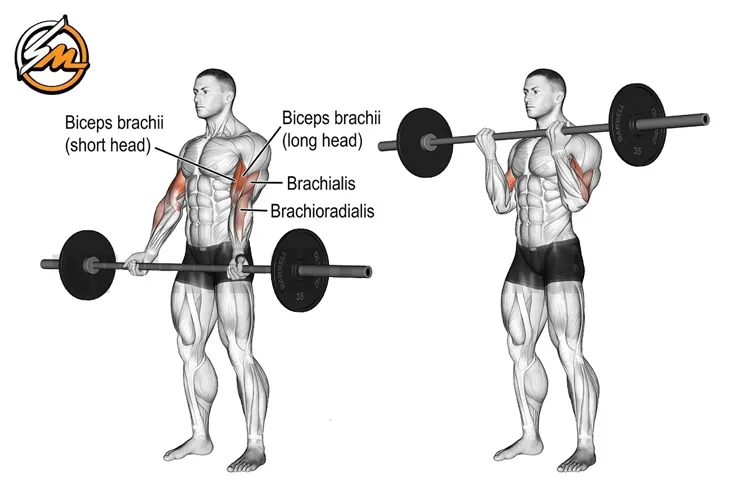
Isolation movements act as the precision tools of your training. These exercises limit movement to a single joint, which forces the targeted muscle to bear almost the entire load. While you won't be setting any personal bests on a bicep curl, you will be creating the specific stimulus needed to force individual muscle growth.
Isolation work is vital for correcting imbalances, such as when one arm is stronger than the other. If you are looking for expert picks for muscle building, you’ll notice these routines almost always include isolation work as an accessory to help sculpt specific muscle groups. They are also much safer to perform at the end of a session when your energy is low, as they place less demand on your central nervous system than a heavy deadlift or squat.
Side-by-Side: Performance, Energy, and Recovery
Choosing between these movements often comes down to your immediate goal for that specific set. Compounds provide a high return on investment but require more recovery time due to the overall load placed on your body. Isolation moves have a lower energy cost, making them easier to add as a finisher.
| Feature | Compound Exercises | Isolation Exercises |
|---|---|---|
| Joint Involvement | Multi-joint | Single-joint |
| Recovery Needs | High | Low |
| Best For | Strength/Power | Aesthetic/Detail |
| Example | Barbell Squat | Leg Extension |
If you are using compact picks for small spaces, you might be limited by the amount of weight you have available. In this case, isolation work becomes even more important to ensure you can reach muscle fatigue without needing a massive rack of plates. Use these differences to dictate how you rotate your exercises throughout the week.
The Big to Small Strategy: How to Build Your Routine
The most effective way to combine these exercises is to organize your workout based on intensity. Always perform your compound lifts first while your joints are warm and your focus is sharp. Once your energy begins to wane, shift to isolation movements to finish off the specific areas you want to prioritize.
For example, if your plan includes full body workouts, start with a squat or a press. Move to a secondary compound like a row, and wrap up with curls or lateral raises. This flow ensures you don't exhaust the small muscles needed to stabilize your heavy lifts before you've even had a chance to move the heavy iron.
Common Training Mistakes That Stunt Your Progress
The most frequent error is prioritizing isolation movements at the expense of heavy, foundational lifts. If you skip the compounds, you lose the systemic hormonal and strength-building benefits that come from moving your entire body. Focus your energy where it creates the greatest stimulus first, then fill in the rest later.
Another common pitfall is falling into the "junk volume" trap. This happens when you perform endless sets of isolation work that don't actually trigger new growth. Your body has a finite recovery capacity for every session.
Once you exceed that limit, additional isolation work provides no benefit and actually hinders your progress.
Track your sets and reps to ensure you are actually improving over time. If you use expert picks for teenage training or any other specialized kit, ensure your progress is measurable. You should be either adding weight, adding reps, or improving your form each week.
If the scale weight and performance metrics don't budge, look at your primary lifts rather than adding more isolation exercises.
Frequently Asked Questions About Training Efficiency
How many isolation movements should I do per workout?
Most training programs perform best with two to three isolation movements per session. Treat them as accessories to your primary compounds. If you perform more than that, you risk systemic fatigue.
Focus on intensity for those few exercises rather than volume.
Can I skip compound lifts if I have lower back pain?
You should prioritize safe, alternative compound movements rather than skipping them entirely. Options like goblet squats or trap bar deadlifts place less shear force on your spine than traditional barbell variations. Consult a physical therapist if you have pain.
Modifying your form is often better than abandoning multi-joint training.
How do I know if I am neglecting my weak points?
Isolation work is the perfect diagnostic tool for identifying lagging muscle groups. If you notice one side of your body is significantly weaker during a unilateral movement, dedicate extra attention to that side. Do not let your dominant side take over during your compound sets.
Use isolation exercises to bring those weaker areas up to speed.
Should I do isolation exercises for cardio?
Isolation exercises are not an efficient choice for cardiovascular health. They do not recruit enough muscle mass to elevate your heart rate sufficiently. Stick to compounds or dedicated aerobic activity for better heart health.
Isolation movements remain focused strictly on muscular size and local endurance.
How often should I change my exercise selection?
Stick to a consistent program for at least eight to twelve weeks to see real progress. Constant variation prevents your body from mastering the movement patterns required for strength. Only adjust your exercises when you hit a plateau that standard progression cannot overcome.
Consistency is the primary driver of physical transformation.

