Understanding how does strength training work starts with recognizing that your body is a masterpiece of adaptation. When you lift a weight that challenges your muscles, you create a specific biological signal for growth.
This process relies on placing stress on your fibers, which triggers repair and strengthening. As of 2026, research from the National Strength and Conditioning Association confirms that consistent loading is the primary driver of these structural changes.

Today's Exclusive Deals
Limited-time Exclusive Deals. Check current discount on Amazon.
Check Price on Amazon As an Amazon Associate I earn from qualifying purchases.Quick Answer
Strength training works by creating tension in your muscles. This tension causes microscopic tears in muscle fibers. Your body repairs these tears during rest.
The repaired muscle fibers become thicker and stronger. This cycle is called adaptation. Progressive overload makes this process effective.
The Science of Strength: How Training Forces Your Body to Adapt

Image source: Web (Bing) / smcrep.org (Web image (fair-use with source credit))
Strength training functions through a simple yet precise feedback loop. When you perform a lift, you impose a mechanical demand that your muscles cannot comfortably handle. This perceived crisis prompts your body to initiate internal changes.
You don't get stronger while you are in the gym. You get stronger in the hours and days afterward as your body compensates for the stress. It does this by fortifying your tissues against future exposure to similar loads.
Choosing the right gear for your first sessions is often the first step in creating that initial stimulus. By moving consistently against external resistance, you move from a sedentary state to a physically demanding one. This transition is where your biological systems, from your central nervous system to your bone density, begin to optimize for performance.
Why Your Muscles Change: Mechanical Tension and Protein Synthesis
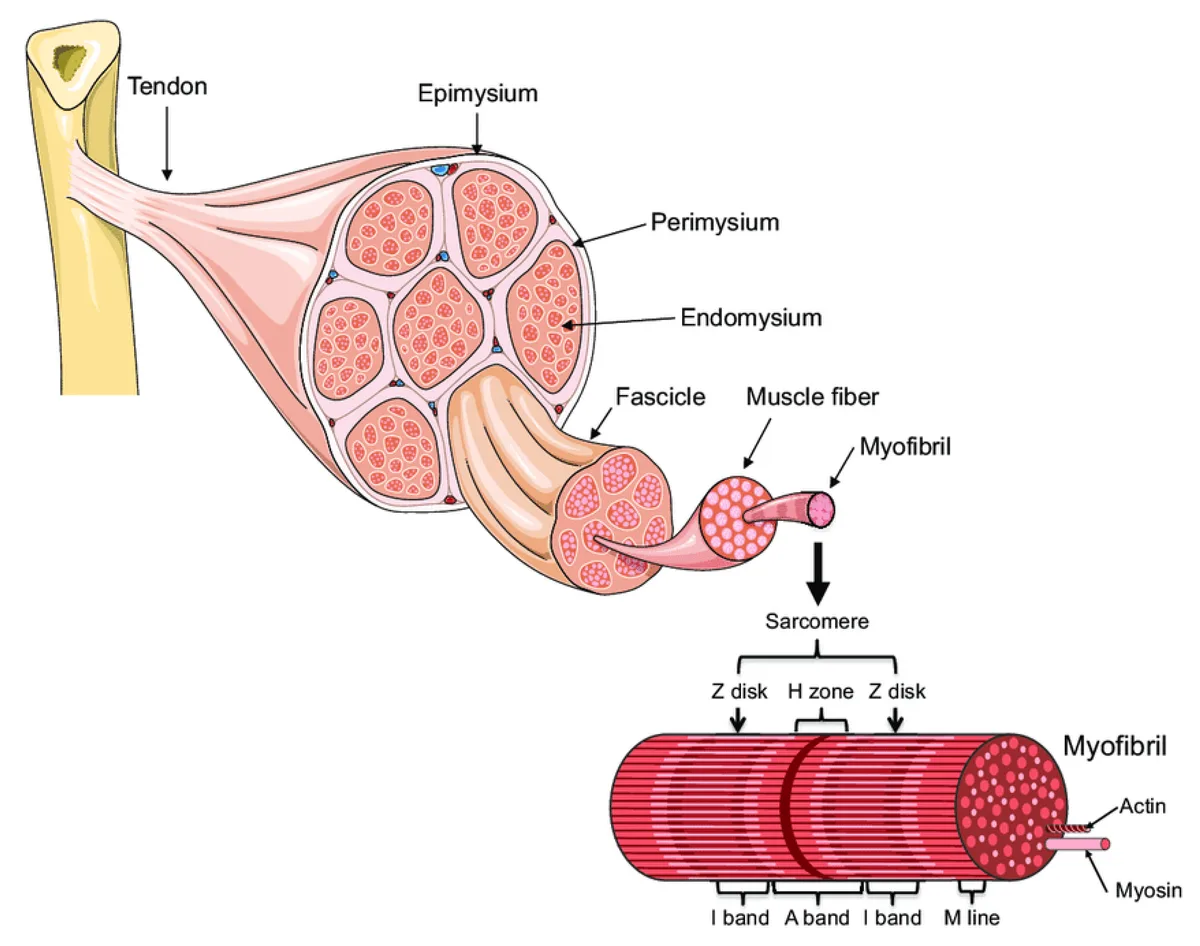
Image source: Web (Bing) / ar.inspiredpencil.com (Web image (fair-use with source credit))
Mechanical tension is the most critical factor in muscle growth. It occurs when your muscle fibers are stretched and contracted under a heavy load. This tension triggers chemical pathways that tell your DNA to begin building new proteins.
This process, known as muscle protein synthesis, is the actual building phase of your training. If you are looking to maximize muscle development, you need to ensure you consume enough protein to support these repairs. Without the raw materials, your body cannot complete the work.
Your fibers also adapt by increasing in diameter to handle more force. Scientists note that this cross-sectional growth is what leads to visible size gains. It is a slow, methodical response to consistent, high-effort inputs.
| Feature | Role in Growth |
|---|---|
| Mechanical Tension | Primary trigger for cellular signaling. |
| Protein Availability | Provides building blocks for repair. |
| Rest Intervals | Allows for systemic recovery between sets. |
| Repetition Range | Influences which fiber types are activated. |
The First Phase: Why Your Brain Gets Stronger Before Your Muscles Do
If you are new to training, you might notice your strength skyrocketing during the first few weeks. This rarely happens because your muscles have significantly changed size yet. Instead, your nervous system is becoming more efficient.
Your brain is learning how to recruit more muscle fibers at the exact same moment. This is called motor unit recruitment. It is effectively a software update for your neuromuscular connection.
Early strength gains are primarily neurological. You are getting better at the skill of lifting, even if you are using reliable home-gym staples to do so. Eventually, the rate of strength gain from your nervous system plateaus.
That is when the physiological growth of your muscle tissue takes over the heavy lifting.
The Blueprint for Growth: Applying Progressive Overload Safely

Image source: Web (Bing) / etsy.com (Web image (fair-use with source credit))
Progressive overload is the strategy of gradually increasing the difficulty of your workouts. If you do not add difficulty, your body has no reason to adapt further. You must consistently challenge your current capacity.
You can achieve this by adding weight to the bar. You can also increase the number of reps or decrease your rest time. Each of these methods forces your body to sustain a higher level of performance than it did previously.
Many lifters find that tools built for full-body routines help them track these gains more effectively. Keep a simple logbook to ensure you are actually improving. If you are lifting the same weight for the same reps every week, you are maintaining, not growing.
The Recovery Equation: Why Rest is Where the Real Gains Happen
Training is the stimulus, but recovery is the adaptation. If you train constantly, you stay in a state of breakdown. You need to provide your body with the time to mend the micro-tears created during your sessions.
During rest, your body refills glycogen stores and repairs damaged cells. Adequate sleep is vital here. Research indicates that the human body performs best when training sessions for strength goals are balanced with days for recovery.
Don't mistake doing nothing for wasting time. Rest days are an active part of your training program. If you feel overly fatigued or your performance drops, take an extra rest day.
Your muscles will thank you by showing up stronger in your next session.
Avoiding the Risks: Common Mistakes and How to Stay Injury-Free
Injuries usually happen when you rush the process or ignore your body's feedback. Ego lifting is the most frequent culprit, where you prioritize heavy weight over perfect technique. This often leads to joint strain or ligament damage that keeps you out of the gym for weeks.
Another common error is skipping your warm-up. You need to prepare your tendons and ligaments for the load before you touch the main equipment. A few minutes of dynamic movement significantly improves your range of motion and joint stability.
Don't ignore persistent pain. There is a difference between the soreness from a good workout and the sharp pain of an injury. If a specific movement consistently causes discomfort, switch to a variation that feels more natural.
Consistency beats intensity every time because you cannot build muscle while sitting on the sidelines recovering from a preventable injury.
Strategic Optimization: Periodization and Long-Term Progress
Periodization is the practice of splitting your training into organized phases to avoid plateaus. You cannot push your body to its absolute limit every single day without eventually stalling. Instead, you cycle your intensity to ensure steady, long-term improvement.
Many successful programs use a block structure. You might spend four weeks focusing on volume, four weeks on strength, and one week on deloading. A deload week involves significantly reducing your intensity to let your central nervous system catch up.
This structured approach prevents burnout and keeps your progress on a steady upward trajectory. If you are serious about your gains, look for gear that supports heavy lifting as you increase your experience level. Planning your training phases makes it easier to know exactly when to push hard and when to dial it back.
Frequently Asked Questions About Muscle Building and Strength
Can I build strength with bodyweight exercises?
Yes, you can build significant strength using your own body weight. The key remains applying progressive overload, such as increasing repetitions or moving into more difficult variations like one-arm pushups. Eventually, most athletes add external resistance to continue challenging their muscles beyond their own weight.
How often should I train to see real results?
Most research suggests training each muscle group at least twice per week for optimal results. This frequency allows for enough stimulus to trigger protein synthesis while leaving sufficient time for recovery between sessions. Adjust your frequency based on how quickly your body repairs and your personal schedule constraints.
Why do my muscles feel sore after a workout?
That soreness is delayed onset muscle soreness, caused by microscopic tears in your fibers during intense exercise. It is a normal part of the adaptation process and usually peaks 24 to 48 hours after your session. You don't need to be sore to know you had a productive, effective workout.
Should I lift heavy or do more repetitions?
Both methods contribute to strength and size, but they signal the body differently. Lifting heavier weights at lower repetitions builds more pure strength and nervous system efficiency. Performing moderate weights for higher repetitions is generally more effective for maximizing muscle size, or hypertrophy, through increased metabolic stress.
When should I move to heavier weights?
You should increase your weight only when you can complete your target repetitions with perfect form. If your form breaks down or you lose control of the movement, the weight is too heavy. Focus on moving the load through a full range of motion before adding more plates.