
Scuba diving is your ticket to a breathtaking, silent world. It’s about exploring vibrant coral reefs, swimming alongside majestic sea turtles, and discovering shipwrecks that hold centuries of stories. If you’ve ever dreamed of experiencing life beneath the waves, scuba diving makes that dream a reality by allowing you to breathe underwater.
This activity, officially known as Self-Contained Underwater Breathing Apparatus (SCUBA) diving, lets you stay submerged for extended periods. Divers typically use specialized equipment to manage their breathing and buoyancy, allowing for safe and enjoyable exploration. Many official training organizations, like the Professional Association of Diving Instructors (PADI), follow strict guidelines to ensure diver safety, with their Open Water Diver certification being a common starting point.

Today's Exclusive Deals
Limited-time Exclusive Deals. Check current discount on Amazon.
Check Price on Amazon As an Amazon Associate I earn from qualifying purchases.Quick Answer
Scuba diving means breathing underwater with a portable air supply. It lets you explore marine environments for extended periods. You use specialized gear like tanks, regulators, and buoyancy aids.
Training is essential for safe underwater exploration. It offers unique adventures and discoveries.
Why Seeing is Believing: The Visuals of Scuba
Let's be honest, reading about scuba diving is one thing, but seeing it is another entirely. Imagine yourself drifting weightlessly, sunlight dappling through the water onto colorful coral formations, or a school of shimmering fish parting as you glide by. Text alone can't capture the sheer scale of a manta ray or the intricate details of a nudibranch.
Visuals are key to truly understanding what scuba diving offers.
While we can describe the gear, the experience is best conveyed through images and videos that show divers interacting with their environment. You'd see how the buoyancy control device (BCD) helps maintain neutral buoyancy, allowing for effortless movement. You'd also witness the vibrant blues and greens of a healthy reef, and the diverse array of marine life that calls it home.
This visual aspect is fundamental to appreciating the allure of diving.

Image source: Web (Bing) / pinterest.com (Web image (fair-use with source credit))
Diving Gear: Your Lifeline Underwater
Scuba diving gear is your personal life support system beneath the waves. It's carefully designed to allow you to breathe, stay warm, and control your position in the water. Understanding each component is crucial for both safety and enjoyment.
Without the right equipment, venturing underwater would be impossible.
The Essential Kit You'll Need
This is the core kit you'll need for any scuba dive. Each piece serves a vital function, working together to create a safe and comfortable experience. You'll encounter many of these items when you start your training.
- Scuba Tank (Cylinder): This holds your compressed breathing gas, usually air. As of 2026, standard aluminum tanks typically hold around 80 cubic feet of air.
- Regulator: This device reduces the high-pressure air from your tank to a breathable pressure. It usually includes a primary second stage, an alternate air source (octopus), and a submersible pressure gauge (SPG).
- Buoyancy Control Device (BCD): This vest-like jacket allows you to control your buoyancy. You can inflate it to float on the surface or deflate it to descend.
- Dive Mask: Essential for clear vision underwater. It creates an air space in front of your eyes, allowing you to see without distortion from the water.
- Fins: Worn on your feet, fins provide the propulsion needed to move through the water efficiently.
- Exposure Suit (Wetsuit or Drysuit): Protects you from the cold water and helps prevent hypothermia.
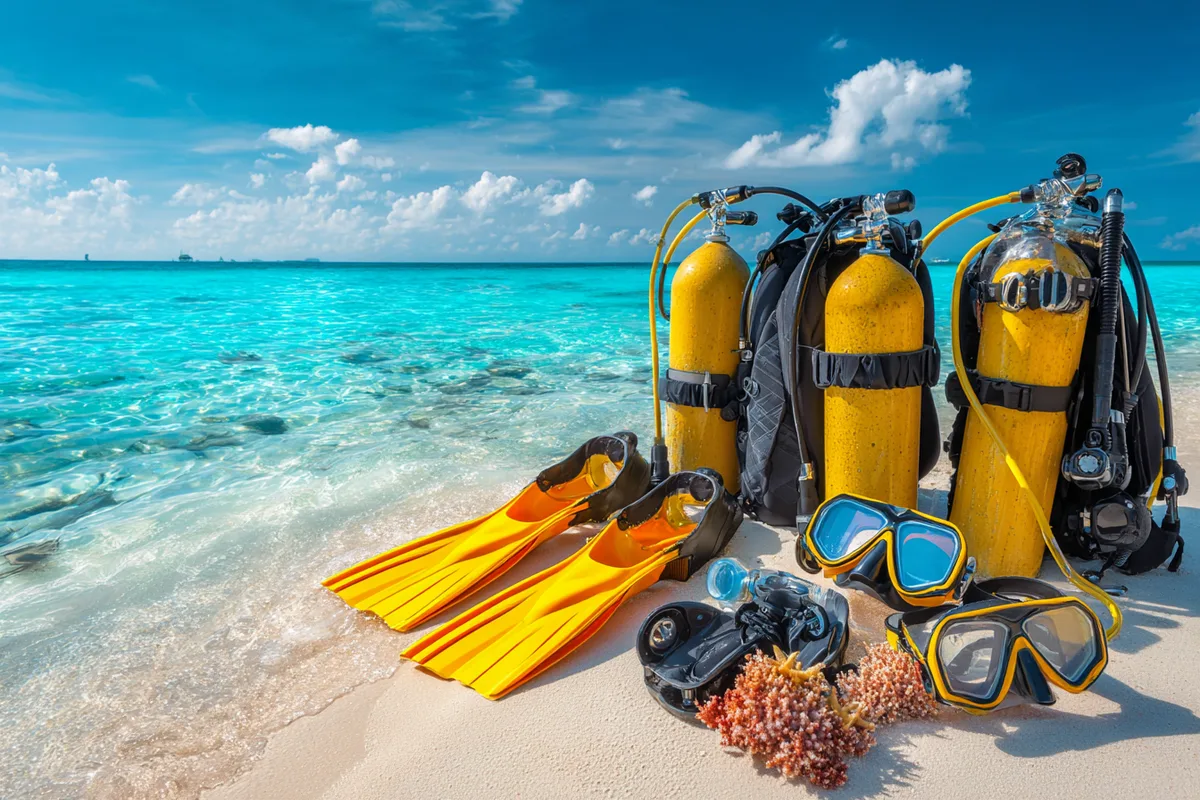
Image source: Web (Bing) / outuro.com (Web image (fair-use with source credit))
How Each Piece Works
Understanding the function of each gear item is paramount. Your regulator, for instance, has multiple stages. The first stage attaches to the tank valve and lowers the tank pressure.
The second stage, the part you breathe from, further reduces this pressure to ambient levels, making it easy to inhale.
Your BCD works by using a bladder that can be filled with air or have air released from it. Inflating the bladder adds positive buoyancy, helping you float. Deflating it removes air, increasing your negative buoyancy so you can sink.
A good understanding of your gear ensures you can manage your dives effectively and safely. For those looking for specific options, reviewing 8 Best Scuba Diving BCD 2027: Top Picks for Every Diver can offer insights into different models.
The Scuba Diving Experience: What to Expect
Scuba diving is more than just a hobby; it's an immersive experience that engages your senses in a way few other activities can. It transports you to a world where sound is muffled, gravity feels different, and every turn reveals something new and wondrous. Preparing for your first dive involves understanding both the physical sensations and the mental shift required.
Exploring the Marine World
The primary draw for most divers is the opportunity to witness marine ecosystems firsthand. You’ll encounter vibrant coral reefs teeming with life, from tiny, colorful reef fish to larger pelagics like sharks and rays. Many divers find immense peace in observing the underwater world, noting its intricate beauty and the delicate balance of its inhabitants.
It's a chance to see nature in its purest form, often untouched by human activity.
For those looking to capture these moments, a Best Scuba Diving Camera 2026: Top Picks for Underwater Photography can be an excellent investment.
The Feeling of Being Submerged
When you descend, the world above fades away. You enter a realm of quiet, broken only by the sound of your own breathing and the gentle clicks and whistles of marine life. You’ll feel a sense of weightlessness as your BCD helps you achieve neutral buoyancy, allowing you to hover effortlessly.
This feeling of freedom and serenity is profoundly different from anything experienced on land.
The sensation of breathing underwater, while initially strange, quickly becomes natural for certified divers. Your dive computer, a crucial piece of equipment, tracks your depth and time, ensuring you stay within safe limits. Understanding these parameters is part of what makes diving accessible and enjoyable.
If you're planning your travels, a Best Scuba Diving Gear Bag 2027: Top Picks for Easy Travel can help you transport your essentials.
Is Scuba Diving for You? Who Should Dive
Scuba diving appeals to a broad range of people, from adventure seekers to those simply looking for a unique way to relax and connect with nature. It’s an activity that can be adapted to different interests and physical capabilities, making it accessible to many. The key is finding the right way to engage with it.
Recreational Diving
This is the most common form of scuba diving, focused on exploring the underwater world for pleasure. Recreational divers typically dive in relatively shallow, clear waters, enjoying the sights and sounds of marine life. It’s perfect for tourists wanting to see coral reefs or for locals interested in exploring nearby lakes and coastlines.
If you're just starting out, looking at Best Scuba Diving Gear for Beginners 2026: Top Picks to Buy Now can be a great first step.
Advanced Exploration
Beyond recreational diving, there are more specialized forms like wreck diving, underwater photography, and cave diving. These often require advanced training and specialized equipment. For example, wreck enthusiasts might need a good Best Scuba Diving Knife 2026: Top Picks for Safe Underwater Adventures to navigate tight spaces.
Whether you're drawn to the vastness of the open ocean or the mysteries of submerged ruins, scuba diving offers a pathway to extraordinary experiences.
Common Scuba Diving Mishaps and How to Avoid Them
While scuba diving is generally safe when proper procedures are followed, like any adventure sport, it carries potential risks. Being aware of these common mishaps is the first step in preventing them. Many of these issues stem from misunderstandings of pressure or improper gear use.
Pressure Issues: The Bends and More
One of the most talked-about risks is decompression sickness, often called "the bends." This occurs when dissolved gases in your body form bubbles during a rapid ascent. To avoid this, divers strictly adhere to dive tables or their Best Scuba Diving Computer 2026: Top Picks for Safe Underwater Adventures to stay within no-decompression limits and perform safety stops. Barotrauma, injuries caused by pressure changes, can affect ears, sinuses, or lungs if equalization techniques aren't used correctly during descent and ascent.
Gear Malfunctions and Environmental Risks
Equipment failure can happen, though it's rare with well-maintained gear. Pre-dive safety checks, or "buddy checks," are critical for ensuring your gear is functioning correctly. Risks also come from the environment itself.
Strong currents can sweep divers off course, and entanglement in fishing lines or kelp is a possibility. Wearing appropriate exposure protection, like a Best Scuba Diving Wetsuit for Warm Water 2027: 5 Best Picks, and carrying a dive knife can mitigate some of these environmental hazards. Always dive with a buddy and communicate any concerns immediately.
Getting Certified: Your Path to Becoming a Diver
To safely and confidently explore the underwater world, formal training is essential. Scuba certification courses are designed to teach you the fundamental skills and knowledge needed for diving. These courses are structured to build your understanding gradually, ensuring you're well-prepared for real-world diving situations.
It’s not just about fun; it's about mastering the techniques that keep you safe.
Understanding Dive Courses
The most common starting point is the Open Water Diver certification. This course typically involves three main phases: academics, confined water dives, and open water dives. The academic portion covers topics like dive physics, physiology, equipment, and safety procedures.
You'll learn about the effects of pressure, how to plan dives, and how to handle common problems. Many organizations, like PADI, structure their curriculum around these core principles.
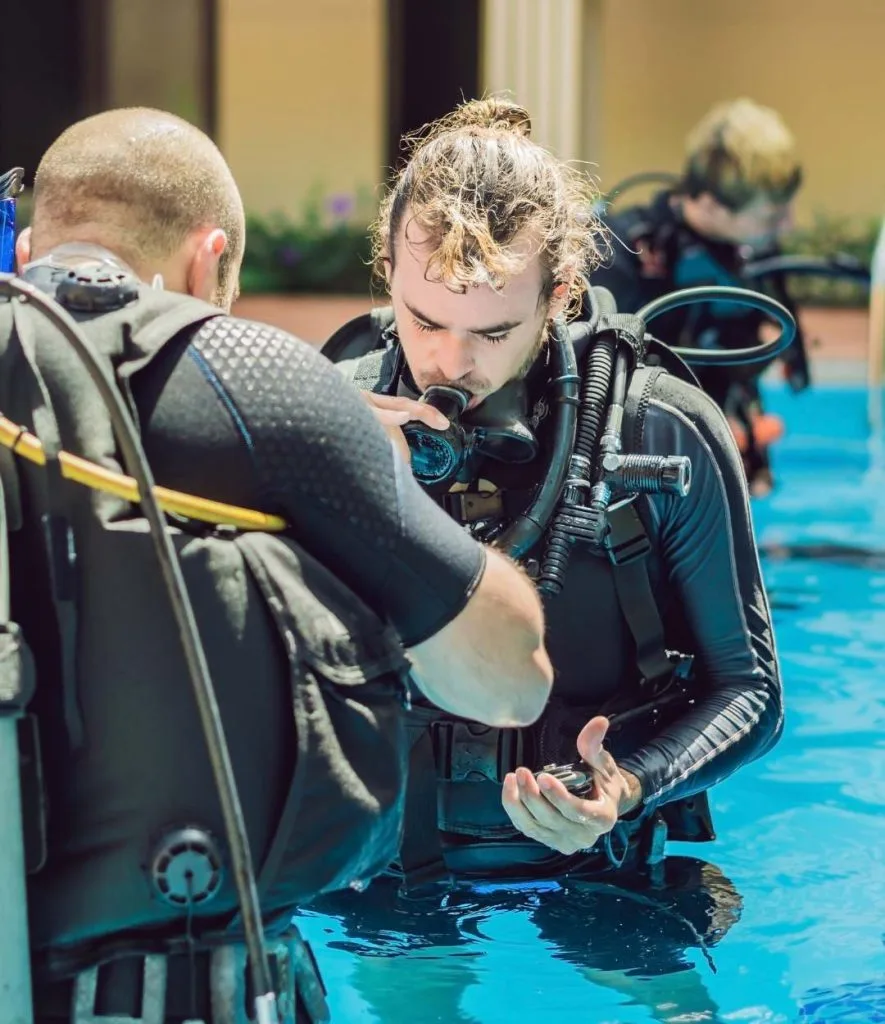
Image source: Web (Bing) / larrywedgewoodscuba.com (Web image (fair-use with source credit))
The confined water dives, often conducted in a swimming pool, allow you to practice essential skills in a controlled environment. This includes assembling and disassembling your gear, clearing your mask, recovering a regulator, and practicing buoyancy control. Once you've mastered these skills, you'll move on to open water dives in an actual dive site, applying what you've learned under the direct supervision of an instructor.
Safety First: Key Certifications
Beyond the Open Water Diver level, you can pursue further training. Advanced Open Water Diver courses introduce you to new diving activities like deep diving and night diving, further expanding your skills. Rescue Diver courses focus on accident prevention and management, equipping you to help yourself and other divers in emergencies.
Specialized courses like drysuit diving or wreck penetration are also available for those with specific interests. Always ensure your certification is from a recognized agency, as this signifies you've met established safety standards.
Scuba Diving Safety Essentials
Safety is the bedrock of responsible scuba diving. While the gear and training provide a foundation, a consistent commitment to safety protocols makes every dive enjoyable and risk-free. This involves meticulous preparation before you even hit the water and careful execution during your dive.
Pre-Dive Checks and Planning
Before every dive, a thorough pre-dive safety check is mandatory. This usually involves a "buddy check," where you and your dive partner systematically go through each other's equipment. You'll confirm that your air is on, your BCD inflates and deflates correctly, your weights are secure, and your alternate air source is accessible.
Dive planning also includes discussing the dive site, potential hazards, and emergency procedures with your buddy.
This methodical approach ensures that any potential gear issues are identified and resolved before you enter the water. It’s a habit that experienced divers never skip, regardless of how familiar they are with the equipment or the dive site. If you're considering purchasing gear, it's wise to look at options like a Best Scuba Diving Regulator for Beginners 2026: Top Picks Reviewed to ensure you start with reliable equipment.
In-Water Procedures
Once underwater, maintaining situational awareness is key. Always monitor your air supply using your submersible pressure gauge (SPG) and communicate it to your buddy. Practice slow, controlled ascents, performing safety stops as recommended by your dive computer or tables.
Avoid holding your breath, especially during ascent, to prevent lung overexpansion injuries. Respect marine life by not touching or disturbing anything you see.
A critical safety tool is a Surface Marker Buoy (SMB). This is deployed underwater to signal your location to the surface support team. Knowing how to deploy an SMB correctly is a vital skill, especially when diving in areas with boat traffic.
For guidance on selecting one, consult resources on the Best Scuba Diving Surface Marker Buoy Reviews and Buying Guide 2026.
Frequently Asked Questions About Scuba Diving
How much does scuba diving certification cost?
Certification costs can vary depending on the dive shop and location, but typically range from $400 to $700 for an Open Water Diver course. This usually includes instruction, course materials, equipment rental, and certification fees.
How deep can a certified diver go?
A standard Open Water Diver certification typically allows you to dive to a maximum depth of 18 meters (60 feet). Advanced training is required for deeper dives, with specific depth limits depending on the certification level.
Do I need to know how to swim to scuba dive?
While you don't need to be an Olympic swimmer, basic water comfort and swimming ability are essential. Most certification agencies require a basic swimming test, usually involving swimming a certain distance and treading water for a few minutes, to ensure you can handle yourself in the water.
What if I get claustrophobic underwater?
Claustrophobia can be a challenge, but many divers find they overcome it with proper training and gradual exposure. Your instructor will help you practice breathing techniques and build confidence. If you have severe claustrophobia, it's best to discuss this with your doctor and dive instructor before starting a course.
How long can you stay underwater?
The duration of a dive depends on several factors, including your depth, breathing rate, and the amount of air in your tank. For a typical recreational dive to 10-12 meters (30-40 feet) with a standard 80 cubic foot tank, you might stay underwater for 45 to 60 minutes. Dive computers and tables help calculate these limits precisely.
Your Next Step into the Blue
Scuba diving is an incredible gateway to exploring the wonders of our planet's oceans and waterways. It offers a unique blend of adventure, tranquility, and discovery that few other activities can match. The journey begins with getting the right training and understanding your gear, always prioritizing safety.
Whether you're drawn by the vibrant colors of a coral reef, the mystery of a shipwreck, or simply the serene experience of floating weightlessly, scuba diving can fulfill those desires. It’s an activity that grows with you, offering endless opportunities for learning and exploration as you gain experience and pursue further certifications. Remember that proper preparation and continuous learning are the keys to a lifetime of amazing underwater adventures.

