
Ice hockey is a fast, thrilling sport where players skate, shoot, and compete at high speed. But with so much action, rules are needed to keep the game fair and safe. One of the most important parts of ice hockey is the penalty system.
Penalties stop players from breaking the rules and keep the competition balanced. Whether you are new to hockey or just want to understand the game better, learning about penalties is key.

Today's Exclusive Deals
Limited-time Exclusive Deals. Check current discount on Amazon.
Check Price on Amazon As an Amazon Associate I earn from qualifying purchases.What Is A Penalty In Ice Hockey?
A penalty in ice hockey is a punishment given to a player who breaks a rule during the game. When a player commits a penalty, they usually have to sit in the penalty box for a set amount of time, leaving their team short-handed. Penalties help keep the game safe, fair, and exciting for everyone.
There are many reasons why a player might get a penalty. Some are for dangerous actions, like hitting another player too hard, while others are for smaller rule violations, like using the stick in the wrong way. Referees watch the game closely to catch these mistakes and give out penalties when needed.
Types Of Penalties
Different actions lead to different types of penalties in ice hockey. The most common are minor, major, misconduct, and match penalties.
Minor Penalty
A minor penalty is the most common type. It lasts two minutes. The player’s team has to play with one less player until the penalty ends or the other team scores.
Examples:
- Tripping: Using a stick or body to trip an opponent.
- Hooking: Using the stick to hold back another player.
- Holding: Grabbing an opponent or their stick.
Major Penalty
A major penalty lasts five minutes. These are given for more serious actions. The penalized team cannot return the player, even if the other team scores during this time.
Examples:
- Fighting
- Checking from behind
- High-sticking with injury
Misconduct Penalty
A misconduct penalty is for bad behavior. The player must leave the ice for ten minutes, but their team can replace them, so they do not play short-handed.
Examples:
- Abusive language
- Arguing with officials
Match Penalty
A match penalty is the most serious. The player is removed from the game for a dangerous or dirty play, usually with intent to injure. The team plays short-handed for five minutes.
Penalty Shot
Sometimes, a player is denied a clear chance to score because of a foul. In these cases, the referee can award a penalty shot. The player gets to skate in alone and try to score against the goalie.
Common Penalties Explained
Some penalties happen more often in games. Understanding these helps you follow the action.
- Tripping – Using a stick or body to make another player fall.
- Slashing – Swinging the stick at another player, even if it does not hurt them.
- Cross-checking – Hitting a player with both hands on the stick.
- Interference – Stopping a player who does not have the puck.
- Boarding – Checking someone dangerously into the boards.
- High-sticking – Lifting the stick above shoulder level and hitting someone.
- Delay of game – Doing something that stops play on purpose, like shooting the puck out of the rink.
Here’s how these penalties compare:
| Penalty | Time (minutes) | Description |
|---|---|---|
| Minor | 2 | Less serious infractions (e.g., tripping, hooking) |
| Major | 5 | Serious actions (e.g., fighting, boarding with injury) |
| Misconduct | 10 | Unsportsmanlike conduct; team not short-handed |
| Match | Game | Intent to injure; ejected from game |
What Happens After A Penalty?
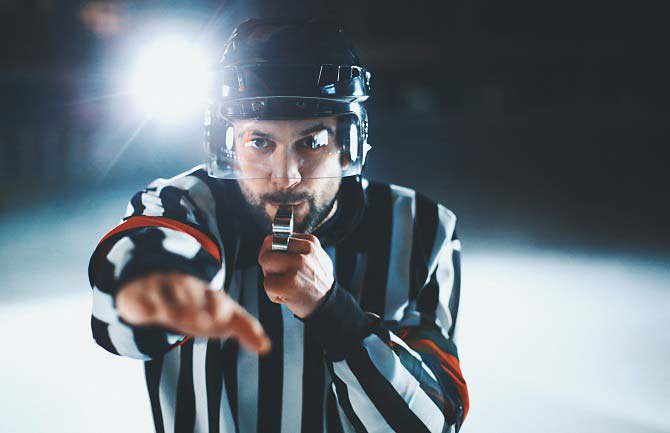
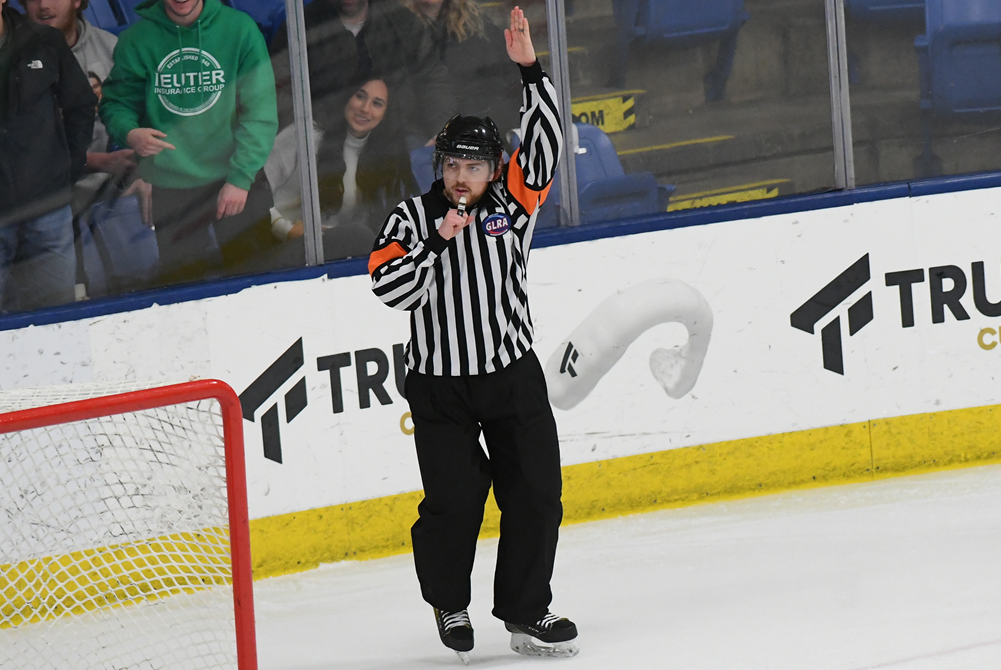
When a player gets a penalty, the referee raises an arm to signal it. Play continues until the offending team touches the puck. Then, the referee stops play and sends the player to the penalty box.
The penalized player’s team must play with fewer skaters, called short-handed. The other team has a power play, meaning they have more players on the ice and a better chance to score.
Here’s a simple comparison of team situations:
| Situation | Team Strength | Chance to Score |
|---|---|---|
| Even strength | 5 vs 5 | Normal |
| Power play | 5 vs 4 | Higher for power play team |
| Short-handed | 4 vs 5 | Lower for penalized team |
If the team on the power play scores, a minor penalty ends early. But a major penalty continues even after a goal.
Special Cases And Double Penalties
Sometimes, both teams get penalties at the same time. In this case, both teams lose a player, and the game continues with fewer skaters. This is called four-on-four or even three-on-three hockey. These situations often lead to faster play and more scoring chances.
Another special case is the double minor penalty. This is a four-minute penalty, usually for high-sticking when it causes injury. The player must stay in the penalty box for four minutes unless the other team scores twice.
Key Rules And Insights
Many new fans miss a few important details about penalties:
- Stacked penalties: If a team gets two penalties at once, they can have only three skaters on the ice. The next penalty waits until the first one ends.
- Serving penalties: If a goalie gets a penalty, another player serves the time in the box.
- Delayed penalty: Play continues until the penalized team gets the puck, giving the other team a free chance to attack.
Why Penalties Matter
Penalties are more than just punishments. They change the flow of the game. Teams train special power play and penalty kill units to handle these moments. A good power play can turn a game around, while a strong penalty kill can save a team in trouble.
For example, in the NHL, teams score about 20% of the time on the power play. That means one in five power plays ends with a goal. This can be the difference between winning and losing.
Penalties In Professional Leagues
Different leagues have their own rule books. The NHL (National Hockey League) is the most famous, but other leagues like the IIHF (International Ice Hockey Federation) have slight differences. For more detail, check the official NHL rule book.
Frequently Asked Questions
What Is The Penalty Box?
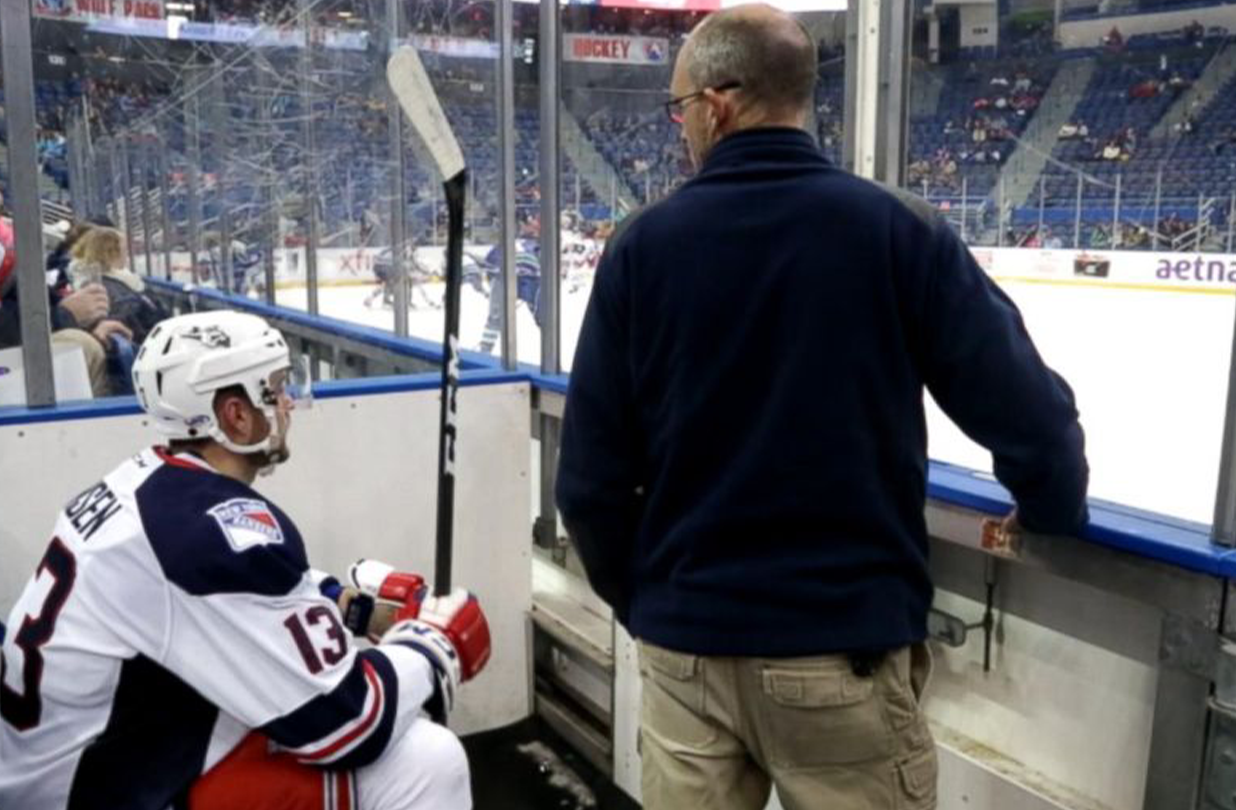
The penalty box is a special area where penalized players sit during their penalty time. They cannot rejoin the play until the penalty ends.
How Does A Team Play Short-handed?
When a player is in the penalty box, their team plays with one fewer skater. The team focuses on defense and tries to prevent the other team from scoring.
Can A Team Have More Than One Player In The Penalty Box?
Yes, teams can have up to two or even three players in the box. In this case, teams can play with as few as three skaters.
What Happens If The Goalie Gets A Penalty?
If a goalie gets a penalty, another player from the same team serves the penalty time in the box, but the goalie stays in the game.
How Do Referees Signal Penalties?
Referees use hand and arm signals to show what type of penalty has been called. For example, tapping the wrist means slashing, and pointing to the penalty box means the player must go there.
Ice hockey penalties may seem complex at first, but they are a vital part of the game. Understanding them makes every match more exciting and helps you appreciate the skill and discipline it takes to play at the highest level.

